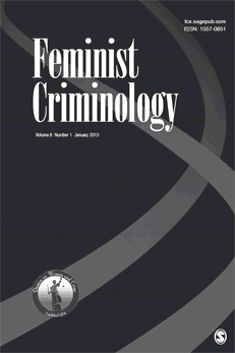
Feminist Criminology
Scope & Guideline
Innovating Research at the Intersection of Gender and Crime.
Introduction
Aims and Scopes
- Gendered Analysis of Crime and Victimization:
The journal consistently examines how gender influences both the perpetration of crime and the experiences of victims, particularly women and marginalized groups. This includes exploring issues such as intimate partner violence, sexual assault, and systemic discrimination. - Intersectionality in Criminology:
Feminist Criminology prioritizes intersectional approaches, recognizing how various social categories, including race, class, sexuality, and disability, intersect to shape individuals' experiences with crime and justice. - Community and Systemic Responses to Gender-Based Violence:
The journal investigates the effectiveness of community interventions and systemic policies aimed at addressing gender-based violence, including studies on legal responses, support services for survivors, and the role of advocacy organizations. - Feminist Theoretical Frameworks:
Feminist Criminology employs diverse feminist theories to analyze crime and justice, contributing to a deeper understanding of how traditional criminological theories may overlook or misinterpret women's experiences. - Qualitative and Mixed Methods Research:
The journal often utilizes qualitative and mixed methods research to provide nuanced insights into the lived experiences of individuals affected by crime, emphasizing narrative accounts and personal perspectives.
Trending and Emerging
- Digital and Technological Impacts on Gendered Violence:
Recent publications have increasingly focused on technology-facilitated abuse and the implications of digital spaces for gender-based violence. This trend is particularly relevant as technology continues to play a significant role in both perpetration and victimization. - Experiences of Marginalized Groups:
There is a growing emphasis on the experiences of marginalized women, including LGBTQ+ individuals, women of color, and those with intersectional identities. This focus highlights the diverse realities of victimization and justice-seeking behaviors in various communities. - Impact of Incarceration on Women and Families:
Emerging research themes include the consequences of incarceration on women and their families, particularly focusing on maternal roles and the experiences of mothers with incarcerated children. This highlights the broader societal implications of the criminal justice system. - Resilience and Agency in the Face of Violence:
A notable trend is the exploration of resilience and coping mechanisms among women facing violence and discrimination. This shift emphasizes women's agency and strength, challenging traditional victim narratives. - Intersection of Mental Health and Criminal Justice:
The intersection of mental health issues and women's experiences within the criminal justice system is gaining attention. This theme reflects a growing recognition of the importance of mental health support for women involved in crime or victimization.
Declining or Waning
- Traditional Gender Roles in Crime:
Research that solely focuses on traditional gender roles and their impact on crime rates seems to be waning. This reflects a broader understanding that crime cannot be fully explained by gender alone, necessitating more complex analyses that incorporate intersectionality. - General Strain Theory Applications:
While still relevant, general strain theory applications in the context of women's criminality appear to be less frequent. Scholars are increasingly looking beyond strain as a singular explanation for women's behavior towards more holistic approaches that consider systemic and structural factors. - Victim Blaming Narratives:
The exploration of victim-blaming narratives in relation to women's experiences with crime and justice has seen a decline. As feminist perspectives gain traction, there is a shift towards understanding victims' rights and agency rather than focusing on blame. - Focus on Male-Centric Perspectives:
The journal has moved away from studies that primarily focus on male perspectives in crime, acknowledging that understanding women's experiences and voices is critical to the field. This shift highlights the need for more gender-responsive research.
Similar Journals
Feminist Legal Studies
Fostering critical dialogue in feminist legal theory.Feminist Legal Studies is a prominent academic journal established in 1993, published by Springer in Switzerland, and has quickly become an essential resource for scholars and practitioners in the field of Gender Studies. With an ISSN of 0966-3622 and an E-ISSN of 1572-8455, this journal is known for its rigorous peer-reviewed articles that explore the intersection of gender and law, advocating for a critical examination of legal structures through a feminist lens. Ranked in the Q2 category of Gender Studies for 2023, and positioned at #53 out of 213 in Scopus rankings, it holds a significant place in the academic discourse, reflecting its commitment to advancing knowledge and fostering dialogue in an evolving field. The journal operates on a traditional subscription model but may also feature open-access options for select articles, broadening its reach to a diverse audience. With a focus from 1993 to 2002 and resuming from 2005 to 2024, Feminist Legal Studies continues to bridge theoretical insights with practical implications, making it a vital publication for researchers, legal professionals, and students alike who aspire to contribute to feminist theory and practice.

Gender Place and Culture
Exploring the Intersection of Gender and SpaceGender, Place and Culture is a leading international journal published by Routledge Journals, Taylor & Francis Ltd, dedicated to advancing knowledge and understanding in the fields of Gender Studies, Cultural Studies, and related disciplines. Since its inception in 1994, this esteemed publication has become a critical resource for researchers, professionals, and students seeking to explore the intricate relationships between gender, identity, and spatial dynamics. With a commendable impact factor and prestigious rankings placing it in the Q1 quartile for Arts and Humanities (miscellaneous), Cultural Studies, and Gender Studies, the journal not only underscores its significance within academia but also reflects its commitment to high-quality scholarship. The editorial team actively promotes rigorous research that addresses contemporary societal issues, fostering an inclusive scholarly discourse. Researchers interested in contributing to this dynamic field will find Gender, Place and Culture an invaluable platform for sharing innovative ideas and findings, contributing to the ongoing conversation around the complex interplay of gender and space.

Feminist Theory
Empowering voices through rigorous feminist analysis.Feminist Theory is a premier academic journal published by SAGE Publications Inc, dedicated to advancing the field of gender studies. Established in 2000, this journal has quickly established itself as a vital resource for scholars, practitioners, and students, engaging with contemporary feminist issues and theories. With an impressive impact factor reflecting its esteemed reputation—ranked in the Q1 quartile of gender studies in 2023 and positioned at #30 out of 213 in the Scopus rankings with an 86th percentile—Feminist Theory presents a platform for rigorous research, critical analysis, and thought-provoking essays. Although currently not open access, the journal is committed to providing a robust forum for interdisciplinary contributions that enhance our understanding of feminist perspectives in various socio-political contexts. Its influence extends across the globe, making it an essential read for anyone invested in gender studies and feminist discourse.

Women & Criminal Justice
Empowering Voices, Transforming JusticeWomen & Criminal Justice, published by Routledge Journals, Taylor & Francis Ltd, stands as a prominent platform for scholarly discourse in the intertwined realms of gender studies and legal research. Since its inception in 1989, this journal has been pivotal in addressing the unique challenges and perspectives of women within the criminal justice system, making substantial contributions to the field. With a commendable impact factor reflected in its Q1 ranking in Law and Q2 ranking in Gender Studies, it offers both researchers and practitioners rigorous and insightful analyses. The journal covers a wide spectrum of topics, aligning contemporary issues with legal frameworks, while advocating for a nuanced understanding of gender-related injustices. Though it operates under a traditional access model, its invaluable insights foster essential discussions among academics, policymakers, and social advocates. By engaging with themes of societal crime, victimization, and justice reform, Women & Criminal Justice continues to underscore the importance of integrating gender awareness into legal scholarship and practice, thereby enriching the broader academic community.
Journal of Contemporary Criminal Justice
Transforming Understanding of Justice in Today's World.Journal of Contemporary Criminal Justice is a leading academic publication within the field of criminal justice, published by SAGE Publications Inc. This esteemed journal, bearing the ISSN 1043-9862 and E-ISSN 1552-5406, has been contributing significantly to the discourse on contemporary issues in justice systems since its inception in 1978. Renowned for its rigorous peer-reviewed articles, the journal holds an impressive 2023 ranking within the Q1 quartile in Law, further affirmed by its Scopus rank of #110 out of 1025 in the field of Social Sciences - Law, placing it in the 89th percentile. Though not an open access journal, it provides a vital platform for scholars, practitioners, and students seeking to explore and disseminate pioneering research and practical insights into the evolving criminal justice landscape. The journal covers a wide array of topics, from policy analysis to sociological perspectives, ensuring its relevance across multiple disciplines. With a commitment to advancing the understanding of justice in contemporary society, the Journal of Contemporary Criminal Justice is an essential resource for anyone engaged in the fields of criminology, criminal law, and social policy.

Violence and Gender
Bridging Theory and Practice in Gender StudiesViolence and Gender is an esteemed academic journal published by MARY ANN LIEBERT, INC, focusing on the intricate interrelations between violence, gender dynamics, and societal implications. Since its inception in 2014, this journal has made significant strides in providing a platform for rigorous scholarly discourse, cutting-edge research, and critical analyses, making it indispensable for professionals, researchers, and students in fields such as Cultural Studies, Gender Studies, and Health. With an impressive classification in the top quartiles (Q1 and Q2) across various categories, including Cultural Studies and Gender Studies, and a remarkable Scopus rank indicating its impactful contributions, Violence and Gender stands out in the academic community. While it operates under a subscription model, the journal remains committed to expanding access to important findings related to the prevalence and impact of gender-based violence through comprehensive research. By bridging the gap between theory and practice, it aims to inspire actionable insights and promotes a deeper understanding of the complexities surrounding gender and violence in contemporary society.

International E-Journal of Criminal Sciences
Advancing Understanding Through Innovative ResearchWelcome to the International E-Journal of Criminal Sciences, a distinguished platform dedicated to the rigorous exploration of contemporary issues within the field of criminal sciences. Published by the DMS INT RESEARCH CENTRE, this journal aims to disseminate high-quality research and critical analyses that foster a deeper understanding of criminal behavior, law enforcement strategies, justice systems, and related societal impacts. With its commitment to open access, it ensures that knowledge is readily available to a global audience, promoting inclusivity and academic collaboration across borders. Although specific metrics like impact factor and H-index have yet to be established, its relevance and contribution to the discourse on criminal sciences remain significant. Researchers, professionals, and students are invited to engage with the journal’s valuable insights, as it strives to become a leading resource for innovative thought and evidence-based solutions in the evolving landscape of criminal science.
THEORETICAL CRIMINOLOGY
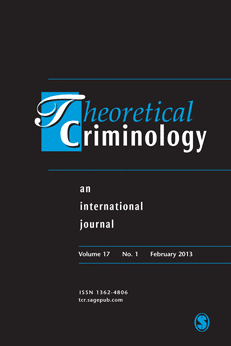
Charting the Future of Theoretical ResearchTHEORETICAL CRIMINOLOGY is a premier academic journal published by SAGE PUBLICATIONS LTD that serves as a vital platform for the dissemination of cutting-edge research in the realms of law, sociology, and forensic medicine. Established in 1997 and converging into a comprehensive resource through 2024, this journal has achieved a remarkable reputation with a 2023 Q1 ranking in Law as well as in Sociology and Political Science, underscoring its influential contributions to these disciplines. Situated in the United Kingdom, it is recognized for its rigorous peer-reviewed content and holds prestigious positions in Scopus rankings, including Rank #34 in Social Sciences - Law and Rank #38 in Medicine - Pathology and Forensic Medicine, reflecting its commitment to academic excellence. Although it does not currently offer open access options, the journal ensures that its articles are accessible through institutional subscriptions, making it an indispensable resource for researchers, professionals, and students aiming to deepen their understanding of theoretical frameworks and contemporary issues in criminology.
Feminist Theology
Engaging in the Dialogue of Gender and ReligionFeminist Theology, an esteemed journal published by SAGE Publications Ltd, stands at the forefront of the interplay between gender studies and religious discourse since its inception in 1992. With a commitment to exploring the dimensions of faith through a feminist lens, this journal addresses the critical intersections of gender, religion, and spirituality. Based in the United Kingdom, it boasts an impactful presence, reflected in its Scopus ranks where it holds a respectable position in both Gender Studies and Religious Studies categories. This journal, categorized in the Q3 tier for Gender Studies and Q2 for Religious Studies as of 2023, invites researchers, professionals, and students alike to engage with its rich content that not only challenges traditional narratives but also contributes to contemporary academic discourse. Although not an open-access journal, it ensures that its publications remain accessible for scholarly advancement, fostering a community of inquiry that is essential for the development of feminist theological perspectives.

Travail Genre et Societes
Transforming perspectives on gender and organizational behavior.Travail Genre et Sociétés is a prominent journal dedicated to advancing the interdisciplinary discourse on gender studies, sociology, and organizational behavior within the realms of business and international management. Published by EDITIONS LA DECOUVERTE in France, this journal provides a scholarly platform where researchers and practitioners can explore the intricate relationships between work, gender, and society. With a convergence period spanning from 2001 to 2024, Travail Genre et Sociétés holds a Q3 ranking in Gender Studies and reflects significant contributions to the field despite its current Q4 positioning in several categories, including Economics and Organizational Behavior. The journal's focus is crucial for understanding contemporary societal dynamics, making it an invaluable resource for those studying the intersections of gender and labor. Though it does not offer open access, its findings reach a wide audience, contributing to global conversations around gender equity and social justice in professional environments.