
FILOZOFSKI VESTNIK
Scope & Guideline
Exploring the Depths of Philosophy and Religion
Introduction
Aims and Scopes
- Biopolitics and Necropolitics:
The journal frequently examines the concepts of biopolitics and necropolitics, exploring how power relations govern life and death, and the implications of these dynamics on marginalized communities. - Interdisciplinary Approaches:
FILOZOFSKI VESTNIK encourages contributions that draw from various disciplines, including philosophy, psychoanalysis, political theory, and cultural studies, fostering a rich dialogue among different fields. - Critical Examination of Contemporary Issues:
The journal focuses on current socio-political issues such as race, colonialism, technology, and environmental crises, providing critical insights that challenge conventional narratives. - Philosophical Genealogy:
A consistent theme is the exploration of philosophical genealogies, tracing the development of ideas through historical contexts and their relevance to contemporary debates. - Cultural and Artistic Critique:
The journal often engages with cultural phenomena, including literature, film, and art, analyzing how these mediums reflect and critique societal structures.
Trending and Emerging
- Digital Humanities and Technology:
There is an increasing emphasis on the intersection of philosophy with digital technology, particularly how digital environments shape our understanding of the body, identity, and social relations. - Racialization and Colonial Critique:
Recent papers highlight a growing concern with racialization processes and colonial histories, reflecting a critical engagement with issues of race, identity, and power in contemporary contexts. - Environmental Philosophy:
The journal is showing a trend towards environmental philosophy, addressing topics such as climate change, ecological crisis, and the philosophical implications of these urgent issues. - Psychoanalysis and Cultural Critique:
Emerging themes include the application of psychoanalytic theory to cultural and political critiques, exploring how unconscious motivations shape societal dynamics. - Intersectionality and Marginalized Voices:
There is a notable trend towards intersectionality, with a focus on marginalized voices and experiences, emphasizing how different forms of oppression intersect in contemporary society.
Declining or Waning
- Traditional Philosophical Canon:
There appears to be a waning interest in traditional philosophical texts and figures, such as Descartes and Kant, as contemporary issues take precedence over classical philosophical debates. - Purely Theoretical Discourse:
The journal has gradually moved away from purely theoretical discussions that do not engage with practical implications or contemporary relevance, favoring more applied philosophical inquiries. - Historical Philosophy:
The examination of historical philosophical movements and their implications has diminished, as the focus shifts towards pressing modern issues and their philosophical underpinnings.
Similar Journals
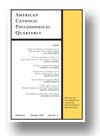
AMERICAN CATHOLIC PHILOSOPHICAL QUARTERLY
Fostering Interdisciplinary Connections in Faith and PhilosophyAmerican Catholic Philosophical Quarterly, published by the American Catholic Philosophical Association, is a prestigious journal that has been disseminating scholarly work in the fields of philosophy and religious studies since 1996. With its headquarters in Bronx, NY, this quarterly explores diverse philosophical inquiries framed through a Catholic lens, making it a vital resource for researchers, professionals, and students seeking to deepen their understanding of philosophical discourse intertwined with religious thought. Although the journal does not currently offer open access options, its rigorous peer-reviewed content ensures a high academic standard, reflected in its Scopus rankings—#257 in Religious Studies and #393 in Philosophy, placing it in the 60th and 51st percentiles respectively in the 2023 categorization. Aimed at advancing philosophical dialogue and fostering interdisciplinary connections, the *American Catholic Philosophical Quarterly* stands as a significant platform for those committed to exploring the complexities of faith, reason, and morality in contemporary society.
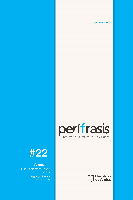
Perifrasis-Revista de Literatura Teoria y Critica
Bridging theory and practice in the world of literature.Perifrasis-Revista de Literatura Teoria y Critica is a distinguished open-access journal published by UNIV ANDES in Colombia, dedicated to advancing the fields of literature, literary theory, and criticism. With an ISSN of 2145-8987 and an E-ISSN of 2145-9045, this journal has been a significant platform for scholarly discourse since its inception in 2010, embracing an open-access model that enhances accessibility and dissemination of research findings. Strategically positioned in the Q2 category for Literature and Literary Theory, Perifrasis boasts a commendable Scopus ranking, reflecting its commitment to high-quality scholarship. The journal encompasses a wide range of topics within the humanities, including cultural studies and gender studies, and aims to foster critical engagement and innovative thinking among researchers, students, and professionals alike. As the journal continues to evolve through its converged years from 2019 to 2024, it remains a vital resource for those exploring the dynamic intersections of literature, society, and identity.
Film-Philosophy
Illuminating Philosophical Insights Through FilmFilm-Philosophy is an esteemed academic journal published by Edinburgh University Press, specializing in the intersection of film studies and philosophical discourse. Since its launch in 1998, this Open Access journal has provided a platform for scholarly debates and innovative research, allowing for free and unrestricted access to its content, which has significantly contributed to the global dialogue on visual culture. With a commendable impact illustrated by its Q1 ranking in Visual Arts and Performing Arts and Q2 in Philosophy, the journal sits within the top quartile of its field. Operating from the United Kingdom, Film-Philosophy is committed to fostering a multidisciplinary approach, inviting contributions from researchers, professionals, and students alike. By engaging with critical theories and the aesthetics of cinema, the journal stands as a vital resource for understanding the philosophical implications of film and its cultural significance.

Vestnik Sankt-Peterburgskogo Universiteta-Filosofiya i Konfliktologiya
Navigating the Complexities of Philosophy and ConflictVestnik Sankt-Peterburgskogo Universiteta-Filosofiya i Konfliktologiya is a prestigious academic journal published by ST PETERSBURG UNIV PRESS, focusing on the interdisciplinary exploration of philosophy, conflict studies, cultural studies, and religious studies. With its ISSN 2542-2278 and E-ISSN 2541-9382, this journal serves as a vital platform for researchers and scholars looking to disseminate their findings in these dynamic fields. The journal has shown impressive rankings in 2023, achieving Q1 status in Cultural Studies and Religious Studies, alongside Q2 in Philosophy and Q3 in Sociology and Political Science. This positioning, alongside its diverse publication scope since its convergence in 2017, underscores the journal's critical role in advancing scholarly dialogue and research. Though it operates under a closed access policy, the journal remains integral for professionals and students seeking rigorous academic discourse and insights into contemporary issues affecting philosophy and conflictology within a cultural context. Its influence and reach in the academic community contribute significantly to ongoing debates and studies, establishing it as an essential resource for anyone engaged in these disciplines.
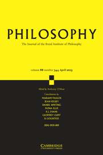
PHILOSOPHY
Illuminating the Path of Philosophical InquiryPHILOSOPHY, published by Cambridge University Press, stands as a premier journal in the field of philosophy, boasting a significant impact with a prestigious Q1 classification and an admirable ranking of #167 out of 806 in the Arts and Humanities category as of 2023. With a history that dates back to 1926 and continuing through 2024, this journal has established itself as an essential platform for disseminating groundbreaking research and innovative ideas in philosophical discourse. Although it does not offer open access, the journal's reach is substantial, contributing to scholarly conversations across various domains within the discipline. Researchers, professionals, and students alike benefit from a wealth of articles that explore critical philosophical questions, encourage rigorous debate, and present diverse perspectives. Access to PHILOSOPHY ensures engagement with leading-edge scholarship that shapes contemporary thought and advances understanding in this dynamic field.
Cultura-International Journal of Philosophy of Culture and Axiology
Cultivating Insights in Culture and Axiology.Cultura - International Journal of Philosophy of Culture and Axiology is a pivotal academic platform dedicated to the interdisciplinary exploration of cultural philosophy and value theory. Published by PETER LANG GMBH, EUROPAISCHER VERLAG WISSENSCHAFTEN, the journal has been contributing to the discourse since 2009, with its impact recognized in the latest Scopus rankings where it stands at Q3 in both Cultural Studies and Philosophy. The journal offers vital insights for researchers and scholars, delving into the nuances of cultural phenomena and philosophical inquiries that shape human understanding and societal values. While it operates under a traditional access model, its critical content readily influences contemporary debates in the humanities and social sciences, making it an essential resource for academics, professionals, and students alike. With a commitment to fostering a rich dialogue on culture and axiology, Cultura continues to be at the forefront of cultivating philosophical thought and cultural analysis in a rapidly evolving global landscape.

Cuadernos de Filosofia Latinoamericana
Navigating Contemporary Issues Through a Philosophical LensCuadernos de Filosofia Latinoamericana is an esteemed academic journal dedicated to the exploration of philosophical discourse and critical thought in the context of Latin American studies. Published by UNIV SANTO TOMAS, this journal serves as a vital platform for scholars and researchers looking to delve into diverse philosophical traditions and contemporary issues affecting the region. With an ISSN of 0120-8462 and an E-ISSN of 2500-5375, it remains committed to the dissemination of rigorously researched articles that challenge established paradigms and promote innovative thinking. Although currently not listed as an Open Access publication, its significant potential for enhancing academic dialogues in philosophy makes it an essential resource for professionals, students, and academics eager to engage with Latin American philosophical perspectives. The journal's commitment to quality and relevance in its thematic scope underscores its importance in enriching the philosophical landscape of Latin America and beyond.

INQUIRY-AN INTERDISCIPLINARY JOURNAL OF PHILOSOPHY
Empowering Scholars Through Open Access Philosophical InquiryINQUIRY - AN INTERDISCIPLINARY JOURNAL OF PHILOSOPHY, published by Routledge Journals, Taylor & Francis Ltd, stands as a pivotal platform for the exploration of philosophical discourse, particularly at the intersection of philosophy and health policy. With its ISSN 0020-174X and E-ISSN 1502-3923, this journal has been committed to open access since 2014, thereby fostering an inclusive environment for both dissemination and engagement in critical philosophical inquiry. Spanning its rich history from 1958 to 2024, INQUIRY is consistently recognized for its significant contributions, boasting a 2023 ranking of Q1 in Philosophy and Q2 in Health Policy, indicative of its scholarly impact and prestige. Currently, it ranks #69/806 in Arts and Humanities for Philosophy and #170/310 in Medicine for Health Policy, solidifying its role as a vital resource for researchers, professionals, and students committed to advancing knowledge across disciplines. The journal's address in Milton Park, Abingdon, UK, further embeds it within a robust academic community that champions interdisciplinary collaboration and innovation.
GERMANIC REVIEW
Charting the Course of Germanic Studies Through TimeGERMANIC REVIEW, published by Routledge Journals, Taylor & Francis Ltd, stands as a prominent academic journal dedicated to the study of Germanic languages, literature, and cultural studies. With an ISSN of 0016-8890 and an E-ISSN of 1930-6962, this journal has been a valuable resource for researchers and scholars since its inception, encompassing a wide range of topics within its field. Despite its Q4 ranking in Cultural Studies and Q3 ranking in Literature and Literary Theory, the journal has grown steadily in reputation, with Scopus ranks placing it within the competitive landscape of Arts and Humanities. The journal publishes contributions that delve into historical and contemporary issues, fostering a deeper understanding of Germanic cultures. By bridging literary analysis with cultural discourse, GERMANIC REVIEW invites academics, professionals, and students alike to engage with critical themes and methodologies that redefine the boundaries of Germanic studies. As a subscription-based journal, it remains dedicated to promoting scholarly communication and advancing knowledge in the humanities.

SINN UND FORM
Exploring the Nexus of Thought and CultureSINN UND FORM is a distinguished academic journal, exploring the intricate intersections of Cultural Studies, Literature, Literary Theory, Philosophy, and Religious Studies. Published in Germany by SINN UND FORM, this journal provides a crucial platform for scholars and practitioners to disseminate and debate innovative ideas and research findings. Even though it currently holds a Q4 quartile ranking across several categories, the journal continues to uphold a commitment to fostering critical dialogue within its fields. Located at C/O AUFBLAU-VERLAG GMBH in Berlin, SINN UND FORM has been a key resource for academic inquiry since its inception. The scope of the journal reflects a rich heritage of intellectual exploration, and while it does not offer open access options, it remains an important repository of thoughtful engagement with contemporary cultural and philosophical issues. With the ever-evolving landscape of humanities scholarship, this journal is poised to attract the attention of researchers, students, and professionals seeking to enrich their understanding and provoke meaningful discussions.