
First Peoples Child & Family Review
Scope & Guideline
Championing Insights for Indigenous Families.
Introduction
Aims and Scopes
- Indigenous Child Welfare:
The journal emphasizes research and discussions surrounding child welfare systems specific to Indigenous communities, advocating for reforms that respect Indigenous rights and cultural practices. - Cultural Competence and Connectedness:
Promoting cultural connectedness and the incorporation of Indigenous knowledge in child and family services is a core area, highlighting the importance of culturally relevant practices. - Community-led Research and Advocacy:
The journal supports community-driven research methodologies and encourages advocacy for systemic changes in child welfare, emphasizing the importance of Indigenous perspectives. - Interdisciplinary Approaches:
It encourages interdisciplinary research that integrates insights from various fields such as sociology, education, and health to address the complexities of Indigenous child and family issues. - Focus on Inclusivity and Accessibility:
The journal addresses issues of accessibility in services for Indigenous children, particularly those with disabilities, ensuring that all voices are heard and included.
Trending and Emerging
- Indigenizing Education and Services:
There is a marked increase in research focused on integrating Indigenous knowledge and practices into educational and child welfare services, promoting a holistic approach to community well-being. - Advocacy for Systemic Change:
Recent publications show a strong trend towards advocating for systemic changes in colonial child protection systems, reflecting a shift towards empowerment and self-determination for Indigenous communities. - Intersectionality in Indigenous Wellness:
Emerging themes include a focus on intersectionality, particularly concerning identity and wellness among Indigenous women, Two-Spirit, and gender-diverse individuals, acknowledging the diverse experiences within Indigenous populations. - Use of Indigenous Research Methodologies:
There is a growing trend towards employing Indigenous research methodologies that prioritize respect, relationality, and community involvement, ensuring that research is conducted in a culturally sensitive manner. - Mental Health and Healing Practices:
An increase in discussions around mental health and healing practices, including the role of ceremony and cultural healing, highlights a holistic understanding of wellness in Indigenous communities.
Declining or Waning
- Traditional Child Welfare Practices:
There is a noticeable decrease in discussions around traditional child welfare practices as the journal increasingly emphasizes contemporary Indigenous-led approaches and reforms. - Generalized Child Welfare Issues:
Topics that do not specifically address Indigenous contexts or perspectives are becoming less frequent, indicating a narrowing focus on issues that are directly relevant to First Peoples. - Historical Narratives of Colonization:
While historically significant, papers solely focused on the historical context of colonization without linking to current implications for child welfare are less common, as the journal shifts towards actionable solutions and present-day advocacy.
Similar Journals

NEW ZEALAND JOURNAL OF PSYCHOLOGY
Advancing psychological understanding through local insights.NEW ZEALAND JOURNAL OF PSYCHOLOGY is a prominent scholarly publication dedicated to advancing the field of psychology through rigorous research and insightful analysis. Published by the New Zealand Psychological Society, this journal serves as a platform for both local and international scholars to share their findings and perspectives. While it holds a Category Quartiles ranking of Q4 in Psychology (miscellaneous) and is placed at the 18th percentile in the broader Scopus Ranks for General Psychology, it remains a crucial resource for understanding psychological phenomena within the unique socio-cultural context of New Zealand. The journal's commitment to fostering an inclusive academic dialogue is underscored by its availability since 1996, allowing for a rich historical perspective on psychological research. Although not categorized as open access, the journal maintains a strategic relevance for researchers, practitioners, and students alike, offering valuable insights into the landscape of psychology and the intricacies of human behavior. The journal address is PO Box 4092, Wellington, New Zealand.

JOURNAL OF THE POLYNESIAN SOCIETY
Illuminating the Heritage of the IslandsJOURNAL OF THE POLYNESIAN SOCIETY, published by Polynesian Soc Inc, is a distinguished periodical that aims to disseminate high-quality research in the fields of anthropology, archaeology, and cultural studies. With an ISSN of 0032-4000 and E-ISSN 2230-5955, this journal serves as a key resource for scholars and practitioners interested in the rich historical and cultural narratives of the Polynesian region. Since its inception, the journal has published a multitude of scholarly articles, reflecting a convergence of research from 1971 to 2022, thus establishing itself as a foundational text within its domain. The journal is indexed in notable categories with a Q4 ranking in anthropology and a Q3 in both archaeology and cultural studies as of 2023, highlighting its relevant contributions to the academic community. Moreover, its impressive Scopus ranks position it within the 80th percentile for archaeology and the 67th percentile for anthropology, showcasing its dedication to scholarly excellence. Although not an open-access publication, the journal remains a vital avenue for academic discourse and exchange, making it a significant resource for researchers, professionals, and students dedicated to understanding the diverse cultures of the Pacific Islands.

Virajes-Revista de Antropologia y Sociologia
Fostering Critical Dialogues on Contemporary IssuesVirajes-Revista de Antropologia y Sociologia, published by UNIV CALDAS, is a premier open-access journal that has been at the forefront of anthropological and sociological research since its inception in 2008. With the ISSN 0123-4471 and the E-ISSN 2462-9782, this journal offers a unique platform for scholars and practitioners to disseminate high-quality research that contributes to the understanding of social dynamics and cultural phenomena, particularly in the Latin American context. The journal seeks to foster an interdisciplinary approach, bridging theoretical and empirical research, and encouraging critical dialogues on contemporary issues in anthropology and sociology. By providing open access, Virajes ensures that its valuable content is available to a global audience, thus enhancing knowledge dissemination and engagement within the academic community. With its commitment to excellence and accessibility, Virajes stands as an essential resource for researchers, professionals, and students committed to exploring the complexities of human societies.

International Journal of Indigenous Health
Connecting Research with Indigenous Wisdom for Health SolutionsInternational Journal of Indigenous Health is a leading academic platform dedicated to advancing the understanding and promotion of health issues pertinent to Indigenous populations. Published by the University of Victoria Centre for Aboriginal Health Research, this journal serves as a critical resource for researchers, policymakers, and practitioners interested in Indigenous health perspectives, cultural practices, and healthcare strategies. The journal's open access model facilitates widespread dissemination of knowledge, ensuring that vital research reaches those who need it most. With its commitment to exploring the intersection of health and Indigenous knowledge systems, the International Journal of Indigenous Health plays a significant role in fostering dialogue, driving healthcare innovations, and improving health outcomes for Indigenous communities globally. For researchers and professionals dedicated to this important field, engaging with this journal will not only enhance their understanding but also contribute meaningfully towards the evolution of Indigenous health research.

Anthropology Today
Innovating Perspectives on Human BehaviorAnthropology Today, published by WILEY, is a leading peer-reviewed journal in the field of anthropology, boasting a distinguished Q1 category ranking in the 2023 evaluations and a notable position within the top 79th percentile of its discipline according to Scopus. Established in the United States, this journal offers a rich compendium of contemporary anthropological research, covering diverse topics that shape the understanding of human cultures and societies. It is recognized for its rigorous academic standards and commitment to publishing innovative studies that reflect current trends and discussions within the field. While the journal is not open access, it provides insightful articles and reviews that are indispensable for researchers, professionals, and students seeking to enhance their knowledge and stay updated with the latest anthropological findings and theoretical advancements.
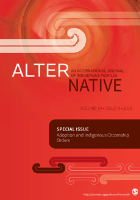
Alternative-An International Journal of Indigenous Peoples
Elevating Indigenous Voices in Academic DiscourseAlternative: An International Journal of Indigenous Peoples is a leading academic journal published by SAGE Publications Ltd that focuses on the complexities, narratives, and contemporary issues surrounding Indigenous communities globally. With an impressive Q1 ranking in Anthropology, Cultural Studies, and History, this journal stands at the forefront of interdisciplinary research, making significant contributions to understanding Indigenous peoples’ rights, cultural heritage, and social justice. Spanning years from 2014 to 2024, it serves as a vital platform for researchers, professionals, and students engaged in discussions and studies related to Indigenous knowledge systems and cultural dynamics. The journal operates under rigorous peer-review standards, ensuring high-quality scholarly articles that resonate within the academic community. Although it currently does not offer open access, the valuable insights and research findings presented within its pages are indispensable for anyone dedicated to advancing the field of Indigenous studies.
International Journal on Minority and Group Rights
Navigating the complexities of group dynamics and political landscapes.International Journal on Minority and Group Rights is a distinguished academic journal published by BRILL, focusing on the vital areas of minority rights and group dynamics within the realms of Political Science, International Relations, and Geography. Established in 1993, the journal has continually evolved, offering essential insights and scholarly discussions pertaining to the rights of marginalized communities globally. With a significant impact in its field, it currently holds a Q3 rating in both Geography, Planning and Development and Political Science and International Relations as of 2023, reflecting its commitment to contributing to critical academic dialogues. While it operates under a subscription model, the journal makes a concerted effort to engage academic audiences by publishing high-quality research that addresses contemporary issues related to minority rights and inclusivity. Researchers, students, and professionals are encouraged to explore its enlightening articles that not only assess existing frameworks but also propose innovative approaches for safeguarding minority rights.
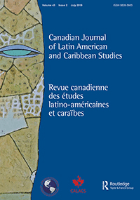
Canadian Journal American and Caribbean Studies
Bridging Knowledge: Insights from the Americas and Caribbean.Welcome to the Canadian Journal of American and Caribbean Studies, a pivotal platform for researchers, professionals, and students interested in the intricate relationships and dynamics of the American and Caribbean regions. Published by Routledge Journals, Taylor & Francis Ltd., this journal presents a rich tapestry of scholarly articles that explore various dimensions of political, geographical, and developmental studies. With a history spanning from 1984 to 2011 and resuming in 2014 through 2024, it continues to contribute to the field's scholarly discourse. The journal currently ranks in the Q4 quartile for Development and Geography, Planning and Development, and Q3 for Political Science and International Relations, underscoring its emerging relevance within these domains. While it is not open access, the journal provides a vital resource for advancing research and fostering academic dialogue among its audience. Explore cutting-edge insights and critical analyses that reflect the evolving landscapes of American and Caribbean studies.
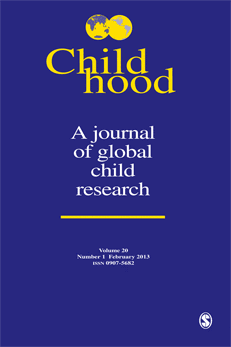
CHILDHOOD-A GLOBAL JOURNAL OF CHILD RESEARCH
Shaping the Future of Child ResearchCHILDHOOD: A Global Journal of Child Research is a leading peer-reviewed publication dedicated to advancing the field of child research, published by SAGE Publications Ltd in the United Kingdom. With an ISSN of 0907-5682 and an E-ISSN of 1461-7013, the journal has earned a prestigious reputation, securing a Q1 ranking in both Anthropology and Cultural Studies, along with commendable rankings in other social science categories. Spanning a convergence of impactful years from 1993 to 2024, CHILDHOOD aims to provide a multidisciplinary platform for researchers, educators, and practitioners to explore diverse perspectives on childhood and the experiences of children across the globe. Although it is not an open-access journal, it remains accessible to a wide audience through various institutional subscriptions and databases. As an influential resource in the social sciences, particularly within developmental and educational psychology, CHILDHOOD continues to shape discourse and inspire scholarship that critically engages with children's lives, cultures, and rights.

AUSTRALIAN JOURNAL OF SOCIAL ISSUES
Navigating Complex Social DynamicsAustralian Journal of Social Issues, published by Wiley, is a prestigious academic journal that has been at the forefront of social science research since its inception in 1975. With a focus on sociology and political science, this journal ranks impressively in the 2023 Scopus rankings, positioned at #297 out of 1466 journals, reflecting its significant impact within the field (79th percentile). The journal lacks an open access model, affirming its traditional scholarly avenues while still attracting a wide readership interested in social issues pertinent to Australia and beyond. Covering a diverse range of topics regarding socio-political dynamics, institutional analysis, and community studies, it provides invaluable insights for researchers, professionals, and students keen to explore contemporary social challenges. With a history that converges into the current year, the Australian Journal of Social Issues continues to contribute meaningfully to the scholarly discourse, enhancing our understanding of social constructs and their implications across the globe.