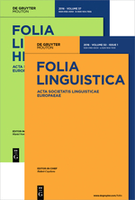
FOLIA LINGUISTICA
metrics 2024
Advancing Linguistic Knowledge Since 1967
Introduction
FOLIA LINGUISTICA, published by WALTER DE GRUYTER GMBH, is a premier scholarly journal dedicated to the field of linguistics. Established in 1967, the journal has consistently provided a platform for innovative research and scholarly discourse in language and linguistics, contributing significantly to the academic community's understanding of language structures, usage, and cognitive processes. With its classification in the top quartile (Q1) of linguistics and language in 2023, FOLIA LINGUISTICA holds a respectable rank (#282/1088) within the Arts and Humanities category and an admirable percentile rank of 74th, ensuring its position at the forefront of linguistic scholarship. Researchers and academics from around the globe can access a wealth of knowledge and cutting-edge research findings through this esteemed publication, which is vital for anyone looking to engage with the latest advancements in linguistics. Located in Berlin, Germany, FOLIA LINGUISTICA encompasses all aspects of language research, making it an indispensable resource for researchers, professionals, and students alike seeking to deepen their understanding of language and its complexities.
Metrics 2024
 0.450.600.7029
Metrics History
Rank 2024
Scopus
IF (Web Of Science)
JCI (Web Of Science)
Quartile History
Similar Journals

Glossa-A Journal of General Linguistics
Connecting Scholars in the World of LinguisticsGlossa: A Journal of General Linguistics, published by the Open Library of Humanities, stands as a leading voice in the realm of linguistic research since its inception in 2016. With its Q1 category ranking in Linguistics and Language and impressive Scopus ranks encompassing the top 83rd and 81st percentiles in its respective fields, Glossa fosters a vibrant academic community committed to the rigorous exploration of language and linguistic theory. Operating under an open access model, the journal not only enhances the visibility of groundbreaking research but also ensures that valuable insights are accessible to a global audience. The journal's commitment to interdisciplinary dialogue makes it an indispensable resource for scholars, professionals, and students eager to engage with contemporary developments in linguistics. As it converges into 2024, Glossa continues to champion innovative scholarship and critical discourse that challenges conventional boundaries within the field.
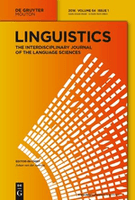
LINGUISTICS
Advancing the Frontiers of Linguistic ResearchLINGUISTICS, published by De Gruyter Mouton, stands as a leading journal in the field of linguistics, exemplifying innovation and scholarly rigor. With its roots tracing back to 1963 and a commitment to advancing linguistic research, this journal has consistently achieved Q1 status in both the Linguistics and Language category, marking it among the top-tier journals in the discipline. The journal is indexed with impressive rankings in Scopus, evidenced by its position within the 84th percentile in Language and Linguistics, and 83rd percentile in Social Sciences, demonstrating its significant influence and reach among scholars. Transitioning to Open Access since 2022, LINGUISTICS enhances accessibility and fosters a wider dissemination of knowledge. Published in Germany and backed by a reputable publisher, LINGUISTICS is dedicated to exploring diverse topics in linguistics, making it essential reading for researchers, professionals, and students aiming to stay at the forefront of linguistic scholarship.
Eesti ja Soome-Ugri Keeleteaduse Ajakiri-Journal of Estonian and Finno-Ugric Linguistics
Bridging Academic Excellence in Language StudiesEesti ja Soome-Ugri Keeleteaduse Ajakiri - Journal of Estonian and Finno-Ugric Linguistics is a premier academic journal published by UNIV TARTU PRESS, dedicated to advancing the field of linguistics with a particular focus on the Estonian and Finno-Ugric languages. Since its inception, the journal has embraced an Open Access publishing model, allowing researchers and enthusiasts to freely explore its groundbreaking studies and findings since 2013. With an Impact Factor that places it in the Q3 quartile of leading journals within the linguistic domain, it serves as a vital platform for the dissemination of new research and theoretical advancements. Ranked 410th out of 1088 journals in the Arts and Humanities category for Language and Linguistics, it reflects a robust commitment to quality scholarship that appeals to academics, professionals, and students alike. Operating from Tartu, Estonia, the journal aims to foster greater understanding and appreciation of the Estonian language within the broader context of Finno-Ugric studies, making it an essential resource for anyone interested in these unique linguistic cultures.

Lingue e Linguaggio
Advancing Linguistic Knowledge Through Rigorous ResearchLingue e Linguaggio, published by SOC ED IL MULINO, is a distinguished academic journal in the field of Linguistics and Language, hailing from Bologna, Italy. With an esteemed Q2 ranking in its category as of 2023, this journal is recognized for its contributions to both the arts and humanities as well as social sciences, achieving notable positions within Scopus rankings. It serves as a vital platform for researchers, practitioners, and students interested in exploring various linguistic phenomena, language dynamics, and theoretical frameworks. Although it operates under a traditional subscription model rather than open access, its comprehensive array of studies and publications provides significant insights and fosters academic discourse. With a publication period extending from 2002 to 2024, Lingue e Linguaggio continues to be a key resource for advancing the understanding of language in contemporary contexts.
RUSSIAN LINGUISTICS
Illuminating the intersections of language and psychology.RUSSIAN LINGUISTICS is a peer-reviewed academic journal published by Springer, dedicated to advancing the understanding of the Russian language and its interplay with various linguistic frameworks. With a longstanding history that spans from its inception in 1974, the journal encompasses a broad range of topics within the fields of linguistics and language studies, offering valuable insights especially in *Developmental and Educational Psychology* and the intricacies of linguistics at large. Currently ranked in the Q2 quartile for Linguistics and Language, and holding substantial positions within Scopus rankings, RUSSIAN LINGUISTICS serves as an essential resource for researchers, educators, and students alike, fostering dialogue and collaboration within the international linguistic community. The journal notably provides critical access to research findings that enhance the comprehension of Russian linguistics' role in a global context, despite operating under a traditional access model. For those pursuing scholarly excellence, RUSSIAN LINGUISTICS remains a pivotal platform for disseminating innovative research and promoting the study of language.

DEUTSCHE SPRACHE
Navigating the Intricacies of German LinguisticsDEUTSCHE SPRACHE, published by Erich Schmidt Verlag, is a pivotal journal dedicated to the intricate study of the German language. With its ISSN 0340-9341 and E-ISSN 1866-5233, this publication serves as a vital resource for linguists, educators, and language enthusiasts alike. Spanning diverse topics within the fields of linguistics and language, psychology, and social sciences, the journal has earned a Q3 ranking in Linguistics and Language, alongside a Q4 ranking in both Psychology (miscellaneous) and Social Sciences (miscellaneous) as of 2023. Although the journal is not Open Access, it provides invaluable insights on the developments in German language research from its convergence years of 2002 to 2011 and 2017 to 2023. Positioned in Berlin-Tiergarten, Germany, DEUTSCHE SPRACHE continues to expand its influence and accessibility to researchers, professionals, and students keen on understanding the nuances of linguistic expression in the German language.

Studi e Saggi Linguistici
Empowering Linguistic Scholarship for a Global AudienceStudi e Saggi Linguistici is a distinguished academic journal published by EDIZIONI ETS, based in Pisa, Italy. With its ISSN 0085-6827, this journal has established itself as a vital resource in the field of linguistics, particularly noted for its contributions since its inception in 2016. Although currently categorized in the lower quartile (Q4) by the 2023 metrics in the domains of Linguistics and Language within Scopus, it remains a significant platform for innovative research and critical discussions surrounding language studies. Focusing on both theoretical and practical aspects of linguistics, the journal serves as a nexus for scholars and practitioners alike, facilitating a rich interchange of ideas and knowledge in a rapidly evolving discipline. As an invaluable publication for researchers, professionals, and students, Studi e Saggi Linguistici is committed to advancing the understanding of linguistic phenomena and fostering scholarly communication in its field.

Voprosy Yazykoznaniya
Connecting Researchers Through Linguistic ExcellenceVoprosy Yazykoznaniya, published by the esteemed Russian Academy of Sciences and the State Academy of Humanities (GAUGN), stands as a leading journal in the field of linguistics and language studies. With an impressive Q2 rank in Linguistics and Language for 2023 and a strong position within Scopus rankings, this journal fosters scholarly dialogue and pushes the boundaries of linguistic research by providing a platform for innovative studies, reviews, and analyses. Although not open access, its publication ensures high academic standards and visibility within the global academic community. Researchers, professionals, and students alike can benefit from the rich insights and diverse perspectives presented in this journal, serving as a vital resource for anyone interested in the intricacies of language and its role in society. Operating since 2009 and continuing to 2024, Voprosy Yazykoznaniya is an essential reference point for contemporary linguistic scholarship in the Russian Federation and beyond.

Cognitive Studies-Etudes Cognitives
Pioneering Open Access in Cognitive StudiesCognitive Studies-Etudes Cognitives, published by the Polish Academy of Sciences, Institute of Slavic Studies, is a prominent open-access journal based in Poland, dedicated to advancing research in the interdisciplinary fields of cognitive studies, communication, and linguistics. Since its inception, the journal has made a significant impact in the academic community, evidenced by its ranking in the Scopus database within the top 30% for Language and Linguistics. With an aim to bridge theoretical insights and practical applications, Cognitive Studies invites contributions that explore the complex interplay between language, cognition, and technology, making it a vital resource for researchers, professionals, and students alike. As the journal continues to grow, it remains committed to maintaining rigorous standards for publication while fostering an inclusive environment for innovative ideas and diverse perspectives. The journal is easily accessible and aims to facilitate knowledge dissemination, proudly offering open access since 2014.
Review of Cognitive Linguistics
Enhancing Understanding of Language Through Cognitive LensesThe Review of Cognitive Linguistics, published by John Benjamins Publishing Co, is a premier academic journal dedicated to the exploration of cognitive approaches to linguistics. With an ISSN of 1877-9751 and E-ISSN 1877-976X, this journal provides a critical platform for researchers and professionals to disseminate their findings in the rapidly evolving fields of linguistics and language, alongside developmental and educational psychology. Hailing from the Netherlands, the journal boasts impressive standing within the academic community, as indicated by its 2023 Q1 ranking in Linguistics and Language and Q3 in Developmental and Educational Psychology. Additionally, its Scopus rankings reflect a strong position within the arts and humanities and social sciences categories. While currently operating under a traditional access model, this journal actively contributes to the overarching discourse within cognitive linguistics, and is a vital resource for those aiming to deepen their understanding of the intricate link between language and cognition. Researchers, educators, and students are encouraged to engage with the rich body of articles spanning its convergence years from 2010 to 2024, making it an essential read for those at the forefront of these interdisciplinary studies.