LINGUISTICS
metrics 2024
Elevating the Study of Linguistics for Future Generations
Introduction
LINGUISTICS, published by De Gruyter Mouton, stands as a leading journal in the field of linguistics, exemplifying innovation and scholarly rigor. With its roots tracing back to 1963 and a commitment to advancing linguistic research, this journal has consistently achieved Q1 status in both the Linguistics and Language category, marking it among the top-tier journals in the discipline. The journal is indexed with impressive rankings in Scopus, evidenced by its position within the 84th percentile in Language and Linguistics, and 83rd percentile in Social Sciences, demonstrating its significant influence and reach among scholars. Transitioning to Open Access since 2022, LINGUISTICS enhances accessibility and fosters a wider dissemination of knowledge. Published in Germany and backed by a reputable publisher, LINGUISTICS is dedicated to exploring diverse topics in linguistics, making it essential reading for researchers, professionals, and students aiming to stay at the forefront of linguistic scholarship.
Metrics 2024
 0.561.301.0056
Metrics History
Rank 2024
Scopus
IF (Web Of Science)
JCI (Web Of Science)
Quartile History
Similar Journals
International Journal of Chinese Linguistics
Advancing Knowledge in Chinese Language StudiesInternational Journal of Chinese Linguistics is a distinguished publication that delves into various aspects of linguistic studies pertaining to the Chinese language. Published by John Benjamins Publishing Co, this journal stands out for its commitment to advancing the knowledge and understanding of Chinese linguistics within the global academic community. With an impact factor that places it in the Q2 quartile of linguistics and language, the journal is indexed in prominent databases, achieving ranks of #501 in Arts and Humanities and #580 in Social Sciences. These rankings reflect the journal's dedication to maintaining high scholarly standards and its relevance in both linguistic research and practical applications. While not categorized as Open Access, the journal provides necessary access through institutional subscriptions, thereby ensuring that valuable research reaches a broad audience. Covering a wide range of topics from syntax and phonetics to sociolinguistics and applied linguistics, the International Journal of Chinese Linguistics serves as an essential resource for researchers, professionals, and students seeking to deepen their understanding of the intricate relationship between language and culture in the Chinese context. With converging years from 2019 to 2024, it continues to evolve, reflecting ongoing developments in the field.

SKASE Journal of Theoretical Linguistics
Empowering Linguistic Inquiry and DiscoverySKASE Journal of Theoretical Linguistics, published by the SLOVAK ASSOCIATION STUDY ENGLISH-SKASE, is a distinguished Open Access journal that expands the horizons of linguistic research and theoretical frameworks. With its ISSN N/A and E-ISSN 1336-782X, the journal has established itself as a pivotal resource for scholars in the field, achieving a commendable Q2 ranking in Linguistics and Language as of 2023. The journal, which has been in continuous publication since 2017, actively publishes innovative research studies, reviews, and theoretical discussions, easing access to groundbreaking work for academics and practitioners alike. Based in Slovakia, it connects a rich heritage of linguistic scholarship and is indexed in Scopus, ranking alongside its peers in both Arts and Humanities and Social Sciences categories. The SKASE Journal of Theoretical Linguistics is crucial for anyone interested in the evolving landscapes of linguistics, serving as an invaluable platform for disseminating knowledge and fostering collaboration amongst researchers worldwide.

Jezikoslovlje
Championing Scholarly Excellence in LinguisticsJezikoslovlje, published by the Josip Juraj Strossmayer University, Faculty of Philosophy in Croatia, is an essential publication in the field of Linguistics and Language Studies. Launched in 2008 and extending its contributions to the academic community through 2024, this journal addresses a spectrum of linguistic research, facilitating scholarly dialogue around both theoretical and applied aspects of language. With a current Scopus ranking placing it in the 54th percentile in the Arts and Humanities and the 50th percentile in Social Sciences, Jezikoslovlje serves as a vital resource for researchers and students looking to engage with contemporary linguistic issues. Although it operates under a traditional access model, its indexed presence and rigorous peer-review process ensure that published works maintain a high scholarly standard, inviting contributions that advance understanding in this dynamic discipline. The journal's commitment to fostering knowledge in linguistics makes it a significant platform for academics in Croatia and beyond.

LINGUISTIQUE
Nurturing a Community of Language ScholarsLINGUISTIQUE, an esteemed journal published by PRESSES UNIV FRANCE, serves as a vital platform for scholarly discourse in the fields of linguistics and language studies. With its ISSN 0075-966X and E-ISSN 2101-0234, this French journal has been a significant contributor to the understanding of linguistic phenomena since its inception in 2004, and it continues its journey through to 2024. Although currently categorized in the Q4 quartile for both Arts and Humanities (miscellaneous) and Linguistics and Language, its commitment to publishing quality research encourages a diverse range of articles, reviews, and innovative studies. Positioned in the 32nd and 29th percentiles for its respective fields according to Scopus rankings, LINGUISTIQUE is dedicated to advancing knowledge and stimulating engagement among researchers, professionals, and students alike. While it does not offer open access, the journal remains an essential resource for those who seek to deepen their understanding of linguistic principles in a global context, facilitating a richer discourse that connects theory with practice.

Taiwan Journal of Linguistics
Pioneering Research for a Deeper Understanding of LinguisticsTaiwan Journal of Linguistics, published by CRANE PUBL CO, is a prominent Open Access journal dedicated to the field of linguistics since its inception in 2003. With its ISSN 1729-4649 and E-ISSN 1994-2559, this journal serves as a vital platform for the dissemination of significant research and scholarly discussions from Taiwan and beyond. The journal particularly focuses on advancing knowledge in linguistic theory, language acquisition, phonetics, and sociolinguistics, catering to a diverse academic audience including researchers, professionals, and students. Although it currently holds a Q4 ranking in the Linguistics and Language category, the journal's commitment to quality and accessibility positions it as an emerging resource for those engaged in language studies. Currently ranked #584 in Arts and Humanities and #668 in Social Sciences, it provides critical insights and fosters scholarly exchanges that enhance understanding within the field. The journal's open access model ensures the broadest reach for its published articles, facilitating the global sharing of linguistic research. For more information, visit the journal’s website to explore its latest publications and submission guidelines.
Cognitive Semantics
Exploring the Intersection of Cognition and SemanticsCognitive Semantics, published by BRILL, is a leading academic journal dedicated to the intricate study of cognitive processes underlying language use and semantic meaning. With its ISSN 2352-6408 and E-ISSN 2352-6416, this journal contributes significantly to the fields of linguistics and language studies, reflecting its importance in contemporary research on cognitive linguistics. Over its publication span from 2015 to 2024, it has established a niche as a Q3 ranked journal in the Linguistics and Language category for 2023, showcasing its relevance and growing influence in the academic community. Although currently not open access, the journal aims to provide a robust platform for exchanging ideas, theories, and methodologies related to cognitive semantics, fostering interdisciplinary dialogue among researchers, professionals, and students. Readers can expect to uncover valuable insights into the cognitive mechanisms that shape our understanding of language, making this journal an essential resource for anyone involved in linguistic research.
LANGUAGE
Elevating Academic Discourse in Linguistic StudiesLANGUAGE, published by the Linguistic Society of America, is a premier academic journal dedicated to the rigorous study of linguistic theory and practice. With an ISSN of 0097-8507 and E-ISSN 1535-0665, this esteemed journal has established itself as a leading publication in the field of linguistics since its inception. The journal has consistently maintained a high impact factor, being ranked in the Q1 category in Linguistics and Language for 2023, placing it among the top tier of academic journals. Notably, it also holds impressive Scopus rankings, being positioned at #75 out of 1088 in Arts and Humanities, and #89 out of 1167 in Social Sciences, demonstrating a significant impact and reach in the discipline. While it is not an open-access journal, LANGUAGE provides crucial insights into linguistic research, fostering a vibrant academic community. Spanning years from 1996 to 2024, it continues to be an essential resource for researchers, professionals, and students alike, aiming to advance the understanding of language in its myriad forms and functions.
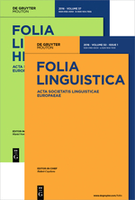
FOLIA LINGUISTICA
Exploring the Depths of Language and ThoughtFOLIA LINGUISTICA, published by WALTER DE GRUYTER GMBH, is a premier scholarly journal dedicated to the field of linguistics. Established in 1967, the journal has consistently provided a platform for innovative research and scholarly discourse in language and linguistics, contributing significantly to the academic community's understanding of language structures, usage, and cognitive processes. With its classification in the top quartile (Q1) of linguistics and language in 2023, FOLIA LINGUISTICA holds a respectable rank (#282/1088) within the Arts and Humanities category and an admirable percentile rank of 74th, ensuring its position at the forefront of linguistic scholarship. Researchers and academics from around the globe can access a wealth of knowledge and cutting-edge research findings through this esteemed publication, which is vital for anyone looking to engage with the latest advancements in linguistics. Located in Berlin, Germany, FOLIA LINGUISTICA encompasses all aspects of language research, making it an indispensable resource for researchers, professionals, and students alike seeking to deepen their understanding of language and its complexities.
Australian Journal of Linguistics
Championing Quality Research in LinguisticsThe Australian Journal of Linguistics, published by Routledge Journals, Taylor & Francis Ltd, stands as a distinguished platform in the field of linguistics, fostering rigorous academic discourse since its inception in 1981. With an ISSN of 0726-8602 and an E-ISSN of 1469-2996, the journal has achieved a notable Q2 ranking in the linguistics and language category for 2023, indicating its quality and relevance within the academic community. With a Scopus ranking of #316 in Arts & Humanities and #373 in Social Sciences, it sits in the 71st and 68th percentiles respectively, underscoring its impact in the fields it encompasses. The journal aims to publish high-quality research articles that contribute to the understanding of linguistic theory, sociolinguistics, and applied linguistics, making it an essential resource for researchers, professionals, and students alike. The journal is based in the United Kingdom, at 2-4 Park Square, Milton Park, Abingdon OX14 4RN, Oxon, England, and actively encourages contributions that can expand the current linguistic discourse, reinforcing its commitment to highlighting diverse perspectives in language research.
Sign Language & Linguistics
Exploring the Intersection of Communication and CultureSign Language & Linguistics is an esteemed academic journal published by John Benjamins Publishing Co, dedicated to advancing the field of sign language studies and linguistics. With an ISSN of 1387-9316 and an E-ISSN of 1569-996X, this journal has earned a prominent place in the linguistic community, achieving a Q1 ranking in both the Linguistics and Language category, and standing out within the Scopus rankings, placing in the 77th percentile among the Arts and Humanities and 75th percentile in the Social Sciences categories. Sign Language & Linguistics spans over two decades of research, offering comprehensive insights and analyses from 1998 to 2024, promoting high-quality scholarly communication. Aimed at researchers, professionals, and students alike, this journal is essential for those exploring the intersection of sign languages, linguistics, and cultural studies, facilitating progressive discourse and fostering an understanding of this vital mode of human communication.