
Frontiers in Sociology
Scope & Guideline
Championing Diverse Voices in Social Science
Introduction
Aims and Scopes
- Social Dynamics and Inequality:
The journal emphasizes research on social structures, inequalities, and dynamics, particularly regarding gender, race, and class. This includes examining how these factors influence individual and collective experiences, particularly in marginalized communities. - Migration and Transnationalism:
A significant focus on the sociological aspects of migration, including the experiences of migrants and refugees, the impact of transnational ties, and the sociocultural implications of migration on both receiving and sending communities. - Health and Wellbeing:
Research on the intersection of health, wellbeing, and social factors is a core area, exploring how societal conditions affect mental and physical health across different populations, including the effects of global health crises like COVID-19. - Gender Studies:
The journal consistently publishes work that examines gender roles, identities, and inequalities, addressing how gender intersects with other social categories in various contexts. - Digital Sociology:
With the rise of digital technologies, the journal explores the implications of digital culture on social interactions, identity formation, and community building, highlighting the sociological impacts of online behaviors and social media. - Qualitative and Mixed-Methods Research:
Utilizing diverse methodologies, the journal encourages qualitative and mixed-methods approaches to capture the complexities of social phenomena, ensuring rich, contextual insights into sociological inquiries.
Trending and Emerging
- Intersectionality in Social Research:
There is a growing emphasis on intersectionality, exploring how various social identities (race, gender, class, sexuality) converge to impact individual experiences and social outcomes. - Impact of Global Crises on Society:
Research addressing the implications of global crises, particularly the COVID-19 pandemic, on social structures, mental health, and community resilience is increasingly prominent. - Digital Activism and Social Change:
The journal is seeing a rise in studies examining digital activism, especially how social media platforms facilitate movements for social justice and change. - Environmental Sociology:
Emerging themes also include environmental sociology, focusing on the social implications of climate change and environmental justice, reflecting a broader societal concern for sustainability. - Mental Health and Society:
There is a notable increase in research linking mental health issues with social factors, emphasizing the need for sociological perspectives in understanding mental health crises. - Queer and LGBTQ+ Studies:
The exploration of queer identities and LGBTQ+ rights is gaining traction, indicating a shift towards more inclusive sociological discourses.
Declining or Waning
- Traditional Labor Studies:
Research focusing on traditional labor dynamics and industrial relations is becoming less frequent, possibly overshadowed by broader discussions on gig economies and remote work arrangements. - Classic Sociological Theories:
There appears to be a reduced emphasis on classic sociological theories, such as those from Weber and Durkheim, as newer frameworks and theories gain traction in addressing contemporary issues. - Rural Sociology:
The focus on rural sociology, particularly concerning agricultural practices and rural communities, seems to be diminishing, likely influenced by urbanization trends and the increasing relevance of urban studies. - Family Structures and Dynamics:
While family studies remain important, traditional views on family structures are being overshadowed by broader discussions on diverse family forms and their intersection with social justice issues.
Similar Journals

Japanese Journal of Sociology
Pioneering sociological discourse on Japan's global interactions.Japanese Journal of Sociology, published by WILEY, is a pivotal academic platform dedicated to advancing the field of sociology, particularly in the context of Japanese society and its global interactions. With an ISSN of 2769-1365 and E-ISSN of 2769-1357, the journal offers an Open Access model that promotes widespread dissemination of sociological research, ensuring accessibility for researchers, professionals, and students alike. Since its inception in 2023, it has aimed to reflect the rich complexities of social dynamics in Japan and beyond, making it a significant contributor to the discourse in general social sciences. Ranking #106/275 in its category with a 61st percentile in Scopus Ranks, it stands out as a reputable source for high-quality research, fostering international collaboration and innovation. Researchers are encouraged to engage with the journal’s evolving body of work to further enhance their understanding of societal issues, both local and global.

International Journal of Sociology and Social Policy
Empowering researchers to influence policy and practice.The International Journal of Sociology and Social Policy, published by Emerald Group Publishing Ltd, stands as a leading academic platform since its inception in 1981, offering critical insights and scholarly research at the intersection of Sociology and Social Policy. With an impressive impact factor reflected in its Q1 rankings in both Economics and Sociology and Political Science, this journal is a vital resource for researchers and practitioners within the social sciences, featuring rigorous analyses that inform policy development and response strategies. The journal's commitment to advancing knowledge in these fields is evident in its esteemed Scopus rankings, making it a desirable outlet for sharing findings that influence both academic discourse and practical applications. While access to articles remains subscription-based, the Journal's broad scope covers contemporary issues, encouraging engagement from diverse perspectives. As it continues to evolve through to 2024, the International Journal of Sociology and Social Policy remains an essential resource for those dedicated to exploring and addressing the complexities of societal dynamics.

Contemporanea-Revista de Sociologia da UFSCar
Fostering innovative insights into contemporary social issues.Contemporanea-Revista de Sociologia da UFSCar is a leading academic journal published by the Department of Sociology at the Federal University of São Carlos, Brazil. With an ISSN of 2236-532X and an E-ISSN of 2316-1329, this journal has established itself as a significant platform for the dissemination of sociological research since it became Open Access in 2011. The journal aims to foster innovative discussions and provide scholarly insights that align with contemporary sociological trends, thus attracting a diverse readership comprising researchers, professionals, and students alike. By addressing crucial social issues and promoting interdisciplinary dialogue, Contemporanea plays a vital role in advancing sociological knowledge and inquiry in an increasingly complex world. Its commitment to accessibility ensures that valuable research findings are available to a global audience, enhancing the impact of sociological studies across borders.
GENDER & SOCIETY
Unpacking the Complexities of Gender RelationsGENDER & SOCIETY, published by SAGE Publications Inc, is a leading peer-reviewed journal dedicated to exploring the critical intersection of gender, sociocultural dynamics, and societal structures. With an impactful presence in the academic landscape, this journal holds prestigious Q1 rankings across multiple categories—including Arts and Humanities, Gender Studies, and Sociology and Political Science—reflecting its significant contributions to ongoing discourse in these fields. The journal's ISSN is 0891-2432 and its E-ISSN is 1552-3977, attesting to its accessibility to a global audience of researchers and scholars. Notably, GENDER & SOCIETY ranks fourth in Gender Studies according to Scopus, placing it in the top 2% of its category. Since its inception in 1987, it has been a vital resource for advocating innovative research methodologies and fostering scholarly dialogue about the complexities of gender in contemporary society. Researchers, professionals, and students alike are encouraged to engage with its robust and diverse scholarship, which is pivotal for understanding the multifaceted realities of gender relations today.
Canadian Review of Sociology-Revue Canadienne de Sociologie
Pioneering Research in Arts and Humanities.Canadian Review of Sociology-Revue Canadienne de Sociologie is a prestigious journal tailored for sociologists and social scientists, published by WILEY. Since its inception in 1964, this esteemed journal has served as a critical platform for the dissemination of high-quality research in both the arts and humanities and broader social sciences, holding a commendable Q1 ranking in Arts and Humanities and Q2 ranking in Social Sciences as of 2023. With an impressive Scopus percentile ranking—78th in Arts and Humanities and 73rd in General Social Sciences—the journal underscores its influence and relevance in contemporary sociological discourse. Researchers and practitioners alike can expect rigorous peer-reviewed articles that contribute to theoretical and empirical debates, as well as discussions on pressing societal issues. While currently not open access, the journal continues to be integral for academic institutions and researchers keen on exploring the intricacies of sociological phenomena across generational and cross-cultural lines, with converged years extending to 2024. Addressed from Hoboken, NJ, the journal not only enriches the academic landscape but also cultivates a global community of sociologists committed to advancing knowledge.
SOCIOLOGICAL QUARTERLY
Fostering Critical Discourse in Social SciencesSociological Quarterly, published by Taylor & Francis Inc, stands as a leading journal in the field of sociology and political science, providing a platform for innovative research and critical discourse since its inception in 1960. With an impressive impact factor reflected by its Q2 categorization in the 2023 rankings, this journal has effectively positioned itself as a crucial resource for scholars and practitioners alike. Operating under the ISSN 0038-0253 and E-ISSN 1533-8525, the journal is committed to advancing knowledge and fostering scholarly communication within the social sciences, evidenced by its robust Scopus ranking of 392 out of 1466 and a commendable 73rd percentile. Although it does not currently offer open access, Sociological Quarterly remains an essential publication for those seeking to engage with contemporary sociological issues and to contribute to the vibrant dialogue shaping our understanding of society.
SOCIOLOGICAL INQUIRY
Pioneering Research for a Dynamic Sociological LandscapeSociological Inquiry is a premier journal in the field of sociology, published by Wiley, which has established its reputation through rigorous peer review and scholarly excellence since its inception in 1961. The journal carries the ISSN 0038-0245 and E-ISSN 1475-682X, and is located in the vibrant academic landscape of the United Kingdom. With a notable impact factor and ranked in the Q1 category in Sociology and Political Science, it stands among the top 17% of journals in its field, as indicated by its Scopus rank of 250 out of 1466, reflecting an impressive 82nd percentile. The objective of Sociological Inquiry is to advance the understanding of social phenomena through empirical and theoretical contributions, aiming to foster dialogue among sociologists, political scientists, and interdisciplinary scholars. Despite not offering open access options, this journal remains vital for anyone looking to engage with cutting-edge research that shapes contemporary sociological thought and practice.
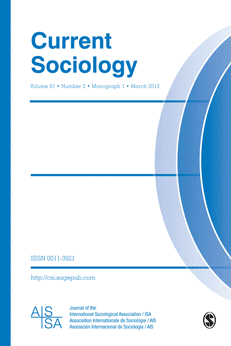
CURRENT SOCIOLOGY
Connecting Research with Real-World ImpactCURRENT SOCIOLOGY is a prestigious academic journal published by SAGE PUBLICATIONS LTD, focusing on the dynamic field of sociology. Since its inception in 1952, this journal has been at the forefront of sociological research, bridging theoretical frameworks and empirical studies to address contemporary social issues. As evidenced by its impressive impact factor and notable ranking among the top Q1 journals in Sociology and Political Science, CURRENT SOCIOLOGY is recognized for its quality and contribution to the academic community, holding a commendable position within the 87th percentile of its discipline—#183 out of 1466 in the Scopus ranks. The journal's scope encompasses a wide range of sociological topics, providing a platform for researchers, professionals, and students to share their insights and foster discussions that shape our understanding of societal dynamics. While it does not currently offer open access, its rich repository of knowledge makes it a vital resource for those eager to explore cutting-edge sociological theories and findings.
BRITISH JOURNAL OF SOCIOLOGY OF EDUCATION
Challenging Perspectives on Education and SocietyBritish Journal of Sociology of Education, published by Routledge Journals, Taylor & Francis Ltd, is a leading academic journal that focuses on the critical examination of the social dimensions of education. With a significant impact in the field, recognized by its Q1 rankings in both Education and Sociology & Political Science categories, this journal has been an essential resource since its inception in 1980 and continues to influence scholarship through 2024 and beyond. The journal's comprehensive scope invites contributions that explore the complex interplay between education systems and social structures, making it indispensable for researchers, professionals, and students committed to understanding these vital dynamics. While it currently does not offer Open Access, the journal's high Scopus rankings, placing it in the top 21% in Sociology and Political Science and the top 28% in Education, underscore its significance in fostering scholarly discourse and advancing knowledge.
EUROPEAN SOCIOLOGICAL REVIEW
Exploring the depths of social dynamics and theory.European Sociological Review, published by Oxford University Press, stands as a leading journal in the fields of sociology and political science. With an impressive h-index and a 2023 ranking in the top 10th percentile (Q1) of Scopus, it represents a key platform for scholars and practitioners seeking to advance sociological discourse. Since its inception in 1985 and continuing through to 2024, this journal has provided a wide array of high-quality articles that explore various dimensions of sociological theory, research, and application, fostering a deeper understanding of social dynamics. Although not open access, the journal's rigorous peer-review process ensures that only the most impactful research is disseminated, making it an essential resource for academia, policy-making, and social research. By focusing on contemporary sociological challenges and contributing to significant debates, the European Sociological Review is invaluable for researchers, professionals, and students committed to the empirical understanding of societal trends.