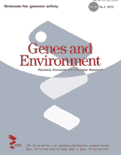
Genes and Environment
metrics 2024
Unraveling the Threads of Genetics and Environment
Introduction
Genes and Environment is a premier interdisciplinary journal published by BMC that explores the dynamic interplay between genetic factors and environmental influences shaping health and behavior. Since its inception, the journal has gained recognition for its commitment to providing open access (since 2015) to groundbreaking research, fostering an inclusive platform for scholars worldwide. With an ISSN of 1880-7046 and an E-ISSN of 1880-7062, Genes and Environment consistently ranks in Q2 in Environmental Science, Q3 in Genetics, and Q2 in Social Psychology according to the 2023 category quartiles, highlighting its significant contributions to these fields. The journal is headquartered in the United Kingdom and has a diverse portfolio of research spanning from 2006 to 2024. It is recognized in Scopus with commendable rankings across various disciplines. By fostering dialogue among researchers, professionals, and students, Genes and Environment serves as a vital resource for understanding complex biological interactions with environmental factors, ultimately aiming to advance knowledge and inform public policy.
Metrics 2024
 0.592.702.3022
Metrics History
Rank 2024
Scopus
IF (Web Of Science)
JCI (Web Of Science)
Quartile History
Similar Journals
Clinical Epigenetics
Leading the Charge in Epigenetic Research and ApplicationClinical Epigenetics is a pioneering open-access journal published by BMC, dedicated to advancing the field of epigenetics and its critical implications in clinical and translational research. Established in 2011, the journal has become an authoritative resource in the realms of developmental biology, genetics, and molecular biology, as evidenced by its impressive 2023 Scopus categorization as a Q1 journal in multiple domains including clinical genetics. With a robust impact factor and rankings that place it among the top quartiles in its fields—Rank #13 in Clinical Genetics and #14 in Developmental Biology—Clinical Epigenetics serves as an essential platform for researchers, professionals, and students alike, encouraging the dissemination of high-quality research findings. Operating from its United Kingdom headquarters, this journal not only contributes to scholarly dialogue across the globe but also supports unrestricted access to vital findings that push the boundaries of our understanding of epigenetic mechanisms and their clinical applications.

JOURNAL OF APPLIED TOXICOLOGY
Advancing the Science of ToxicologyJOURNAL OF APPLIED TOXICOLOGY, published by Wiley, stands as a leading platform in the field of toxicology, focusing on the rigorous examination of chemical substances and their effects on biological systems. With an impressive Impact Factor, it ranks in the top quartile (Q2) for toxicology journals, reflecting its esteemed position within the scientific community. The journal, identifiable by its ISSN 0260-437X and E-ISSN 1099-1263, has been an invaluable resource since its inception in 1981, and it continues to serve as a conduit for innovative research and practical applications through 2024. Positioned at the forefront of the field, it garners recognition in the Scopus Rankings, where it ranks #31 out of 133 journals in the toxicology category, placing it in the 77th percentile—a testament to its contribution to the advancement of pharmacology and toxicological sciences. While not an open-access journal, it remains accessible to a wide audience of researchers, professionals, and students eager to explore cutting-edge findings in applied toxicology, making it a pivotal resource for enhancing knowledge and fostering collaboration in the field.
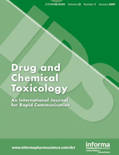
DRUG AND CHEMICAL TOXICOLOGY
Championing interdisciplinary research in toxicology.Drug and Chemical Toxicology is a well-respected journal in the fields of toxicology, pharmacology, and public health, published by Taylor & Francis Ltd. Since its inception in 1978, this journal has diligently explored the effects and mechanisms of chemical exposures on health and the environment, fulfilling a crucial role in advancing scientific understanding and safeguarding public health. The journal is indexed across prestigious databases and features an impressive array of articles categorized within the Q2 and Q3 quartiles across various categories in 2023, reflecting its significance in Chemical Health and Safety as well as Environmental and Occupational Health disciplines. With an extensive reach and a focus on interdisciplinary research, Drug and Chemical Toxicology offers a rich repository of original research, reviews, and methodological advancements, catering to a diverse audience of researchers, professionals, and students dedicated to the betterment of safety and health standards. Although not an open-access publication, its articles are widely accessible to the academic community, ensuring that critical innovations and insights are shared for the greater good.
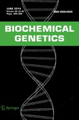
BIOCHEMICAL GENETICS
Illuminating Pathways in Biochemistry and GeneticsBIOCHEMICAL GENETICS, published by Springer/Plenum Publishers, is a prominent journal in the fields of biochemistry, genetics, and molecular biology, with a substantial impact on the scientific community since its inception in 1967. The journal holds a significant position within various academic quartiles, ranking Q2 in Ecology, Evolution, Behavior and Systematics, and Q3 in Biochemistry, Genetics, and Medicine (miscellaneous), among others, demonstrating its diverse and interdisciplinary reach. With an ISSN of 0006-2928 and an E-ISSN of 1573-4927, it is recognized for contributing critical research insights and methodologies that drive the fields of biochemical genetics forward. Although it is not an Open Access journal, it provides vital access options and resources for researchers globally, facilitating the dissemination of knowledge across institutions. Positioned within the competitive landscape of Scopus rankings, it maintains respectable standings across its focused areas, making it an invaluable resource for researchers, professionals, and students seeking to deepen their understanding of genetic mechanisms and biochemical processes.
CANCER EPIDEMIOLOGY BIOMARKERS & PREVENTION
Unlocking Insights for a Cancer-Free TomorrowCancer Epidemiology Biomarkers & Prevention is a premier journal published by the American Association for Cancer Research, dedicated to advancing the understanding of cancer epidemiology, biomarkers, and preventive strategies. With an impressive impact factor that places it in the Q1 quartile across three critical categories — Epidemiology, Medicine, and Oncology — the journal stands as a vital resource for researchers and healthcare professionals seeking to explore novel insights in cancer prevention and control. The journal's rigorous selection process ensures the high quality of published research, making it a trusted source for the latest findings and methodologies in the fight against cancer. Although it currently does not support open access, the journal's comprehensive articles, spanning from its inception in 1983 to the present, facilitate significant advancements in the field. Located in Philadelphia, PA, this journal not only serves as a platform for dissemination but also stimulates vital discussions among the oncology community, ensuring that significant translational research reaches its audience effectively.
Human Genomics
Transforming Health Through Genetic InsightsHuman Genomics, published by BMC, is a leading open-access journal dedicated to advancing the field of genomics and its applications in health and disease. Since its inception in 2003, the journal has provided a vital platform for researchers to disseminate groundbreaking findings related to genetic research, contributing significantly to areas such as Drug Discovery, Genetics, Molecular Biology, and Molecular Medicine, as reflected in its Q1 and Q2 quartile rankings throughout 2023. With an ISSN of 1473-9542 and an E-ISSN of 1479-7364, Human Genomics not only delivers high-quality, peer-reviewed research but also ensures accessibility to a broader audience, empowering professionals, students, and academics to stay at the forefront of genomic science. Through its rigorous editorial standards and impactful publications, the journal fosters a collaborative environment for innovative research across the globe from its base in the United Kingdom. By promoting open access since its launch, Human Genomics continues to enhance the visibility and impact of genetic studies, making it an essential resource for anyone involved in the rapidly evolving field of human genomics.
MOLECULAR PSYCHIATRY
Advancing the Frontiers of Mental Health ResearchMOLECULAR PSYCHIATRY, published by SpringerNature, is a premier peer-reviewed journal that has established itself as a leading platform for the dissemination of cutting-edge research in the fields of neuroscience, molecular biology, and psychiatry. With an impressive impact factor and a reputation for excellence, the journal is ranked Q1 in key categories, signifying its high academic quality and relevance. The journal’s scope spans groundbreaking studies and innovative therapeutic approaches that intersect at the molecular and cellular levels, providing invaluable insights into the biological underpinnings of psychiatric disorders. Since its inception in 1996, MOLECULAR PSYCHIATRY has evolved to support both established and emerging researchers, fostering a collaborative environment that enhances the understanding of mental health. It is committed to improving access to scientific knowledge, although it currently does not offer open access options. With its headquarters in London, the journal continues to play a pivotal role in enhancing the global dialogue on psychiatric and neurological advancements, making it an essential resource for academics and professionals dedicated to advancing mental health sciences.
Cancer Epidemiology
Innovating Understanding of Cancer IncidenceCancer Epidemiology, published by ELSEVIER SCI LTD, serves as a premier platform for disseminating innovative research in the areas of cancer epidemiology and oncology. Operating from the Netherlands, this journal provides a critical insight into the factors influencing cancer incidence, including genetic, environmental, and lifestyle variables. With an impact factor reflecting its significance in the field, it holds a respectable Q2 ranking in Cancer Research, Epidemiology, and Oncology. The journal spans a wide range of topics and publishes studies that aim to bridge gaps in existing literature through rigorous research methodologies. Researchers and professionals interested in acquiring the latest insights and contributing to the evolving discourse on cancer epidemiology will find this journal an invaluable resource. Access to articles may be available through open access options, ensuring the widest dissemination of knowledge.
GENOMICS
Transforming Genetic Knowledge into Impactful ResearchGENOMICS is a prestigious journal published by Academic Press Inc Elsevier Science, dedicated to advancing the field of genetic research and molecular biology. With an impressive impact factor, this journal is recognized for its rigorous peer-review process and high-quality publications that cover a wide range of topics within the genomics discipline. Operating from the United States, GENOMICS has established itself as a vital resource for researchers, professionals, and students alike, standing at Q2 in the Genetics category according to the latest rankings. With a rich history dating back to 1987 and convergence extending to 2024, the journal highlights cutting-edge discoveries and methodologies, ensuring that its readership remains at the forefront of genetic advancements. Although currently not an open-access journal, articles published within its pages are often accessible through various academic platforms, enhancing worldwide reach and dissemination. For those engaged in the fields of biochemistry, genetics, and molecular biology, GENOMICS serves as an indispensable platform for impactful research and collaborative initiatives.
Cardiovascular Toxicology
Exploring the critical intersection of toxicology and cardiology.Cardiovascular Toxicology is a pivotal journal dedicated to advancing the understanding of the interplay between toxic substances and cardiovascular health. Published by HUMANA PRESS INC, this journal serves as a critical resource for researchers and professionals in the fields of cardiology, toxicology, and molecular biology. With an ISSN of 1530-7905 and an E-ISSN of 1559-0259, it has established itself as a key source of high-quality research since its inception in 2001, continuing to contribute valuable insights through 2024. The journal enjoys a robust reputation, evidenced by its Q2 ranking in both Cardiology and Cardiovascular Medicine and Toxicology, along with a Q3 ranking in Molecular Biology for 2023. With Scopus rankings placing it in the 80th percentile for Cardiology and 71st for Toxicology, Cardiovascular Toxicology attracts submissions that reflect cutting-edge research and innovative methodologies. Notably, the journal prioritizes stringent peer review and scholarly rigor, ensuring that published works significantly impact the understanding of cardiovascular responses to various toxic agents. Though not an open-access journal, its content remains highly sought after in a diverse scholarly community, making it indispensable for those dedicated to enhancing cardiovascular disease prevention, diagnosis, and treatment through toxicological insights.