HUNTINGTON LIBRARY QUARTERLY
Scope & Guideline
Illuminating Cultural Narratives Through Interdisciplinary Research
Introduction
Aims and Scopes
- Interdisciplinary Scholarship:
The journal encourages interdisciplinary approaches, integrating literature with history, book history, and material culture studies to provide a richer understanding of the texts and artifacts from the early modern period. - Focus on Manuscript and Print Culture:
A significant aim is the exploration of manuscript studies and the transition between manuscript and print cultures, particularly how these mediums influenced literary production and reception. - Historical Contextualization:
The journal emphasizes the importance of situating literary works within their historical context, examining how societal, political, and cultural factors shaped literary production and consumption. - Women’s Studies and Gender Perspectives:
An ongoing commitment to women's studies is evident, showcasing the contributions and experiences of women in literature, authorship, and book history, particularly in the early modern period. - Material Culture and Literary Value:
The journal explores the materiality of texts and their cultural significance, analyzing how physical artifacts (like books, letters, and inventories) inform our understanding of literary value and authorship.
Trending and Emerging
- Digital Humanities and Technology:
There is an increasing incorporation of digital humanities methodologies, such as quantitative analyses and digital finding aids, to study manuscript culture and literary networks, indicating a trend towards utilizing technology in literary scholarship. - Epistolary Studies:
The exploration of epistolary networks and correspondence has gained traction, reflecting a growing interest in how letters and communication shaped social and literary landscapes in early modern contexts. - Miscellany and Anthology Studies:
A notable focus on the study of miscellanies and anthologies has emerged, examining their role in literary culture and how they reflect social and historical contexts, signaling a shift towards understanding compilation as a literary practice. - Material Culture and Collecting:
The journal has increasingly addressed themes related to material culture, particularly how the act of collecting books and artifacts informs our understanding of literary history and authorship. - Women’s Literary Networks:
Recent themes emphasize women's literary contributions and networks, highlighting the importance of female authorship and the socio-political contexts that shaped their work, resonating with broader feminist scholarly movements.
Declining or Waning
- Colonial and Post-Colonial Studies:
While the journal has historically included studies related to colonial contexts, there appears to be a reduction in the number of papers explicitly addressing colonial and post-colonial themes, indicating a potential shift towards more localized or immediate historical contexts. - Traditional Literary Canon:
There seems to be a diminishing focus on the traditional literary canon, such as the works of well-established authors (e.g., Shakespeare, Milton), as the journal increasingly prioritizes marginalized voices and lesser-known texts. - Formalist Literary Criticism:
The journal has gradually moved away from formalist approaches to literature, which emphasize structure and aesthetics, in favor of more contextually-driven analyses that consider historical and cultural implications. - Biographical Studies of Major Authors:
There is a noticeable decline in biographical studies focusing on major authors, suggesting a shift towards thematic and contextual analyses rather than individual-centric narratives. - Purely Theoretical Approaches:
The journal appears to be less focused on abstract theoretical frameworks, favoring concrete historical and material analyses that provide tangible connections to the texts under consideration.
Similar Journals
Book History
Unveiling the narratives behind every page.Book History is a pivotal academic journal published by Johns Hopkins University Press that delves into the rich and intricate narratives surrounding the book as a cultural artifact and form of communication. With its ISSN 1098-7371 and E-ISSN 1529-1499, this journal fosters interdisciplinary discourse across the fields of history, conservation, and library and information sciences, as evidenced by its solid standing in 2023’s Scopus rankings: 540th in Arts and Humanities (History), 48th in Arts and Humanities (Conservation), and 189th in Social Sciences (Library and Information Sciences). The journal operates under a Q2 ranking in History and Q3 in Conservation and Library and Information Sciences, making it a key resource for scholars and students alike. Dedicated to advancing the study of the book's multifaceted role in society from 2019 to 2023, it provides insightful research articles, reviews, and thematic explorations that contribute to our understanding of literary production, dissemination, and preservation. Although it does not provide open access options, its contributions are invaluable to the academy, enriching the scholarly conversation around books and their historical significance.
Luso-Brazilian Review
Illuminating the Intersections of Literature and SocietyLuso-Brazilian Review is a premier academic journal published by University of Wisconsin Press, dedicated to advancing the study of Lusophone cultures, literature, history, and socio-political contexts. With an ISSN of 0024-7413 and E-ISSN 1548-9957, this journal serves as a vital resource for scholars who seek to explore the rich and diverse connections between Portugal and Brazil. It holds notable distinction with a Q1 ranking in Literature and Literary Theory and consistently performs well in Cultural Studies and History, making it an essential publication for both researchers and enthusiasts in these fields. Although not open access, the journal offers a wealth of peer-reviewed articles that probe into intricate themes impacting Lusophone literature and cultural studies from 1978 to 2024, ensuring that readers remain at the forefront of ongoing scholarly conversation. Housed in the heart of the United States at Madison, WI, Luso-Brazilian Review continues to cultivate an academic dialogue that is relevant, timely, and invaluable for professionals, students, and anyone interested in the cultural interplay between Lusophone nations.

Magnificat Cultura i Literatura Medievals
Fostering Inclusive Research in Medieval HeritageMagnificat Cultura i Literatura Medievals, published by UNIV VALENCIA, SERVICIO PUBLICACIONS, is an esteemed academic journal that has been at the forefront of medieval studies since its inception in 2014. With its Open Access model, this journal ensures that cutting-edge research is readily available to scholars and enthusiasts alike, fostering an inclusive academic environment. Based in Spain, it boasts impressive rankings with a Q2 designation in History and a Q1 in Literature and Literary Theory for 2023, indicating its significant contribution to these fields. The journal is indexed by Scopus, achieving top-tier rankings in both Literature and History, and is recognized in the 87th and 72nd percentiles of their respective categories. With a focus on the complexities of medieval culture and literature, Magnificat serves as a vital resource for researchers, professionals, and students dedicated to exploring the rich tapestry of medieval scholarship.
PARERGON
Fostering Innovative Research in Arts and HumanitiesPARERGON, the esteemed journal published by the Australian and New Zealand Association for Medieval and Early Modern Studies, serves as a vital platform for scholarly discourse within the fields of Arts and Humanities, Cultural Studies, History, Literature and Literary Theory, Religious Studies, and Visual Arts and Performing Arts. Established in 2002, PARERGON aims to contribute significantly to the understanding and appreciation of medieval and early modern studies by providing a forum for innovative research and critical analysis. With a commendable ranking within the Q4 category, it is regarded as a niche journal that, despite its humble rankings, attracts the attention of researchers, professionals, and students seeking avenues for intellectual growth. The journal does not offer Open Access, ensuring a focused readership commitment but may present challenges for broader dissemination. By bridging disciplines and fostering interdisciplinary dialogue, PARERGON plays an important role in enriching the academic landscape of its respective fields, making it a relevant choice for those invested in exploring historical and cultural narratives.

Listy Filologicke
Fostering Excellence in Humanities and Social Sciences Research.Listy Filologicke is a distinguished academic journal published by the Institute of Classical Studies at the Academy of Sciences of the Czech Republic, focusing on the interdisciplinary fields of History, Linguistics and Language, and Literature and Literary Theory. With an ISSN of 0024-4457 and an E-ISSN of 2570-9410, this journal has been a pivotal platform for scholarly discourse since its convergence years began in 2003. Notably, it holds a Q3 classification in History and Linguistics and Language, and a Q2 in Literature and Literary Theory as of 2023. Its rankings within Scopus illustrate its relevance and impact in academia, with noteworthy positions in the Arts and Humanities and Social Sciences categories. Researchers, professionals, and students will find Listy Filologicke an invaluable resource for exploring cutting-edge research, critical analyses, and discourse that contribute significantly to their respective fields. Based in the heart of the Czech Republic, it continues to promote scholarly excellence and foster international collaboration.
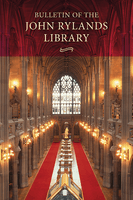
Bulletin of the John Rylands Library
Exploring the Nexus of Knowledge and HistoryBulletin of the John Rylands Library is a prominent academic journal published by MANCHESTER UNIVERSITY PRESS that serves as a vital platform for research in the fields of Arts and Humanities and Library and Information Sciences. Since its inception, the journal has contributed to the scholarly discourse surrounding library practices, archiving, and historical studies, making it essential reading for researchers, professionals, and students alike. With an ISSN of 2054-9318 and an E-ISSN of 2054-9326, it offers a rich repository of knowledge, although steeped in a diverse array of subjects, it currently holds a Q4 quartile ranking, reflecting its niche but significant impact within its categories. The journal has undergone various published years, most recently from 2014 to 2023, encompassing thematic articles that bridge theoretical and practical realms. While primarily a subscription-based resource, its authoritative contributions are invaluable for anyone engaged in understanding the evolution of libraries and their impact on society. The Bulletin significantly enhances academic engagement, fostering a deeper appreciation for the interconnectedness of library science and the broader humanities.
Journal of Victorian Culture
Decoding the Victorian Influence on Modern SocietyThe Journal of Victorian Culture, published by Oxford University Press, is an esteemed academic journal that explores the multifaceted cultural landscape of the Victorian era. With a publication history spanning from 1996 to 2024, this journal serves as a critical platform for scholars and practitioners in the fields of Cultural Studies, History, Literature and Literary Theory, and Visual Arts and Performing Arts. It currently holds notable rankings, including Q3 in Cultural Studies and History, and Q2 in Literature, making it a prominent resource in these disciplines. Targeted at an audience that includes dedicated researchers, professionals, and students, the journal promotes interdisciplinary exploration and innovation, encouraging contributors to engage deeply with Victorian themes and their influence on contemporary culture. For those interested in cutting-edge discussions and insights, the Journal of Victorian Culture provides access to rich, scholarly content that is indispensable for understanding the era's impact on modern artistic and social paradigms.
Ben Jonson Journal
Elevating Understanding of a Literary LuminaryBen Jonson Journal, published by Edinburgh University Press, is a distinguished academic periodical dedicated to the examination of the works and contributions of the esteemed playwright and poet, Ben Jonson. Since its inception in 1996, this journal has served as a vital platform for interdisciplinary research in the fields of literature and literary theory, fostering a deeper understanding of Jonson’s impact on the literary canon and cultural discourse. With an ISSN of 1079-3453 and an E-ISSN of 1755-165X, the journal occupies a notable position in the academic landscape, currently ranked in the Q4 category of the Scopus Arts and Humanities Literature and Literary Theory metrics and holding a percentile rank of 77th. Although it does not offer open access, the journal is committed to embracing rigorous scholarly standards and advancing critical dialogue among researchers, professionals, and students alike. Its geographical roots in the United Kingdom only amplify its relevance in the global literary community, making the Ben Jonson Journal an essential resource for those seeking to explore the complexities of early modern literature.
Journal of Modern Periodical Studies
Exploring the Future of Periodicals.Welcome to the Journal of Modern Periodical Studies, an esteemed publication from Penn State University Press, dedicated to the exploration and analysis of contemporary trends in periodicals. Established in 2010, this journal serves as a vital platform for researchers, professionals, and students engaged in the fields of Communication, Visual Arts, and Performing Arts. Despite its current Q4 ranking in Communication and Q3 in Visual Arts and Performing Arts, the Journal continues to foster critical discourse and innovative scholarship, making it a significant contributor to our understanding of periodical studies. Our commitment to quality and accessibility ensures that the latest research findings are disseminated effectively, although we currently do not offer open access options. As we move into an era increasingly dominated by digital media, our focus remains on inspiring comprehensive analysis and creative expression within the modern landscape of periodicals. Join us in discovering new narratives and scholarly insights that shape the future of this dynamic field.
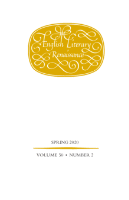
ENGLISH LITERARY RENAISSANCE
Celebrating the Legacy and Future of Literary ThoughtENGLISH LITERARY RENAISSANCE, published by University of Chicago Press, stands as a pivotal academic journal in the realm of Literature and Literary Theory. With a historical pedigree dating back to 1971, this esteemed journal has made significant contributions to the study of English literature, exploring a wide array of themes, methodologies, and critical interpretations that underscore the richness of literary discourse. The journal is ranked in the Q2 category for literature and literary theory and is positioned in the 89th percentile in the Scopus rankings, affirming its impact within the field. Although it does not operate under an open access model, ENGLISH LITERARY RENAISSANCE continues to attract a vibrant community of scholars and educators eager to engage with its rigorous scholarship and innovative approaches. This journal not only serves as a platform for groundbreaking research but also fosters critical dialogue that shapes the future of literary studies.