
Indonesian Biomedical Journal
metrics 2024
Bridging Knowledge Gaps in Biomedical Sciences
Introduction
Indonesian Biomedical Journal, published by PRODIA EDUCATION & RESEARCH INST, serves as a vital platform for the dissemination of groundbreaking research in the fields of biochemistry, genetics, and molecular biology, as well as general medicine. Since its inception, this Open Access journal has made significant strides in enhancing accessibility to scientific knowledge, allowing researchers, professionals, and students to engage with high-quality studies without financial barriers. With an ISSN of 2355-9179 and a focus on emerging biomedical topics, the journal has established itself in the academic community, securing Q3 and Q4 rankings in its respective categories for 2023. The journal's commitment to maintaining a rigorous peer-review process ensures that only the most innovative and impactful research is published, fostering an environment that encourages collaborative learning and discovery. As it converges from 2017 to 2024, the Indonesian Biomedical Journal continues to be an essential resource for those involved in advancing biomedical sciences, particularly within the unique context of Indonesia and beyond.
Metrics 2024
 0.210.700.709
Metrics History
Rank 2024
Scopus
IF (Web Of Science)
JCI (Web Of Science)
Quartile History
Similar Journals

EXCLI Journal
Advancing Knowledge in Animal Science and PharmacologyEXCLI Journal is an esteemed open access scientific publication dedicated to the fields of Animal Science and Zoology, Drug Discovery, Molecular Medicine, and Pharmacology. Established in 2002 and published by the EXCLI JOURNAL MANAGING OFFICE, this journal has quickly ascended in the academic community, securing a Q1 classification in significant categories like Animal Science and Drug Discovery in the 2023 rankings. With an impressive Scopus Rank of #13 out of 490 in its primary field, the journal maintains high standards for quality research and innovation. The EXCLI Journal is committed to disseminating progressive findings with global relevance, providing a platform for researchers, professionals, and students to engage with cutting-edge studies. With a compelling aim to foster knowledge exchange and collaboration among scientists worldwide, this journal signifies a critical resource for those invested in advancing our understanding of animal science and pharmaceutical research.

Biomedical Research and Therapy
Driving excellence in biomedical research and clinical applications.Biomedical Research and Therapy is a pioneering journal published by BIOMEDPRESS, dedicated to the field of biomedical sciences. With its ISSN 2198-4093, this journal aims to disseminate high-quality research and innovative therapies that advance knowledge in biomedical research. Although it operates on a non-open access model, it provides crucial insights into various topics such as drug discovery, disease mechanisms, regenerative medicine, and clinical applications. The journal's rigorous peer-review process ensures the publication of critical findings and methodologies, making it a vital resource for researchers, practitioners, and students interested in the constantly evolving landscape of biomedical research. With converged years from 2020 to 2024 and an emerging reputation in its field, Biomedical Research and Therapy is positioned to contribute significantly to the global scientific community, enriching the discourse around therapeutic advancements and biomedical innovations.
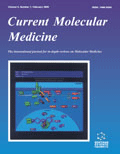
CURRENT MOLECULAR MEDICINE
Advancing the Frontiers of Molecular MedicineCURRENT MOLECULAR MEDICINE is a pivotal journal fostering advancements in the interdisciplinary fields of molecular medicine, biochemistry, and genetics. Published by Bentham Science Publishers, this esteemed journal has been disseminating vital research findings since its inception in 2001 and is continuously dedicated to exploring the molecular basis of health and disease. With a focus on translational research, CURRENT MOLECULAR MEDICINE provides an invaluable platform for researchers, healthcare professionals, and students, making significant contributions to the understanding of molecular mechanisms and therapeutic strategies. With an ISSN of 1566-5240 and an E-ISSN of 1875-5666, the journal holds a commendable position within the scientific community, being ranked Q3 in Biochemistry and Molecular Biology and Q2 in Medicine (miscellaneous) as of 2023. This journal does not currently operate on an open access model but remains accessible through various institutional subscriptions. The multidisciplinary scope covering molecular biology to medicinal applications positions CURRENT MOLECULAR MEDICINE as an essential resource for those striving to meet the challenges of modern healthcare and biomedical research.

Biomolecules and Biomedicine
Empowering Discovery in Biochemistry and Biomedical SciencesBiomolecules and Biomedicine is a pioneering open-access journal dedicated to advancing the fields of molecular biology and biomedical sciences, published by the Association of Basic Medical Science Federation Bosnia & Herzegovina in Sarajevo. With the ISSN 2831-0896 and the E-ISSN 2831-090X, this journal aims to facilitate the dissemination of high-quality research from 2023 onwards, inviting submissions that provide innovative insights and findings across various facets of medicine and biological sciences. Positioned within the General Medicine and Biochemistry, Genetics and Molecular Biology categories, it currently holds rankings of 332 out of 636 and 173 out of 221 respectively, highlighting its emerging influence in these fields. As an open-access journal, it ensures that all published research is freely accessible to a global audience, fostering collaboration and knowledge exchange among researchers, professionals, and students alike. With a commitment to enhancing scientific discourse and promoting cutting-edge research, Biomolecules and Biomedicine is poised to become a vital resource for those dedicated to unraveling the complexities of biomolecules and their roles in health and disease.

New Armenian Medical Journal
Advancing Medical Knowledge, One Article at a Time.New Armenian Medical Journal (ISSN: 1829-0825, E-ISSN: 1829-0825) is a prominent academic publication established by Yerevan State Medical University, dedicated to advancing the field of medicine through high-quality research and scholarly discourse. Located in Armenia, this journal serves as a vital platform for disseminating innovative findings and clinical practices, with a particular focus on the regional healthcare landscape as well as global health issues. While currently categorized in the lower quartile (Q4) of general medicine, it demonstrates a commitment to improving its impact factor and ranking, evidenced by its ongoing publication from 2009 to 2024. The journal embraces a diverse scope that encompasses miscellaneous topics within medical research, catering to the needs of practitioners, researchers, and students alike. Though not an open-access journal, it offers valuable insights and knowledge that contribute meaningfully to the medical community. By participating in this scholarly dialogue, readers can enhance their understanding and foster advancements in the ever-evolving field of medicine.

Asian Biomedicine
Illuminating the Path of Biomedical AdvancementsAsian Biomedicine, published by WALTER DE GRUYTER GMBH, serves as a crucial platform for disseminating pioneering research in the field of biomedical sciences. Established in 2008, this journal has carved its niche in the landscape of academic publishing, concentrating on a diverse array of topics within biochemistry, genetics, and molecular biology, as well as medicine. Though it currently holds a Q4 ranking in its category, it is dedicated to fostering academic discussions and advancing knowledge among researchers, professionals, and students alike. While the journal features a variety of access options, it is committed to ensuring that its content remains relevant and impactful, with an emphasis on the latest developments and research trends. The editorial board encourages submissions that address pressing biomedical issues, thus empowering contributors to engage meaningfully with the scientific community. With a broad international scope and a focus on quality, Asian Biomedicine is poised to play an increasingly important role in the advancement of biomedical research in Asia and beyond.

Human Gene
Fostering Collaboration in Genetic ResearchHuman Gene is an innovative open access journal published by ELSEVIER, dedicated to the ever-evolving field of genetics. Established in 2022, this journal serves as a vital resource for researchers, professionals, and students alike, aiming to facilitate the dissemination of groundbreaking research and advancements in both basic and clinical genetics. With an ISSN of 2773-0441, Human Gene focuses on providing a platform for high-quality studies that investigate genetic mechanisms, their implications in health and disease, and novel therapeutic strategies. The journal currently holds a Q4 ranking in both Genetics and Clinical Genetics categories, reflecting its emerging status within the scientific community, and strives to enhance its impact to better serve an engaged audience. With its base in Amsterdam, Netherlands, Human Gene is committed to making research accessible through its open access model, inviting contributions that advance our understanding of human genetics and foster collaboration across disciplines.

FOLIA BIOLOGICA
Cultivating Knowledge Across Biological DisciplinesFOLIA BIOLOGICA, published by Charles University Prague, First Faculty of Medicine, is an esteemed academic journal that has been contributing to the fields of Biochemistry, Cell Biology, Developmental Biology, Genetics, Immunology, and Molecular Biology since its inception in 1961. With an ISSN of 0015-5500, this journal serves as a vital platform for researchers and professionals to disseminate their findings and advance knowledge within these disciplines. Despite its current Category Quartiles ranking in the lower tiers (Q3 and Q4), FOLIA BIOLOGICA continues to provide valued insights and foster scholarly dialogue, particularly in its paralleled fields. The journal is headquartered in Prague, Czech Republic, and operates without Open Access options, which emphasizes its focus on curated, peer-reviewed content essential for academicians and students. By bridging theoretical and practical knowledge, FOLIA BIOLOGICA remains committed to enriching the scientific community and serving as a cornerstone for future research innovations.
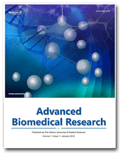
Advanced Biomedical Research
Fostering Open Access to Pioneering Biomedical ResearchAdvanced Biomedical Research, published by Wolters Kluwer Medknow Publications, is a prominent open access journal dedicated to advancing the field of biomedical research since its inception in 2012. With an ISSN of 2277-9175, this journal serves as a vital platform for researchers, professionals, and students to disseminate high-quality research findings and innovative ideas in a variety of topics within biochemistry, genetics, and molecular biology. Recognized within the Q3 category of the 2023 journal quartile rankings, it ranks 365th among general medicine journals and 187th in the general fields of biochemistry and genetics, underscoring its commitment to fostering scientific dialogue and collaboration. With its open access model, Advanced Biomedical Research ensures that research is readily accessible to a global audience, thereby enhancing the visibility and impact of scholarly work. As the journal continues to evolve through its converged editorial focus from 2019 to 2024, it aims to play a critical role in shaping the future of biomedical sciences in India and beyond.
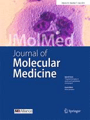
JOURNAL OF MOLECULAR MEDICINE-JMM
Unveiling the Molecular Mysteries of Health and Disease.JOURNAL OF MOLECULAR MEDICINE (JMM) is a premier publication dedicated to advancing the field of molecular medicine, encompassing critical areas such as drug discovery, genetics, and biochemistry. Published by Springer Heidelberg in Germany, this influential journal has established its significance within the academic community, achieving an impressive Q1 ranking across multiple categories as of 2023, including Drug Discovery, Clinical Genetics, and Molecular Medicine. With a focus on publishing high-quality research and novel insights, JMM appeals to a diverse audience of researchers, professionals, and students passionate about the molecular underpinnings of health and disease. The journal, which has seen a convergence of relevant research spanning from 1976 to 2024, is instrumental in showcasing groundbreaking studies that push the boundaries of knowledge in molecular therapeutics and biomedical science. While it does not offer open access, the rigor of its peer-reviewed content ensures that each publication is a valuable addition to the scientific discourse surrounding molecular medicine. For comprehensive studies and reviews that highlight the intersection of molecular biology and clinical application, look no further than JOURNAL OF MOLECULAR MEDICINE.