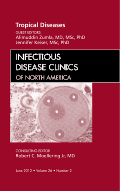
INFECTIOUS DISEASE CLINICS OF NORTH AMERICA
Scope & Guideline
Bridging Knowledge and Practice in Infectious Diseases
Introduction
Aims and Scopes
- Human Immunodeficiency Virus (HIV) Management:
The journal extensively covers the management of HIV, focusing on areas such as antiretroviral therapy, co-morbidities associated with HIV, and the implications of HIV on different populations, including pregnant individuals and those with substance use disorders. - Antimicrobial Stewardship:
A prominent theme in the journal is the promotion of antimicrobial stewardship, emphasizing strategies to optimize the use of antibiotics, reduce resistance, and improve patient outcomes in various healthcare settings. - Infectious Disease in Special Populations:
The journal addresses infectious diseases in specific populations, including organ transplant recipients, older adults, and individuals with chronic conditions, focusing on tailored management approaches and unique challenges faced by these groups. - Emerging Infections and Global Health:
The journal highlights the impact of emerging infections, such as COVID-19, and their management in immunocompromised patients, reflecting a broader concern for global health and infectious disease preparedness. - Sexually Transmitted Infections (STIs):
There is a dedicated focus on STIs, exploring their epidemiology, management, and the implications for public health, particularly in vulnerable populations. - Infection Control and Prevention:
The journal provides insights into infection control measures, particularly in healthcare settings, emphasizing evidence-based practices to prevent healthcare-associated infections.
Trending and Emerging
- Management of Infectious Diseases in the Context of COVID-19:
There is an increasing focus on the implications of COVID-19 for patients with other infectious diseases, particularly in immunocompromised populations, as well as the long-term effects of the pandemic on healthcare practices. - Advances in Diagnostics and Therapeutics:
Emerging themes include novel diagnostic tools and therapeutic strategies, particularly for multidrug-resistant infections, highlighting the need for innovation in infection management. - Intersection of Infectious Diseases and Public Health:
The journal is increasingly addressing the intersection of infectious diseases with public health issues, such as demographic and geographic disparities in infection rates and healthcare access. - Impact of Comorbid Conditions on Infectious Disease Outcomes:
Recent publications emphasize the role of comorbidities, such as cardiovascular disease and substance use disorders, in the management and outcomes of infectious diseases, reflecting a more holistic approach to patient care. - Telehealth and Remote Management Strategies:
With the rise of telehealth, the journal is exploring remote management strategies for infectious diseases, which have become essential in maintaining care continuity during and after the COVID-19 pandemic.
Declining or Waning
- Chronic Infections Management:
Topics related to the management of chronic infections, such as tuberculosis and certain fungal infections, have seen a reduction in focus, possibly due to successful public health interventions and treatment advancements. - Basic Infectious Disease Principles:
There is a noticeable decline in papers discussing fundamental principles of infectious diseases, as more specialized and advanced topics take precedence in the evolving landscape of infectious disease research. - Generalized Infection Prevention Strategies:
Broad discussions on general infection prevention strategies are less frequent, likely due to a shift towards more specific and targeted approaches to infection control in various healthcare contexts.
Similar Journals
INFECTIOUS DISEASES IN CLINICAL PRACTICE
Transforming clinical practice through scholarly excellence.INFECTIOUS DISEASES IN CLINICAL PRACTICE, published by Lippincott Williams & Wilkins, is a crucial resource in the field of infectious diseases and microbiology. With an ISSN of 1056-9103 and an E-ISSN of 1536-9943, this journal has been a platform for scholarly communication since its inception in 1992, now spanning over two decades of continuous publication. The journal primarily focuses on the latest research developments, case studies, and clinical practices relevant to infectious diseases, making it an indispensable tool for researchers, healthcare professionals, and students alike. Although it is currently categorized in the Q4 quartile for both Infectious Diseases and Medical Microbiology, it continues to strive for excellence and relevance in a rapidly evolving field. By facilitating open access to impactful articles (note: Open Access not applicable), the journal aims to enhance global understanding and management of infectious diseases, ensuring that practitioners are well-equipped to confront contemporary challenges in this critical area of public health. Situated in the United States at TWO COMMERCE SQ, 2001 MARKET ST, PHILADELPHIA, PA 19103, INFECTIOUS DISEASES IN CLINICAL PRACTICE plays an essential role in fostering academic discourse and advancing clinical knowledge.
Transplant Infectious Disease
Exploring the complexities of infectious challenges in transplant medicine.Transplant Infectious Disease is a premier journal dedicated to advancing the understanding of infectious complications in transplant recipients, contributing significantly to the fields of Infectious Diseases and Transplantation. Published by Wiley in the United Kingdom, this journal boasts an impressive reputation within the academic community, holding a 2023 Q2 quartile ranking in both Infectious Diseases and Transplantation, as well as notable Scopus rankings that position it among the top tiers of its categories. With a convergence of scholarly articles and research findings from 1999 through 2024, Transplant Infectious Disease serves as a critical resource for researchers, professionals, and students seeking to explore the intersection of transplantation and infectious diseases. The journal encourages open dialogue and knowledge dissemination through rigorous peer-reviewed content, making it an essential platform for those aiming to address the challenges and innovations in transplant medicine.

Infection Prevention in Practice
Advancing global health through infection prevention insights.Infection Prevention in Practice is a leading academic journal published by ELSEVIER that has established itself as a vital resource in the domains of Infectious Diseases and Public Health. With its Open Access policy implemented since 2019, the journal enhances global accessibility to cutting-edge research and practical insights aiming to reduce the risk of infections in various settings. It proudly holds a Q3 ranking in Infectious Diseases and a Q2 ranking in Public Health, Environmental and Occupational Health as of 2023, showcasing its impact and relevance within the scientific community—particularly with a Scopus rank placing it in the 71st percentile for public health research. Its scope includes the latest advancements, strategies, and practices in infection prevention, making it an indispensable read for researchers, healthcare professionals, and students dedicated to improving health outcomes and combating infectious diseases effectively. The journal operates from its base in the United Kingdom and reaches a global audience, fostering collaboration and innovation in infection control practices.

Infectious Disease Reports
Advancing global health through groundbreaking research.Infectious Disease Reports is a premier open-access journal published by MDPI, dedicated to advancing the field of infectious diseases. Since its inception in 2009, this journal has established itself as a significant platform for disseminating cutting-edge research, reviews, and case studies, critical for global health. With a commendable Q2 ranking in the category of Infectious Diseases and a Scopus rank of #140 out of 344, it is recognized for its impactful contributions to medical research, holding a 59th percentile in its field. The journal aims to provide comprehensive insights into various dimensions of infectious diseases, ranging from epidemiology to novel treatment modalities. As an open-access publication, Infectious Disease Reports ensures that its articles are freely available to a wide audience, fostering collaborative efforts among researchers, healthcare professionals, and students worldwide. With its ongoing commitment to excellence, the journal plays an essential role in shaping the future of infectious disease research.

Indian Journal of Sexually Transmitted Diseases and AIDS
Fostering scholarly discourse on critical health issues.The Indian Journal of Sexually Transmitted Diseases and AIDS, published by WOLTERS KLUWER MEDKNOW PUBLICATIONS, serves as a vital platform for disseminating research and knowledge in the fields of sexually transmitted infections and HIV/AIDS management. With ISSN 2589-0557 and E-ISSN 2589-0565, this journal aims to bridge the gap in public health and clinical research by providing peer-reviewed articles that cover a range of topics from epidemiology to therapeutic advancements. Despite its status with an impact factor in the lower quartiles across relevant categories, including Q3 in Dermatology, Q4 in Infectious Diseases, and Q4 in Public Health, it holds potential for growth and greater visibility within the academic community. The journal's scope spans critical insights and innovative approaches in managing sexually transmitted diseases, and it is committed to fostering scholarly discourse among its readership consisting of researchers, health professionals, and students alike. As it converges from 2018 to 2024, the Indian Journal of Sexually Transmitted Diseases and AIDS continues to underscore the importance of addressing pressing health issues in India and beyond, while offering an accessible resource for those dedicated to this vital field.
Journal of Hospital Infection
Uniting Global Expertise to Combat Hospital InfectionsJournal of Hospital Infection, published by W B SAUNDERS CO LTD, stands as a pivotal resource in the infectious diseases, medicine, and microbiology sectors. With an impressive impact factor positioning it in the Q1 quartile across its relevant categories, this journal not only ranks highly—#32 out of 344 in Infectious Diseases and #17 out of 140 in Medical Microbiology—but also exemplifies a commitment to advancing knowledge and practice in hospital infection control. Since its inception in 1980, the journal has become a vital platform for disseminating research that informs clinical practices, promotes safety in health care environments, and enhances medical education. While access is non-open, the journal's extensive scope and rigorously peer-reviewed contributions ensure its relevance and significance to researchers, professionals, and students aiming to stay at the forefront of this dynamic field. The journal’s headquarters in London underscores its international relevance, making it an essential reference for anyone involved in combating hospital-acquired infections.
HIV MEDICINE
Transforming Insights into Action Against HIVHIV Medicine is a prestigious journal published by Wiley that stands at the forefront of research in the fields of health policy, infectious diseases, and pharmacology, with a commendable impact factor reflected in its Q1 rankings for 2023. Established in 1999 and set to converge its expertise through 2024, this journal plays a critical role in advancing the understanding and treatment of HIV and related health challenges. It is esteemed for its rigorous peer-review process and its contributions to both clinical and policy-oriented discussions surrounding HIV medicine. With a broad international readership, it serves as a vital resource for researchers, healthcare professionals, and students committed to fighting the global HIV epidemic. Although not open access, its vital insights are indispensable for anyone involved in infectious disease research and healthcare policy. Articles published in HIV Medicine shape global health strategies and influence the future of HIV research, making it a must-read for those dedicated to this crucial field.
European Journal of Internal Medicine
Advancing Internal Medicine Through Rigorous ResearchThe European Journal of Internal Medicine is a leading academic publication dedicated to advancing the field of internal medicine, published by ELSEVIER from the Netherlands. With an impressive impact factor and a Q1 ranking in the Internal Medicine category, this journal stands out as a vital resource for researchers, healthcare professionals, and students alike. Spanning over three decades of converged publications from 1989 to 2024, it features high-quality peer-reviewed articles that cover a wide array of topics pertinent to clinical practice and medical research. Recognized for its contribution to the field, it occupies the notable 22nd position among 167 in Scopus rankings, reflecting its influential role in shaping contemporary medical discourse. The European Journal of Internal Medicine is not only a hub for innovative findings but also serves as a platform for interdisciplinary collaboration, offering valuable insights that foster advancements in patient care and treatment methodologies.
Annals of Clinical Microbiology and Antimicrobials
Fostering innovation in the fight against infectious diseases.Annals of Clinical Microbiology and Antimicrobials, published by BMC, is a leading open-access journal that has been fostering scientific discourse in the fields of microbiology and infectious diseases since its inception in 2002. With an established reputation for excellence, this journal is positioned in the prestigious Q1 category across multiple disciplines, including Infectious Diseases, Medicine (miscellaneous), and Medical Microbiology as of 2023. This journal serves as a vital platform for researchers, healthcare professionals, and students, promoting the latest advancements in clinical microbiology and antimicrobial research. Access to its invaluable content is open to all, reflecting the commitment to disseminate knowledge universally. The Annals of Clinical Microbiology and Antimicrobials is based in the United Kingdom and continues to pave the way for innovation and discussions that shape the future of clinical practices in microbiology.
Brazilian Journal of Infectious Diseases
Empowering healthcare through innovative research and insights.The Brazilian Journal of Infectious Diseases, published by Elsevier Brazil, is a premier open-access journal dedicated to advancing research and clinical practice in the field of infectious diseases. Since its inception in 2001, this journal has been pivotal in disseminating innovative studies and reviews that inform healthcare professionals and researchers alike. With an impressive impact factor reflected by its ranking in the second quartile for Infectious Diseases and third quartile for Medical Microbiology in 2023, the journal ranks #127 out of 344 in medicine – infectious diseases and #61 out of 140 in medical microbiology, showcasing its reputable standing in the scientific community. The Brazilian Journal of Infectious Diseases invites contributions that highlight significant findings, novel methodologies, and critical reviews aimed at enhancing patient care and public health initiatives. With an international readership and a focus on pressing issues in infectious diseases, it serves as an essential platform for knowledge exchange and collaboration among scholars and practitioners across Brazil and beyond. By reinforcing the importance of open access to scientific literature, this journal not only promotes transparency but also enhances the global discourse surrounding infectious diseases.