
INSECT SYSTEMATICS & EVOLUTION
Scope & Guideline
Illuminating Insect Diversity and Evolution
Introduction
Aims and Scopes
- Taxonomic Revisions:
The journal publishes comprehensive taxonomic revisions of various insect groups, providing critical updates on species classifications, descriptions of new species, and synonymies. - Phylogenetic Analyses:
Research frequently includes phylogenetic studies that utilize molecular and morphological data to understand evolutionary relationships among insect taxa. - Integrative Approaches:
A consistent focus on integrative taxonomy is evident, where authors combine molecular, morphological, and ecological data to provide a holistic view of insect classification and evolutionary history. - Biogeography Studies:
The journal often features studies that explore the biogeographical patterns of insect species, contributing to the understanding of how geographical and environmental factors influence insect diversity. - Functional Morphology:
Research on functional morphology is also prominent, examining how the physical traits of insects relate to their ecological roles and evolutionary adaptations.
Trending and Emerging
- Molecular Phylogenetics:
There is a rising trend in the use of molecular phylogenetics to resolve taxonomic ambiguities, with many studies employing DNA sequencing techniques to clarify relationships among insect species. - Integrative Taxonomy:
The trend towards integrative taxonomy has gained momentum, with researchers increasingly combining molecular, morphological, and ecological data to provide comprehensive insights into insect classification and evolution. - Focus on Neotropical Insects:
A significant number of recent papers concentrate on Neotropical insects, highlighting this region's biodiversity and the need for systematic studies in underexplored areas. - Technological Advances in Imaging:
The application of advanced imaging techniques, such as confocal laser scanning microscopy, is on the rise, enabling detailed morphological assessments that enhance taxonomic revisions. - Evolutionary Ecology:
Emerging themes in evolutionary ecology are becoming more prominent, with studies examining the interactions between insects and their environments and how these relationships influence evolutionary trajectories.
Declining or Waning
- Taxonomic Reviews of Less Popular Orders:
There has been a noticeable decrease in the frequency of taxonomic reviews focusing on less popular insect orders, such as certain Diptera and Neuroptera families, suggesting a potential shift towards more widely studied groups. - Morphological Studies Without Molecular Data:
Research that relies solely on morphological characteristics for classification has become less common, as integrative approaches that include molecular data are increasingly favored. - Ecological Studies Without Systematic Context:
Studies focusing on ecological aspects of insects without a strong systematic context appear to be declining, indicating a trend towards research that combines ecological data with taxonomic and phylogenetic insights.
Similar Journals

SOCIOBIOLOGY
Innovating Research in Agricultural EntomologySOCIOBIOLOGY is a distinguished journal published by the Universidade Estadual de Feira de Santana, focusing on the diverse field of insect science and its implications in agricultural and biological contexts. With its ISSN 0361-6525 and an open access policy established since 2012, the journal prioritizes the dissemination of innovative research, allowing for wider accessibility to its content. Hailing from the United States, it serves as a vital resource for researchers, professionals, and students interested in understanding the complex interactions within insect populations and their environments. As of 2023, SOCIOBIOLOGY holds a reputable position within the academic community, ranking in the third quartile (Q3) in the Insect Science category, with a Scopus rank of #100 out of 181, placing it in the 45th percentile. The journal invites contributions that challenge existing paradigms and explore new frontiers in the ecological and evolutionary dimensions of entomology, fostering a collaborative platform for the sharing of knowledge and advancements within the field.
JOURNAL OF ZOOLOGICAL SYSTEMATICS AND EVOLUTIONARY RESEARCH
Connecting the Dots of Animal Science and EvolutionThe Journal of Zoological Systematics and Evolutionary Research, published by Wiley-Hindawi, stands as a premier academic journal since its establishment, showcasing cutting-edge research in the fields of Animal Science, Zoology, and Ecology. With an impressive track record spanning from 1963 to the present, this journal has earned a Q1 classification in both Animal Science and Ecology, as well as recognized rankings in Genetics and Molecular Biology. Its impact is highlighted by its Scopus ranks, placing it in the top percentile for relevant categories, underscoring its vital role in advancing knowledge and understanding within these disciplines. Researchers, professionals, and students will find a wealth of high-quality, peer-reviewed articles that contribute to the evolutionary understanding of biodiversity and systematics. Though not an Open Access journal, it remains accessible to a wide audience committed to exploring the intricacies of zoology and evolutionary biology.
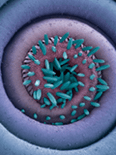
Annual Review of Entomology
Illuminating the World of EntomologyAnnual Review of Entomology, published by Annual Reviews, is a premier journal dedicated to advancing the understanding of entomology through comprehensive review articles from leaders in the field. With a focus on Ecology, Evolution, Behavior, and Systematics and Insect Science, the journal ranks in the top quartile (Q1) as of 2023, reflecting its significant impact and relevance in these disciplines. Based in the United States, the Annual Review of Entomology has been a trusted resource since its inception, providing critical insights that inform research, policy, and education in entomology. Researchers and professionals will find valuable reviews that synthesize current knowledge and highlight future directions in insect research. The journal's impressive standing, as indicated by its rankings—first in both Agricultural and Biological Sciences categories—emphasizes its pivotal role in shaping scientific discourse and innovation.
ORIENTAL INSECTS
Bridging Science and Conservation in Insect StudiesORIENTAL INSECTS is a distinguished journal dedicated to advancing the field of Insect Science, published by the reputable Taylor & Francis Ltd. With its long-standing history since 1967, this journal provides a platform for innovative research focused specifically on the diverse insect fauna of the Oriental region, encompassing topics such as taxonomy, ecology, physiology, and behavior. The journal is indexed with an ISSN of 0030-5316 and an E-ISSN of 2157-8745, making it easily accessible to a global audience. Although it currently does not operate under an Open Access model, its rigorous peer-review process ensures the dissemination of high-quality research. As a Q4 journal in the Insect Science category for 2023 and ranked 103 out of 181 in Scopus, ORIENTAL INSECTS remains a vital resource for researchers, professionals, and students seeking to enhance their understanding of insect biodiversity and conservation. Located in the United Kingdom, it is committed to promoting the latest scientific findings and fostering collaboration among entomologists worldwide, contributing significantly to the academic community.
ANNALES ZOOLOGICI
Delving into the Dynamics of Animal BiologyANNALES ZOOLOGICI is a distinguished academic journal published by the Museum & Institute of Zoology, Polish Academy of Sciences, based in Warsaw, Poland. With a long-standing tradition in zoological research, this journal has evolved to encompass a diverse range of studies in ecology, evolution, behavior, and systematics, aiming to foster a deeper understanding of animal biology and conservation. It holds a commendable Q2 classification in the 2023 Ecology, Evolution, Behavior and Systematics category, indicating its significant contribution to the field. Although ANNALES ZOOLOGICI is not an open-access publication, it remains accessible to a global audience of researchers, professionals, and students aiming to advance their knowledge and engage with cutting-edge zoological findings. As of 2024, this journal continues to be a vital resource for those eager to explore the complexities of animal life and contribute to ongoing discussions within this essential scientific discipline.
Entomologica Americana
Fostering Insights into Biodiversity and EcologyEntomologica Americana is a pivotal journal in the field of Insect Science, published by the esteemed New York Entomological Society Inc. With its ISSN (1947-5136) and E-ISSN (1947-5144), this journal serves as a critical resource for researchers, professionals, and students dedicated to the study of entomology. Although it is categorized in the Q4 quartile for Insect Science as per the 2023 Scopus Rankings, where it ranks 179 out of 181, it continues to provide valuable insights into various aspects of insect biology, ecology, and conservation. The journal has been actively publishing since its convergence years from 2009 to 2017, and in selected years thereafter, including 2019, 2021, and 2023. Located at the iconic American Museum of Natural History in New York City, Entomologica Americana is a testament to the ongoing exploration and understanding of the insect world that underpins biodiversity and ecosystem health. Although it does not operate under an Open Access model, it offers a vital platform for scholarly communication and the dissemination of research findings, making it indispensable for anyone involved in or entering the fascinating field of entomology.

ACTA ENTOMOLOGICA MUSEI NATIONALIS PRAGAE
Empowering Research in Insect Biology and BeyondACTA ENTOMOLOGICA MUSEI NATIONALIS PRAGAE, published by the esteemed NARODNI MUZEUM - PRIRODOVECKE MUZEUM in the Czech Republic, is an influential journal in the fields of Ecology, Evolution, Behavior and Systematics, as well as Insect Science. With an ISSN of 0374-1036 and an E-ISSN of 1804-6487, this journal has established itself as a vital resource for researchers, professionals, and students interested in the intricate world of entomology. Spanning publications from 2005 to 2024, it is recognized for its contributions to the understanding of insect biology, offering insights on ecological interactions and evolutionary relationships. Although it operates as a subscription-based platform, the journal maintains a respectable presence in scholarly circles, positioned in the Q2 quartile for both relevant categories in 2023. ACTA ENTOMOLOGICA serves not only as a repository of significant empirical findings but also as a discourse platform for emerging entomological concepts, making it an essential read for those involved in the biological sciences.
JOURNAL OF THE KANSAS ENTOMOLOGICAL SOCIETY
Advancing Knowledge in Entomology and EcologyJOURNAL OF THE KANSAS ENTOMOLOGICAL SOCIETY, published by the Kansas Entomological Society, serves as a vital platform dedicated to the field of entomology and insect science. With an ISSN of 0022-8567 and an E-ISSN of 1937-2353, this journal has established itself since its inception in 1994, continuing to contribute valuable research up to 2024. Despite its current Q4 categorization in the 2023 Insect Science rankings, it ranks 106 out of 181 in Scopus, representing a significant opportunity for researchers to disseminate their findings in a supportive and engaged community. Although it is not an open-access journal, its commitment to rigorous peer review and relevance in agricultural and biological sciences makes it an essential resource for professionals, scholars, and students alike. The journal's focus on local and regional entomological issues often addresses broader ecological impacts, showcasing the importance of insects in environmental health and agriculture. We invite you to explore the rich tapestry of findings and discussions within this esteemed publication.
INTERNATIONAL JOURNAL OF ODONATOLOGY
Illuminating the Science of Dragonflies and DamselfliesINTERNATIONAL JOURNAL OF ODONATOLOGY, published by Wachholtz Verlag GmbH, is a vital resource for researchers and professionals in the fields of Ecology, Evolution, Behavior, and Insect Science. Established in 1998, this journal provides a platform for the dissemination of innovative research pertaining to odonatology, encompassing the ecological and biological interactions of dragonflies and damselflies. With its focus on advancing knowledge within these scientific disciplines, the journal holds a commendable Q3 ranking in Ecology, Evolution, Behavior and Systematics and a Q2 ranking in Insect Science for 2023, reflecting its significance in academic circles. Although it operates without open access, its articles are accessible through institutional subscriptions, allowing for wide dissemination among scholars and practitioners. The journal's commitment to publishing high-quality, peer-reviewed research makes it an authoritative source of information that enriches the study of odonates and their broader ecological contexts. For inquiries, the journal's editorial team can be reached at C/O Fleet7, Fleethorn 7, Kiel 24103, Germany.

Insect Systematics and Diversity
Unraveling the Mysteries of Entomological ScienceInsect Systematics and Diversity, published by Oxford University Press Inc., stands as a leading journal in the realm of entomological research, boasting an impressive impact factor driven by its rigorous peer-review process and high-quality publications. With a focus on animal science, zoology, developmental biology, and insect science, the journal is expertly positioned to address the complexities of insect evolution, behavior, and ecological interactions. Since its inception in 2017, the journal has rapidly gained recognition, achieving Q1 quartile ranks in multiple categories, including Insect Science and Ecology, Evolution, Behavior, and Systematics, indicating its relevance and prestige within the academic community. Researchers, professionals, and students alike will find invaluable insights, methodologies, and discussions that propel the understanding of insect diversity and systematics, ensuring the journal is an essential resource for advancing knowledge in this dynamic field. The journal provides access to a wealth of information, fostering collaboration and engagement within the global scientific community.