
INSECT SYSTEMATICS & EVOLUTION
metrics 2024
Illuminating Insect Diversity and Evolution
Introduction
INSECT SYSTEMATICS & EVOLUTION is a prestigious journal published by BRILL, which has been a vital source of scholarly information since its inception. Specializing in the fields of ecology, evolution, behavior, and systematics within the realm of insect science, this journal garners significant attention with its 2023 ranking in the second quartile across multiple categories, highlighting its relevance and impact in the field. With a focus on advancing knowledge through innovative research and reviews, it serves as an essential platform for researchers, professionals, and students alike, promoting an understanding of insect biodiversity and systematics. The journal’s accessibility options, including its Open Access policy, combined with a broad international scope, ensure that critical findings reach a diverse audience, fostering collaboration and discourse within the scientific community. Situated in the Netherlands, INSECT SYSTEMATICS & EVOLUTION maintains its commitment to excellence and strives to contribute actively to the ongoing dialogue in insect science, making it a must-read for anyone interested in the intricate world of insects.
Metrics 2024
 0.461.301.1034
Metrics History
Rank 2024
Scopus
IF (Web Of Science)
JCI (Web Of Science)
Quartile History
Similar Journals
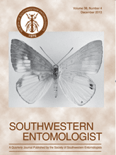
SOUTHWESTERN ENTOMOLOGIST
Pioneering Studies for Ecological and Agricultural ProgressSOUTHWESTERN ENTOMOLOGIST is a pivotal academic journal dedicated to advancing the fields of Agronomy, Ecology, and Insect Science. Published by the SOUTHWESTERN ENTOMOLOGICAL SOC in the United States, this journal plays a crucial role in disseminating vital research findings that address pressing ecological and agricultural challenges. With its ISSN 0147-1724 and E-ISSN 2162-2647, the journal has been publishing comprehensive studies since 1993 and continues to contribute significantly to the knowledge base up to 2024. As a Q4 ranked journal in both Agronomy and Crop Science and Ecology, as well as Insect Science, it provides an inclusive platform for researchers and students to share their insights and foster collaborations. Although it currently does not offer open access options, the content is accessible to academic institutions and professionals, ensuring that significant findings reach a broad audience. Given its niche focus, SOUTHWESTERN ENTOMOLOGIST not only appeals to researchers and students but also to professionals looking to stay updated on the latest trends and developments in entomology and its related fields.

Zoosystematics and Evolution
Elevating the discourse on systematics and evolution.Zoosystematics and Evolution is a premier peer-reviewed journal dedicated to the fields of animal science, zoology, and evolution, published by Pensoft Publishers. With a commendable Q1 ranking in multiple categories including Animal Science and Zoology, Ecology, Evolution, Behavior and Systematics, as well as Insect Science, this journal stands out as a vital resource for researchers and professionals engaged in the dynamic study of biodiversity and systematics. Since transitioning to Open Access in 2014, it has ensured that groundbreaking research is readily available to a global audience, thus fostering collaborative advancements and facilitating the dissemination of knowledge. The journal has a significant presence in both Scopus and various academic indices, enhancing its reputation and impact within the scientific community. Based in Bulgaria, at 12 Prof Georgi Zlatarski St, Sofia, the journal continues to thrive, contributing valuable insights that drive scientific inquiry and exploration in the ever-evolving realm of zoological research.
SYSTEMATICS AND BIODIVERSITY
Illuminating the path to understanding biological diversity.Systematics and Biodiversity, published by Taylor & Francis Ltd, is a prominent academic journal that provides a vital platform for advancing research in the fields of ecology, evolution, and plant science. With an ISSN of 1477-2000 and an E-ISSN of 1478-0933, the journal has established itself as a reputable source of scholarly information since its inception in 2003, and continues to publish cutting-edge studies through 2024. Recognized for its rigorous peer-review process, it holds a prestigious position in academic circles, reflected by its Q2 ranking in Ecology, Evolution, Behavior and Systematics and Q1 ranking in Plant Science as of 2023. The journal's contributions are further characterized by its strong performance in Scopus rankings, placing it in the 69th and 68th percentiles in its respective categories. Researchers, professionals, and students alike will find invaluable insights and innovative methodologies within its pages, making Systematics and Biodiversity an essential resource for those dedicated to understanding the complexities of biological diversity and systematics. The journal's impact factors and commitment to high-quality research underscore its significance in shaping the future of ecological and botanical studies.

Annual Review of Entomology
Connecting Research, Policy, and Education in EntomologyAnnual Review of Entomology, published by Annual Reviews, is a premier journal dedicated to advancing the understanding of entomology through comprehensive review articles from leaders in the field. With a focus on Ecology, Evolution, Behavior, and Systematics and Insect Science, the journal ranks in the top quartile (Q1) as of 2023, reflecting its significant impact and relevance in these disciplines. Based in the United States, the Annual Review of Entomology has been a trusted resource since its inception, providing critical insights that inform research, policy, and education in entomology. Researchers and professionals will find valuable reviews that synthesize current knowledge and highlight future directions in insect research. The journal's impressive standing, as indicated by its rankings—first in both Agricultural and Biological Sciences categories—emphasizes its pivotal role in shaping scientific discourse and innovation.
Entomologica Americana
Exploring the Intricacies of Insect LifeEntomologica Americana is a pivotal journal in the field of Insect Science, published by the esteemed New York Entomological Society Inc. With its ISSN (1947-5136) and E-ISSN (1947-5144), this journal serves as a critical resource for researchers, professionals, and students dedicated to the study of entomology. Although it is categorized in the Q4 quartile for Insect Science as per the 2023 Scopus Rankings, where it ranks 179 out of 181, it continues to provide valuable insights into various aspects of insect biology, ecology, and conservation. The journal has been actively publishing since its convergence years from 2009 to 2017, and in selected years thereafter, including 2019, 2021, and 2023. Located at the iconic American Museum of Natural History in New York City, Entomologica Americana is a testament to the ongoing exploration and understanding of the insect world that underpins biodiversity and ecosystem health. Although it does not operate under an Open Access model, it offers a vital platform for scholarly communication and the dissemination of research findings, making it indispensable for anyone involved in or entering the fascinating field of entomology.

Alpine Entomology
Exploring the Insect Wonders of Mountainous RealmsAlpine Entomology is a pioneering open-access journal published by Pensoft Publishers, dedicated to advancing the study of insect science and ecology, with a particular focus on mountainous environments. Launched in 2017 and accessible online, this journal provides a vital platform for researchers, professionals, and students to share their findings and insights in a rapidly evolving field. With its ISSN N/A and E-ISSN 2535-0889, Alpine Entomology has been recognized for its contributions, achieving Q3 category rankings in 2023 across several disciplines, including Animal Science and Zoology, as well as Ecology and Insect Science. Set in Sofia, Bulgaria, the journal exemplifies a commitment to promoting high-quality research and enhancing collaboration among scientists globally. Through its open-access model, it ensures that groundbreaking research is widely disseminated, helping to bridge gaps in knowledge and fostering a deeper understanding of alpine ecosystems and their intricate insect communities.
JOURNAL OF THE KANSAS ENTOMOLOGICAL SOCIETY
Advancing Knowledge in Entomology and EcologyJOURNAL OF THE KANSAS ENTOMOLOGICAL SOCIETY, published by the Kansas Entomological Society, serves as a vital platform dedicated to the field of entomology and insect science. With an ISSN of 0022-8567 and an E-ISSN of 1937-2353, this journal has established itself since its inception in 1994, continuing to contribute valuable research up to 2024. Despite its current Q4 categorization in the 2023 Insect Science rankings, it ranks 106 out of 181 in Scopus, representing a significant opportunity for researchers to disseminate their findings in a supportive and engaged community. Although it is not an open-access journal, its commitment to rigorous peer review and relevance in agricultural and biological sciences makes it an essential resource for professionals, scholars, and students alike. The journal's focus on local and regional entomological issues often addresses broader ecological impacts, showcasing the importance of insects in environmental health and agriculture. We invite you to explore the rich tapestry of findings and discussions within this esteemed publication.
Insect Systematics and Diversity
Connecting the Dots in Insect Evolutionary StudiesInsect Systematics and Diversity, published by Oxford University Press Inc., stands as a leading journal in the realm of entomological research, boasting an impressive impact factor driven by its rigorous peer-review process and high-quality publications. With a focus on animal science, zoology, developmental biology, and insect science, the journal is expertly positioned to address the complexities of insect evolution, behavior, and ecological interactions. Since its inception in 2017, the journal has rapidly gained recognition, achieving Q1 quartile ranks in multiple categories, including Insect Science and Ecology, Evolution, Behavior, and Systematics, indicating its relevance and prestige within the academic community. Researchers, professionals, and students alike will find invaluable insights, methodologies, and discussions that propel the understanding of insect diversity and systematics, ensuring the journal is an essential resource for advancing knowledge in this dynamic field. The journal provides access to a wealth of information, fostering collaboration and engagement within the global scientific community.

Austral Entomology
Empowering Insect Studies for a Sustainable FutureAustral Entomology, published by Wiley, is a leading journal in the field of entomology, specializing in the study of insects within the wider context of agronomy, ecology, and evolutionary biology. With an impact factor that reflects its growing influence and a commendable H-Index, this journal serves a vital role in disseminating cutting-edge research that bridges the gap between basic entomological studies and applied agricultural practices. Since its inception in 2014, Austral Entomology has maintained a strong commitment to open access, fostering a collaborative environment for researchers and practitioners. Recognized within category quartiles Q2 across multiple fields such as Agronomy and Crop Science and Ecology, it ranks impressively among journals in Insect Science, showcasing the significance of its contributions to understanding insect behavior, ecology, and systematics. Given its robust accessibility options, the journal not only enhances the visibility of entomological research but also empowers professionals and students alike to engage with and apply findings in real-world contexts.

REVISTA DE LA SOCIEDAD ENTOMOLOGICA ARGENTINA
Advancing Insect Science Through Open Access ResearchREVISTA DE LA SOCIEDAD ENTOMOLOGICA ARGENTINA is an esteemed open-access journal dedicated to the field of entomology, published by the SOCIEDAD ENTOMOLOGICA ARGENTINA. Since its transition to open access in 2013, the journal has sought to promote research in insect science, ecology, and related disciplines, facilitating global dissemination of knowledge and encouraging collaborative studies across borders. Located in the vibrant scientific landscape of La Plata, Argentina, the journal is indexed in Scopus and categorized in the fourth quartile of ecology and insect science, reflecting its commitment to enhancing the discourse within these critical fields. Aiming to bridge the gap between researchers, students, and professionals, REVISTA DE LA SOCIEDAD ENTOMOLOGICA ARGENTINA serves as a platform for innovative research, reviews, and reports on ecological interactions, behavior, and systematic entomology, ultimately driving forward our understanding of insect biodiversity and its broader environmental impacts.