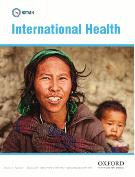
International Health
Scope & Guideline
Exploring Innovative Healthcare Solutions
Introduction
Aims and Scopes
- Global Health Research:
The journal publishes studies that address health issues on a global scale, particularly those affecting low- and middle-income countries, thus contributing to the understanding of global health disparities. - Public Health Interventions:
Papers often focus on evaluating public health interventions and policies, providing evidence for effective strategies to combat health challenges in diverse populations. - Neglected Tropical Diseases (NTDs):
A significant area of focus includes research on neglected tropical diseases, exploring their epidemiology, management, and integration into broader health systems. - Mental Health Integration:
The journal emphasizes the importance of integrating mental health into primary care and NTD management, highlighting the intersection of mental health and physical health. - Health Systems Strengthening:
Research on health systems strengthening is prevalent, focusing on capacity building, service delivery models, and health financing strategies. - Innovative Methodologies:
The journal encourages the use of innovative research methodologies, including participatory approaches, mixed-methods studies, and health economics to evaluate interventions.
Trending and Emerging
- COVID-19 Impact and Responses:
Research focusing on the impact of COVID-19 on various health systems and populations is a prominent emerging theme, exploring vaccine distribution, health-seeking behaviors, and the pandemic's broader socio-economic effects. - Mental Health and NTDs:
An increasing number of studies are exploring the intersection of mental health and neglected tropical diseases, emphasizing the need for integrated care models that address both physical and mental health. - Health Equity and Social Determinants:
Emerging themes include a stronger focus on health equity, social determinants of health, and addressing disparities in health outcomes among marginalized populations. - Innovative Health Technologies:
There is a growing interest in the use of innovative health technologies, including mobile health applications and telemedicine, particularly in the context of improving access to care in resource-limited settings. - Sustainability in Health Systems:
Research on the sustainability of health systems, particularly in light of climate change and resource constraints, is gaining prominence, highlighting the need for resilient health infrastructures.
Declining or Waning
- Traditional Epidemiological Studies:
There has been a noticeable decrease in the publication of traditional epidemiological studies that do not incorporate innovative methodologies or interdisciplinary approaches. - In-depth Case Studies:
The journal has published fewer detailed case studies focusing on single diseases or health interventions, likely shifting towards broader and more integrated health system analyses. - Focus on Non-Communicable Diseases (NCDs):
The emphasis on non-communicable diseases appears to be waning, possibly due to a growing focus on infectious diseases and global health emergencies like the COVID-19 pandemic. - Localized Health Issues:
There has been a reduction in studies that focus exclusively on localized health issues without a broader implication for global health, as the journal seeks to address more universal topics. - Single-Disease Programs:
The focus on single-disease programs has decreased, as the journal increasingly prioritizes integrated approaches to health that consider multiple health challenges simultaneously.
Similar Journals
BMJ Global Health
Pioneering insights that drive global health forward.BMJ Global Health is a premier open-access journal published by the BMJ Publishing Group, dedicated to advancing the field of global health through the dissemination of high-quality research, innovative ideas, and impactful policy analysis. Established in 2016 and based in the United Kingdom, this journal has rapidly ascended to prominence, evidenced by its solid impact factor and ranking in the Q1 category for both Health Policy and Public Health, Environmental and Occupational Health. With its commitment to open access, BMJ Global Health ensures that vital research is freely available to enhance public discourse and inform decision-making processes around the world. The journal welcomes contributions that address pressing global health challenges and offers researchers an influential platform to shape health practices and policies. With Scopus rankings placing it in the top percentile of its categories, BMJ Global Health is indispensable for anyone seeking to stay at the forefront of health discourse and practice.

International Journal of Noncommunicable Diseases
Exploring innovative solutions for global health challenges.The International Journal of Noncommunicable Diseases, published by Wolters Kluwer Medknow Publications, is a leading open-access journal dedicated to advancing research in the field of noncommunicable diseases (NCDs). Since its inception in 2016, the journal has provided a robust platform for the dissemination of high-quality studies, reviews, and case reports that address the growing burden of NCDs globally. With a commitment to enhancing knowledge and understanding, the journal aims to navigate the complexities of prevention, diagnosis, management, and policy implications related to diseases such as diabetes, cardiovascular conditions, and cancers. The journal features an inclusive editorial board made up of renowned experts in the field, ensuring rigorous peer review and maintaining a high standard of scholarly excellence. As an open-access journal, it promotes widespread availability of its content, fostering collaboration and innovation among researchers, healthcare professionals, and students alike. Engage with the latest research and contribute to the growing body of knowledge in this critical area of public health by exploring the International Journal of Noncommunicable Diseases.
Asia-Pacific Journal of Public Health
Exploring critical public health challenges in the Asia-Pacific region.Asia-Pacific Journal of Public Health, published by SAGE Publications Inc, is a leading platform for disseminating scholarly research in the field of public health. With an impressive scope that spans from the late 1980s to the present, the journal offers a wealth of articles that address critical issues faced by diverse populations in the Asia-Pacific region. Categorized in the Q3 quartile for both Medicine (miscellaneous) and Public Health, Environmental and Occupational Health, it holds a significant position within its field, ranked 310 out of 665 in the Scopus database. Researchers and professionals have access to valuable insights that inform public health policy and practice, making this journal an essential resource for those aiming to enhance health outcomes in the region. While not currently open access, the journal's rigorous peer-review process ensures the integrity and relevance of its content. As the landscape of public health continues to evolve, the Asia-Pacific Journal of Public Health remains a vital resource for advancing knowledge, fostering collaboration, and promoting a healthier society.
Osong Public Health and Research Perspectives
Connecting research to real-world health solutions.Osong Public Health and Research Perspectives is an esteemed open-access journal dedicated to advancing knowledge in the fields of Public Health and Infectious Diseases. Published by the Korea Disease Control & Prevention Agency, this journal serves as a vital resource for researchers, professionals, and students alike, addressing significant health challenges and disseminating research findings that contribute to public health advancements worldwide. Recognized for its impact, the journal boasts a Q2 ranking in both Infectious Diseases and Public Health, Environmental and Occupational Health categories, as well as a prestigious 94th percentile in Scopus rankings, underscoring its influence and quality. Since its inception in 2010, Osong Public Health and Research Perspectives has provided open access to critical research, ensuring that vital information is readily available to enhance public health initiatives and policy-making. With a commitment to upholding high academic standards, this journal continues to be a cornerstone for collaborative research and discourse within the global health community.

Lancet Global Health
Bridging gaps in health equity and knowledge.Lancet Global Health (ISSN: 2214-109X) is a leading open-access journal published by Elsevier, renowned for its commitment to disseminating high-quality research in the field of global health. Established in 2013, this esteemed journal has quickly ascended to become one of the top-ranked publications in its category, achieving a remarkable Q1 ranking in Medicine (Miscellaneous) and placing in the 98th percentile of general medicine according to Scopus. With a focus on innovative research and impactful studies, the Lancet Global Health aims to foster dialogue and dissemination of knowledge across disciplines, addressing pressing health issues effectively. The journal provides open access to its content, ensuring that vital information reaches a broad audience, including researchers, health professionals, and policy-makers. As it continues to bridge gaps in global health research and practice through its rigorous peer-reviewed articles, Lancet Global Health plays a crucial role in shaping the future of health equity and social justice worldwide.
Health Research Policy and Systems
Connecting knowledge to action in health care.Health Research Policy and Systems is a leading open-access journal published by BMC, dedicated to advancing the field of health policy and systems research. With an impressive impact factor and a prestigious ranking of Q1 in both Health Policy and Medicine (miscellaneous), this journal is positioned at the forefront of health system innovation and policy analysis. Established in 2003 and spanning until 2024, it serves as a vital platform for researchers, professionals, and students to disseminate high-quality, peer-reviewed research that informs and shapes effective health policies. Based in the United Kingdom, the journal is committed to providing a global audience with access to a wide array of research articles, systematic reviews, and commentary that address pressing health system challenges and propose actionable solutions. With an rising reputation, Health Research Policy and Systems plays an essential role in bridging the gap between research and practice, fostering the exchange of knowledge across disciplines to enhance health outcomes worldwide.

Current Tropical Medicine Reports
Exploring the frontiers of tropical medicine.Current Tropical Medicine Reports, published by Springer, is an esteemed journal that serves as a pivotal platform for researchers, professionals, and students in the fields of immunology, allergy, and infectious diseases. With a strong focus on emerging tropical medicine topics, the journal provides an authoritative avenue for disseminating innovative research and practical insights, showcasing its commitment to advancing global health knowledge. Now in its convergence years from 2014 to 2024, it has successfully established itself in the academic community, evidenced by its Q2 rankings in the categories of Infectious Diseases and Immunology and Allergy in 2023, reflecting its impact and relevance. The journal boasts impressive Scopus rankings, holding the 50th position in Infectious Diseases and 55th in Immunology and Allergy, further underscoring its significance in these critical fields. While it operates under a subscription model, the journal serves not only as a resource for published research but also as a catalyst for collaboration and knowledge exchange among the scientific community. With a growing readership, Current Tropical Medicine Reports is poised to continue shaping the discourse surrounding tropical health challenges.
HEALTH POLICY AND PLANNING
Connecting Research to Real-World Health Impact.HEALTH POLICY AND PLANNING is a prestigious academic journal published by Oxford University Press that focuses on the critical issues related to health policy and its impact on global health systems. Since its inception in 1986, this journal has rapidly established itself in the field, holding a distinguished position in the Q1 category of Health Policy, with a notable Scopus ranking of #57 out of 310, placing it in the 81st percentile. By providing a platform for empirical research, theoretical analyses, and policy discussions, HEALTH POLICY AND PLANNING aims to contribute to the development and improvement of health policies worldwide. As a valuable resource for researchers, professionals, and students alike, it fosters a deeper understanding of health system challenges and encourages the dissemination of innovative solutions. Although the journal does not offer open access, it remains an essential publication for those engaged in shaping the future of global health policy.
TROPICAL DOCTOR
Elevating the discourse on public health in tropical regions.Tropical Doctor is a distinguished academic journal published by SAGE Publications Inc, specializing in the fields of infectious diseases and public health. With a history dating back to 1971, this journal serves as a crucial platform for disseminating research focused on the health challenges and requirements pertinent to tropical and developing regions. Though currently categorized in the fourth quartile in both Infectious Diseases and Public Health, Environmental and Occupational Health, it plays an essential role in fostering dialogue among researchers, health professionals, and policymakers. The journal provides insights into the prevention, treatment, and management of tropical diseases, thus bridging gaps in knowledge that are vital for improving health outcomes. While it does not offer open access, its rigorous peer-review process ensures that only high-quality research is published. As the global landscape of health continues to evolve, Tropical Doctor remains an important resource for those committed to addressing the pressing health issues in tropical regions.
Health Policy OPEN
Opening doors to groundbreaking research in health policy.Health Policy OPEN is an esteemed open-access journal published by Elsevier that has made significant contributions to the field of health policy since its inception in 2020. With an impact factor placing it in the prestigious Q2 category of health policy journals, it ranks 116 out of 310 within the Scopus database, highlighting its critical engagement in the field and situating it within the 62nd percentile. As an open-access platform, Health Policy OPEN promotes the dissemination of high-quality research, making it accessible to a global audience of researchers, professionals, and students alike. The journal focuses on topical issues, innovative approaches, and evidence-based practices that shape health policies worldwide. With its headquarters in Amsterdam, Netherlands, the journal serves as a vital resource for advancing knowledge and fostering discussions that drive health policy initiatives and reforms. Engage with Health Policy OPEN to contribute to the evolving landscape of health policy and to stay informed on the latest research advancements.