Journal of Nutrition Health & Aging
Scope & Guideline
Empowering healthier aging with innovative research.
Introduction
Aims and Scopes
- Nutrition and Aging:
Research exploring how dietary patterns, nutrient intake, and specific diets (e.g., Mediterranean diet, plant-based diets) impact health outcomes and aging processes in older adults. - Sarcopenia and Functional Capacity:
Studies investigating the relationship between sarcopenia, muscle mass, and functional decline, including assessments of muscle quality and interventions to improve physical function. - Frailty and Nutrition:
Examination of frailty as a critical health issue in older adults, focusing on the role of nutrition in its prevention and management. - Chronic Disease Management:
Research on the influence of nutritional status on chronic diseases prevalent in older populations, such as cardiovascular disease, diabetes, and cognitive decline. - Social Determinants of Health:
Studies that consider the social and environmental factors affecting nutrition and health outcomes among older adults, including food insecurity and social isolation. - Interventions and Clinical Applications:
Research focused on practical interventions, including dietary supplementation, exercise programs, and integrated care models aimed at improving health and quality of life in older adults.
Trending and Emerging
- Precision Nutrition:
Research is increasingly focusing on precision nutrition, tailoring dietary recommendations based on genetic, metabolic, and lifestyle factors to optimize health outcomes in older adults. - Mental Health and Nutrition:
Emerging studies are exploring the links between nutrition, mental health, and cognitive function, particularly how dietary patterns can influence mood and cognitive decline. - Interdisciplinary Approaches:
There is a growing trend towards interdisciplinary research that combines insights from nutrition, gerontology, psychology, and social sciences to address the multifaceted challenges of aging. - Impact of COVID-19 on Aging:
Research addressing the effects of the COVID-19 pandemic on nutritional status, health behaviors, and frailty in older adults has surged, highlighting the need for adaptive strategies in public health. - Technology and Aging:
Investigations into the use of technology, such as telehealth and remote monitoring, to support nutritional interventions and health management in older adults are gaining prominence.
Declining or Waning
- Traditional Dietary Supplements:
Research on conventional dietary supplements has seen a decline, possibly due to a shift towards more holistic and integrated dietary interventions that consider the overall dietary pattern rather than isolated supplements. - Single Nutrient Focus:
There is a noticeable decrease in studies focusing solely on individual nutrients without considering their role within the broader context of dietary patterns and overall health. - Age-Specific Nutritional Guidelines:
While age-specific guidelines were once a focal point, there is a growing trend towards personalized nutrition that considers individual health profiles rather than broad age categories.
Similar Journals

Nutrition Journal
Empowering Healthy Choices with Groundbreaking Research.Nutrition Journal is a prestigious open-access publication from BMC, dedicated to advancing the field of nutrition and dietetics since its inception in 2002. With an impressive impact factor and a notable Scopus ranking, it ranks in the top quartile (Q1) in both Medicine (miscellaneous) and Nutrition and Dietetics, highlighting its significant contribution to health sciences. Based in the United Kingdom, the journal covers a broad spectrum of topics, making it an essential resource for researchers, healthcare professionals, and students interested in nutrition's role in health and disease prevention. The journal not only facilitates the dissemination of groundbreaking research but also prioritizes accessibility, allowing global audiences to engage with vital findings that shape dietary practices and public health policies. With a commitment to interdisciplinary collaboration, Nutrition Journal fosters an environment where innovative ideas and evidence-based solutions can flourish, making it a cornerstone reference in the field.
BMC Geriatrics
Elevating the discourse on aging and health.BMC Geriatrics is a leading open-access journal dedicated to advancing the field of geriatrics and gerontology. Published by BMC, this esteemed journal has been at the forefront of research since its inception in 2001, providing a vital platform for sharing innovative studies and insights that address the complexities of aging. With an impressive Q1 ranking in the 2023 category of Geriatrics and Gerontology and a solid Scopus ranking at #40 out of 116, BMC Geriatrics showcases high-impact research that influences clinical practices and policy-making. As a fully open-access publication, it ensures that groundbreaking research is freely available to researchers, practitioners, and students alike, promoting the diffusion of knowledge across the global healthcare community. This journal is crucial for anyone interested in the latest developments in elderly care, health issues affecting aging populations, and innovative interventions designed to improve quality of life among older adults.

Journal of Frailty & Aging
Fostering innovation in the study of frailty.Journal of Frailty & Aging, published by SPRINGER BASEL AG, is a leading platform dedicated to advancing research in the fields of aging, geriatrics, and gerontology. With an ISSN of 2260-1341 and an E-ISSN of 2273-4309, this journal has established itself as a pivotal resource for scholars and practitioners aiming to explore the complexities of frailty and its impact on aging populations. As of 2023, it proudly holds a Q3 classification in Aging and Q2 classifications in both Geriatrics and Gerontology, as well as Physiology (medical), alongside a notable Q1 ranking in Medicine (miscellaneous). The journal's Scopus ranks further reflect its quality and relevance, with rankings as high as #22 in Aging within the Biochemistry, Genetics and Molecular Biology category. The Journal of Frailty & Aging invites contributions that illuminate contemporary challenges and innovations in the field, offering Open Access to enhance the dissemination of knowledge. By publishing rigorous research and impactful reviews, the journal strives to foster a deeper understanding of health and well-being in older adults, making it an essential resource for researchers, healthcare professionals, and students engaged in this vital area of study.
International Journal of Gerontology
Elevating the discourse on aging and its implications.International Journal of Gerontology is a distinguished peer-reviewed journal dedicated to advancing the field of gerontology and addressing the multifaceted challenges associated with aging. Published by the Taiwan Society of Geriatric Emergency & Critical Care Medicine, this innovative journal has been an open-access platform since 2018, ensuring that vital research is accessible to a global audience. With an ISSN of 1873-9598, it serves as a crucial resource for researchers and practitioners focused on the biological, psychological, and social aspects of aging. The journal is indexed in Scopus with a rank of #103/116 in the Medicine category (Geriatrics and Gerontology) as of 2023, placing it in the Q4 quartile—a testament to its evolving impact in the field. Spanning works published from 2007 to 2024, the International Journal of Gerontology facilitates the dissemination of critical research findings and clinical practices that inform and enhance geriatric care and research methodologies.
European Review of Aging and Physical Activity
Empowering healthier aging through physical engagement.European Review of Aging and Physical Activity is a leading peer-reviewed journal published by SPRINGER HEIDELBERG, focusing on the intersection of gerontology and physical activity. With an impact factor placing it in the Q1 category for Geriatrics and Gerontology, this journal serves as a vital resource for researchers, healthcare professionals, and students dedicated to advancing the understanding of how physical activity influences aging. Open Access since 2015, it provides broad accessibility to its high-quality research, ensuring that pivotal findings are available to a global audience. The journal's Scopus ranking further underscores its impact, being positioned at #17 out of 116 in the field of Geriatrics and Gerontology, placing it in the 85th percentile. Published from Germany, the European Review of Aging and Physical Activity continues to address pertinent issues in the field, facilitating discourse and innovation for better health outcomes in aging populations.
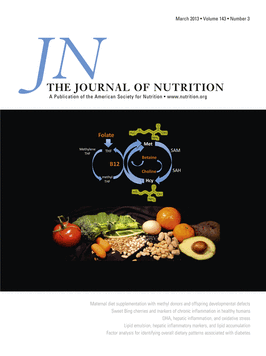
JOURNAL OF NUTRITION
Exploring the vital links between diet and well-being.JOURNAL OF NUTRITION is a premier academic journal published by Elsevier Science Inc, dedicated to advancing the understanding of nutritional science and its impact on health. With a long-standing tradition since its inception in 1945, the journal provides a vital platform for high-quality research, featuring articles that cover a wide range of topics within the fields of Medicine and Nutrition and Dietetics. Recognized for its significant contributions, the journal holds an impressive impact factor, with a Q1 rank in both Medicine (miscellaneous) and Nutrition and Dietetics as of 2023, positioning it among the top tier of scholarly publications in these disciplines. The Scopus Rankings further validate its status, boasting a rank of #57/398 in Medicine and #30/140 in Nutrition, indicating its influential presence in the research community. Although it operates under a traditional access model, the journal actively engages with a global audience of researchers, professionals, and students by disseminating cutting-edge insights designed to inform nutrition policy and practice. By focusing on current trends, innovative methodologies, and evidence-based nutrition strategies, the JOURNAL OF NUTRITION continues to be an essential resource for those committed to enhancing health through nutrition.

Journal of Gerontology and Geriatrics
Bridging Research and Practice in GeriatricsJournal of Gerontology and Geriatrics, published by PACINI EDITORE, is a crucial resource for those dedicated to the study of aging and geriatric health. Since its inception in 2016, this journal has aimed to disseminate high-quality research and findings that address the intricate biological, social, and psychological aspects of aging. With ISSN 2499-6564 and E-ISSN 2499-6564, it strives to foster discussions that enhance our understanding of gerontology and geriatrics on a global scale, despite its current positioning in the Q4 quartile of academic rankings. Located in Pisa, Italy, the journal invites contributions from researchers, professionals, and students who are passionate about advancing knowledge in these critical fields. Although it currently does not offer open access, the journal plays a vital role in connecting the community with essential insights that guide both research and practice in geriatric care.
AMERICAN JOURNAL OF CLINICAL NUTRITION
Elevating dietary science through rigorous research.The American Journal of Clinical Nutrition, published by Elsevier Science Inc, stands as a premier academic platform dedicated to advancing knowledge in the fields of clinical nutrition and dietary science. With its roots tracing back to 1952, this prestigious journal boasts rigorous peer-reviewed research, providing vital insights and evidence-based findings that cater to the ever-evolving landscape of nutrition and health care. Affiliated with a strong reputation, the journal holds an impressive impact factor and is ranked in the top quartile (Q1) in both Nutrition and Dietetics and Medicine (miscellaneous), underscoring its significance in the academic community. With current Scopus rankings placing it #7 in Nursing and Nutrition and Dietetics and #20 in Medicine, it serves as an essential resource for researchers and practitioners seeking to stay at the forefront of clinical nutritional science. This journal not only disseminates groundbreaking research but also fosters collaborations among scholars, enhancing the clinical implications of nutrition practices globally. Access to the journal may vary, given its non-open access format; however, its contributions remain indispensable to professionals and students alike striving to deepen their understanding of clinical nutrition.
Journal of the American Medical Directors Association
Empowering research in Geriatrics and Gerontology.The Journal of the American Medical Directors Association, published by Elsevier Science Inc, stands as a leading publication in the fields of Geriatrics, Gerontology, Health Policy, and Nursing. With an impressive track record since its inception in 2001, this journal features cutting-edge research and critical reviews that address the multifaceted challenges affecting older adults and the professionals who serve them. Holding a Q1 ranking in multiple categories, including Geriatrics and Gerontology, it boasts an outstanding reputation within the academic community, reflected in its Scopus rankings—#3 in General Nursing and #7 in Geriatrics and Gerontology. This journal not only disseminates vital knowledge but also aims to influence policy and clinical practice, making it an essential resource for researchers, healthcare professionals, and students dedicated to improving care for the aging population. Although it operates under a subscription model, the journal ensures that its curated content continues to advance the understanding and management of age-related health issues.
JOURNAL OF RENAL NUTRITION
Nourishing Insights for Better Renal OutcomesJOURNAL OF RENAL NUTRITION, published by W B SAUNDERS CO-ELSEVIER INC, stands as a vital resource in the domains of nephrology, nutrition, and dietetics. With its ISSN 1051-2276 and E-ISSN 1532-8503, this journal has been committed to advancing the field since 1991, showcasing research that influences both clinical practice and dietary management in renal care. Ranking in the Q2 category for Medicine (miscellaneous), Nephrology, and Nutrition and Dietetics, it encourages the dissemination of quality research that enhances our understanding of the interplay between renal health and nutrition. With Scopus rankings placing it among the top 20% of journals in relevant fields, it serves as an essential platform for researchers, healthcare professionals, and students seeking to stay abreast of the latest findings and clinical advancements. Though not an open-access publication, its impact in shaping dietary approaches for renal patients cannot be overstated, making it a key tool for those dedicated to optimising health outcomes in this specialized area.