INTERNATIONAL JOURNAL OF IMAGING SYSTEMS AND TECHNOLOGY
metrics 2024
Exploring the Frontiers of Imaging Science
Introduction
INTERNATIONAL JOURNAL OF IMAGING SYSTEMS AND TECHNOLOGY, published by Wiley, is a leading journal dedicated to advancing the field of imaging systems and technologies. With an ISSN of 0899-9457 and E-ISSN 1098-1098, this esteemed journal offers a platform for high-quality research spanning essential interdisciplinary areas, including Biomedical Engineering, Computer Science, and Health Informatics. Recognized for its impactful contributions, it holds a commendable position in the Q2 quartile across multiple categories as of 2023. The journal boasts an excellent Scopus ranking, with notable acknowledgments like rank #49 out of 333 in Radiology, Nuclear Medicine, and Imaging, showcasing its relevance and importance in the academic community. Publishes annually from 1989 to 2024, it aims to bridge gaps in knowledge and foster innovative developments through rigorous peer-reviewed articles. Though it operates under a traditional access model, the journal maintains an accessible repository of cutting-edge research, making it indispensable for researchers, professionals, and students alike seeking to stay at the forefront of imaging technology advancements.
Metrics 2024
 0.713.002.9057
Metrics History
Rank 2024
Scopus
IF (Web Of Science)
JCI (Web Of Science)
Quartile History
Similar Journals

Tomography
Advancing medical imaging through innovative research.Tomography is an esteemed peer-reviewed journal published by MDPI, focusing on a broad spectrum of topics related to medical imaging and diagnostics. Launched in 2015, this Open Access journal serves as a vital platform for researchers, professionals, and students in the fields of medicine, radiology, nuclear medicine, and imaging. With an impressive impact factor reflecting its relevance, the journal has achieved a quartile ranking of Q2 in both Medicine (Miscellaneous) and Radiology, Nuclear Medicine, and Imaging as of 2023. Renowned for disseminating high-quality research, Tomography welcomes original research articles, reviews, and technical notes, fostering innovation and collaboration within the scientific community. Housed in Basel, Switzerland, the journal aims to bridge the gap between fundamental research and clinical application, appealing to a diverse readership eager to advance the field of medical imaging.
MAGNETIC RESONANCE IN MEDICINE
Transforming Health Care with Magnetic Resonance InsightsMAGNETIC RESONANCE IN MEDICINE is a premier academic journal published by Wiley, dedicated to advancing the field of radiology, nuclear medicine, and imaging. With an impressive impact factor reflective of its Q1 ranking in the Radiology, Nuclear Medicine and Imaging category for 2023, it holds a distinguished position among its peers. Since its inception in 1984, this journal has served as a vital resource for researchers, clinicians, and students alike, offering cutting-edge research articles, reviews, and innovative findings that push the boundaries of magnetic resonance technology. The journal’s rigorous peer-review process ensures the highest standards of scientific integrity, making it an essential platform for those looking to make significant contributions to the field. Published in the United States, MAGNETIC RESONANCE IN MEDICINE continues to foster global discourse and collaboration, offering access options that include traditional subscriptions, ensuring that its vital content remains accessible to the academic community and beyond.
SIGNAL PROCESSING-IMAGE COMMUNICATION
Innovating Signal Processing for Tomorrow's TechnologiesSIGNAL PROCESSING-IMAGE COMMUNICATION, published by Elsevier, is a leading journal in the fields of Computer Vision, Signal Processing, and Electrical Engineering. With an impressive range of Quartile rankings in 2023, including Q1 in Electrical and Electronic Engineering and Q2 in Signal Processing, this journal is vital for researchers and professionals seeking the latest advancements and comprehensive studies in image communication technologies. Issued in the Netherlands, SIGNAL PROCESSING-IMAGE COMMUNICATION has been an essential resource since its inception in 1989, fostering innovation and collaboration among academia and industry. The journal provides a platform for high-quality peer-reviewed research, addressing significant challenges and solutions in the convergence of image processing and communication. Although currently not an Open Access journal, it offers subscription options that ensure a broad dissemination of groundbreaking knowledge. With a robust reputation reflected in its Scopus ranks, this journal serves as an indispensable reference for students and experts aiming to stay at the forefront of developments in this dynamic field.
Current Medical Imaging
Unveiling the Future of Imaging in MedicineCurrent Medical Imaging is a reputable journal published by Bentham Science Publishers, specializing in the dynamic field of medical imaging, with a strong emphasis on both clinical applications and technological advancements. Established in 2007, the journal has made significant contributions to the fields of Internal Medicine and Radiology, consistently ranking in the Q3 quartile for these categories as of 2023. The journal's ISSN 1573-4056 and E-ISSN 1875-6603 ensure wide accessibility for scholarly communication, although it operates under a traditional access model. With its continuous publication from 2011 to 2024, Current Medical Imaging aims to bridge the gap between advanced imaging techniques and their practical application in patient care, making it indispensable for researchers, healthcare professionals, and students eager to stay at the forefront of innovations in imaging technology and clinical practice.

EJNMMI Physics
Transforming Nuclear Medicine through Cutting-edge Physics.EJNMMI Physics, the premier journal for advancements in nuclear medicine and imaging, is published by Springer in Switzerland and has been an open-access outlet since 2014, allowing for broad dissemination of critical research findings. With an ISSN of 2197-7364, the journal aims to bridge the gap between state-of-the-art physics and practical applications in biomedical engineering and radiology. Its impressive Q1 ranking in multiple categories, including Biomedical Engineering, Instrumentation, Radiation, and Radiology, Nuclear Medicine and Imaging, exemplifies its significant impact in the field. The journal boasts exceptional metrics with Scopus rankings placing it in the top echelons across disciplines, including a 6th position out of 58 in Radiation, and serves as an essential resource for researchers, professionals, and students who are eager to contribute to and stay informed about cutting-edge scientific advancements. With a broadening scope until 2024, EJNMMI Physics is an indispensable tool for those dedicated to pushing the boundaries of knowledge in medical physics and imaging technologies.
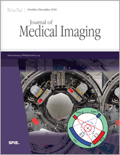
Journal of Medical Imaging
Illuminating Innovations in Medical ImagingThe Journal of Medical Imaging, published by SPIE-SOC PHOTO-OPTICAL INSTRUMENTATION ENGINEERS, is an esteemed publication in the field of medical imaging, playing a pivotal role in advancing the discipline since its inception in 2014. With an ISSN of 2329-4302 and an E-ISSN of 2329-4310, this journal has garnered significant recognition, evidenced by its Q2 ranking in 2023 within the critical category of Radiology, Nuclear Medicine, and Imaging. The journal is dedicated to presenting cutting-edge research and innovations that enhance diagnostic imaging techniques and methodologies, appealing to a diverse audience of researchers, professionals, and students alike. Offering valuable insights into the interplay of optics and imaging technologies, it serves as a crucial resource for fostering knowledge and collaboration in the medical community. Notably, it holds a competitive rank of #136 out of 333 in its Scopus category, placing it in the 59th percentile—a testament to its influence and relevance in ongoing medical research. Therefore, the Journal of Medical Imaging stands out as an essential platform for disseminating transformative findings and innovations in healthcare imaging.
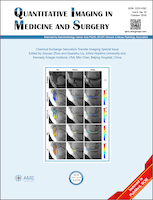
Quantitative Imaging in Medicine and Surgery
Empowering Clinicians with Advanced Imaging KnowledgeQuantitative Imaging in Medicine and Surgery is an esteemed journal dedicated to advancing the field of medical imaging through rigorous research and innovative methodologies. Published by AME PUBLISHING COMPANY in China, this journal has established itself with an impressive Q2 quartile ranking in the field of Radiology, Nuclear Medicine, and Imaging, reflecting its dedication to high-quality research. With a comprehensive focus on quantitative imaging techniques, the journal covers a wide range of topics including image analysis, imaging biomarkers, and the integration of imaging in clinical practice, promoting collaboration between imaging specialists and clinicians. As an open access journal, Quantitative Imaging in Medicine and Surgery ensures that its articles are freely accessible, facilitating the dissemination of knowledge to a broader audience. With a commitment to fostering innovation in imaging science, this journal serves as an invaluable resource for researchers, professionals, and students alike, ultimately aiming to improve patient outcomes through advanced imaging strategies and technologies.
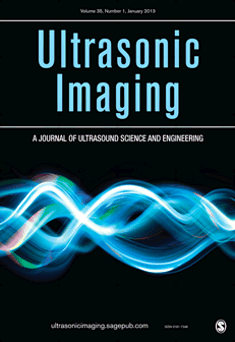
ULTRASONIC IMAGING
Advancing the Frontiers of Ultrasound TechnologyULTRASONIC IMAGING, published by SAGE PUBLICATIONS INC, is a leading journal within the fields of Radiology, Nuclear Medicine, and Imaging, with a particular focus on advancing the science and application of ultrasound technology. Since its inception in 1979, the journal has provided a platform for high-quality research, featuring innovative studies that bridge theoretical advancements and practical applications, making it an essential resource for researchers and professionals. With a notable impact factor reflecting its robust contribution to the medical community (2023: Q2 rankings in both Radiological and Ultrasound Technology and Radiology, Nuclear Medicine, and Imaging), ULTRASONIC IMAGING serves to disseminate pivotal developments in diagnostic imaging techniques, enhancing the understanding of ultrasound's role in patient care. Researchers are encouraged to explore this journal's collection of cutting-edge articles that push the boundaries of knowledge in ultrasound imaging and its implementation in clinical practices.

Imaging
Advancing the Frontiers of Medical ImagingImaging, published by AKADEMIAI KIADO ZRT, is an esteemed open-access journal dedicated to the field of medical imaging, established in 2020. With an E-ISSN of 2732-0960 and based in Budapest, Hungary, this journal provides a vital platform for the dissemination of cutting-edge research and advancements in imaging techniques, especially in the realms of radiology, nuclear medicine, and ultrasound technology. While currently positioned in the Q4 category across multiple medical specialties, the journal continues to strive for improvements in visibility and impact, contributing to the evolving discourse in medical imaging. The journal aims to facilitate an inclusive and collaborative environment for researchers, professionals, and students, inviting them to share their findings and insights to enhance the field's development. With open-access availability since its inception, Imaging ensures free and easy access to its content, fostering a greater understanding and appreciation of innovative imaging practices worldwide.
MEDICAL IMAGE ANALYSIS
Transforming Health Through Innovative Imaging Solutions.MEDICAL IMAGE ANALYSIS, published by ELSEVIER, stands as a premier journal in the fields of computer science and medical imaging, particularly focusing on the intersection of Computer Graphics, Computer Vision, and Health Informatics. With an impressive impact factor and a consistent classification in the Q1 quartile across multiple domains including Radiology and Radiological Technology, this journal attracts high-quality research and innovative methodologies that significantly contribute to advancing medical practices and technology. Based in the Netherlands, and covering a gamut of topics from 1996 to 2025, it serves as a vital platform for disseminating cutting-edge studies aiming to enhance diagnostic accuracy and treatment planning through sophisticated imaging techniques. While it does not offer Open Access options, the journal’s rigorous peer-review process and high Scopus rankings—positioning it within the top percentiles across several categories—further solidify its reputation as an essential resource for researchers, professionals, and students committed to the evolution of medical imaging.