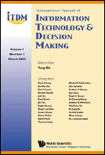
INTERNATIONAL JOURNAL OF INFORMATION TECHNOLOGY & DECISION MAKING
Scope & Guideline
Exploring the Synergy of Technology and Strategic Choices
Introduction
Aims and Scopes
- Decision-Making Methodologies:
The journal emphasizes innovative decision-making methodologies, including multi-criteria decision-making (MCDM), fuzzy logic, and machine learning techniques, catering to various real-world applications. - Impact of Information Technology on Decision Making:
It explores the influence of information technology on decision-making processes, highlighting how digital tools and data analytics can enhance decision quality and efficiency. - Application in Diverse Domains:
Research published in the journal spans various domains such as healthcare, finance, logistics, and environmental management, showcasing the interdisciplinary nature of decision-making. - Risk Management and Assessment:
There is a consistent focus on risk analysis and management strategies that utilize advanced information systems to mitigate uncertainties in decision-making. - Sustainability and Innovation:
The journal also addresses themes of sustainability and innovation, particularly how decision-making frameworks can support sustainable practices and technological advancements.
Trending and Emerging
- Integration of AI and Machine Learning:
Recent publications indicate a significant increase in research exploring the integration of AI and machine learning in decision-making processes, reflecting the industry's shift towards data-driven solutions. - COVID-19 Related Decision-Making:
There is a notable rise in studies addressing decision-making frameworks and strategies in response to the COVID-19 pandemic, emphasizing the need for adaptive and resilient approaches. - Sustainable Development Goals (SDGs):
Emerging themes include the alignment of decision-making practices with sustainable development goals, showcasing a growing concern for environmental and social sustainability. - Smart Technologies and IoT Applications:
The journal is increasingly featuring research on smart technologies and the Internet of Things (IoT), particularly regarding their impact on data collection and decision-making efficiency. - Cybersecurity in Decision-Making Systems:
With rising concerns over data security, there is a growing focus on incorporating cybersecurity measures within decision-making frameworks, ensuring the integrity and reliability of information systems.
Declining or Waning
- Traditional Statistical Approaches:
There appears to be a diminishing emphasis on traditional statistical methods for decision-making, as newer methodologies such as machine learning and AI-driven approaches gain prominence. - Generalized Decision-Making Models:
The popularity of generalized decision-making models seems to be waning, with more specific and tailored approaches being favored in recent publications. - Focus on Single-Domain Applications:
Research that concentrates exclusively on single-domain applications is decreasing, suggesting a shift towards more interdisciplinary and integrative studies that combine multiple fields. - Basic Theoretical Frameworks:
There is a noticeable reduction in papers that solely focus on theoretical frameworks without practical applications, indicating a preference for studies that demonstrate real-world applicability.
Similar Journals

Operations Research Perspectives
Pioneering Research for Enhanced Operational EfficienciesOperations Research Perspectives is a premier journal dedicated to advancing the field of operations research, published by Elsevier in the vibrant academic landscape of the Netherlands. Since its inception in 2014, this Open Access journal has been committed to disseminating high-quality research that addresses key challenges in optimization, management science, and decision-making processes across various industries. With an impressive impact factor reflected in its 2023 categorization—ranking Q1 in Control and Optimization and maintaining a solid presence in other domains such as Management Science and Operations Research and Statistics—it stands out as an essential resource for researchers and practitioners alike. Located at RADARWEG 29, 1043 NX AMSTERDAM, the journal encompasses a broad spectrum of topics, further highlighted by its Scopus Ranks which place it in the top percentiles across multiple categories. The objectives of *Operations Research Perspectives* involve fostering innovation and facilitating collaboration within the academic community, making it an invaluable tool for anyone looking to deepen their understanding of operational efficiencies and strategic advancements.
Information
Empowering innovation in Information Systems.Information is a distinguished open-access journal published by MDPI since 2010, dedicated to advancing the field of Information Systems. With its E-ISSN 2078-2489, the journal serves as a crucial platform for researchers, professionals, and students to disseminate and access innovative research and methodologies in the domain of information science, data management, and technology. Based in Basel, Switzerland, the journal has established a commendable reputation in the academic community, currently holding a Q2 ranking in the prestigious Scopus category of Information Systems, and occupies the 74th percentile among its peers. The breadth of the journal's objectives is to promote and facilitate the open exchange of ideas, research findings, and emerging trends, fostering collaboration and knowledge growth in a rapidly evolving digital landscape. With an unwavering commitment to high-quality scholarship and accessible knowledge, Information plays an essential role in shaping the future of the information sciences.
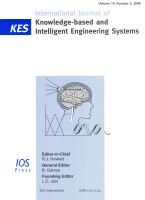
International Journal of Knowledge-Based and Intelligent Engineering Systems
Transforming Ideas into Intelligent Engineering SolutionsThe International Journal of Knowledge-Based and Intelligent Engineering Systems, published by IOS PRESS, serves as a vital platform for scholars and practitioners involved in the fields of Artificial Intelligence, Control and Systems Engineering, and Software Development. Founded in 2004 and continuously publishing through to 2024, this journal stands out with its comprehensive coverage of innovative methodologies and applications that leverage knowledge-based systems. Although currently listed in Q4 for Artificial Intelligence and Q3 for Control and Systems Engineering, it features an increasing trajectory in the scientific community, as indicated by its rankings in Scopus—which reflects the growing importance of intelligent engineering systems in contemporary research. With a commitment to disseminating cutting-edge research without open access constraints, this journal is essential for those seeking to understand and contribute to advancements in intelligent systems. Join a global community of researchers and industry leaders by engaging with the latest findings shared in this well-regarded journal.

KSII Transactions on Internet and Information Systems
Exploring New Dimensions in Digital Research.KSII Transactions on Internet and Information Systems is a leading academic journal dedicated to advancing the fields of Internet technology and information systems. Published by the KSII-Kor Soc Internet Information, this journal has established itself as a significant contributor to research since its inception in 2007, with a focus on innovative solutions and methodologies in computer networks and communications as well as information systems. With a Category Quartile of Q3 in both fields for 2023, it ranks in the 44th percentile among its peers according to Scopus, making it a reputable platform for authors to share their findings. While available in print, the journal also promotes open access, ensuring broad dissemination of research findings. The editorial team is committed to maintaining high scholarly standards and relevance, inviting contributions from researchers, professionals, and students eager to push the boundaries of knowledge in today's rapidly evolving digital landscape. For those engaged in or studying these dynamic fields, the KSII Transactions on Internet and Information Systems remains an invaluable resource for cutting-edge research.

Journal of Information and Organizational Sciences
Navigating contemporary challenges with scholarly rigor.Journal of Information and Organizational Sciences, published by the University of Zagreb, Faculty of Organization and Informatics, serves as a vital platform in the fields of computer science applications, information systems, and library and information sciences. Since its inception in 2006 as an Open Access journal, it has fostered an inclusive environment for researchers, professionals, and students to engage with the latest scholarly work. With ISSN 1846-3312 and E-ISSN 1846-9418, the journal features diverse studies that contribute to our understanding of organizational dynamics and informatization processes. Although currently categorized in the Q4 and Q3 quartiles across its related fields, the journal's commitment to academic rigor and accessibility aims to inspire greater impact in the scholarly community globally. Positioned in the picturesque city of Varazdin, Croatia, it continues to welcome innovative research that confronts contemporary challenges in information and organizational sciences, thus enhancing its pivotal role in bridging theoretical frameworks with practical applications.

JOURNAL OF THE OPERATIONAL RESEARCH SOCIETY
Elevating Knowledge in Operational Research since 1978The JOURNAL OF THE OPERATIONAL RESEARCH SOCIETY, published by Taylor & Francis Ltd, stands as a premier platform for disseminating innovative research in the fields of operational research, management science, and decision-making processes. With an impressive impact factor and a robust Scopus ranking, it is recognized as a Q1 journal in multiple categories including Management Information Systems, Statistics, and Modeling and Simulation. Since its inception in 1978, this journal has been committed to advancing knowledge through rigorous research and practical applications, catering to a diverse audience of researchers, professionals, and students in the operational research community. Although currently not an open-access journal, it provides invaluable insights and analyses that shape the contemporary discourse in its field, making it an essential resource for anyone looking to stay at the forefront of operational research and its applications.
SOFT COMPUTING
Elevating Research in Interdisciplinary ComputingSOFT COMPUTING is a premier international journal published by Springer, focusing on the interdisciplinary field of soft computing, which includes areas such as fuzzy logic, neural networks, genetic algorithms, and their applications. With an ISSN of 1432-7643 and E-ISSN 1433-7479, the journal is based in Germany and contributes significantly to the advancement of knowledge in its fields, boasting an impressive Scopus ranking that places it in the top echelons of Geometry and Topology, Theoretical Computer Science, and Software categories. In the 2023 category quartiles, it has achieved Q2 rankings in multiple disciplines, reflecting its high-quality research contributions. Though not Open Access, the journal's rigor and relevance to contemporary issues make it a favored resource for researchers, professionals, and students alike. From its inception in 2000 and spanning across the years until 2024, SOFT COMPUTING continues to serve as a robust platform for innovative research and theoretical advancements, making it an essential read for anyone engaged in the rapidly evolving landscape of computational intelligence.

Information Resources Management Journal
Transforming Knowledge into Strategic Management Practices.Information Resources Management Journal, published by IGI Global, is a pivotal academic resource dedicated to the exploration of innovations and best practices in the realms of information management, library sciences, and strategic management. First established in 1988, this journal has continually evolved, providing researchers and practitioners with essential insights that shape the industry. With an impressive Scopus ranking positioning it within the 75th percentile in Library and Information Sciences, and its notable presence in Business and International Management, it garners attention from a diverse audience keen on navigating the complexities of managing information resources effectively. Although it currently does not offer open access options, the journal remains committed to disseminating impactful research that resonates with scholars and industry professionals alike. As it approaches its convergence year of 2024, Information Resources Management Journal stands as a cornerstone for those aspiring to contribute meaningfully to the ever-evolving landscape of information management.
INFORMATION SCIENCES
Transforming Theories into Practical SolutionsINFORMATION SCIENCES, published by Elsevier Science Inc, is a premier peer-reviewed journal that has become instrumental in advancing the field of information science since its inception in 1968. With an impressive array of quartile rankings in 2023, including Q1 in Artificial Intelligence, Computer Science Applications, Control and Systems Engineering, Information Systems and Management, Software, and Theoretical Computer Science, this journal serves as a vital resource for researchers and professionals looking to explore cutting-edge theories and practical applications within these domains. The journal is indexed extensively, with notable Scopus rankings, reflecting its significance and influence in the academic community—ranked 6th in Theoretical Computer Science and 10th in Information Systems and Management, among others. Although it does not currently offer an open-access option, the depth of research published within INFORMATION SCIENCES ensures that it remains a key reference point for advancing academic inquiry and addressing complex challenges in the information landscape.

INDUSTRIAL MANAGEMENT & DATA SYSTEMS
Transforming Industrial Practices through Data-Driven ResearchINDUSTRIAL MANAGEMENT & DATA SYSTEMS is a leading academic journal published by Emerald Group Publishing Ltd, focusing on the intersection of industrial management and data analytics. With a strong reputation in multiple fields—including Computer Science Applications, Industrial and Manufacturing Engineering, Industrial Relations, Management Information Systems, and Strategy and Management—the journal has attained an impressive Q1 status in 2023 across these categories, emphasizing its critical role in advancing knowledge within these domains. The journal's extensive history, dating back to 1980 and converging through 2024, reflects its commitment to disseminating cutting-edge research that empowers professionals and researchers alike. No Open Access option is available, but it remains an essential resource for those involved in industrial management and data systems, as evidenced by its strong rankings in Scopus. By publishing high-quality articles that address emerging challenges and innovations, INDUSTRIAL MANAGEMENT & DATA SYSTEMS continues to shape the future landscape of its field, making it a valuable asset for dedicated scholars and practitioners.