INTERNATIONAL JOURNAL OF PEST MANAGEMENT
metrics 2024
Bridging the gap between research and real-world pest management solutions.
Introduction
The INTERNATIONAL JOURNAL OF PEST MANAGEMENT, published by TAYLOR & FRANCIS LTD, is a prestigious academic journal that has established itself as a vital resource in the fields of Agronomy, Crop Science, and Insect Science. With an ISSN of 0967-0874 and E-ISSN 1366-5863, this journal has been disseminating critical research since its inception in 1993 and continues to shape the discourse through to 2024. The journal occupies a significant position in the academic community, currently ranked Q2 in Agronomy and Crop Science and Q3 in Insect Science, based on its impressive Scopus ranks (Agricultural and Biological Sciences: Insect Science rank #33/181; Agronomy and Crop Science rank #109/406). Offering rapid insights into pest management strategies, this journal is essential for researchers, professionals, and students seeking to enhance their understanding of pest dynamics and management practices in an agronomic context. Though it does not provide open access options, its rigorous peer-review process ensures high-quality, impactful publications that contribute significantly to sustainable agricultural practices.
Metrics 2024
 0.381.101.5054
Metrics History
Rank 2024
Scopus
IF (Web Of Science)
JCI (Web Of Science)
Quartile History
Similar Journals
ANNALS OF THE ENTOMOLOGICAL SOCIETY OF AMERICA
Unveiling Nature's Secrets Through EntomologyANNALS OF THE ENTOMOLOGICAL SOCIETY OF AMERICA is a premier journal dedicated to advancing the field of insect science, published by Oxford University Press. With an impressive impact factor and classified in the Q1 quartile for its category, this journal ranks among the top publications in agricultural and biological sciences, specifically within insect science, positioned at #28 out of 181, indicating its significant influence and high-quality research contributions. The journal aims to disseminate original research, comprehensive reviews, and groundbreaking findings that enhance our understanding of entomology, spanning across ecological, evolutionary, and applied segments. With a consistent publication history since 1938, researchers, professionals, and students will benefit from the wealth of knowledge presented in its pages. Although the journal does not currently offer open access, it remains a vital resource for those seeking to stay at the forefront of entomological research and innovation.

Pesquisa Agropecuaria Tropical
Pioneering sustainable practices in tropical agriculture.pesquisa Agropecuaria Tropical is a premier Open Access journal dedicated to advancing the knowledge and practices within the field of agronomy and crop science. Since its inception in 1971, this peer-reviewed journal, published by the Universidade Federal de Goiás, has played a pivotal role in disseminating high-quality research from Brazil and beyond. Operating under an Open Access model, it ensures that scholarly articles are freely accessible, thereby fostering greater collaboration and innovation. With a Scopus ranking placing it in the 32nd percentile among its peers in agricultural and biological sciences, and a current classification in the Q3 category of agronomy and crop science, the journal serves as an essential resource for researchers, professionals, and students alike. As it continues its publication journey from 2010 to 2024, it remains committed to contributing valuable insights and advancements in the agricultural sector, ultimately influencing sustainable practices and food security.
SOUTHWESTERN ENTOMOLOGIST
Innovating Solutions through Entomological ResearchSOUTHWESTERN ENTOMOLOGIST is a pivotal academic journal dedicated to advancing the fields of Agronomy, Ecology, and Insect Science. Published by the SOUTHWESTERN ENTOMOLOGICAL SOC in the United States, this journal plays a crucial role in disseminating vital research findings that address pressing ecological and agricultural challenges. With its ISSN 0147-1724 and E-ISSN 2162-2647, the journal has been publishing comprehensive studies since 1993 and continues to contribute significantly to the knowledge base up to 2024. As a Q4 ranked journal in both Agronomy and Crop Science and Ecology, as well as Insect Science, it provides an inclusive platform for researchers and students to share their insights and foster collaborations. Although it currently does not offer open access options, the content is accessible to academic institutions and professionals, ensuring that significant findings reach a broad audience. Given its niche focus, SOUTHWESTERN ENTOMOLOGIST not only appeals to researchers and students but also to professionals looking to stay updated on the latest trends and developments in entomology and its related fields.

INDIAN JOURNAL OF AGRICULTURAL SCIENCES
Nurturing insights for a greener tomorrow.Welcome to the Indian Journal of Agricultural Sciences, a vital resource for researchers and professionals in the field of agricultural sciences, published by the esteemed Indian Council of Agricultural Research. Established in 1974, this journal aims to disseminate high-quality research and developments in agronomy and crop science, facilitating knowledge exchange and advancement within the agricultural community. Though currently classified in the Q4 category according to 2023 data, it provides an essential platform for publication, contributing valuable insights towards sustainable agricultural practices. With an ISSN of 0019-5022 and an E-ISSN of 2394-3319, the journal houses important research that spans decades of convergence and collaboration, promoting innovation in agriculture across India and beyond. As an open access platform, it invites contributions that reflect a wide array of agricultural disciplines to foster sustainable food systems that address the challenges of food security. Join the network of scholars and practitioners by sharing your research and engaging with the profound work being done in this transformative field.
Pesticide Biochemistry and Physiology
Advancing sustainable agriculture through innovative pesticide research.Pesticide Biochemistry and Physiology, published by Academic Press Inc Elsevier Science, is a prominent peer-reviewed journal dedicated to advancing knowledge in the fields of agronomy, crop science, and the toxicological effects of pesticides. With an established history since 1971, this journal aims to provide a platform for researchers and professionals to share groundbreaking studies that bridge the gap between agricultural practices and environmental health. Holding a remarkable Q1 ranking in both Agronomy and Crop Science as well as Health, Toxicology, and Mutagenesis, it reflects the journal's commitment to high-quality research. The journal is essential reading for anyone involved in the sustainability of agricultural ecosystems, offering insights into the biochemical interactions of pesticides and their physiological impacts on various crops and non-target organisms. As the global demand for sustainable agricultural practices escalates, Pesticide Biochemistry and Physiology remains at the forefront, promoting innovative research to ensure both food security and environmental safety. Converged through an extensive range of studies, this journal is a valuable resource for researchers, professionals, and students aiming to make significant contributions to the evolving landscape of pesticide biochemistry.
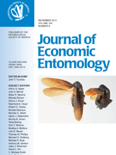
JOURNAL OF ECONOMIC ENTOMOLOGY
Innovating Insights for Agricultural and Ecological ProgressJOURNAL OF ECONOMIC ENTOMOLOGY, published by OXFORD UNIV PRESS INC, stands as a premier interdisciplinary platform for researchers and professionals in the realms of entomology and ecological sciences. With a robust publication history dating back to 1945, this esteemed journal has consistently maintained its reputation for disseminating high-quality research, as evidenced by its prestigious Q1 rankings in both Ecology and Insect Science for 2023. The journal’s impact is highlighted by its excellent Scopus ranks, placing it in the top percentile of Agricultural and Biological Sciences and Environmental Science categories. Aimed at advancing the understanding of insects and their relationships with humans and ecosystems, the JOURNAL OF ECONOMIC ENTOMOLOGY offers a critical forum for original research articles, reviews, and opinion pieces that influence practices in pest management, conservation, and agricultural productivity. Although not an Open Access journal, its findings are pivotal for students, researchers, and professionals striving to address contemporary challenges in entomology and beyond.

PLANT PROTECTION SCIENCE
Advancing sustainable agriculture through innovative research.PLANT PROTECTION SCIENCE, published by the Czech Academy Agricultural Sciences, is an esteemed journal dedicated to advancing the field of agronomy, crop science, and soil science. With a strong open access policy since 2007, this journal has made significant contributions to the dissemination of research relevant to plant protection, sustainable agriculture, and environmental preservation. Operating from Prague, Czech Republic, it has successfully positioned itself within the Q2 category in Agronomy and Crop Science and Q3 in Soil Science as of 2023, highlighting its relevance and influence in these vital areas of agricultural research. According to Scopus, its rankings reflect a respectable standing, with percentile ranks of 58th in Agronomy and Crop Science and 53rd in Soil Science. Researchers, professionals, and students are encouraged to explore its rich repository of peer-reviewed articles, which aim to address critical challenges in plant health and production, thereby fostering innovation in agricultural practices.
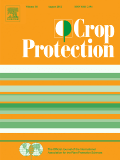
Crop Protection
Pioneering advancements in herbicide development and pest control.Crop Protection is a leading academic journal in the field of Agronomy and Crop Science, published by Elsevier Science Ltd, and recognized for its high impact demonstrated by an impressive Q1 quartile ranking in 2023. With its ISSN 0261-2194 and E-ISSN 1873-6904, this esteemed publication has been a crucial source of research since its inception in 1982, continuing to provide valuable insights and advancements in crop protection strategies through 2024. The journal serves a diverse audience, including researchers, professionals, and students, eager to explore pioneering findings in pest management, herbicide development, and sustainable agricultural practices. While the journal does not offer open access options, its rigorous peer-review process ensures the highest quality of scholarly articles that contribute significantly to the agricultural and biological sciences, maintaining its respected position with a Scopus rank of #63 out of 406 in its category, placing it in the 84th percentile. Engaging with Crop Protection not only enriches knowledge but also promotes innovative solutions for global agricultural challenges.
PHYTOPROTECTION
Empowering Research for Healthier PlantsPHYTOPROTECTION is a distinguished academic journal dedicated to the field of plant protection, published by the Quebec Society for the Protection of Plants. With an ISSN of 0031-9511 and an E-ISSN of 1710-1603, it serves as a platform for researchers, professionals, and students focused on the latest advances in plant protection methodologies, pest management, and sustainable agricultural practices. Although the journal's coverage in Scopus has been discontinued since 2010, its past publications encompass a wealth of valuable research from 1993 to 1994 and from 1996 to 2010, making it a crucial resource for those investigating plant health. The journal firmly positions itself as a fundamental contribution to the advancement of agricultural science, emphasizing research that addresses both contemporary challenges and future trends in the protection of plant resources.
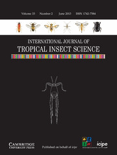
INTERNATIONAL JOURNAL OF TROPICAL INSECT SCIENCE
Uncovering the Secrets of Tropical Insect LifeINTERNATIONAL JOURNAL OF TROPICAL INSECT SCIENCE, published by Springer International Publishing AG, is a leading interdisciplinary journal dedicated to advancing knowledge in the fields of insect science and ecology. With its ISSN 1742-7584 and E-ISSN 1742-7592, this journal provides a platform for researchers to publish high-quality, peer-reviewed articles that explore various aspects of tropical insect biology, behavior, and their ecological impacts. As evidenced by its Q3 ranking in both Ecology, Evolution, Behavior and Systematics and Insect Science, it plays a vital role in fostering scientific dialogue and innovation within these disciplines. Researchers affiliated with the journal benefit from its visibility and growing impact, as demonstrated by its Scopus ranks, with a percentile standing of 61st in Insect Science. Although the journal is not open access, it still reaches a wide academic audience, making significant contributions to our understanding of tropical ecosystems. Situated in Switzerland, this journal is crucial for students, professionals, and researchers invested in the intersection of entomology and ecological science.