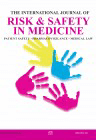
INTERNATIONAL JOURNAL OF RISK & SAFETY IN MEDICINE
Scope & Guideline
Pioneering knowledge in medical risk assessment.
Introduction
Aims and Scopes
- Risk Management in Healthcare:
The journal explores various methodologies and applications of risk management within healthcare settings, aiming to identify, assess, and mitigate risks associated with medical practices. - Patient Safety and Quality Improvement:
A core focus is on patient safety initiatives and quality improvement strategies, investigating how healthcare systems can enhance safety protocols and reduce medical errors. - Pharmacovigilance and Drug Safety:
Research on the safety of medications, including adverse drug reactions and the effectiveness of pharmacovigilance systems, is a significant area of study. - Healthcare Policy and Ethics:
The journal addresses ethical considerations and policy implications related to risk and safety in medicine, fostering discussions on informed consent, patient rights, and healthcare regulations. - Interdisciplinary Collaboration:
Encouraging collaboration among various healthcare professionals to improve safety culture and practices is a vital theme, recognizing that diverse perspectives enhance risk management outcomes.
Trending and Emerging
- Digital Health and Telemedicine:
With the rise of digital health solutions, there is an increasing focus on the implications of telemedicine and digital tools for risk management and patient safety. - COVID-19 Related Research:
The impact of the COVID-19 pandemic has led to a surge in research addressing safety protocols, medication management, and healthcare practices during and after the pandemic. - Pharmacogenetics and Personalized Medicine:
Emerging studies on pharmacogenetics are gaining traction, emphasizing the importance of individualized treatment plans to enhance drug safety and efficacy. - Mental Health and Wellbeing of Healthcare Professionals:
There is a growing emphasis on the mental health and wellbeing of healthcare workers, particularly in relation to stress, burnout, and their impact on patient safety. - Public Health and Community Engagement:
Research focusing on public health initiatives and community involvement in health safety practices is increasingly prominent, highlighting the importance of societal factors in healthcare risk management.
Declining or Waning
- Traditional Risk Assessment Methods:
The emphasis on conventional risk assessment methodologies appears to be diminishing, possibly due to the growing interest in more innovative and integrated approaches to risk management. - Generalized Discussions on Health Policy:
Discussions that do not provide specific, actionable insights into health policy are becoming less frequent, as the journal shifts towards more focused studies that yield practical recommendations. - Descriptive Case Reports:
There is a noticeable decline in the number of purely descriptive case reports, with a trend towards studies that offer quantitative data and analysis, reflecting a preference for evidence-based research.
Similar Journals
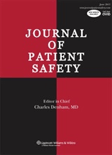
Journal of Patient Safety
Fostering a Safer Healthcare Environment for AllThe Journal of Patient Safety, published by Lippincott Williams & Wilkins, is a premier scholarly journal dedicated to advancing the field of patient safety through empirical research, innovative practices, and critical insights. Established in 2006, this journal has rapidly gained recognition, currently holding a prestigious Q1 ranking in Leadership and Management and a Q2 ranking in Public Health, Environmental and Occupational Health for 2023, reflecting its significant impact within these disciplines. With an impressive rank of #7 in Nursing Leadership and Management and #211 in Medicine Public Health as recorded in Scopus, this journal serves as an essential resource for researchers, healthcare professionals, and students committed to improving patient safety and outcomes. The journal does not operate as an open access publication; however, its comprehensive scope and high-quality articles underscore its dedication to disseminating crucial knowledge in a field that is ever-evolving. Joining the readership of the Journal of Patient Safety means becoming part of a vital conversation aimed at redefining standards of care and enhancing safety protocols across various healthcare settings.
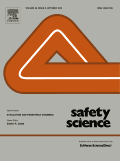
SAFETY SCIENCE
Exploring the dynamics of safety in a changing world.SAFETY SCIENCE, published by Elsevier in the Netherlands, is a premier international journal dedicated to advancing the fields of safety research, public health, environmental and occupational health, and risk management. With an impressive impact factor and recognized as a Q1 journal in multiple categories for 2023, its rigorous peer-reviewed articles are essential for researchers, professionals, and students alike. The journal covers a wide range of topics designed to influence safety practices and policies globally. Although Open Access options are not available, the substantial insights provided in each issue underscore the journal's critical role in enhancing the understanding of safety and risk dynamics in a constantly evolving world. With a convergence of knowledge from the years 1991 to 2025, SAFETY SCIENCE remains at the forefront of evidence-based research, stimulating essential dialogues and innovations that shape our approach to safety in various domains.

Pediatric Quality & Safety
Transforming pediatric safety into a global priority.Pediatric Quality & Safety is an esteemed Open Access journal aimed at enhancing the well-being and care of pediatric patients through rigorous research and innovative practices. Published by Lippincott Williams & Wilkins since 2016, this journal provides a platform for the dissemination of critical findings in the fields of pediatrics, perinatology, and child health, boasting a respectable impact factor that places it in the Q2 category for 2023, ranking #173 out of 330 in its field. With a commitment to improving healthcare outcomes, Pediatric Quality & Safety not only offers comprehensive coverage of current research trends but also promotes best practices among healthcare professionals. It welcomes contributions from researchers, clinicians, and students alike, making it an invaluable resource for anyone dedicated to advancing pediatric care. The journal is accessible for readers worldwide, reflecting a growing emphasis on open-access knowledge and collaboration.
Safety
Innovating safety practices for a healthier environment.Safety is a prestigious Open Access journal published by MDPI, based in Switzerland, dedicated to advancing research in the fields of public health, environmental safety, and occupational health. Since its inception in 2015, the journal has become a vital resource for researchers, practitioners, and policymakers, striving to foster innovative solutions to safety challenges in various sectors. With its rigorous peer-review process and a 2023 ranking in the Q2 category for Safety Research, as well as a notable presence in public health and environmental disciplines, Safety is well-respected in academic circles, holding a Scopus rank of 37/109 in Safety Research and 87/207 in Safety, Risk, Reliability, and Quality. The journal aims to disseminate high-quality research that not only reflects the latest advancements but also aids in developing practical strategies for risk management and safety improvement. Supported by an open-access model, Safety ensures that cutting-edge research is readily available to a global audience, fostering collaboration and knowledge sharing for a safer environment.

Journal of Health and Safety at Work
Enhancing workplace standards through cutting-edge studies.The Journal of Health and Safety at Work, published by the Iranian Occupational Health Association, is a vital resource for researchers, professionals, and students engaged in the fields of occupational health, safety, and environmental management. With an ISSN of 2251-807X and E-ISSN 2383-2088, this Open Access journal has been dedicated to disseminating knowledge since 2012, ensuring that critical research is accessible to a global audience. The journal’s scope encompasses a diverse range of topics including human factors and ergonomics, safety research, and public health, with a focus on enhancing workplace safety and environmental standards. Although currently positioned in the Q4 category across various disciplines within safety and health research, the journal offers a unique platform for emerging studies and innovative practices, making it a significant contributor to the discourse in these fields. The journal's commitment to open access aligns with the growing trend of transparent scholarship, thus facilitating the sharing of vital insights to improve workplace health and safety outcomes. Researchers aiming to publish groundbreaking studies in this pivotal area will find the Journal of Health and Safety at Work an indispensable avenue for advancing knowledge and fostering professional collaboration.
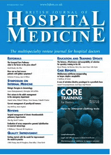
BRITISH JOURNAL OF HOSPITAL MEDICINE
Empowering healthcare professionals with cutting-edge insights.BRITISH JOURNAL OF HOSPITAL MEDICINE is a distinguished publication in the field of medicine, focusing primarily on the latest research, clinical practices, and advancements in hospital medicine. Published by MA HEALTHCARE LTD in the United Kingdom, this journal serves as a critical resource for healthcare professionals, researchers, and students alike, featuring insightful articles that bridge the gap between theory and practice. Holding a Q3 ranking in the miscellaneous medicine category and positioned within the top half of Scopus rankings, the journal underscores its commitment to high-quality, peer-reviewed content. With its inception dating back to 1996, the BRITISH JOURNAL OF HOSPITAL MEDICINE has evolved to include a broad spectrum of topics relevant to contemporary hospital settings, ensuring its readers are well-equipped with the knowledge necessary for improving patient care. Access options are tailored to modern readership, enhancing the visibility and dissemination of vital medical research.
Pharmaceutical Medicine
Elevating standards in pharmacology and therapeutic practices.Pharmaceutical Medicine is a leading journal published by SPRINGER INT PUBL AG, dedicated to the field of pharmacology and pharmaceutical sciences. With ISSN 1178-2595 and E-ISSN 1179-1993, this journal serves as an essential platform for researchers and professionals to share groundbreaking findings and advancements in medication efficacy, safety, and innovative therapeutic strategies. Recognized for its contribution to the field, Pharmaceutical Medicine holds an impressive Q2 ranking in both Pharmacology and Medical Pharmacology categories, further underscored by its competitive Scopus rankings—positioned at 100/272 (63rd percentile) in Medical Pharmacology and 156/313 (50th percentile) in Pharmacology, Toxicology, and Pharmaceutics. Although it primarily operates on a traditional subscription basis, its robust academic reputation continues to attract a diverse readership worldwide. Addressed in the United Kingdom with facilities in Switzerland, the journal publishes authoritative articles from its inception in 2000 through to 2024, making it a pivotal resource for those seeking to enhance their understanding and application of pharmacological principles in clinical practice and research.
Therapeutic Advances in Drug Safety
Championing Open Access to Transform Drug Safety StandardsTherapeutic Advances in Drug Safety is a prestigious open-access journal published by SAGE Publications Ltd that has made significant strides in the field of pharmacology since its inception in 2010. With an impressive impact factor that places it in the Q1 category for Pharmacology (medical), this journal ranks 61st out of 272 in Scopus, showcasing its global influence and commitment to advancing drug safety research. Based in the United Kingdom, it aims to bridge the critical gap between pharmacological innovation and clinical application, offering a platform for the dissemination of groundbreaking research, case studies, and expert reviews. Since adopting an Open Access model in 2019, the journal has significantly increased its reach, ensuring that vital findings in drug safety are accessible to researchers, healthcare professionals, and educators worldwide. As the field of drug safety continues to evolve, Therapeutic Advances in Drug Safety remains an essential resource for those dedicated to enhancing safe therapeutic practices and patient outcomes.
Current Anesthesiology Reports
Shaping the Future of Anesthesia Through Open AccessCurrent Anesthesiology Reports is a prominent journal published by Springer Nature, dedicated to advancing the field of anesthesiology and pain medicine. With a focus on the latest clinical and research developments, this journal serves as a vital resource for researchers, clinicians, and students alike. As of 2023, it holds a respectable Q2 quartile ranking in its category, highlighting its impact and relevance within the discipline, while also ranking 59th out of 136 in Scopus, placing it in the 56th percentile for anesthesiology and pain medicine. The journal is indexed with the E-ISSN 2167-6275 and offers an open-access model that enhances visibility and accessibility of knowledge across the global medical community. Spanning research from 2013 to 2024, Current Anesthesiology Reports aims to contribute significantly to the understanding and practice of anesthesiology, reflecting the rapidly evolving landscape of the discipline.
Turkish Journal of Anaesthesiology and Reanimation
Elevating Standards in Anesthesiology and Pain Medicine.The Turkish Journal of Anaesthesiology and Reanimation is an esteemed academic publication dedicated to advancing the fields of anesthesiology and pain medicine, as well as emergency medicine. Published by GALENOS PUBL HOUSE, this open access journal has been serving the global academic community since 2019, allowing for unrestricted dissemination of research findings and clinical practices. With its current categorization in the Q3 quartile for both anesthesiology and emergency medicine, the journal provides a valuable platform for researchers, professionals, and students alike, featuring rigorous peer-reviewed articles that enhance knowledge and inspire innovation. Located in Istanbul, Turkey, the journal actively contributes to an important dialogue in healthcare, making it a significant resource for those involved in improving patient care and outcomes. Researchers can also benefit from its increasing visibility, reflected in its Scopus rankings, positioning it within the competitive landscape of medical literature. Engage with cutting-edge research and ensure your contributions stand out in this vital field.