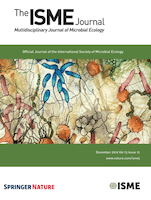
ISME Journal
metrics 2024
Pioneering insights in microbiome and environmental dynamics.
Introduction
The ISME Journal, published by Oxford University Press, stands as a premier multidisciplinary platform dedicated to advancing the fields of Ecology, Evolution, Behavior, and Systematics as well as Microbiology. With its ISSN of 1751-7362 and E-ISSN 1751-7370, this renowned journal has successfully maintained a prestigious reputation reflected in its commendable Q1 rankings across both fields in 2023. It ranks #7 out of 721 in Ecology, Evolution, Behavior, and Systematics and #8 out of 182 in Microbiology, placing it in the top percentiles of relevant Scopus categories. Covering original research, reviews, and methodologies, the journal aims to foster interdisciplinary collaboration and inspire new paradigms in microbiome research, environmental processes, and evolutionary dynamics. Researchers, professionals, and students are encouraged to submit their findings to a journal that not only reaches a global audience but also influences the direction of ongoing scientific discourse. With a commitment to excellence, the ISME Journal represents an essential resource for anyone engaged in these transformative fields of study.
Metrics 2024
 3.6910.8011.80230
Metrics History
Rank 2024
Scopus
IF (Web Of Science)
JCI (Web Of Science)
Quartile History
Similar Journals
JOURNAL OF GENERAL AND APPLIED MICROBIOLOGY
Pioneering research that transforms our understanding of microbes.JOURNAL OF GENERAL AND APPLIED MICROBIOLOGY, published by the MICROBIOL RES FOUNDATION, is a vital resource in the fields of applied microbiology and biotechnology, as well as in diverse medical applications, serving an academic community dedicated to advancing microbial science. Established in 1955, this journal has a rich history of disseminating innovative research and insights into the intricate world of microorganisms. With an ISSN of 0022-1260 and an E-ISSN of 1349-8037, the journal maintains high scholarly standards and robustness, reflected in its 2023 Scopus rankings placing it in the Q3 and Q4 quartiles within its categories. While primarily based in Japan, the journal engages a global audience, offering valuable contributions that inform both theoretical perspectives and practical applications in microbiology. Despite being a non-open-access publication, it provides pivotal research findings essential for academics, professionals, and students alike, fostering a deeper understanding of microbial impact on health and the environment.

Nature Microbiology
Unveiling the Secrets of Microbial LifeNature Microbiology is a premier journal published by NATURE PORTFOLIO that has firmly established itself within the realms of microbiological research since its inception in 2016. Based in the United Kingdom, this prestigious journal specializes in the intricacies of applied microbiology, cell biology, genetics, immunology, and medical microbiology, making it a cornerstone for academics and professionals alike. With an impressive Scopus ranking placing it in the top tier across various relevant categories—such as rank #3 in Genetics and #2 in Applied Microbiology—it underscores the journal’s commitment to high-quality, impactful research. Although it operates under a subscription model, Nature Microbiology's broad Open Access policy facilitates greater dissemination and visibility for its authors. The journal's objectives are centered around publishing cutting-edge advancements that enhance our understanding of microbial life, its interactions, and applications in health and disease. As a Q1 journal across multiple disciplines, it holds immense significance for researchers, professionals, and students enthusiastic about the latest innovations and breakthroughs in microbiology.
MicrobiologyOpen
Unlocking the frontiers of microbiology through open access.MicrobiologyOpen is a prestigious, open access journal published by WILEY, dedicated to advancing the field of microbiology. Since its inception in 2012, this journal has firmly established itself as a significant platform for researchers, professionals, and students alike, facilitating the dissemination of high-quality research findings across a wide range of microbiological disciplines. With an impressive impact factor and a ranking in the 76th percentile of Scopus for immunology and microbiology, MicrobiologyOpen offers a robust forum for innovative studies, reviews, and compelling insights that push the boundaries of scientific understanding. The journal's commitment to open access ensures that groundbreaking research is freely available to the global community, fostering collaboration and knowledge-sharing. As it continues to evolve until 2024, MicrobiologyOpen remains pivotal for anyone looking to stay at the forefront of microbiological research.
MICROBIOLOGICAL RESEARCH
Pioneering Insights in Microbiology ResearchMICROBIOLOGICAL RESEARCH, published by Elsevier GmbH, serves as a leading platform for advancements in the field of Microbiology, holding an impressive Q1 ranking in its category as of 2023. With an ISSN of 0944-5013 and E-ISSN 1618-0623, this journal has been instrumental in disseminating high-quality research since its inception in 1994 and continues to contribute significantly to the academic landscape through 2024. Positioned within the top 13% of publications in the Immunology and Microbiology category, ranked #24 out of 182 according to Scopus, it attracts the attention of researchers, professionals, and students alike. While the journal is not open access, it offers vital insights and peer-reviewed articles that drive innovation and exploration within microbiological research. Its rigorous selection process underscores the importance of quality and relevance in advancing knowledge in this dynamic field.
Microbial Cell
Fostering collaboration in microbial research.Microbial Cell is a distinguished open-access journal published by SHARED SCIENCE PUBLISHERS OG, focusing on the dynamic fields of microbiology, biochemistry, and molecular biology. Since its establishment in 2014, Microbial Cell has been at the forefront of disseminating cutting-edge research essential for advancing our understanding of microbial functions and interactions. With a commendable impact factor and ranking in the top quartiles (Q1 and Q2) across several categories, including Applied Microbiology and Biotechnology and Parasitology, this journal serves as an invaluable resource for researchers, professionals, and students alike. It features a comprehensive scope that encompasses the latest findings in genetics, cell biology, and virology, facilitating the academic community's access to high-quality peer-reviewed work. Microbial Cell not only contributes to advancing microbial sciences but also fosters an inclusive platform for knowledge sharing and collaboration in the scientific community.

Microorganisms
Advancing the frontiers of microbiological research.Microorganisms is a leading open-access journal published by MDPI based in Switzerland, catering specifically to the rapidly evolving fields of microbiology and virology. Since its inception in 2013, the journal aims to foster the dissemination of high-quality research through its comprehensive and interdisciplinary platform, with a particular focus on both fundamental and applied microbiological sciences. Contributing to its esteemed reputation, Microorganisms holds a commendable Q2 ranking in the categories of Microbiology and Virology, as well as in Medical Microbiology, highlighting its significance in the academic community. With a consistent impact, evidenced by its rankings in Scopus—such as rank #25 in Virology and #56 in Microbiology—the journal serves as an invaluable resource for researchers, professionals, and students looking to stay at the forefront of microbiological research. As an open-access journal, Microorganisms ensures that vital research findings are readily available to a global audience, promoting collaboration and innovation in the study of microbial life and its implications for health and disease.

MOLECULAR MICROBIOLOGY
Advancing the Frontiers of Microbial ScienceMOLECULAR MICROBIOLOGY is a prestigious academic journal published by Wiley that has been at the forefront of research in the fields of microbiology and molecular biology since its inception in 1987. With an impressive Q1 rating in Microbiology and a Q2 rating in Molecular Biology for 2023, this journal serves as a vital platform for disseminating high-impact research that advances our understanding of microbial processes and interactions at the molecular level. The journal's ISSN is 0950-382X, and the E-ISSN is 1365-2958, making it easily accessible to a global audience of researchers, professionals, and students. Though not an Open Access journal, MOLECULAR MICROBIOLOGY remains committed to providing valuable insights and fostering knowledge exchange in the academic community. Situated in the United Kingdom and indexed in prominent databases like Scopus, the journal holds a strong standing, with current rankings reflecting its influential role in the academic landscape. Researchers in the field are invited to contribute and engage with cutting-edge discoveries that will shape the future of microbiological sciences.
Current Research in Microbial Sciences
Championing the Latest Breakthroughs in MicrobiologyCurrent Research in Microbial Sciences is a distinguished peer-reviewed journal published by Elsevier, focusing on the dynamic and rapidly advancing fields of microbiology and infectious diseases. With an ISSN of 2666-5174, this journal has established itself as an essential resource for researchers, professionals, and students alike, offering the latest findings and insights from 2020 to 2024. The journal holds a significant position in the academic landscape, achieving a Q2 ranking across multiple categories, including Immunology and Microbiology, Infectious Diseases, and Medical Microbiology, demonstrating its impact in these critical areas of study. With impressive Scopus rankings—such as being placed in the 94th percentile for Immunology and Microbiology—current research is well-supported by a thriving scientific community. Although the journal is not open access, it serves as a vital platform for disseminating high-quality research and fostering collaboration within the microbial sciences. Engaging with this journal enables professionals and researchers to stay abreast of innovations and contribute to the collective body of knowledge that shapes our understanding of microbial interactions and infectious diseases.
Annual Review of Microbiology
Connecting Research to Real-World Applications in MicrobiologyAnnual Review of Microbiology is a preeminent academic journal published by Annual Reviews, specializing in the dynamic field of microbiology. With a rich history dating back to 1948, this journal has become a vital resource for researchers, professionals, and students alike, providing comprehensive reviews that synthesize the latest advancements and trends in microbiological research. The journal is renowned for its impressive reputation, holding a Q1 ranking in both Medicine (miscellaneous) and Microbiology, and achieving an outstanding Scopus rank of #12 out of 182 in the field, placing it in the 93rd percentile. Although it does not offer open access, the Annual Review of Microbiology remains integral to advancing knowledge and understanding of microbial science, helping to bridge the gap between fundamental research and practical applications in health, industry, and environmental sustainability. Its meticulously curated content serves as a crucial platform for fostering innovation and collaboration among the global research community.

Cell Host & Microbe
Exploring the Frontiers of Infectious Disease ResearchCell Host & Microbe is a premier journal published by CELL PRESS, dedicated to advancing the field of host-microbe interactions and infectious diseases. With an impact factor reflecting its esteemed position among scholarly publications, this journal not only focuses on the intricacies of microbiology but also delves into critical areas such as Cancer Research, Immunology, and Molecular Biology, maintaining a distinguished Q1 ranking across several categories. Since its inception in 2007, Cell Host & Microbe has been at the forefront of disseminating high-quality research, providing invaluable insights for researchers, professionals, and students alike. The journal is committed to promoting understanding of the complex relationships between microbial entities and their hosts, filtering groundbreaking research from the top echelons. Located in the heart of Cambridge, MA, USA, this journal serves as an essential resource for anyone looking to deepen their knowledge in microbiology and its applications in health and disease.