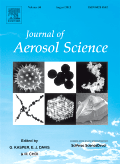
JOURNAL OF AEROSOL SCIENCE
metrics 2024
Unveiling the complexities of aerosol interactions.
Introduction
JOURNAL OF AEROSOL SCIENCE, published by ELSEVIER SCI LTD, is a premier academic journal dedicated to the exploration and advancement of aerosol science. With an ISSN of 0021-8502 and an E-ISSN of 1879-1964, this esteemed journal has been at the forefront of scientific inquiry since its inception in 1970. Recognized within various academic spheres, it boasts an impressive category quartile ranking, including Q1 in Environmental Engineering and Mechanical Engineering, reflecting its multidisciplinary impact across atmospheric science and materials science. With a robust Scopus ranking, it holds significant positions in key categories: #8 in Fluid Flow and Transfer Processes and #20 in Atmospheric Science, highlighting its influence and authority in the field. Although it does not currently offer Open Access, researchers and students alike benefit from its rigorous peer-reviewed articles that contribute vital knowledge to understanding aerosol dynamics, environmental implications, and engineering solutions. As it continues to publish groundbreaking research until 2024 and beyond, the JOURNAL OF AEROSOL SCIENCE remains a pivotal platform for scholars aiming to address the complex challenges posed by aerosols in our environment.
Metrics 2024
 0.873.903.70124
Metrics History
Rank 2024
Scopus
IF (Web Of Science)
JCI (Web Of Science)
Quartile History
Similar Journals
ADVANCES IN ATMOSPHERIC SCIENCES
Unveiling Insights into Climate and Weather SystemsADVANCES IN ATMOSPHERIC SCIENCES is a highly esteemed journal published by SCIENCE PRESS, dedicated to advancing the field of atmospheric sciences. With an impressive impact factor and ranking as Q1 in Atmospheric Science as of 2023, this journal serves as a leading platform for researchers, professionals, and students to disseminate substantial findings and innovative methodologies across various topics within the atmospheric sciences domain. Established in 1984 and continuously publishing through to 2024, it has successfully positioned itself among the top ranks, currently standing at #17 out of 148 in the Scopus category, highlighting its significance in the field with a remarkable 88th percentile. Although it operates under traditional access, the journal provides invaluable insights into climate dynamics, meteorology, and environmental processes that are crucial for both academic and practical applications. Based in Beijing, China, ADVANCES IN ATMOSPHERIC SCIENCES is committed to fostering a global dialogue and collaboration among scholars and industry experts, making it an essential resource for those invested in understanding and addressing contemporary atmospheric challenges.

Canadian Journal of Respiratory Therapy
Elevating the standards of care in pulmonary medicine.Welcome to the Canadian Journal of Respiratory Therapy, an esteemed publication dedicated to advancing the field of respiratory therapy through innovative research and clinical insights. Published by the Canadian Society of Respiratory Therapists since 1996 and transitioning to an Open Access format in 2015, this journal plays a crucial role in disseminating valuable knowledge to professionals, researchers, and students in the disciplines of health professions and pulmonary medicine. With an impact factor that places it in the Q2 category for Health Professions (miscellaneous) and Q3 for Pulmonary and Respiratory Medicine as of 2023, this journal continues to contribute rigorously to the evidence-based practices in the respiratory field. As an accessible platform for sharing high-quality research, the Canadian Journal of Respiratory Therapy supports the ongoing education and professional development of its readers, fostering a growing community committed to improving patient outcomes in respiratory care.
Particuology
Pioneering Research in Particle Science and EngineeringParticuology is a premier international journal published by Elsevier Science Inc, focusing on the critical advancements in the fields of *Chemical Engineering*, *Condensed Matter Physics*, and *Materials Science*. As a Q2 journal in its respective categories for 2023, it offers a platform for researchers to disseminate their findings and engage with the latest developments in particle technology and related areas. With an impressive Scopus rank of 71/273 in General Chemical Engineering and 122/463 in General Materials Science, Particuology is positioned at the forefront of scientific inquiry and innovation. The journal encourages open access, ensuring that groundbreaking research is available to a global audience, thus fostering collaboration and knowledge sharing among academia and industry professionals. With a publication history dating back to 2008, Particuology continues to shape the future of particle science and engineering by providing rigorous peer-reviewed content that reflects the highest standards of academic excellence.
Flexible and Printed Electronics
Advancing the Future of Flexible ElectronicsFlexible and Printed Electronics, published by IOP Publishing Ltd, is a leading journal dedicated to advancing the field of flexible and printed materials within the realm of electrical and electronic engineering. With an impressive Q2 ranking in both Electrical and Electronic Engineering and Electronic, Optical, and Magnetic Materials, this journal is recognized for its significant contributions to the understanding and application of innovative electronic devices and systems. Covering a wide array of topics from materials science to engineering applications, it serves as a vital resource for researchers, professionals, and students alike. The journal's rigorous peer-review process and commitment to high-quality publications ensure that readers are exposed to cutting-edge research and developments. Submissions are welcomed from global contributors, providing a platform for the dissemination of groundbreaking ideas and technologies. With its impressive impact in the academic community, Flexible and Printed Electronics is poised to influence the future of electronics and materials technology.

Experimental and Computational Multiphase Flow
Advancing Knowledge in Fluid InteractionsExperimental and Computational Multiphase Flow, published by SpringerNature, is a prestigious academic journal that critically examines advancements in the field of fluid dynamics, with a specialized focus on multiphase flow phenomena. Since its inception in 2019, the journal has established a remarkable reputation, attaining Q1 status in Fluid Flow and Transfer Processes as well as Mechanical Engineering according to the 2023 category quartiles, reflecting its high impact and relevance in these domains. With Scopus rankings placing it among the top 15 journals in both Chemical Engineering and Nuclear Energy and Engineering, Experimental and Computational Multiphase Flow is an essential resource for researchers, professionals, and students engaged in cutting-edge studies and applications. Although it operates on a subscription model, the journal remains dedicated to disseminating high-quality research and fostering a deeper understanding of complex fluid interactions across various scientific disciplines. By prioritizing innovative methodologies and interdisciplinary collaborations, the journal aims to significantly contribute to the ongoing evolution of multiphase flow research, recognizing its critical importance in engineering and energy sectors.
PLASMA SOURCES SCIENCE & TECHNOLOGY
Advancing the Frontiers of Plasma Science and Technology.PLASMA SOURCES SCIENCE & TECHNOLOGY is a premier academic journal published by IOP Publishing Ltd, focusing on the innovative field of plasma science and its applications in technology. Established in 1992, the journal has significantly contributed to advancing knowledge in this crucial area, maintaining a robust Q1 quartile ranking in Condensed Matter Physics as of 2023, which reflects its high-impact research dissemination. With an impressive Scopus ranking of 74 out of 434 in the field of Physics and Astronomy—specifically within Condensed Matter Physics—this journal stands out as a leading source for researchers and professionals dedicated to the study and application of plasma technologies. While it is not an Open Access journal, the published works are accessible through institutional subscriptions, making them available to a wide academic audience. The journal aims to provide a platform for significant contributions related to plasma physics, fostering scientific dialogue and collaboration across various disciplines. As it continues through its converged years up to 2024, PLASMA SOURCES SCIENCE & TECHNOLOGY remains essential for anyone involved in the burgeoning exploration of plasma-related scientific advancements.
JOURNAL OF THE AIR & WASTE MANAGEMENT ASSOCIATION
Empowering Researchers to Tackle Global Environmental ChallengesJOURNAL OF THE AIR & WASTE MANAGEMENT ASSOCIATION is a leading publication in the fields of environmental science, pollution control, and waste management, published by Taylor & Francis Inc in the United Kingdom. With an impressive history of publication dating back to 1989 and a commitment to advancing knowledge and practice in these critical areas, this journal serves as a valuable resource for researchers, professionals, and students alike. It holds a 2023 impact factor reflected through its competitive rankings in four distinct categories: Q3 in Atmospheric Science and Q2 in Management, Monitoring, Policy and Law, Pollution, and Waste Management and Disposal. The journal's dedication to disseminating innovative research and best practices plays a vital role in enhancing environmental policies and strategies globally. Although not currently Open Access, the journal is accessible through its ISSN 1096-2247 and E-ISSN 2162-2906, providing opportunities for rich academic discussion and collaboration in addressing pressing environmental challenges.
Frontiers in Remote Sensing
Leading the way in open-access remote sensing scholarship.Frontiers in Remote Sensing is an innovative open-access journal published by FRONTIERS MEDIA SA, dedicated to advancing the field of remote sensing through high-quality research and groundbreaking studies. Launched in 2020, this journal has quickly established itself as a pivotal platform for scientists and researchers working in the spheres of Physics and Astronomy and Biochemistry, Genetics, and Molecular Biology. With impressive rankings in Scopus, including a 68th percentile standing in Physics and Astronomy, it provides a vibrant forum for discussions on new methodologies, applications, and technological advancements in remote sensing. The journal is committed to facilitating knowledge dissemination by providing fully open access to its content, ensuring that useful scientific insights are readily available to a global audience. As it converges towards its initial evaluation period (2020 to 2024), Frontiers in Remote Sensing aims to solidify its role as a key resource for researchers, professionals, and students looking to innovate and excel in this dynamic field.
Journal of Meteorological Research
Advancing the Frontiers of Atmospheric Science.The Journal of Meteorological Research, published by SPRINGER HEIDELBERG, stands as a vital resource in the fields of Atmospheric Science and Ocean Engineering, boasting an impressive impact factor that reflects its scholarly significance. With its ISSN 2095-6037 and E-ISSN 2198-0934, the journal offers an open access platform, fostering accessibility and dissemination of cutting-edge research. Established in 2014 and running through to 2024, it is particularly distinguished in 2023 as Q2 in Atmospheric Science and Q1 in Ocean Engineering, underscoring its important contributions to these disciplines, with remarkable rankings in Scopus that place it in the top tiers of both categories. The journal accepts a broad range of research articles, reviews, and innovative methodologies, catering to a diverse audience of researchers, professionals, and students eager to advance their knowledge and expertise in meteorological studies. This makes the Journal of Meteorological Research an essential platform for anyone engaged in understanding and addressing the complex challenges of our changing climate.
AEROSOL SCIENCE AND TECHNOLOGY
Driving Innovation in Aerosol Research for a Cleaner FutureAerosol Science and Technology is a premier academic journal dedicated to the study of aerosols, their properties, and their interactions with the environment, published by Taylor & Francis Inc. Since its inception in 1981, the journal has established itself as a leading source of research, boasting a commendable impact factor which underscores its relevance and influence in the fields of Environmental Chemistry, Materials Science, and Pollution, consistently ranking in the Q2 Quartile. With its comprehensive coverage of the latest advancements and interdisciplinary approaches, the journal serves as an essential resource for researchers, professionals, and students who seek to deepen their understanding of aerosol science and its applications. Although it does not currently offer Open Access options, its rigorous peer-review process ensures the publication of high-quality research that contributes significantly to both theoretical and practical advancements in the field. Readers will benefit from the journal's insightful articles that explore the complexities of aerosols and their impact on climate change, air quality, and health outcomes, making it a pivotal platform for disseminating cutting-edge findings up until 2024.