
Journal of Aging and Environment
Scope & Guideline
Transforming Research into Action for Older Adults
Introduction
Aims and Scopes
- Housing and Community Design for Older Adults:
The journal emphasizes research on how housing design, community layout, and environmental features impact the health, well-being, and engagement of older adults. - Quality of Life and Well-Being:
Research articles often explore the relationship between housing conditions, social environments, and the subjective well-being of older adults, including their perceptions and experiences. - Aging in Place:
A significant focus is placed on studies addressing the preferences and challenges of older adults aging in place, including home modifications and community support systems. - Interdisciplinary Approaches to Aging:
The journal encourages interdisciplinary research that combines insights from architecture, public health, psychology, and social work to address the needs of the aging population. - Innovative Assessment Tools:
The development and validation of assessment tools to evaluate living environments and their suitability for older adults are highlighted, fostering evidence-based interventions.
Trending and Emerging
- Age-Friendly Housing Initiatives:
There is a growing emphasis on understanding and designing age-friendly housing solutions that cater to the preferences and needs of older adults, as evidenced by recent publications on housing preferences and modifications. - Impact of the Built Environment on Health:
Research increasingly explores how various built environment factors, such as walkability and neighborhood design, directly influence the physical and mental health of older adults. - Technology Integration in Aging:
Emerging studies focus on the role of technology in enhancing the living conditions of older adults, including smart home technologies and augmented reality tools for home assessments. - Community Cohesion and Social Connections:
Recent publications highlight the importance of social cohesion and community connections in promoting the well-being of older adults, particularly in the context of the COVID-19 pandemic. - Environmental Adaptations for Dementia Care:
There is a noticeable increase in research addressing environmental adaptations specifically for individuals with dementia, focusing on creating supportive and navigable living spaces.
Declining or Waning
- Traditional Institutional Care Settings:
Research focused on traditional nursing homes and institutional care has decreased, possibly as the field shifts towards exploring more community-based and home-based care models. - Generalized Aging Research:
Broad studies on aging without specific environmental context or practical applications have become less common, as the journal prioritizes targeted research that ties aging to specific environmental factors. - Single-Dimensional Studies:
There is a waning interest in studies that only consider one aspect of aging (e.g., health) without integrating environmental or social factors, as the journal promotes a more holistic approach.
Similar Journals

Gerontology and Geriatric Medicine
Connecting global scholars to the future of elderly care.Gerontology and Geriatric Medicine is a distinguished journal published by SAGE Publications Inc, focusing on the vital field of gerontology and geriatrics. With an impressive Q2 ranking in Geriatrics and Gerontology as of 2023, this journal serves as a crucial platform for disseminating high-quality research and innovation related to aging and elderly care. Since embracing an Open Access model in 2015, it has broadened its reach, enabling scholars, researchers, and practitioners worldwide to access valuable insights without barriers. The journal’s scope encompasses a variety of interdisciplinary studies that address the multifaceted aspects of geriatric medicine, making it an essential resource for anyone dedicated to advancing knowledge and practices in this critical domain. With its commitment to enhancing the understanding of aging populations, Gerontology and Geriatric Medicine is poised to contribute significantly to the ongoing discourse and research developments in the care for older adults.
EDUCATIONAL GERONTOLOGY
Empowering lifelong learning through gerontological insights.EDUCATIONAL GERONTOLOGY, published by Taylor & Francis Inc, is a leading academic journal dedicated to the study of education and aging. With an ISSN of 0360-1277 and an E-ISSN of 1521-0472, this journal has been an essential resource since its inception in 1976, continuing to provide invaluable insights until 2024. As an authoritative platform in the fields of Education and Gerontology, it ranks in the Q2 category for Education and Q3 in Geriatrics and Gerontology, reflecting its significant contribution to these domains. The journal is well-regarded for its rigorous peer-reviewed articles that explore innovative educational practices for older adults and address the challenges faced by this demographic. Researchers, professionals, and students alike can benefit from the multidisciplinary approaches and comprehensive research findings presented within its pages, making it a vital tool for advancing knowledge and practice in educational gerontology.
Ageing International
Advancing Knowledge in Gerontology and Aging StudiesAgeing International, published by SPRINGER, is a distinguished journal that has been at the forefront of scholarly research in the field of gerontology and aging studies since its inception in 1974. With an ISSN of 0163-5158 and an E-ISSN of 1936-606X, this journal provides a platform for high-quality, peer-reviewed articles that address the multifaceted aspects of aging on both individual and societal levels. Recognized as a Q2 category journal in Health (social science) for 2023, Ageing International plays a critical role in disseminating knowledge that influences practice, policy, and future research directions in the ever-evolving landscape of aging. Researchers, professionals, and students will find this journal indispensable for staying current with cutting-edge analyses and discussions, as it holds a Scopus rank of #168 in the social sciences realm, placing it within the 54th percentile of its category. Although it does not offer an open-access model, its extensive archive and ongoing contributions to the literature make it essential reading for anyone engaged in understanding the challenges and opportunities of aging in society. The editorial office is located at ONE NEW YORK PLAZA, SUITE 4600, NEW YORK, NY 10004, UNITED STATES, further emphasizing its dedicated presence in the academic community.
Activities Adaptation & Aging
Elevating gerontology through impactful research and practice.Activities Adaptation & Aging is a leading journal dedicated to the intersection of aging research, health professions, and gerontology, published by Routledge Journals, Taylor & Francis Ltd. With its origins dating back to 1981, this journal has established itself as a vital resource for scholars and practitioners alike, focusing on innovative approaches to enhance the quality of life for older adults. The journal’s inclusion in various prestigious Scopus ranks—such as being positioned in the 92nd percentile for Health Professions (miscellaneous)—reflects its significant impact in the field. Operating without open access, it provides essential insights and empirical research that are crucial for advancing knowledge and practices related to adaptation and engagement in aging. With a strong reputation built over the decades, Activities Adaptation & Aging continues to be an essential platform for disseminating research findings, fostering scholarly dialogue, and promoting effective interventions for aging populations.
ZEITSCHRIFT FUR GERONTOLOGIE UND GERIATRIE
Empowering practitioners with vital insights on geriatric care.ZEITSCHRIFT FUR GERONTOLOGIE UND GERIATRIE, published by SPRINGER HEIDELBERG, is an authoritative journal dedicated to advancing the field of geriatrics and gerontology. With its ISSN 0948-6704 and E-ISSN 1435-1269, this journal has been a significant source of scholarly articles since its inception in 1995, catering to researchers and practitioners amid the growing importance of ageing studies. While it currently holds a Q4 ranking in Geriatrics and Gerontology and a Q3 ranking in Gerontology and Social Sciences, its contribution spans vital topics related to health ethics and legal aspects—reflecting a comprehensive view of the challenges faced in elder care. Although it is not an open-access journal, its rigorous peer-review process ensures that the research published is of high quality and relevance. Based in Heidelberg, Germany, the journal aims to foster discourse and disseminate crucial research findings that impact the health of elderly populations, making it an essential resource for researchers, healthcare professionals, and students devoted to improving geriatric care and understanding the complexities associated with ageing.
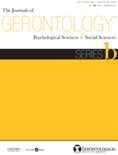
JOURNALS OF GERONTOLOGY SERIES B-PSYCHOLOGICAL SCIENCES AND SOCIAL SCIENCES
Elevating the Discourse on Gerontology and Psychological ScienceJOURNALS OF GERONTOLOGY SERIES B: PSYCHOLOGICAL SCIENCES AND SOCIAL SCIENCES, published by Oxford University Press Inc, stands as a premier scholarly outlet dedicated to the interdisciplinary study of aging, psychological sciences, and social relations. With a notable E-ISSN of 1758-5368 and a track record from 1995 to 2024, this journal has firmly established itself within the top quartile (Q1) across multiple domains including Clinical Psychology, Geriatrics, Gerontology, and Social Psychology. Its rigorous standards propel significant research that contributes to understanding the complexities of aging in contemporary society. Researchers and professionals engaged in these fields benefit from its high-impact publications, underscored by impressive rankings—such as 6th in Geriatrics and Gerontology—positioning it amongst the leading journals globally. While there are currently no Open Access options available, the journal remains a vital resource for advancing knowledge on life-span and life-course studies, ensuring that critical insights reach its dedicated audience of scholars and practitioners.
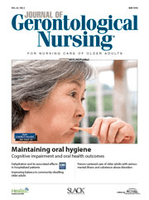
Journal of Gerontological Nursing
Elevating Standards in Elder CareThe Journal of Gerontological Nursing, published by SLACK INC, is a leading peer-reviewed journal dedicated to advancing the field of gerontological nursing through innovative research, clinical practice, and educational advancements. Since its inception in 1975, this journal has become a crucial resource for researchers, healthcare professionals, and students interested in the care and management of older adults. With an impact factor that reflects its significance within the disciplines of gerontology and nursing (Category Quartiles: Q3 in Gerontology and Q3 in Nursing), it serves as a platform for disseminating vital findings, best practices, and evidence-based approaches aimed at improving the quality of life for the aging population. While the journal maintains a print-only format, its content is invaluable for those looking to stay ahead in the rapidly evolving landscape of gerontological care. As it continues to publish until 2024, the Journal of Gerontological Nursing invites contributions that foster dialogue and innovation within this essential area of healthcare.
Advances in Gerontology
Shaping Practices for a Greying WorldAdvances in Gerontology is a pivotal academic journal dedicated to the field of gerontology, published by PLEIADES PUBLISHING INC. With its ISSN 2079-0570 and E-ISSN 2079-0589, this journal serves as an essential platform for researchers, healthcare professionals, and students focused on aging and related health issues. Although currently not an open-access journal, it aspires to enrich the scholarly community by disseminating high-quality research from 2011 through 2024. The journal is recognized in the lower quartile of its category, ranking Q4 in both Geriatrics and Gerontology, reflecting its commitment to addressing emerging topics in the aging population despite its lower visibility in the competitive landscape. As it continues to explore critical areas in gerontology, Advances in Gerontology invites contributions that advance knowledge, foster understanding, and inform practices within this essential field of study.
Aging Medicine and Healthcare
Unlocking the Secrets of Healthy AgingAging Medicine and Healthcare is a leading Open Access journal dedicated to advancing the understanding of geriatric health and the complexities of aging. Published by the Asia Pacific League Clinical Gerontology & Geriatrics, this innovative journal began its journey in 2019 and has since established itself as an important resource for healthcare professionals, researchers, and students interested in the fields of geriatrics and gerontology. With an impact factor that reflects its growing significance (ranked in the 21st percentile within its category), the journal aims to disseminate high-quality research and practical insights that can inform clinical practice and enhance patient care for aging populations. As an Open Access publication, it ensures that research findings are freely accessible, fostering collaboration and knowledge sharing among academics and practitioners globally. The journal is poised to be a vital platform for innovative studies, systematic reviews, and case reports that illuminate the challenges and opportunities in aging medicine.
CANADIAN JOURNAL ON AGING-REVUE CANADIENNE DU VIEILLISSEMENT
Illuminating the path to better elder care practices.Canadian Journal on Aging - Revue Canadienne du Vieillissement is a leading journal published by Cambridge University Press, dedicated to advancing the empirical understanding of aging and its multifaceted impacts on individuals and society. As a vital resource in its field since 1982 and continuing through 2024, this journal fosters discourse among researchers, practitioners, and policymakers with a keen interest in the demographics, health, and societal aspects of aging. It holds a distinguished position in the academic landscape, earning a Q1 ranking in Community and Home Care and Q2 rankings in Geriatrics & Gerontology, Gerontology, and Health (Social Science) as of 2023. Articles are rigorously peer-reviewed to uphold the highest academic standards, ensuring impactful contributions to aging studies. While the journal does not currently offer open access, it serves as an essential platform for sharing innovative research findings that shape the future of elder care and gerontological practice. With a focus on both Canadian contexts and broader international perspectives, the Canadian Journal on Aging provides critical insights that empower professionals and inspire future generations of scholars.