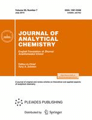
JOURNAL OF ANALYTICAL CHEMISTRY
metrics 2024
Exploring New Dimensions in Analytical Methodologies
Introduction
JOURNAL OF ANALYTICAL CHEMISTRY, published by PLEIADES PUBLISHING INC, stands as a pivotal resource in the field of analytical chemistry, offering an innovative platform for researchers, professionals, and students to advance their knowledge and contribute to the discourse within the discipline. With an ISSN of 1061-9348 and an E-ISSN of 1608-3199, this journal features a focused exploration of analytical methodologies, instrumentation developments, and applications across various domains, contributing to practical and theoretical advancements in the field. Currently ranked in the Q3 category in Analytical Chemistry with a Scopus rank of #111 out of 156, it provides critical insights and innovation strategies for professionals aiming to enhance their analytical capabilities. Access to the journal is through standard subscription models, and it covers an extensive range of topics pertinent to the discipline from 1996 to 2024. Engage with the JOURNAL OF ANALYTICAL CHEMISTRY to be part of a vibrant research community dedicated to push the boundaries of analytical practices.
Metrics 2024
 0.241.001.0040
Metrics History
Rank 2024
Scopus
IF (Web Of Science)
JCI (Web Of Science)
Quartile History
Similar Journals
Analytical Science and Technology
Fostering collaboration and knowledge in diverse scientific fields.Analytical Science and Technology is a prominent journal dedicated to advancing the fields of analytical chemistry and technology, published by the Korean Society for Analytical Science. Based in South Korea, this journal serves as a vital platform for researchers, professionals, and students committed to exploring innovative analytical techniques and methodologies. Although it is classified under Q4 in various subject categories, including Agronomy and Crop Science, Environmental Chemistry, and Pharmacology, the journal aims to provide critical insights and contributions to the scientific community. With ISSN 1225-0163 and E-ISSN 2288-8985, it spans a converged timeline from 2019 to 2024. Despite its current standings in Scopus rankings, the journal is dedicated to improving its visibility and impact through rigorous peer review and high-quality publications, fostering knowledge sharing within its diverse academic fields. Researchers looking for a reliable outlet for their findings are encouraged to consider this journal as it continues to strive for excellence in analytical science.
CHINESE JOURNAL OF ANALYTICAL CHEMISTRY
Advancing Analytical Excellence in ChemistryCHINESE JOURNAL OF ANALYTICAL CHEMISTRY, published by SCIENCE PRESS in China, stands as a prominent platform in the field of analytical chemistry since its inception in 1989. With its ISSN 0253-3820 and E-ISSN 1872-2040, the journal maintains a vital role in disseminating empirical research and innovative methodologies, contributing to the advancement of analytical techniques and their applications. The 2023 Scopus ranking positions the journal in the third quartile (Q3) within its category, reflecting a respectable standing among its peers. Researchers, professionals, and students alike engage with a broad range of topics, from instrumental analysis to environmental monitoring, each aiming to foster further scientific inquiry. Although it does not currently offer Open Access, the journal's rich repository of knowledge continues to be an essential resource for those in the analytical chemistry community, with an enduring commitment to scientific excellence and collaboration.
Talanta Open
Empowering Research, Elevating KnowledgeTalanta Open (ISSN: 2666-8319) is a prominent open-access journal published by Elsevier, dedicated to advancing the field of Analytical Chemistry. Established in 2020, the journal aims to foster innovative research and facilitate knowledge sharing in the analysis of chemical substances and their interactions. With an impressive Q2 ranking in the Analytical Chemistry category and a commendable Scopus ranking of #57/156, Talanta Open has quickly established itself as a vital resource for researchers, professionals, and students alike. The journal is known for its rigorous peer-review process and commitment to quality, ensuring that published content significantly contributes to the scientific community. By providing unrestricted access to high-quality research, Talanta Open underscores the importance of collaboration and accessibility in the ever-evolving landscape of analytical science.
Acta Chemica Iasi
Fostering Collaboration in Cutting-Edge ChemistryActa Chemica Iasi is a distinguished open-access journal dedicated to advancing the field of chemistry, published by the esteemed ALEXANDRU IOAN CUZA UNIVERSITY PRESS located in Iasi, Romania. Since its inception, this journal has served as a vital platform for the dissemination of significant research findings, theoretical advancements, and methodological innovations in various chemistry disciplines. As an open-access publication since 2013, it provides unrestricted access to high-quality articles, fostering collaboration and knowledge sharing among researchers, professionals, and students globally. Although specific metrics such as H-Index and Scopus rankings may be forthcoming, the journal's commitment to rigor and excellence ensures that it remains an invaluable resource for those seeking to stay at the forefront of chemical research. With a focus on promoting scientific inquiry and innovation, Acta Chemica Iasi continues to uphold a legacy of scholarly excellence and contribution to the chemical sciences.
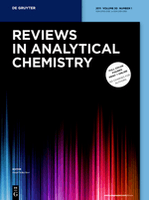
REVIEWS IN ANALYTICAL CHEMISTRY
Exploring the Frontiers of Analytical ResearchREVIEWS IN ANALYTICAL CHEMISTRY, published by De Gruyter Poland Sp. z o.o., serves as a pivotal resource in the field of analytical chemistry, with a notable impact factor indicative of its scholarly significance. As an Open Access journal since 2020, it ensures widespread dissemination of high-quality research articles, facilitating knowledge sharing among researchers, professionals, and students alike. With its origins tracing back to 1980, the journal has adeptly adapted over the years to encompass emerging trends and innovations within analytical methodologies, maintaining its relevance and authority in the discipline. The journal is ranked in the Q2 category of analytical chemistry in 2023 and holds a commendable Scopus rank of #32 out of 156, reflecting its strong performance and the quality of the studies published. Researchers looking for cutting-edge reviews and insights will find this journal an invaluable platform for advancing their knowledge and research in analytical chemistry.
Separation Science Plus
Connecting scholars to the forefront of separation innovation.Separation Science Plus is an emerging academic journal dedicated to advancing the field of analytical chemistry and separation science. Published by WILEY-VCH Verlag GmbH, this journal provides a platform for researchers to disseminate high-quality studies and reviews that address innovative techniques and breakthroughs in separation methodologies. With its ISSN 2573-1815, the journal has made significant inroads since its inception in 2018, encompassing a convergence period until 2024. Despite currently holding a Q3 ranking in Analytical Chemistry and a Q4 ranking in Filtration and Separation, its dedication to publishing impactful research makes it a vital resource for professionals and students alike. The journal operates under the robust scholarly reputation of WILEY, which is known for its commitment to excellence in scientific communication. Researchers interested in the latest advancements in separation techniques will find Separation Science Plus an essential read, fostering the exchange of knowledge and facilitating greater understanding within this specialized field.
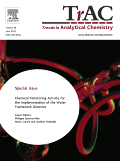
TRAC-TRENDS IN ANALYTICAL CHEMISTRY
Diving Deep into the Latest Methodologies and TechnologiesTRAC - Trends in Analytical Chemistry is a prestigious journal published by Elsevier Science Ltd, situated in the Netherlands. With an impressive impact factor reflected in its Q1 rankings across three major categories—Analytical Chemistry, Environmental Chemistry, and Spectroscopy—this journal stands at the forefront of disseminating pioneering research and advancements in the field of analytical chemistry. Established in 1981, TRAC provides a comprehensive platform for researchers to share influential studies and insights related to the latest trends, methodologies, and technologies in analytical techniques. Recognized globally, the journal excels in fostering cross-disciplinary dialogue and innovation, making it an indispensable resource for academics, professionals, and students alike. Explore the latest issues to stay abreast of cutting-edge developments that shape the analytical sciences.
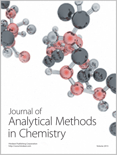
Journal of Analytical Methods in Chemistry
Connecting theory and practice for a brighter scientific future.The Journal of Analytical Methods in Chemistry, published by HINDAWI LTD, stands as a premier platform dedicated to the dissemination of research in the vibrant field of analytical chemistry. With an ISSN of 2090-8865 and an E-ISSN of 2090-8873, this Open Access journal has been committed to providing unrestricted access to quality research since 1978, thereby fostering greater collaboration and innovation among researchers, professionals, and students globally. The journal showcases rigorous research insights spanning diverse categories, earning impressive Scopus rankings including Q2 in Chemical Engineering and Q3 in Analytical Chemistry for 2023, positioning itself effectively among respected peers. Its interdisciplinary approach also covers significant contributions in the realms of instrumentation and computer science applications, thus addressing contemporary challenges and advancements in analytical methodologies. By bridging theoretical underpinnings with practical applications, the Journal of Analytical Methods in Chemistry aims to catalyze knowledge exchange while enhancing the global discourse in analytical science.
Analytical and Bioanalytical Chemistry Research
Fostering Collaboration in Chemical Research.Analytical and Bioanalytical Chemistry Research is an esteemed open-access journal published by the Iranian Chemical Society, dedicated to the advancement of knowledge in the fields of analytical chemistry, biochemistry, and spectroscopy. Since its inception in 2014, this journal has provided a platform for researchers, professionals, and students to publish and access high-quality research articles that contribute to the understanding of chemical analysis and bioanalytical methods. With an ISSN of 2383-093X and an open-access model that promotes global dissemination of findings, it ensures that innovative research reaches a broad audience. The journal has consolidated its presence in the scientific community, currently ranked in quartile Q4 for analytical chemistry, biochemistry, and spectroscopy as of 2023. Its Scopus rankings, including a percentile of 34th in Analytical Chemistry, reflect its commitment to quality research and scholarly contribution. Situated in Tehran, Iran, the journal serves as a vital resource for academic discourse, offering insights into emerging trends and methodologies in analytical and bioanalytical chemistry.
Pakistan Journal of Analytical & Environmental Chemistry
Connecting Global Minds in Chemistry and EnvironmentPakistan Journal of Analytical & Environmental Chemistry, published by the University of Sindh, National Centre of Excellence Analytical Chemistry, is a distinguished platform that has been committed to promoting high-quality research in the fields of analytical and environmental chemistry since its inception. With an ISSN of 1996-918X and an E-ISSN of 2221-5255, this journal has established itself as an open-access resource since 2007, facilitating the dissemination of knowledge to a global audience. Acknowledged for its contributions, the journal currently holds a Q4 category ranking in both Analytical Chemistry and Environmental Chemistry as of 2023, with Scopus rankings placing it within the challenging competitive bracket. The journal aims to publish original research, reviews, and technical notes that elucidate contemporary challenges and advancements, making it an essential read for researchers, professionals, and students who are exploring innovative methodologies and solutions in chemical analysis and environmental monitoring. By fostering a collaborative research environment and encouraging multidisciplinary approaches, the Pakistan Journal of Analytical & Environmental Chemistry plays a crucial role in advancing the field and addressing environmental concerns in Pakistan and beyond.