Journal of Analysis and Testing
metrics 2024
Advancing analytical excellence for a sustainable future.
Introduction
Journal of Analysis and Testing is a premier academic journal published by SPRINGER SINGAPORE PTE LTD, dedicated to advancing the fields of analytical and environmental chemistry. With ISSN 2096-241X and E-ISSN 2509-4696, the journal has established a significant presence since its inception in 2017, converging its focus until 2024. The journal's outstanding rankings in 2023, including Q1 quartile placements in Analytical Chemistry, Instrumentation, and Spectroscopy, underscore its pivotal role in disseminating high-quality research. Researchers can access cutting-edge studies that explore innovative testing methodologies, electrochemical analyses, and material evaluations, making it an essential resource for professionals and students alike. The Journal of Analysis and Testing not only celebrates advances in science and technology but also promotes interdisciplinary collaborations, ensuring widespread impact across analytical and environmental domains. As such, this journal plays a vital role in shaping the future of analytical practices and methodologies, positioning itself as a key conduit for knowledge exchange in the scholarly community.
Metrics 2024
 0.925.504.4022
Metrics History
Rank 2024
Scopus
IF (Web Of Science)
JCI (Web Of Science)
Quartile History
Similar Journals
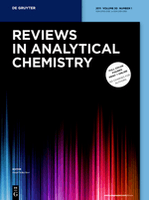
REVIEWS IN ANALYTICAL CHEMISTRY
Transforming Perspectives in Analytical ScienceREVIEWS IN ANALYTICAL CHEMISTRY, published by De Gruyter Poland Sp. z o.o., serves as a pivotal resource in the field of analytical chemistry, with a notable impact factor indicative of its scholarly significance. As an Open Access journal since 2020, it ensures widespread dissemination of high-quality research articles, facilitating knowledge sharing among researchers, professionals, and students alike. With its origins tracing back to 1980, the journal has adeptly adapted over the years to encompass emerging trends and innovations within analytical methodologies, maintaining its relevance and authority in the discipline. The journal is ranked in the Q2 category of analytical chemistry in 2023 and holds a commendable Scopus rank of #32 out of 156, reflecting its strong performance and the quality of the studies published. Researchers looking for cutting-edge reviews and insights will find this journal an invaluable platform for advancing their knowledge and research in analytical chemistry.
MICROCHEMICAL JOURNAL
Connecting Researchers Through Groundbreaking Microchemical StudiesMicrochemical Journal, published by Elsevier, stands as a leading scholarly publication in the fields of Analytical Chemistry and Spectroscopy, boasting impressive rankings of Q1 and Q2 in their respective categories for 2023. With an H-index reflecting its substantial impact and relevance, this journal has been a cornerstone of research dissemination since its inception in 1957, and it continues to play a vital role in advancing the methodological and technological innovations within these disciplines. The journal presents peer-reviewed articles that explore a wide array of topics, making it an essential resource for researchers, professionals, and students keen on the latest advancements in microchemical processes and techniques. Although it does not currently offer open access options, its publication through Elsevier ensures a high standard of academic integrity and wide accessibility through various academic institutions. With a strong Scopus ranking—9th in Chemistry Spectroscopy and 22nd in Analytical Chemistry—Microchemical Journal is an indispensable platform for empirical studies, insightful reviews, and pioneering methodologies in the microchemical domain.
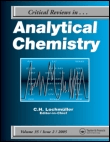
CRITICAL REVIEWS IN ANALYTICAL CHEMISTRY
Synthesizing Knowledge for a Brighter Scientific Future.Critical Reviews in Analytical Chemistry, published by Taylor & Francis Inc, stands as a pivotal journal in the field of analytical chemistry, contributing significantly to its advancement since its inception in 1989. With an impressive Q1 ranking in the 2023 analytical chemistry category, it positions itself among the top 15 journals in the field, reflecting its high impact and relevance, as evidenced by a 90th percentile Scopus rank. This esteemed journal is dedicated to publishing comprehensive reviews that synthesize current research and emerging methods in analytical techniques, making it an invaluable resource for researchers, professionals, and students alike. With the goal of fostering innovation and collaboration, Critical Reviews in Analytical Chemistry continues to address challenges and breakthroughs within the sphere of analytical methodologies, ensuring its authors and readers remain at the forefront of scientific discovery.
Journal of Electroanalytical Chemistry
Fostering Excellence in Electrochemical ResearchThe Journal of Electroanalytical Chemistry, published by Elsevier Science SA, stands as a leading platform for the dissemination of cutting-edge research in the field of electroanalytical science. With an impressive impact factor that reflects its esteemed reputation—ranking in the Q1 category for both Analytical Chemistry and Chemical Engineering, alongside a strong presence in Electrochemistry—this journal provides a vital resource for researchers, professionals, and students alike. Covering topics from fundamental electrochemical processes to innovative analytical techniques, the journal aims to foster an in-depth understanding and discussion of contemporary advancements in electroanalytical methodologies. Operating under a model that prioritizes quality and rigor, it facilitates access to high-quality manuscripts and reviews that contribute to the advancement of the field. For over six decades, from 1959 to 2024, it has played an intrinsic role in shaping the landscape of electrochemistry, continually driving forward the frontiers of knowledge and application.
Acta Chemica Iasi
Empowering Global Research in Chemical SciencesActa Chemica Iasi is a distinguished open-access journal dedicated to advancing the field of chemistry, published by the esteemed ALEXANDRU IOAN CUZA UNIVERSITY PRESS located in Iasi, Romania. Since its inception, this journal has served as a vital platform for the dissemination of significant research findings, theoretical advancements, and methodological innovations in various chemistry disciplines. As an open-access publication since 2013, it provides unrestricted access to high-quality articles, fostering collaboration and knowledge sharing among researchers, professionals, and students globally. Although specific metrics such as H-Index and Scopus rankings may be forthcoming, the journal's commitment to rigor and excellence ensures that it remains an invaluable resource for those seeking to stay at the forefront of chemical research. With a focus on promoting scientific inquiry and innovation, Acta Chemica Iasi continues to uphold a legacy of scholarly excellence and contribution to the chemical sciences.
BUNSEKI KAGAKU
Exploring the Depths of Analytical TechniquesBUNSEKI KAGAKU, published by the Japan Society Analytical Chemistry, is a reputable journal dedicated to the field of analytical chemistry. With an ISSN of 0525-1931, this journal has been a crucial outlet for scholarly communication since its inception in 1952, converging its publication years from 1954 to 1957 and from 1959 to 2024. Although it holds a Q4 category ranking in the most recent 2023 quartiles of analytical chemistry and ranks 153/156 in Scopus, it continues to serve as a platform for quality research, fostering advancements in the field. BUNSEKI KAGAKU is based in Tokyo, Japan, and emphasizes the critical importance of analytical techniques in scientific inquiry. With a commitment to professionalism and rigor, the journal provides a vital resource for researchers, students, and professionals seeking to explore innovative methodologies and contribute to the ongoing dialogue in analytical chemistry.
JOURNAL OF CHROMATOGRAPHY A
Leading the Charge in Chromatographic TechniquesJOURNAL OF CHROMATOGRAPHY A, published by Elsevier, is a leading journal in the disciplines of Analytical Chemistry, Biochemistry, and Organic Chemistry, boasting an impressive 2023 Q2 categorization across multiple fields. With an ISSN of 0021-9673 and an E-ISSN of 1873-3778, this prestigious journal has been at the forefront of chromatography research since its inception in 1958. The journal serves as a vital platform for disseminating high-quality research articles, reviews, and insights into the latest developments in chromatographic techniques and applications, reflecting its standing in the top tier of analytical and organic chemistry literature, evidenced by its impressive Scopus rankings. While it currently operates under a subscription model, the journal continues to make significant contributions to the scientific community by fostering collaboration and innovation in chromatography methodologies. We invite researchers, professionals, and students to engage with the essential findings shared within its pages, which are foundational for advancements in various scientific fields, making it an indispensable resource for enhancing chromatographic knowledge and practice.
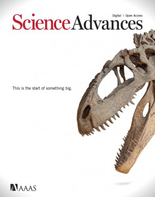
Science Advances
Fostering Collaboration for Global Scientific ProgressScience Advances, published by the American Association for the Advancement of Science, is a leading open-access journal in the field of multidisciplinary sciences. Since its inception in 2015, it has rapidly gained prominence, achieving a remarkable Q1 ranking in both Medicine (miscellaneous) and Multidisciplinary categories, underlining its impact and relevance in contemporary research. With an impressive Scopus ranking of #7 out of 171 in the Multidisciplinary field, it proudly sits in the 96th percentile, showcasing its dedication to disseminating high-quality research across various scientific domains. This journal not only provides open access to innovative findings but also aims to foster collaboration and maintain a high standard of scholarly communication among researchers, professionals, and students globally. Stay updated with some of the most groundbreaking advancements and contribute to the collective pursuit of scientific knowledge through Science Advances.
TRAC-TRENDS IN ANALYTICAL CHEMISTRY
Advancing Knowledge in Analytical ChemistryTRAC - Trends in Analytical Chemistry is a prestigious journal published by Elsevier Science Ltd, situated in the Netherlands. With an impressive impact factor reflected in its Q1 rankings across three major categories—Analytical Chemistry, Environmental Chemistry, and Spectroscopy—this journal stands at the forefront of disseminating pioneering research and advancements in the field of analytical chemistry. Established in 1981, TRAC provides a comprehensive platform for researchers to share influential studies and insights related to the latest trends, methodologies, and technologies in analytical techniques. Recognized globally, the journal excels in fostering cross-disciplinary dialogue and innovation, making it an indispensable resource for academics, professionals, and students alike. Explore the latest issues to stay abreast of cutting-edge developments that shape the analytical sciences.
Analytical Methods
Exploring the Depths of Analytical ChemistryAnalytical Methods, published by the renowned Royal Society of Chemistry, is a distinguished journal that has been serving the scientific community since its inception in 2009. Specializing in the fields of Analytical Chemistry, Chemical Engineering, and General Engineering, this journal holds a reputable position with an impressive Q2 ranking in three relevant categories as of 2023. With its focus on innovative methodologies and advanced applications in analytical science, it aims to disseminate cutting-edge research and foster dialogue among researchers, professionals, and students. Although it is not an open access publication, it is accessible worldwide and provides critical insights into the latest developments in analytical techniques and their engineering applications. The journal also ranks highly in pertinent Scopus categories, such as being in the 77th percentile for General Engineering and 61st percentile for Analytical Chemistry, underlining its significance in advancing knowledge and practical applications in these fields. By participating in this journal, readers can expect to engage with high-quality research that influences the future of analytical practices and chemical engineering.