JANAC-JOURNAL OF THE ASSOCIATION OF NURSES IN AIDS CARE
Scope & Guideline
Bridging Gaps in HIV/AIDS Nursing Through Scholarly Insight
Introduction
Aims and Scopes
- Nursing Practice and Interventions:
The journal focuses on evidence-based nursing practices aimed at improving the care and management of patients with HIV/AIDS. This includes studies on the effectiveness of specific nursing interventions, care models, and the role of nurses in HIV prevention and treatment. - Social Determinants of Health:
Research published often explores how social, economic, and cultural factors influence the health outcomes of people living with HIV. This includes the impact of stigma, discrimination, and access to healthcare services. - Behavioral and Psychological Aspects:
The journal also addresses the psychological and behavioral challenges faced by individuals with HIV, including adherence to treatment, mental health issues, and the role of support networks. - Public Health and Policy Implications:
Studies that examine the broader public health context, including policy implications for HIV prevention and care, are a significant focus. This includes research on interventions that address health disparities and improve access to care. - Innovative Technologies and Interventions:
The journal highlights the use of innovative technologies and interventions in HIV care, such as telehealth, mobile health applications, and community-based programs aimed at increasing access to HIV testing and treatment.
Trending and Emerging
- Intersectionality and Health Disparities:
There is an increasing focus on how intersecting factors such as race, gender, sexual orientation, and socioeconomic status impact health outcomes for people living with HIV. This trend emphasizes the need for tailored interventions that address these disparities. - Mental Health and Well-being:
Recent studies highlight the importance of mental health in the overall care of individuals with HIV, including the impact of stigma and discrimination on mental health outcomes. This emerging theme underscores the necessity for integrated mental health support in HIV care. - Community-Based Interventions:
There is a growing trend towards community-engaged research and interventions that empower local communities to address HIV-related health issues. This includes participatory approaches that involve people living with HIV in the development and implementation of programs. - Use of Technology in HIV Care:
The integration of technology in HIV care, such as telehealth and mobile health applications, is increasingly being explored. This trend reflects the need for innovative solutions to improve access to care and enhance patient engagement. - Addressing Comorbidities:
Research is increasingly focusing on the management of comorbid conditions among individuals with HIV, recognizing that holistic care is essential for improving overall health outcomes and quality of life.
Declining or Waning
- Traditional Epidemiological Studies:
There appears to be a decline in purely traditional epidemiological studies focused solely on HIV prevalence or incidence rates, as more emphasis is now placed on integrated approaches that encompass social determinants and community health. - Generalized HIV Education Programs:
General HIV education and awareness programs seem to be waning, as the journal shifts towards more targeted interventions that address specific populations and their unique challenges, such as stigma and access to care. - Single-Disease Focus:
There is a noticeable decrease in studies that focus exclusively on HIV without considering comorbidities or other health conditions. The trend is moving towards a more holistic approach that incorporates the overall health status of individuals living with HIV.
Similar Journals
Asian Nursing Research
Empowering professionals with cutting-edge insights in nursing.Asian Nursing Research is a prestigious open access journal published by ELSEVIER SCIENCE INC, located in South Korea. Since its inception in 2007, this journal has served as an essential platform for disseminating high-quality research in the field of nursing and healthcare, boasting a notable impact factor and categorized within the top quartiles of both Q1 in Nursing (miscellaneous) and Q2 in Medicine (miscellaneous) for 2023. It holds a commendable rank of #27 out of 139 in the general nursing category, placing it in the 80th percentile according to Scopus rankings. The journal's comprehensive scope encompasses a wide range of topics relevant to nursing practice and research, thereby addressing pressing healthcare challenges and promoting evidence-based clinical practices. By offering open access since 2007, Asian Nursing Research ensures that researchers, professionals, and students have unrestricted access to valuable insights and advancements in the nursing discipline, making it a critical resource for advancing knowledge and improving patient care across Asia and beyond.
Acta Paulista de Enfermagem
Pioneering Insights in Medical and Surgical NursingActa Paulista de Enfermagem is a distinguished peer-reviewed academic journal published by the University of São Paulo's Department of Nursing. With its inception dating back to 2005 as an Open Access publication, this journal has made significant contributions to the fields of Nursing, particularly in Advanced and Specialized Nursing and Medical and Surgical Nursing. It currently holds a commendable impact factor, sitting in the Q2 category for Advanced and Specialized Nursing and Q1 in Medical and Surgical Nursing as of 2023. The journal's rigorous editorial standards have positioned it favorably in Scopus rankings, showcasing its relevance and influence within the nursing community. Research published in Acta Paulista de Enfermagem is accessible to a global audience, enhancing collaboration and innovation in nursing practice. Located in São Paulo, Brazil, it serves not only as a platform for researchers and professionals to share their findings but also as a rich resource for students and educators aiming to advance their knowledge in nursing disciplines.
Geriatric Nursing
Fostering knowledge and innovation in geriatric nursing.Geriatric Nursing is a premier peer-reviewed journal dedicated to advancing the field of gerontology and nursing care for older adults. Published by MOSBY-ELSEVIER, this esteemed journal holds a significant place in the academic community with its Q2 ranking in both Gerontology and Medicine (miscellaneous) as of 2023, reflecting its importance and influence in the study and practice of healthcare for the elderly. With a comprehensive coverage extending from 1980 to 2024, Geriatric Nursing addresses the latest research, clinical practices, and policies impacting geriatric care, making it an essential resource for researchers, practitioners, and students alike. Although it does not provide open access options, its rigorous content garners attention with a Scopus Rank of #14 out of 39 in Nursing and Gerontology, placing it in the 65th percentile for its field. For those dedicated to improving the health and wellbeing of older populations, Geriatric Nursing remains a critical platform for innovation and knowledge dissemination.
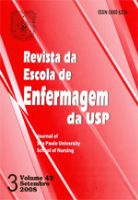
Revista da Escola de Enfermagem da USP
Championing Open Access for Nursing ExcellenceRevista da Escola de Enfermagem da USP, published by UNIV SAO PAOLO, is a premier open-access journal that has been a cornerstone of nursing research since its inception in 1967. With a focus on disseminating innovative research and practices in the field of nursing, this journal has distinguished itself in the 2023 rankings by achieving Q2 in Nursing (miscellaneous) category and ranking 80 out of 139 in Scopus for General Nursing, placing it in the 42nd percentile. Accessible globally since 1996, the journal invites contributions that enhance nursing knowledge and practice, making it an invaluable resource for researchers, professionals, and students alike. Its commitment to open access ensures that vital nursing research is readily available to advance the global healthcare discourse. The journal's editorial office is located at AV Dr Eneas de Carvalho Aguiar, 419, Cerqueira Cesar, SP 05403-000, Brazil, fostering a vibrant community dedicated to improving nursing standards through scholarly engagement.
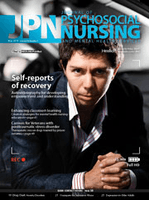
JOURNAL OF PSYCHOSOCIAL NURSING AND MENTAL HEALTH SERVICES
Fostering Knowledge for a Healthier TomorrowThe Journal of Psychosocial Nursing and Mental Health Services, published by SLACK INC, has been a vital resource in the fields of Nursing and Psychiatry and Mental Health since its inception in 1981. This esteemed journal (ISSN: 0279-3695; E-ISSN: 1938-2413) provides a platform for the dissemination of innovative research, evidence-based practices, and scholarly discourse, addressing the psychosocial aspects of mental health care. With a current categorization of Q3 in both Nursing (miscellaneous) and Psychiatry and Mental Health, it ranks in the mid-range among its peers, showcasing its role in fostering knowledge within these crucial domains. The journal's overarching objective is to highlight advancements and challenges in mental health services, thereby enhancing the quality of care provided. Although it does not offer open access, the journal is committed to maintaining high-quality peer-reviewed content that appeals to researchers, clinicians, and educators alike. The insights and findings published herein are indispensable for professionals seeking to improve mental health outcomes and engage with the evolving landscape of psychosocial nursing.
NURSING OUTLOOK
Elevating Healthcare Insights for a Brighter TomorrowNURSING OUTLOOK is a premier academic journal published by Elsevier Science Inc, dedicated to advancing the field of nursing and healthcare through high-quality research and discourse. Since its inception in 1953, this esteemed journal has provided a vital platform for sharing significant findings and innovations in nursing practices, policy, and education. With an impressive impact factor and a distinguished position in the Q1 category for Nursing (miscellaneous), NURSING OUTLOOK ranks #10 out of 139 in the Nursing General category, showcasing its contribution and authority in the field with a remarkable 93rd percentile ranking in Scopus. Researchers, professionals, and students are encouraged to engage with the journal's comprehensive scope that encompasses contemporary issues and trends in nursing, fostering a deeper understanding and improved patient care practices. Although open access options are not available, the journal remains committed to disseminating critical scholarship within the nursing community and beyond, inviting submissions that challenge existing paradigms and contribute to future health care developments.

Revista de Pesquisa-Cuidado e Fundamental Online
Advancing nursing knowledge for a healthier tomorrow.Revista de Pesquisa-Cuidado e Fundamental Online, published by the Universidade Federal do Estado do Rio de Janeiro, is a prominent journal dedicated to advancing knowledge and practice in the field of nursing and healthcare. With its Open Access model since 2009, this journal provides an invaluable platform for researchers, professionals, and students to share innovative findings and insights that address critical issues in patient care and nursing education. Though its specific impact factor is not listed, the journal's commitment to open access fosters greater visibility and accessibility of research, ensuring that vital information reaches a wide audience. The journal aims to enhance the quality of care and to support the ongoing development of nursing as a scientific discipline. Located in Rio de Janeiro, Brazil, the journal also reflects regional health paradigms while contributing to global discourse in healthcare research.
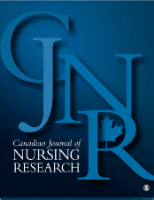
Canadian Journal of Nursing Research
Bridging theory and practice in the nursing discipline.The Canadian Journal of Nursing Research is a leading academic publication in the field of nursing, dedicated to advancing the discipline through rigorous research and scholarly inquiry. Published by SAGE Publications Inc, this journal holds a commendable impact factor, reflecting its significant influence in nursing and broader medical fields, categorized as Q2 in both Nursing and Miscellaneous Medicine as of 2023. The journal, identified by its ISSN 0844-5621 and E-ISSN 1705-7051, has been a crucial platform for high-quality research since its inception in 1988, providing insights that drive evidence-based practice and policy development. Researchers, professionals, and students looking to remain at the forefront of nursing knowledge will find valuable studies and discussions within its pages, offering both theoretical perspectives and practical applications. While this journal does not currently offer open access, its content remains accessible through academic libraries and institutions, fostering a collaborative environment for advancing nursing science and improving patient care.
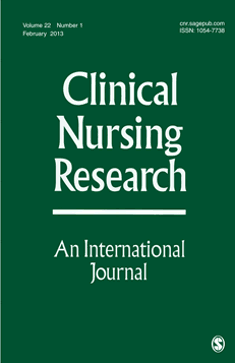
Clinical Nursing Research
Empowering evidence-based practice for better patient outcomes.Clinical Nursing Research is a premier academic journal dedicated to advancing the discipline of nursing through rigorous research and evidence-based practice. Published by SAGE Publications Inc, this journal has been a cornerstone in the field since its inception in 1992, with a commitment to providing high-quality research that informs clinical practice and nursing education. With an impressive Scopus ranking of #40 out of 139 in the general nursing category and a percentile rank of 71, it represents a significant contribution to the nursing literature. Although not an open-access journal, Clinical Nursing Research facilitates access through institutional subscriptions, ensuring that critical findings are disseminated widely. The journal’s objectives include fostering innovation and promoting best practices in nursing, making it an indispensable resource for researchers, practitioners, and students alike. As it continues to evolve through 2024 and beyond, Clinical Nursing Research remains at the forefront of nursing scholarship, addressing the complexities of healthcare in a rapidly changing world.

Revista Latino-Americana de Enfermagem
Connecting Voices, Transforming Healthcare PracticesRevista Latino-Americana de Enfermagem, an esteemed open-access journal published by the Universidade de São Paulo, Escola de Enfermagem de Ribeirão Preto, has been a cornerstone in the field of nursing since its inception in 1993. With a focus on disseminating high-quality research and fostering academic dialogue, it plays a critical role in advancing nursing knowledge across Latin America and beyond. The journal holds a Q2 ranking in Nursing (miscellaneous) for 2023 and is recognized within the top 67th percentile in the general nursing category according to Scopus rankings, highlighting its influence and relevance in the scholarly community. Operating from its base in Brazil, the journal ensures broad accessibility for researchers, professionals, and students alike, granting them the opportunity to engage with innovative findings and best practices in nursing. As it continues to support the convergence of research and practice, Revista Latino-Americana de Enfermagem aims to empower nurse professionals and facilitate the exchange of ideas, ensuring diverse voices in the evolving landscape of healthcare.