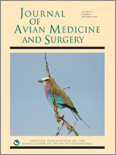
JOURNAL OF AVIAN MEDICINE AND SURGERY
Scope & Guideline
Fostering collaboration for a healthier avian future.
Introduction
Aims and Scopes
- Clinical Veterinary Practices:
The journal emphasizes the clinical aspects of avian medicine, including surgical techniques, anesthesia protocols, and pain management strategies for various bird species. - Health Assessment and Diagnostics:
Research published in the journal often includes studies on diagnostic methods, biomarkers, and reference intervals for blood parameters specific to avian species, enhancing the health assessment capabilities of veterinarians. - Pathology and Disease Management:
A significant focus is placed on the pathology of avian diseases, including neoplasms, infectious diseases, and metabolic disorders, with an aim to improve treatment and management strategies. - Conservation and Wildlife Rehabilitation:
The journal also covers topics related to wildlife rehabilitation, conservation efforts, and the impact of environmental factors on avian health, bridging clinical practices with ecological considerations. - Pharmacology and Therapeutics:
Studies related to pharmacokinetics, drug efficacy, and safety profiles for avian species are routinely published, providing essential data for effective medication management in veterinary practice.
Trending and Emerging
- Integrative and Holistic Medicine Approaches:
An increase in studies exploring integrative medicine techniques, such as the use of alternative therapies in conjunction with conventional treatments, suggests a growing interest in holistic approaches to avian health. - Advancements in Surgical Techniques:
There is a notable rise in publications focusing on innovative surgical practices, including minimally invasive techniques and novel repair methods for complex avian injuries, showcasing advancements in veterinary surgery. - Infectious Disease Surveillance and Management:
Research examining the prevalence, risk factors, and management of infectious diseases in avian populations is on the rise, highlighting the importance of disease control in both domestic and wild birds. - Pharmacological Innovations:
Emerging studies on new pharmacological agents and their effects on avian species point to an expansion in the exploration of medications tailored for avian patients, enhancing treatment options for veterinarians. - Environmental and Ecological Impacts on Avian Health:
Research focusing on the effects of environmental changes, habitat loss, and conservation efforts on avian species health is gaining traction, reflecting an interdisciplinary approach to avian medicine and ecology.
Declining or Waning
- General Avian Behavior Studies:
Research focused solely on general avian behavior, without direct implications for veterinary practices, has become less common, as the journal increasingly prioritizes clinically relevant studies. - Traditional Breeding and Husbandry Practices:
Papers centered on conventional breeding methods and basic husbandry without innovative approaches or significant health implications are appearing less frequently, indicating a shift towards more advanced and research-driven practices. - Non-specific Avian Species Research:
Studies that do not focus on specific health issues or management practices of clinically relevant avian species are decreasing, as the journal emphasizes the importance of targeted research for veterinary applications.
Similar Journals

Journal of the Hellenic Veterinary Medical Society
Connecting researchers and practitioners for animal welfare.Welcome to the Journal of the Hellenic Veterinary Medical Society, a premier platform dedicated to advancing the field of veterinary medicine through high-quality research and scholarly discourse. Published by the Hellenic Veterinary Medical Society, this journal serves as a vital resource for veterinarians, researchers, and students who are committed to the advancement of animal health and welfare. With an ISSN of 1792-2720 and a recognized status in the community, the journal publishes impactful studies that contribute to the understanding of various veterinary disciplines. Although the journal currently sits in Q3 of the Veterinary (miscellaneous) category with a Scopus ranking of #157/194, it aims to elevate its reach and impact within the scientific community, fostering a culture of innovation and knowledge sharing. The journal strictly adheres to open access principles, ensuring that its findings are readily available to all, thereby promoting collaboration and comprehensive learning. By participating in this esteemed journal, authors and researchers contribute to the rich history and ongoing dialogue of veterinary science that dates back to its founding in 1953. We invite you to explore, engage, and contribute to the growing body of knowledge in veterinary medicine.
TIERAERZTLICHE PRAXIS AUSGABE GROSSTIERE NUTZTIERE
Enhancing understanding of veterinary practices for food animals.TIERAERZTLICHE PRAXIS AUSGABE GROSSTIERE NUTZTIERE is a pivotal journal in the field of veterinary science, focusing specifically on large animals and food production animals. Published by GEORG THIEME VERLAG KG, this journal has been a resource for veterinary professionals since its inception in 1996, delivering current research and practical insights to its readership through 2024. Despite its classification in the Q4 quartile for both Food Animals and Veterinary (miscellaneous) categories, the journal provides an essential platform for emerging studies, contributing to the interdisciplinary dialogue around veterinary practices. Researchers and practitioners benefit from the journal’s commitment to advancing knowledge, despite its modest rankings in Scopus where it stands at rank #150 in General Veterinary and #32 in Food Animals. While not currently offering Open Access options, the journals’ significant body of work remains an invaluable asset for those dedicated to enhancing animal health and welfare. TIERAERZTLICHE PRAXIS serves as a cornerstone for academic exploration and practical application in the veterinary field, fostering a deeper understanding of the complexities involved in animal care and management.

Slovenian Veterinary Research
Fostering Innovation in Veterinary ResearchSlovenian Veterinary Research, published by the University of Ljubljana, serves as a significant platform for the dissemination of research within the veterinary field. With an ISSN of 1580-4003 and an E-ISSN of 2385-8761, this open-access journal has made its content freely available to the global research community since 2021, enhancing accessibility and engagement. The journal's scope includes a diverse range of topics relevant to veterinary science, aiming to foster innovation and collaboration among researchers, professionals, and students in the field. Although currently categorized in the Q4 quartile for veterinary studies, the journal is committed to improving its impact and visibility, particularly as it converges on its upcoming years of operation from 2007 to 2024. As it strives to elevate its Scopus ranks, currently positioned at rank #162/194 in General Veterinary, Slovenian Veterinary Research provides a vital resource for advancing knowledge and best practices in veterinary medicine. For anyone interested in the latest veterinary research trends and findings emanating from Slovenia and beyond, this journal represents an essential source of information.

ACTA VETERINARIA SCANDINAVICA
Championing excellence in veterinary scholarship.ACTA VETERINARIA SCANDINAVICA is a prestigious open-access journal dedicated to advancing the field of veterinary science and promoting interdisciplinary research. Published by BMC since 2001, this journal has become a vital resource for veterinarians, researchers, and students worldwide, with an ISSN of 0044-605X and an E-ISSN of 1751-0147. With a remarkable impact factor reflecting its relevance—ranking in the Q2 quartile for Veterinary (miscellaneous) and Q3 for Medicine (miscellaneous)—ACTA VETERINARIA SCANDINAVICA focuses on a broad spectrum of veterinary topics, ensuring that critical research is available to the academic community and beyond. Located in the United Kingdom, this journal has successfully converged its publishing efforts from 1960 to 2024, highlighting its long-standing commitment to veterinary excellence. Researchers are encouraged to submit their work through the journal’s user-friendly platform, contributing to the ever-evolving landscape of animal health and welfare.

Acta Scientiae Veterinariae
Elevating the standards of veterinary sciences worldwide.Acta Scientiae Veterinariae is an esteemed academic journal dedicated to advancing knowledge in the field of veterinary sciences. Published by the Universidade Federal do Rio Grande do Sul, this journal serves as a vital platform for researchers, professionals, and students interested in the latest findings and developments in veterinary medicine and related disciplines. Operating under an open access model, Acta Scientiae Veterinariae ensures that its content is freely accessible, promoting widespread dissemination of research that contributes to the understanding and welfare of animal health. With an ISSN of 1678-0345 and an E-ISSN of 1679-9216, the journal has made a significant impact in its category, holding a Q4 ranking in the Veterinary (miscellaneous) category as per the latest 2023 categorizations and ranking in the 11th percentile, reflecting its continued relevance within the academic community. As it converges years from 2010 to 2024, Acta Scientiae Veterinariae continues to foster innovation and collaboration in veterinary research, making it an invaluable resource for those committed to enhancing animal health and veterinary practices.
JOURNAL OF ZOO AND WILDLIFE MEDICINE
Advancing veterinary science for wildlife health.JOURNAL OF ZOO AND WILDLIFE MEDICINE, published by the American Association of Zoo Veterinarians, serves as a pivotal resource in the field of veterinary science, focusing specifically on the health and well-being of zoo and wildlife species. With an ISSN of 1042-7260 and an E-ISSN of 1937-2825, this journal is recognized for its significant contributions to animal science and has been categorized in the second quartile in both Animal Science and Zoology, as well as Veterinary disciplines, according to the latest rankings. It holds a respectable position within Scopus, being ranked #91 in General Veterinary and #290 in Animal Science and Zoology. While the journal operates on a subscription basis, its impactful research articles have been invaluable for clinicians, researchers, and students alike, providing crucial insights that advance wildlife conservation, veterinary practices, and animal health care from 1993 to the present. With a global reach and a targeted focus on both theoretical and practical applications, JOURNAL OF ZOO AND WILDLIFE MEDICINE is instrumental in fostering collaboration among professionals dedicated to the study and care of wild animal populations.
International Journal of Veterinary Science and Medicine
Advancing veterinary knowledge for a healthier world.Welcome to the International Journal of Veterinary Science and Medicine, a leading platform for the dissemination of innovative research in the field of veterinary science. Published by TAYLOR & FRANCIS LTD, this esteemed journal has maintained an Open Access policy since 2013, ensuring widespread accessibility and engagement with cutting-edge veterinary studies. With an impressive impact factor and a Category Quartile ranking of Q1 in Veterinary (miscellaneous) as of 2023, it stands out as one of the top journals in its field, ranking #16 out of 194 in the Scopus Veterinary category, placing it in the 92nd percentile of academic publications. The journal encourages submissions of high-quality research and articles that contribute to advancements in veterinary medicine, ranging from clinical studies to public health implications. Located in the United Kingdom, the journal aims to foster collaboration and communication among veterinary professionals, researchers, and students, making it an indispensable resource for anyone involved in this vital field.
JOURNAL OF VETERINARY MEDICAL SCIENCE
Unlocking the Future of Veterinary Medicine Through Research.JOURNAL OF VETERINARY MEDICAL SCIENCE, published by the Japan Society of Veterinary Science, serves as a critical platform for advancing the field of veterinary medicine. With an ISSN of 0916-7250 and E-ISSN of 1347-7439, this journal covers a broad spectrum of topics relevant to veterinary science, publishing original research, reviews, and case studies that contribute to the scientific knowledge base and clinical practice. Recognized for its quality, the journal has achieved a Q2 ranking in the Veterinary (miscellaneous) category for 2023, placing it within the top 35% of journals in its field as per Scopus rankings. With a convergence of years spanning from 1991 to 2024, it reflects a rich history of scholarly contributions. Researchers, professionals, and students engaged in veterinary science will find valuable insights and advancements within its pages, significantly supporting their work and enhancing veterinary practices globally. The journal is located at the University of Tokyo, and while it does not currently offer open access, it remains an essential resource in veterinary medical literature.
AVIAN DISEASES
Uniting researchers for a healthier avian future.AVIAN DISEASES, a prominent journal published by the American Association of Avian Pathologists, serves as a critical platform for advancing research in the field of avian health and pathology. With the ISSN 0005-2086 and E-ISSN 1938-4351, this journal has been a cornerstone of scholarly communication since its inception in 1963, covering a wide array of topics including epidemiology, immunology, and microbiology as they pertain to avian species. Recognized for its academic rigor, AVIAN DISEASES boasts a commendable 2023 categorization in Q2 for Animal Science and Zoology, alongside Q3 rankings in Food Animals and Immunology, indicative of its significant contribution to these fields. Although it does not offer Open Access options, the journal continues to attract a diverse international readership, providing invaluable resources for researchers, practitioners, and students dedicated to avian medicine and veterinary science. By addressing critical issues affecting poultry health and production, AVIAN DISEASES plays an essential role in promoting sustainable practices within the agricultural industry.
AVIAN PATHOLOGY
Fostering breakthroughs in avian pathology for a healthier future.AVIAN PATHOLOGY is a leading academic journal published by Taylor & Francis Ltd, focusing on the field of avian health, diseases, and diagnostics. With an ISSN of 0307-9457 and an E-ISSN of 1465-3338, this esteemed journal has been serving the scientific community since its inception in 1972, with content converging until 2024. Notably recognized in the 2023 Journal Rank, it holds a Q1 category in Animal Science and Zoology, making it an essential source for researchers and practitioners alike. The journal emphasizes critical insights into avian pathology, fostering significant advancements in veterinary science and poultry health management. Although it is not open access, subscriptions provide access to high-impact reviews and original research that underpin vital practices in the industry. With its prestigious publishing lineage and impactful scope, AVIAN PATHOLOGY continues to be a cornerstone for those dedicated to understanding and improving the health of avian species worldwide.