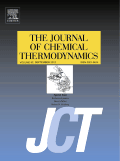
JOURNAL OF CHEMICAL THERMODYNAMICS
metrics 2024
Unveiling the Secrets of Chemical Energy
Introduction
The JOURNAL OF CHEMICAL THERMODYNAMICS serves as a pivotal platform for the dissemination of high-quality research in the field of thermodynamics and its applications across various scientific disciplines. Published by Academic Press Ltd - Elsevier Science Ltd, this esteemed journal, with an ISSN of 0021-9614 and E-ISSN 1096-3626, strives to contribute to the understanding of the thermodynamic properties of chemicals, materials, and molecular interactions. Covering a broad spectrum of topics from atomic and molecular physics to general materials science, it consistently ranks in the Q2 category across multiple fields including Physics and Astronomy, Chemistry, and Materials Science. With its convergence years extending from 1969 to 2025, the journal boasts a respected history and a commitment to fostering scholarly dialogue among researchers, professionals, and students alike. Though it is not an Open Access journal, its rigorous peer-review process ensures that published articles meet the highest standards of scientific excellence, making it an essential resource for anyone seeking to stay at the forefront of chemical thermodynamics research.
Metrics 2024
 0.562.202.10104
Metrics History
Rank 2024
Scopus
IF (Web Of Science)
JCI (Web Of Science)
Quartile History
Similar Journals
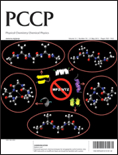
PHYSICAL CHEMISTRY CHEMICAL PHYSICS
Elevating Knowledge in Physical and Theoretical ChemistryPhysical Chemistry Chemical Physics is a premier interdisciplinary journal published by the Royal Society of Chemistry, dedicated to advancing the fields of physical chemistry and chemical physics. With an impressive impact factor and categorized in the Q2 quartiles for both Physical and Theoretical Chemistry and Physics and Astronomy, this journal serves as a vital platform for the dissemination of high-quality research findings from 1999 through 2024. Based in the United Kingdom, the journal is committed to providing open access to its articles, enhancing the visibility and accessibility of research to a global audience. Researchers, professionals, and students alike are encouraged to contribute to this esteemed journal, ensuring impactful discussions and significant advancements in the understanding of chemical and physical phenomena. With strong Scopus rankings underscoring its relevance, Physical Chemistry Chemical Physics stands out as an essential resource for specialists striving to innovate and excel within these dynamic fields.
Journal of Applied Mechanics and Technical Physics
Shaping the Future of Engineering through Rigorous ResearchJournal of Applied Mechanics and Technical Physics is a distinguished publication that serves as a vital resource for researchers and professionals in the realms of mechanical engineering, mechanics of materials, and condensed matter physics. Published by MAIK NAUKA/INTERPERIODICA/SPRINGER, this journal has been committed to disseminating high-quality research since its inception in 1965. With a noted presence in the academic community, it holds a respectable Q3 ranking in multiple categories as of 2023, indicating its relevance and contribution to the field. Although it does not currently offer open access, the journal provides valuable insights and advancements through its rigorous peer-review process. Covering a broad spectrum of topics in applied mechanics and technical physics, it aims to foster innovation and dialogue among scientists, engineers, and scholars alike. Located in the United States, the journal continues to make significant strides in bridging the gap between theoretical research and practical applications, making it an essential read for anyone engaged in these dynamic fields.
FLUID PHASE EQUILIBRIA
Illuminating the Science of Phase EquilibriaFLUID PHASE EQUILIBRIA, published by Elsevier, stands as a pivotal platform within the realm of chemical engineering and physical chemistry since its inception in 1977. With an ISSN of 0378-3812 and an E-ISSN of 1879-0224, this esteemed journal features a diverse array of research dedicated to the principles and applications of phase equilibria in fluid systems. Ranked within the top quartiles (Q2) across multiple categories, including Chemical Engineering and Physical and Theoretical Chemistry, it highlights its significance with Scopus ranks that place it prominently in comparison to its peers. Although it does not currently offer open access, the journal's extensive content contributes significantly to scholarly discourse, making it an invaluable resource for researchers, professionals, and students alike. Operating from Amsterdam, Netherlands, FLUID PHASE EQUILIBRIA serves as a central hub for advancing knowledge and fostering collaboration in fluid phase studies, promising insights that span theoretical analyses to practical implementations.
JOURNAL OF PHASE EQUILIBRIA AND DIFFUSION
Connecting Researchers in the World of Materials ChemistryJOURNAL OF PHASE EQUILIBRIA AND DIFFUSION, published by Springer, stands as a pivotal resource in the fields of Condensed Matter Physics, Materials Chemistry, and Metals and Alloys. This esteemed journal, with an ISSN of 1547-7037 and an E-ISSN of 1863-7345, targets a diverse community of researchers, professionals, and students focused on the interactions and transformations of materials at various phases. With a commendable 2023 Q2 ranking across its relevant categories, it holds a significant position among contemporary scientific journals, with Scopus ranks reflecting its influence—#77 in Materials Science _ Metals and Alloys and #197 in Materials Science _ Materials Chemistry. Although it operates under a traditional subscription model, the journal's contributions span essential research and groundbreaking advancements from 2004 to 2024, encouraging rigorous exploration and fostering collaboration in pursuit of knowledge in phase equilibria and diffusion phenomena. The integrity and high standards maintained by the journal make it an indispensable platform for disseminating critical findings that shape the future of materials science.

Computational and Theoretical Chemistry
Empowering Scholars with Open Access to Cutting-Edge ResearchComputational and Theoretical Chemistry, published by ELSEVIER, stands at the forefront of interdisciplinary research in the realms of computational chemistry, theoretical physics, and biochemistry. With its ISSN 2210-271X and E-ISSN 1872-7999, the journal has established a significant presence in the academic community since its inception. Covering innovative computational methodologies and theoretical advancements, it addresses critical issues in condensed matter physics and molecular biochemistry, providing a rich resource for scholars and industry professionals alike. The journal enjoys a respectable impact factor and ranks notably in several Scopus categories, making it a vital platform for disseminating high-quality research. It adopts an open-access model, facilitating wider readership and engagement, which is essential for fostering collaborative innovations in the scientific landscape. As it continues to evolve from 2011 to 2024, Computational and Theoretical Chemistry is committed to advancing knowledge and promoting insightful discussions within the scientific community.

Annual Review of Physical Chemistry
A Scholarly Nexus for Physical Chemistry ExcellenceAnnual Review of Physical Chemistry, published by Annual Reviews, stands as a premier source of comprehensive review articles in the field of physical chemistry. With a prestigious impact factor and a strong reputation reflected in its Q1 rankings in both Physical and Theoretical Chemistry and Medicine (Miscellaneous), this journal is essential for researchers seeking to stay at the forefront of advancements in the discipline. Covering a wide array of topics, the Annual Review of Physical Chemistry synthesizes the latest findings, trends, and methodologies, providing a vital resource for professionals and students alike. Although it does not offer open access, its scholarly rigor and in-depth analyses ensure it occupies a critical space in academia. Its consistent publication since 1975 guarantees that it has historical significance and relevance, making it a cornerstone for those engaged in cutting-edge research within the realm of physical chemistry.
PHYSICS AND CHEMISTRY OF LIQUIDS
Advancing the Frontier of Liquid-State SciencePHYSICS AND CHEMISTRY OF LIQUIDS is a distinguished academic journal dedicated to the exploration and advancement of liquid-state scientific research within the fields of physics and chemistry. Published by Taylor & Francis Ltd, this esteemed journal features contributions that delve into various aspects of condensed matter physics, materials chemistry, and characteristics of electronic, optical, and magnetic materials. With an ISSN of 0031-9104 and an E-ISSN of 1029-0451, it has been disseminating valuable knowledge since its inception in 1968. The journal’s commitment to academic rigor is reflected in its current Q3 rankings across multiple categories, including condensed matter physics and physical chemistry. Although not open access, the journal remains a crucial resource for researchers, professionals, and students seeking to stay at the forefront of liquid research advancements. Its publications contribute significantly to the understanding of the interactions and behaviors of liquid materials, making it an indispensable asset in both academic and industrial contexts.

Physical Chemistry Research
Empowering global access to pioneering physical chemistry findings.Physical Chemistry Research, published by the Iranian Chemical Society, is an esteemed academic journal dedicated to advancing knowledge within the fields of *Fluid Flow and Transfer Processes*, *Physical and Theoretical Chemistry*, and *Statistical and Nonlinear Physics*. Since its inception in 2013, the journal has established a crucial platform for researchers, professionals, and students to share innovative findings and methodologies, enhancing collaboration and knowledge dissemination in the physical chemistry community. With impactful contributions recognized in Quartile 3 and Quartile 4 classifications across various categories, the journal is positioned to cultivate emerging research trends as it continues to converge through 2024. Researchers can benefit from diverse perspectives on crucial phenomena in physical chemistry, as the journal is indexed in prominent databases, further increasing accessibility and visibility. The *open access* policy ensures that cutting-edge research remains available to a broad audience, promoting the growth of the discipline globally.
JOURNAL OF MOLECULAR LIQUIDS
Innovating the Future of Molecular Liquid StudiesJOURNAL OF MOLECULAR LIQUIDS, published by Elsevier, is a premier academic journal focused on the intricate nature of molecular liquids, spanning foundational to applied research. With an ISSN of 0167-7322 and an E-ISSN of 1873-3166, this journal has established its significance in various fields, achieving Q1 rankings across atomic and molecular physics, condensed matter physics, and materials chemistry, among others, as of 2023. The journal’s broad scope, covering studies from theoretical frameworks to experimental applications, serves as a vital platform for disseminating innovative research findings while advancing our understanding of molecular interactions and dynamics. With a strong position in Scopus rankings and high impact factors, it is a trusted resource for researchers, professionals, and students alike, seeking comprehensive insights into molecular liquids. As a journal that thrives on pioneering energy, the JOURNAL OF MOLECULAR LIQUIDS is essential for anyone wishing to remain at the forefront of research in this dynamic field.
JOURNAL OF PHYSICAL AND CHEMICAL REFERENCE DATA
Discovering Precision in Reference Data Since 1972The Journal of Physical and Chemical Reference Data, published by AIP Publishing, stands as a pivotal resource in the fields of chemistry and physical sciences. With an ISSN of 0047-2689 and E-ISSN 1529-7845, this journal has been diligently curating and disseminating essential reference data since its inception in 1972. Covering a wide array of topics, it is classified in the top quartile (Q1) for miscellaneous chemistry and holds commendable standings in physical and theoretical chemistry, as well as general physics and astronomy, according to the latest Scopus rankings. Researchers and professionals rely on its comprehensive and accurate data to advance their work, making it an indispensable resource for academia and industry alike. While the journal does not currently offer open access options, its rigorous peer-review process ensures that each contribution maintains the highest scholarly standards, catering to a global audience dedicated to the advancement of physical and chemical knowledge.