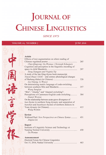
JOURNAL OF CHINESE LINGUISTICS
metrics 2024
Cultivating Knowledge in the Realm of Chinese Linguistics
Introduction
JOURNAL OF CHINESE LINGUISTICS, published by the JOURNAL CHINESE LINGUISTICS, is a prominent periodical that serves as a vital resource for researchers and scholars in the fields of linguistics and Chinese studies. With its ISSN 0091-3723, this journal has been contributing to the academic community since 1996 and continues to publish innovative research until 2024. Although it is classified in the third quartile (Q3) for both Arts and Humanities and Linguistics categories, its focus on Chinese linguistics positions it uniquely within this specialized domain. The journal is committed to advancing the understanding of Chinese language structures, usage, and context, encouraging interdisciplinary dialogue among linguists and language researchers. While currently not labeled as open access, the journal remains accessible to institutions and scholars worldwide, creating an invaluable platform for disseminating knowledge. As such, it plays a critical role in promoting linguistic diversity and cultural awareness within the academic landscape.
Metrics 2024
 0.140.200.2017
Metrics History
Rank 2024
Scopus
IF (Web Of Science)
JCI (Web Of Science)
Quartile History
Similar Journals

Dialectologia
Pioneering Insights into Dialectal Diversity and VariationDialectologia, published by the Universidad de Barcelona, Facultad de Filología, is a distinguished academic journal dedicated to the fields of linguistics and language studies. Since its inception in 2008, this Open Access journal has made significant strides in disseminating knowledge, fostering scholarly communication, and promoting research in dialectology and sociolinguistics. With its current classification in the Q3 quartile of linguistics and language, and Scopus rankings placing it in the 32nd and 29th percentiles within the Arts and Humanities and Social Sciences, respectively, Dialectologia plays a crucial role in advancing the study of language variation and change. The journal’s commitment to providing a platform for innovative research is underscored by its accessibility to a wide audience, ensuring that researchers, professionals, and students alike can engage with and contribute to contemporary discourse in language studies. Based in Barcelona, Spain, Dialectologia not only enriches academic literature but also connects a global community of language scholars through its compelling and diverse contributions.

SKASE Journal of Theoretical Linguistics
Empowering Linguistic Inquiry and DiscoverySKASE Journal of Theoretical Linguistics, published by the SLOVAK ASSOCIATION STUDY ENGLISH-SKASE, is a distinguished Open Access journal that expands the horizons of linguistic research and theoretical frameworks. With its ISSN N/A and E-ISSN 1336-782X, the journal has established itself as a pivotal resource for scholars in the field, achieving a commendable Q2 ranking in Linguistics and Language as of 2023. The journal, which has been in continuous publication since 2017, actively publishes innovative research studies, reviews, and theoretical discussions, easing access to groundbreaking work for academics and practitioners alike. Based in Slovakia, it connects a rich heritage of linguistic scholarship and is indexed in Scopus, ranking alongside its peers in both Arts and Humanities and Social Sciences categories. The SKASE Journal of Theoretical Linguistics is crucial for anyone interested in the evolving landscapes of linguistics, serving as an invaluable platform for disseminating knowledge and fostering collaboration amongst researchers worldwide.

LINGUISTIQUE
Cultivating Insights in the World of LanguageLINGUISTIQUE, an esteemed journal published by PRESSES UNIV FRANCE, serves as a vital platform for scholarly discourse in the fields of linguistics and language studies. With its ISSN 0075-966X and E-ISSN 2101-0234, this French journal has been a significant contributor to the understanding of linguistic phenomena since its inception in 2004, and it continues its journey through to 2024. Although currently categorized in the Q4 quartile for both Arts and Humanities (miscellaneous) and Linguistics and Language, its commitment to publishing quality research encourages a diverse range of articles, reviews, and innovative studies. Positioned in the 32nd and 29th percentiles for its respective fields according to Scopus rankings, LINGUISTIQUE is dedicated to advancing knowledge and stimulating engagement among researchers, professionals, and students alike. While it does not offer open access, the journal remains an essential resource for those who seek to deepen their understanding of linguistic principles in a global context, facilitating a richer discourse that connects theory with practice.
Journal of French Language Studies
Unveiling New Dimensions of French Linguistic ResearchJournal of French Language Studies, published by Cambridge University Press, is a prestigious and leading journal in the field of linguistics and language that provides a platform for scholarly articles and research findings relevant to the French language and its various dimensions. With an impressive Q1 ranking in the 2023 categorization and ranked #257 out of 1088 in Scopus for Language and Linguistics, this journal plays a pivotal role in advancing the study of French linguistic methodologies, sociolinguistics, and applied linguistics. Since its inception in 1991, the journal has continually contributed to the academic community, attracting innovative investigations and theoretical discussions that enrich understanding and research in the field. Researchers and students enjoy comprehensive access to critical analysis and emerging trends, and as it continues to converge towards 2024, the journal promises to remain an essential resource for exploring the evolving landscape of French language studies.
Corpus Linguistics and Linguistic Theory
Advancing linguistic insights through empirical exploration.Corpus Linguistics and Linguistic Theory, published by DE GRUYTER MOUTON, is a premier academic journal dedicated to advancing the interdisciplinary field of linguistics through the lens of corpus-based research methodologies. With an ISSN of 1613-7027 and E-ISSN 1613-7035, this journal is a valuable resource for linguists, researchers, and students who aim to investigate language structures, usage, and their theoretical implications. Recognized as a Q1 journal in the realm of Linguistics and Language, it boasts impressive Scopus rankings, positioning it within the top 7% and 8% of its categories in the Arts and Humanities and Social Sciences, respectively. Its relevance is underscored by a commitment to publishing rigorous research from 2005 to 2024, addressing contemporary advancements in linguistic theory fueled by empirical data. While the journal is not open access, it remains an essential platform for disseminating high-quality scholarship that informs both theoretical perspectives and practical applications in linguistics. As such, Corpus Linguistics and Linguistic Theory plays a crucial role in shaping the future of linguistic studies, making it indispensable for anyone engaged in this dynamic field.

Studia z Filologii Polskiej i Slowianskiej
Fostering Dialogue in the World of Slavic StudiesStudia z Filologii Polskiej i Slowianskiej is a prominent journal published by the Polish Academy of Sciences, Institute of Slavic Studies, focusing on the rich and diverse field of linguistics and language studies, particularly within the Slavic context. With the ISSN 0081-7090 and E-ISSN 2392-2435, this open-access journal has been a valuable resource for researchers, professionals, and students since its transition to an open-access model in 2014. It features rigorous peer-reviewed articles that contribute to the understanding of linguistic phenomena and cultural narratives across Slavic languages. Recognized within the Q3 quartile of linguistics and language in 2023, it ranks at the intersection of arts, humanities, and social sciences, providing insights that echo through disciplines such as sociolinguistics, psycholinguistics, and philology. In its ongoing publication trajectory from 2011 to 2023, Studia z Filologii Polskiej i Slowianskiej continues to foster academic discourse and collaboration, positioning itself as a key player in the global linguistic community.
Journal of Greek Linguistics
Celebrating the Vibrant Discourse of Greek LinguisticsThe Journal of Greek Linguistics, published by BRILL, is a premier platform dedicated to advancing the study of Greek language and its historical and contemporary implications within the broader field of linguistics. With an impact factor recognized in the linguistics community, this journal significantly contributes to the academic discourse surrounding Greek linguistics and its relevance in cultural and social studies. First made open access in 2016, it is now accessible to a global audience, facilitating a collaborative environment for researchers, scholars, professionals, and students alike. The journal is proudly positioned in the Q2 quartile for linguistics and language, reflecting its esteemed standing in the academic community, and it ranks within the top 30% in both the Arts and Humanities and Social Sciences categories according to Scopus. With a focus on the intersection of language, culture, and society, the journal invites contributions that offer new insights and promote interdisciplinary research. The Journal of Greek Linguistics continues to be an essential resource for those engaged in the rich and evolving conversation about the Greek language.

REVUE DE LINGUISTIQUE ROMANE
Fostering Interdisciplinary Dialogue in LinguisticsREVUE DE LINGUISTIQUE ROMANE, published by the esteemed SOCIÉTÉ LINGUISTIQUE ROMANE, is a prominent academic journal dedicated to the exploration of Romance linguistics. With its ISSN 0035-1458, the journal plays a significant role in advancing knowledge within the fields of linguistics and the history and philosophy of science. Although it does not currently offer Open Access, it provides critical insights and peer-reviewed research that are indispensable for scholars, educators, and students interested in the nuances of Romance languages. The journal, which has seen converged coverage from 2006 to 2017, and then again from 2019 to 2021, is ranked in the third quartile (Q3) across various categories within Scopus, reflecting its established presence in the academic community. As a vital resource for interdisciplinary studies, REVUE DE LINGUISTIQUE ROMANE is instrumental for those seeking to deepen their understanding of linguistic structures, cultural nuances, and the historical development of Romance languages.

Turkic Languages
Charting New Territories in Turkic LinguisticsTurkic Languages is an esteemed academic journal published by HARRASSOWITZ VERLAG, dedicated to the exploration and analysis of Turkic languages within the broader fields of linguistics and language studies. With an ISSN of 1431-4983, this journal serves as a vital platform for researchers, professionals, and students interested in the intricate structures, dynamics, and cultural contexts of Turkic languages. Although it currently operates without an Open Access option, the journal's commitment to quality research is evident in its placement within the Q4 category of Linguistics and Language for 2023, alongside its Scopus rankings where it stands in the 30th and 26th percentiles for Language and Linguistics across Arts and Humanities and Social Sciences, respectively. The journal's scope encompasses a variety of linguistic phenomena, striving to foster a deeper understanding of Turkic languages and their significance in the global linguistic landscape. With converged years from 2017 to 2022, Turkic Languages continues to uphold its reputation as a crucial resource for advancing scholarship in this specialized field.
Asia-Pacific Language Variation
Advancing Understanding of Linguistic Variation Across CulturesAsia-Pacific Language Variation is a prominent scholarly journal published by John Benjamins Publishing Co, dedicated to the exploration and analysis of linguistic diversity across the Asia-Pacific region. With its ISSN 2215-1354 and E-ISSN 2215-1362, the journal serves as a key resource for researchers and practitioners in the fields of linguistics and language studies. Since its inception in 2019, it has quickly ascended in stature, receiving a 2023 category quartile ranking of Q2 in Linguistics and Language and achieving impressive Scopus rankings, placing it in the 83rd percentile in Arts and Humanities and 81st in Social Sciences. Through its rigorous peer-reviewed articles, the journal aims to foster a deeper understanding of language variation, promoting interdisciplinary research and collaboration. Although it is not an open-access journal, the depth of research and critical insights offered in its pages make it an invaluable asset for academics, students, and professionals keen on the nuances of language within the dynamic Asia-Pacific context.