JOURNAL OF CLASSIFICATION
metrics 2024
Transforming Classification: Where Theory Meets Practicality
Introduction
JOURNAL OF CLASSIFICATION, published by Springer, stands as a premier academic platform dedicated to the advancement of classification methodologies across various disciplines. With an ISSN of 0176-4268 and E-ISSN of 1432-1343, this esteemed journal has been pivotal since its inception in 1984, showcasing influential research that continues to shape the fields of Library and Information Sciences, Mathematics, Psychology, and Statistics. As reflected in its 2023 quartile rankings—Q2 in Library and Information Sciences, Mathematics (miscellaneous), and Psychology (miscellaneous), as well as Q3 in Statistics, Probability and Uncertainty—the journal is recognized for its high standard of scholarly contributions. Notably, its Scopus rankings highlight its significant impact, particularly in Mathematics (ranked #12/90) and Psychology (ranked #21/97), placing it among the elite publications in these fields. Although not an open access journal, it provides invaluable insights for researchers, professionals, and students seeking to deepen their understanding of classification theory and its practical applications. With convergence expected through 2024, the journal is well-positioned to further contribute to interdisciplinary discussions and innovations, solidifying its importance within the academic community.
Metrics 2024
 0.491.801.9047
Metrics History
Rank 2024
Scopus
IF (Web Of Science)
JCI (Web Of Science)
Quartile History
Similar Journals

Data Science and Engineering
Empowering innovation through data-driven research.Data Science and Engineering is a premier open access journal published by SPRINGERNATURE, dedicated to advancing the fields of data science, artificial intelligence, computational mechanics, and information systems. Since its inception in 2016, this journal has rapidly established itself as a leader in the academic community, boasting an impressive Q1 ranking in multiple computer science categories, including Artificial Intelligence, Software, and Information Systems. With a commitment to disseminating high-quality research, it caters to a diverse audience of researchers, professionals, and students eager to explore the intersection of data and technology. The journal's robust global reach, combined with its respected reputation, empowers authors to share their findings widely, facilitating breakthroughs and innovations across the digital landscape. Join the vibrant community of scholars contributing to this integral field of study, and stay informed with the latest research by accessing the journal freely online.
International Journal on Document Analysis and Recognition
Elevating Standards in Document Recognition ResearchInternational Journal on Document Analysis and Recognition (IJDAR), published by Springer Heidelberg, stands at the forefront of research and advancements in the field of document analysis, computer vision, and pattern recognition. With its ISSN 1433-2833 and E-ISSN 1433-2825, the journal is an essential resource for researchers and practitioners focusing on innovations in automatic document processing, image analysis, and artificial intelligence applications in document retrieval and recognition. Recognized as a Q1 journal in multiple relevant categories, including Computer Science Applications, Computer Vision and Pattern Recognition, and Software, IJDAR boasts impressive Scopus rankings that position it among the top-tier publications in these domains. The journal’s converged publication years from 1998 to 2024 offer a rich repository of knowledge essential for both theoretical and practical advancements, ensuring that researchers, professionals, and students can keep pace with the latest findings and methodologies. Access options may vary, but the journal continuously strives to facilitate the dissemination of high-quality research that contributes significantly to the academic discourse in document analysis and recognition.
Inteligencia Artificial-Iberoamerical Journal of Artificial Intelligence
Empowering Researchers with Cutting-Edge Insights.Inteligencia Artificial-Iberoamerican Journal of Artificial Intelligence, published by the ASOC ESPANOLA INTELIGENCIA ARTIFICIAL, serves as a pivotal platform for disseminating cutting-edge research in the burgeoning fields of artificial intelligence and software development. Established in 1997 as an Open Access journal, it ensures broad accessibility to its scholarly content, thus fostering collaboration and knowledge exchange amongst researchers, professionals, and students across the globe. Based in Valencia, Spain, the journal currently operates within a significant timeline spanning from 2004 to 2010 and 2012 to 2024, enabling continual contributions to the academic discourse. Although it holds a Q4 quartile ranking in both the Artificial Intelligence and Software categories and a notable yet competitive Scopus ranking among its peers, the journal remains committed to advancing the understanding and application of sophisticated AI methodologies. As it continues to embrace innovative research, this journal stands as a crucial reference point for those keenly navigating the complexities of artificial intelligence in a rapidly evolving digital landscape.

International Journal of Data Warehousing and Mining
Exploring New Frontiers in Data ManagementInternational Journal of Data Warehousing and Mining, published by IGI Global, is a vital resource in the field of data management and analytics, catering to researchers, professionals, and students alike. With ISSN 1548-3924 and E-ISSN 1548-3932, this journal has been at the forefront of disseminating pioneering research since its inception in 2005 and will continue to do so through 2024. Despite its current categorization in the Q4 quartile for Hardware and Architecture as well as Software, and its Scopus rankings, the journal aims to foster innovation within the domains of data warehousing, data mining, and their applications across various sectors. The absence of an open access option does not diminish its significance; rather, it ensures that the journal maintains rigorous peer-review standards, providing high-quality research outputs that contribute to ongoing discussions and advancements within the field. Researchers and practitioners looking to stay updated on the latest trends and methodologies will find the International Journal of Data Warehousing and Mining an indispensable tool in their academic and professional endeavors.
SOFT COMPUTING
Advancing Knowledge in Fuzzy Logic and Neural NetworksSOFT COMPUTING is a premier international journal published by Springer, focusing on the interdisciplinary field of soft computing, which includes areas such as fuzzy logic, neural networks, genetic algorithms, and their applications. With an ISSN of 1432-7643 and E-ISSN 1433-7479, the journal is based in Germany and contributes significantly to the advancement of knowledge in its fields, boasting an impressive Scopus ranking that places it in the top echelons of Geometry and Topology, Theoretical Computer Science, and Software categories. In the 2023 category quartiles, it has achieved Q2 rankings in multiple disciplines, reflecting its high-quality research contributions. Though not Open Access, the journal's rigor and relevance to contemporary issues make it a favored resource for researchers, professionals, and students alike. From its inception in 2000 and spanning across the years until 2024, SOFT COMPUTING continues to serve as a robust platform for innovative research and theoretical advancements, making it an essential read for anyone engaged in the rapidly evolving landscape of computational intelligence.
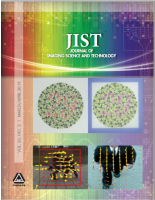
JOURNAL OF IMAGING SCIENCE AND TECHNOLOGY
Bridging Disciplines through Imaging ExcellenceJOURNAL OF IMAGING SCIENCE AND TECHNOLOGY, published by I S & T - SOC IMAGING SCIENCE TECHNOLOGY, is a pivotal resource in the realms of imaging science, optics, and materials. With its ISSN 1062-3701 and E-ISSN 1943-3522, this journal has been disseminating influential research since 1993 and continues to be a vital platform for scholars up to 2024. Despite its varied quartile rankings across disciplines—such as Q4 in Atomic and Molecular Physics and Optics, and Q3 in Chemistry (Miscellaneous) and Electronic, Optical and Magnetic Materials—it provides an essential forum for innovative ideas and advancements. The journal’s focus on interdisciplinary connections encourages collaboration among researchers in the fields of chemistry, computer science, and physics. Researchers, professionals, and students interested in exploring the latest imaging technologies and methodologies will find invaluable insights within its pages, making it a significant addition to their academic libraries.

EXPERT SYSTEMS WITH APPLICATIONS
Bridging Theory and Application in Expert SystemsEXPERT SYSTEMS WITH APPLICATIONS is a premier journal published by PERGAMON-ELSEVIER SCIENCE LTD, dedicated to showcasing cutting-edge research in the fields of Artificial Intelligence, Computer Science Applications, and Engineering. With an esteemed Q1 ranking across multiple categories, this journal not only reflects high-quality scholarship but also plays a pivotal role in advancing the application of expert systems and intelligent technologies in various sectors. Operating from the United Kingdom, it features a wide range of insightful articles that address complex challenges and offer innovative solutions through interdisciplinary approaches. Researchers and practitioners can access invaluable resources to inform their work, contributing to the journal's strong reputation and growing readership. With its convergence of relevant technologies from 1990 to 2025, EXPERT SYSTEMS WITH APPLICATIONS stands as an essential source for those aiming to push the boundaries of knowledge in these thriving fields, making it a key platform for both established experts and emerging scholars.

Communications for Statistical Applications and Methods
Innovating Statistics for Diverse ApplicationsCommunications for Statistical Applications and Methods is a vital academic journal dedicated to advancing the field of statistics, with a particular focus on practical applications and methodologies. Published by the Korean Statistical Society, this journal has become a significant resource for researchers, practitioners, and students engaged in statistical sciences and its diverse applications in various fields including finance and modeling. Operating without an Open Access format, the journal is accessible through institutional subscriptions, allowing a broad audience to benefit from its insights. The journal covers works from its inception in 2017 to 2024, and although it currently ranks in the Q4 and Q3 quartiles across various mathematical and statistical categories, its commitment to quality research makes it a noteworthy platform for emerging trends and innovations. The journal not only serves to disseminate knowledge but also fosters collaboration among statisticians, ensuring that crucial advancements in statistical applications are communicated effectively.
INTERNATIONAL JOURNAL OF COMPUTER APPLICATIONS IN TECHNOLOGY
Driving insights in computer applications for a digital future.International Journal of Computer Applications in Technology is a reputable academic journal published by InderScience Enterprises Ltd, dedicated to advancing the field of computer applications across various domains including Computer Networks and Communications, Computer Science Applications, and more. With an ISSN of 0952-8091 and an E-ISSN of 1741-5047, this journal has been a credible source of research since its inception in 1976, transitioning into its current form in 1988. With its consistent rank in the Q3 quartile for several key engineering and computer science categories in 2023, it highlights the significance of the journal and its contributions to ongoing discourse in these fields. Researchers benefit from its wide-ranging scope, which encompasses both theoretical and practical applications of technology, making it an invaluable resource for both industry professionals and academic scholars. Although it currently does not provide open access, the journal remains committed to disseminating high-quality research that is essential for technological advancement and innovation.
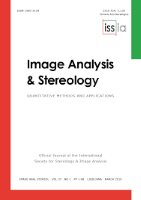
Image Analysis & Stereology
Unlocking the Potential of Image AnalysisImage Analysis & Stereology is a premier open-access journal dedicated to the dynamic fields of image analysis and stereological methods, published by the International Society for Stereology. Since its inception in 2000, this journal has provided an essential platform for researchers and professionals to disseminate their findings and share innovative methodologies across various disciplines, including Acoustics, Biotechnology, Computer Vision, and Materials Science. As a respected publication with a broad scope, the journal holds a Q3 ranking across multiple categories and is indexed in Scopus. With its commitment to advancing research and enhancing academic discourse, Image Analysis & Stereology is vital for anyone involved in quantitative imaging studies, offering valuable insights and access to groundbreaking research in a rapidly evolving landscape.