
NETWORK-COMPUTATION IN NEURAL SYSTEMS
metrics 2024
Fostering Collaboration in Network and Neural Computation
Introduction
NETWORK-COMPUTATION IN NEURAL SYSTEMS is a distinguished journal published by Taylor & Francis Inc, focusing on the innovative intersection of network theory and neural computation. Since its inception in 1990, this journal has provided a vital platform for researchers and professionals in the field of neuroscience, exploring the dynamics of neural networks and computational models. With its current Q3 category ranking in Neuroscience (miscellaneous) and a robust position in Scopus, the journal plays a critical role in advancing knowledge and discussion within this interdisciplinary area. The journal addresses a wide range of topics related to the computational aspects of neural systems, fostering collaboration and providing valuable insights amongst scholars. Although it is not an open-access publication, its well-curated content remains accessible through institutional subscriptions, ensuring that significant research reaches the hands of those who need it. As it continues to evolve through 2024 and beyond, NETWORK-COMPUTATION IN NEURAL SYSTEMS stands as a key resource for anyone deeply engaged in understanding the complexities and intricacies of neural computations.
Metrics 2024
 0.551.102.3062
Metrics History
Rank 2024
Scopus
IF (Web Of Science)
JCI (Web Of Science)
Quartile History
Similar Journals

Transactions of the Association for Computational Linguistics
Catalyzing Progress in Computational Language StudiesTransactions of the Association for Computational Linguistics, published by MIT Press, serves as a premier open access journal dedicated to advancing the field of computational linguistics. Established as a key resource since 2013, this journal enhances the dissemination of research, offering unlimited access to groundbreaking studies. It holds an impressive array of category quartiles in 2023, ranking in the Q1 quartile across multiple disciplines including Artificial Intelligence, Communication, Computer Science Applications, Human-Computer Interaction, and Linguistics and Language. Further emphasizing its remarkable impact, the journal ranks #1 in both Linguistics and Communication, placing it at the forefront of social sciences. These factors contribute to an overall Scopus percentile ranking that epitomizes the journal's relevance and superiority within its domain. As researchers, professionals, and students seek to explore and contribute to the rapidly evolving landscape of language technology, this journal stands as an indispensable platform for sharing innovative ideas and studies within the community.

IMAGING SCIENCE JOURNAL
Exploring New Dimensions in Visual TechnologyImaging Science Journal, published by Taylor & Francis Ltd, serves as a vital resource for researchers and professionals in the fields of computer vision, pattern recognition, and media technology. With an ISSN of 1368-2199 and an E-ISSN of 1743-131X, this journal has been fostering scholarly dialogue since its inception in 1997, with a converged content offering extending through 2024. Its categorization in Quartile 4 in Computer Vision and Pattern Recognition and Quartile 3 in Media Technology highlights its relevance and contributions to emerging trends in these domains. Although it ranks 36th in the Engineering - Media Technology category and 96th in Computer Science - Computer Vision and Pattern Recognition, its innovative research and insights continue to attract the attention of scholars dedicated to advancing knowledge at the intersection of imaging technologies. Offering versatile access options, this journal is essential for students, researchers, and professionals aiming to stay informed and engaged in the rapidly evolving landscape of imaging science.
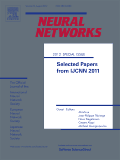
NEURAL NETWORKS
Illuminating Pathways in Neural Science and AINEURAL NETWORKS, an esteemed journal with the ISSN 0893-6080 and E-ISSN 1879-2782, is published by Pergamon-Elsevier Science Ltd in the United Kingdom. This influential journal, established in 1988 and continuing its publication through 2024, is recognized for its significant contributions to the fields of Artificial Intelligence and Cognitive Neuroscience, ranking in the Q1 category in both disciplines as of 2023. With a strong Scopus rank of #4/115 in Cognitive Neuroscience and #35/350 in Artificial Intelligence, and a commendable percentile of 96th and 90th respectively, NEURAL NETWORKS stands at the forefront of academic research. Researchers, professionals, and students can benefit from the journal's rigorous peer-review process and the dissemination of groundbreaking findings that shape understanding in artificial intelligence methodologies and their cognitive applications. While the journal currently operates under traditional access options, it serves as a vital resource in fostering innovations and cross-disciplinary collaboration.

Interdisciplinary Sciences-Computational Life Sciences
Fostering Collaboration for Transformative Life Science InsightsInterdisciplinary Sciences-Computational Life Sciences, published by SPRINGER HEIDELBERG, is a premier journal dedicated to advancing the field of life sciences through the lens of computational methods. With an ISSN of 1913-2751 and an E-ISSN of 1867-1462, this journal serves as a significant platform for researchers and professionals alike, fostering innovation and collaboration across various disciplines. As a testament to its impact, the journal holds a Q2 category status in Biochemistry, Genetics and Molecular Biology, Computer Science Applications, and Health Informatics, reflecting its influential contributions and rigorous peer-review process. The Scopus rankings demonstrate its esteemed placement within its fields, with notable percentiles that highlight its relevance and reach. While the journal operates under a traditional access model, its commitment to publishing high-quality research continues to stimulate important discussions and developments within the scientific community. Founded in 2009 and converging through 2024, Interdisciplinary Sciences-Computational Life Sciences remains an essential resource for the latest discoveries at the intersection of computation and life sciences, appealing to both seasoned researchers and enthusiastic students eager to contribute to this dynamic field.
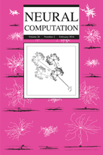
NEURAL COMPUTATION
Driving discoveries in neural computation and cognitive modeling.NEURAL COMPUTATION, published by MIT PRESS, is a leading academic journal that focuses on the interdisciplinary field of neural computing, combining insights from artificial intelligence, cognitive neuroscience, and computational modeling. With an impressive impact factor and consistently high rankings—being positioned in the Q1 category of Arts and Humanities and Q2 in Cognitive Neuroscience—this journal serves as a vital resource for researchers and professionals interested in understanding the complex interactions between neural processes and computational systems. Founded in 1995 and continuing through its converged years until 2024, NEURAL COMPUTATION publishes cutting-edge articles that advance theoretical knowledge and practical applications in both fields. While it does not provide open access, the journal ensures rigorous peer-review processes, making it an essential platform for disseminating significant research findings. With its commitment to fostering innovation and understanding at the intersection of neuroscience and computation, NEURAL COMPUTATION stands out as a cornerstone for academic exploration and discovery.
SOFT COMPUTING
Driving Excellence in Soft Computing ResearchSOFT COMPUTING is a premier international journal published by Springer, focusing on the interdisciplinary field of soft computing, which includes areas such as fuzzy logic, neural networks, genetic algorithms, and their applications. With an ISSN of 1432-7643 and E-ISSN 1433-7479, the journal is based in Germany and contributes significantly to the advancement of knowledge in its fields, boasting an impressive Scopus ranking that places it in the top echelons of Geometry and Topology, Theoretical Computer Science, and Software categories. In the 2023 category quartiles, it has achieved Q2 rankings in multiple disciplines, reflecting its high-quality research contributions. Though not Open Access, the journal's rigor and relevance to contemporary issues make it a favored resource for researchers, professionals, and students alike. From its inception in 2000 and spanning across the years until 2024, SOFT COMPUTING continues to serve as a robust platform for innovative research and theoretical advancements, making it an essential read for anyone engaged in the rapidly evolving landscape of computational intelligence.
AI, published by MDPI, is a distinguished open access journal dedicated to advancing the field of artificial intelligence. Since its inception in 2020, the journal has swiftly established itself as a prominent platform for scholarly research, currently ranking in the Q2 category for 2023 within the artificial intelligence sector according to Scopus. With an impressive global reach from its base in Basel, Switzerland, the journal aims to foster innovation and collaboration among researchers, professionals, and students alike, providing a forum to share groundbreaking findings and applications in AI. The journal's commitment to accessibility ensures that research is available to a wide audience, enhancing knowledge dissemination and contributing significantly to the ongoing evolution of artificial intelligence technologies. To explore the latest in AI research, readers can access articles through their open access model, encouraging an inclusive academic environment.
Foundations of Data Science
Elevating Data Science with Rigorous ResearchFoundations of Data Science, published by the American Institute of Mathematical Sciences (AIMS), is a pioneering journal dedicated to advancing knowledge within the ever-evolving fields of data science, mathematics, and computational theory. With an impact factor reflecting its quality and relevance, this journal has established itself as a crucial resource for researchers and professionals alike, achieving remarkable rankings in the Scopus metrics across various mathematical categories, including 35th in Analysis and 70th in Statistics and Probability. The journal, which has been continuously growing in significance since its inception in 2019, focuses on both foundational theories and applied methodologies, providing open access to cutting-edge research from 2024 onward. Its commitment to fostering interdisciplinary collaboration ensures that it remains at the forefront of the data science realm, making it an essential platform for students, scholars, and practitioners aiming to deepen their understanding and contribute to the scientific community.
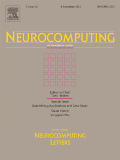
NEUROCOMPUTING
Innovating at the Convergence of Neuroscience and TechnologyNEUROCOMPUTING is a premier academic journal published by ELSEVIER, specializing in the interdisciplinary fields of Artificial Intelligence, Cognitive Neuroscience, and Computer Science Applications. With an impressive impact factor and a Q1 ranking in its relevant categories for 2023, NEUROCOMPUTING is recognized as a leader in fostering innovative research and providing a platform for ground-breaking studies. The journal’s scope covers the convergence of neural computation and artificial intelligence, making it essential reading for researchers and professionals seeking to explore the latest advancements and applications in these dynamic fields. For those interested in the cutting-edge intersection of neuroscience and computational techniques, NEUROCOMPUTING offers a wealth of knowledge that significantly contributes to both theoretical and practical advancements. The journal is dedicated to publishing high-quality, peer-reviewed articles and is an invaluable resource for students and established scholars alike, looking to stay at the forefront of research trends.

Parallel Processing Letters
Unlocking Innovations in Computational Technologies.Parallel Processing Letters is a notable academic journal published by World Scientific Publishing Co Pte Ltd, focusing on the dynamic fields of Computer Science, particularly in Hardware and Architecture, Software, and Theoretical Computer Science. Established in 1994, this journal provides a platform for the dissemination of cutting-edge research and developments in parallel processing and computational technologies. Despite its current Q4 ranking in multiple categories, Parallel Processing Letters plays an important role in fostering scholarly discussion and innovation within the computing community. With the ISSN 0129-6264 and E-ISSN 1793-642X, the journal is dedicated to maintaining rigorous academic standards while encouraging collaborative research conducive to the advancement of parallel processing systems. It serves as a valuable resource for researchers, professionals, and students seeking to deepen their understanding and gain insights into this rapidly evolving domain.