Journal of Communication Inquiry
Scope & Guideline
Navigating the Intersection of Theory and Practice in Communication
Introduction
Aims and Scopes
- Interdisciplinary Communication Studies:
The journal promotes research that crosses disciplinary boundaries, integrating insights from sociology, media studies, cultural studies, and political science to explore communication phenomena. - Critical Analysis of Media Representations:
A consistent focus on how media representations shape public perceptions and discourse, particularly regarding marginalized groups, identity politics, and issues of power and privilege. - Exploration of Digital and Alternative Media:
The journal investigates the role of digital platforms and alternative media in shaping public narratives, activism, and community engagement, reflecting on their transformative potential in contemporary society. - Ethical Considerations in Communication:
A commitment to examining the ethical dimensions of communication practices, particularly in journalism, advertising, and public relations, addressing issues like misinformation, bias, and representation. - Impact of Technology on Communication:
The journal explores how emerging technologies, including AI and social media, influence communication strategies, audience engagement, and the overall landscape of journalism and media.
Trending and Emerging
- Sexuality and Communication:
Recent publications indicate a growing interest in the intersections of sexuality, power, and communication, as researchers explore how these dynamics influence media representations and societal norms. - Digital Activism and Social Justice:
There is an increasing focus on digital activism and its role in social justice movements, highlighting how online platforms serve as tools for mobilization, awareness, and community-building. - Intersectionality in Media Studies:
Emerging research emphasizes intersectionality, examining how various identities (e.g., race, gender, class) intersect to shape experiences and representations in media, reflecting a broader commitment to diversity and inclusivity. - AI and Media Ethics:
The ethical implications of artificial intelligence in media production and consumption are gaining traction, with scholars critically analyzing how AI technologies impact journalistic integrity and public trust. - Global Perspectives on Communication:
An expanding interest in global and transnational communication studies is evident, as researchers explore cross-cultural exchanges and the impact of globalization on local media practices.
Declining or Waning
- Traditional Journalism Practices:
There is a noticeable decrease in studies focusing on conventional journalism practices, as attention shifts towards digital and alternative media, reflecting a changing media landscape. - Static Media Audiences:
Research on passive media consumption and static audience models has diminished, giving way to more dynamic explorations of audience agency and interaction in digital contexts. - Narrowly Defined Cultural Studies:
The focus on narrowly defined cultural studies that do not integrate broader social or political contexts appears to be declining, as scholars increasingly emphasize interdisciplinary approaches. - Historical Analysis of Media Events:
While historical perspectives remain valuable, there has been a reduced emphasis on isolated historical analyses of media events, with a greater interest in contemporary implications and ongoing narratives. - Conventional Advertising Strategies:
Studies centered on traditional advertising models and strategies are less frequent, as research increasingly prioritizes the impacts of digital marketing and consumer engagement in the online sphere.
Similar Journals
Chinese Journal of Communication
Fostering Scholarly Dialogue on Chinese Media and Global InteractionsThe Chinese Journal of Communication, published by Routledge Journals, Taylor & Francis Ltd, has established itself as a pivotal platform for scholarly discourse in the field of communication, particularly within the context of Chinese media and its global interactions. With a notable Q1 ranking in the 2023 Communication category and a commendable Scopus ranking of #77 out of 511 journals, it represents a significant contributor to the advancement of communication studies. The journal's focus extends from theoretical frameworks to empirical research, fostering a comprehensive understanding of the evolving communication landscape. Available in both print (ISSN: 1754-4750) and digital formats (E-ISSN: 1754-4769), the journal does not operate on an Open Access basis, yet it remains a highly sought-after resource for researchers, professionals, and students aiming to explore communication phenomena from a Chinese perspective. Given its publication history converging from 2010 to 2024, it serves as a valuable reference point for ongoing academic investigations and is instrumental in shaping future research directions in this dynamic field.

Review of Communication Research
Connecting Scholars to Transform Communication StudiesReview of Communication Research is a prestigious open-access journal dedicated to advancing the field of communication studies. Published by REVIEW COMMUNICATION RESEARCH from its base in Madrid, Spain, this journal has established itself as a vital platform for scholarly discourse since its inception. With an impressive impact factor and ranked in the Q1 quartile of communication journals for 2023, it holds a commendable position, placing it within the top 13% of approximately 511 journals in the communication category on Scopus. Since becoming open-access in 2013, the journal has enabled researchers, professionals, and students to access high-quality research without financial barriers, thereby fostering a greater dissemination of knowledge and dialogue within the community. Covering a wide array of topics from communication theory to media studies, the Review of Communication Research continues to contribute significantly to the understanding and evolution of communication in today’s interconnected world. Researchers are encouraged to engage with and submit their findings to this influential journal to further enrich the scholarly landscape.

Comunicacion y Sociedad-Guadalajara
Advancing communication research for a connected world.Comunicacion y Sociedad-Guadalajara is a distinguished peer-reviewed journal published by UNIV GUADALAJARA that plays a vital role in the field of communication studies. With an ISSN of 0188-252X and an E-ISSN of 2448-9042, this journal has embraced Open Access since 2023, ensuring that groundbreaking research is accessible to a wider audience. Hailing from Mexico, it serves as a platform for innovative research and critical discourse in communication, ranking Q2 in the Communication category and securing a notable Scopus rank of #[232/511, positioning it within the top 54th percentile of its field. Covering converged years from 2009 to 2010 and from 2013 to 2024, the journal's objective is to foster scholarly dialogue and advance knowledge across diverse aspects of communication. With a commitment to excellence, Comunicacion y Sociedad-Guadalajara stands as an essential resource for researchers, professionals, and students seeking to engage with contemporary issues in communication.

Revista Comunicacao Midiatica
Advancing Research in Communication StudiesRevista Comunicação Midiática is a prominent academic journal focusing on the fields of communication, media studies, and cultural dynamics, published by Universidade Estadual Paulista Júlio Mesquita Filho, Facility of Architecture, Arts & Communication. With its ISSN 2236-8000, this journal aims to disseminate innovative research, theoretical advancements, and practical insights that contribute to a deeper understanding of communication processes in contemporary society. Although it currently does not provide Open Access options, the journal serves as a valuable resource for researchers, professionals, and students who are keen to explore the intricate relationships between media and culture. Located in Bauru, Brazil, the journal is committed to fostering multidisciplinary dialogue and enhancing scholarly discourse, making it an invaluable addition to the academic landscape in the realm of media studies.
Middle East Journal of Culture and Communication
Unveiling Insights into Middle Eastern DynamicsMiddle East Journal of Culture and Communication is a vital scholarly platform published by BRILL, dedicated to fostering an understanding of cultural dynamics and communication pathways within the Middle East. Established in 2008, this journal delivers a rich array of interdisciplinary research spanning the fields of Arts and Humanities, Communication, Cultural Studies, Political Science, and Sociology. With an impact factor reflective of its commitment to high-quality scholarship, it currently ranks in various quartiles, including Q3 in Arts and Humanities (miscellaneous) and Q4 in Communication and Political Science, demonstrating its importance in the academic discourse surrounding these disciplines. The journal's open access policy ensures that critical insights and analyses are widely disseminated, catering to a global audience of researchers, professionals, and students alike. The Middle East Journal of Culture and Communication stands as an essential resource for those seeking to explore the intricate tapestry of cultural interactions in the region through rigorous academic inquiry.
International Communication Gazette
Fostering Scholarly Dialogue in International CommunicationThe International Communication Gazette is a prestigious academic journal published by SAGE Publications Inc. that has been at the forefront of communication studies since its inception in 1961. With a focus on interdisciplinary research, this journal aims to explore the ever-evolving landscape of communication within the contexts of sociology and political science. Ranking in the top quartile (Q1) in both the Communication and Sociology & Political Science fields, it offers significant insights into current trends and theories, making it a vital resource for researchers, professionals, and students alike. The journal holds a commendable position in Scopus rankings, standing at #82 out of 511 in Communication and #245 out of 1466 in Sociology and Political Science, reflecting its impact and relevance in the scholarly community. Although it is not an open-access journal, the International Communication Gazette remains committed to disseminating high-quality, peer-reviewed research that sparks discussions and furthers understanding in the dynamic world of global communication.
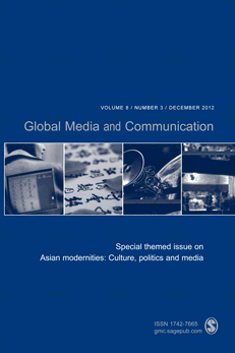
Global Media and Communication
Exploring the Nexus of Media and Communication WorldwideGlobal Media and Communication is a premier journal dedicated to advancing the fields of media and communication studies, published by SAGE Publications Ltd. With an ISSN of 1742-7665 and an E-ISSN of 1742-7673, this journal offers a platform for scholarly discourse and innovative research that explores the intricate relationships between global media practices and communication strategies. Recognized as a Q1 journal in both the Arts and Humanities (Miscellaneous) and Communication categories for 2023, it stands out in its commitment to delivering high-quality, peer-reviewed articles that contribute to the understanding of contemporary media landscapes. Located in London, United Kingdom, the journal benefits from being at the heart of cultural and digital innovation. Researchers, professionals, and students can look forward to insightful articles that not only critique existing frameworks but also propose new methodologies, ensuring that Global Media and Communication remains a vital resource for anyone interested in navigating the evolving dynamics of media and communication on a global scale.
Asian Journal of Communication
Connecting Ideas, Cultures, and DisciplinesThe Asian Journal of Communication, published by Routledge Journals, Taylor & Francis Ltd, is a premier scholarly platform dedicated to advancing the field of communication studies. Established in 1990 and continuing its impactful publication journey through 2024, this esteemed journal caters to a broad spectrum of interdisciplinary research, addressing critical issues in communication, media, and education in an Asian context. With an impressive impact factor and ranked in the top quartiles in both Communication (Q1) and Education (Q2), the journal is recognized for its rigorous peer-review process and its commitment to quality scholarship. Researchers, professionals, and students can access invaluable insights and innovative research trends, helping to bridge gaps and foster understanding across diverse communication practices. The journal is accessible through institutional subscriptions and promotes global discourse, making it an essential resource for anyone engaged in the vibrant field of communication.
International Journal of Media & Cultural Politics
Engaging Scholars in the Politics of CultureThe International Journal of Media & Cultural Politics, published by INTELLECT LTD, serves as a vital platform for scholarly discourse in the rapidly evolving fields of communication and cultural studies. With an ISSN of 1740-8296 and an E-ISSN of 2040-0918, this journal has established itself as a key resource since its inception in 2009, with significant contributions from 2013 to 2023. It is categorized within the Q3 quartile for Communication and Q2 for Cultural Studies, reflecting its commitment to high-quality research and its influential role in shaping contemporary discourse, evidenced by its Scopus rankings of #322 in Cultural Studies and #289 in Communication. Although not an open access journal, its comprehensive access options and rigorously peer-reviewed articles make it an essential read for researchers, professionals, and students seeking to understand the intricate intersections of media, politics, and culture in today’s society, fostering a deeper engagement with critical issues in these domains.
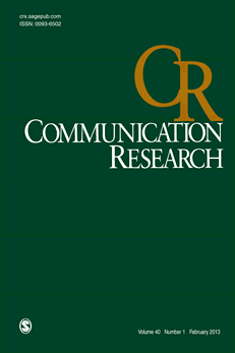
COMMUNICATION RESEARCH
Unveiling Insights into Language and Communication.COMMUNICATION RESEARCH, published by SAGE Publications Inc, stands as a premier journal in the fields of Communication and Linguistics, boasting an impressive impact factor that reflects its influential contributions to academic scholarship. Since its inception in 1974, this esteemed journal has provided rigorous, peer-reviewed research that delves into the dynamics of human communication, making it a vital resource for researchers, practitioners, and students alike. With a commendable ranking within the Q1 category for both Communication and Linguistics and consistently placed within the 99th percentile across Scopus ranks, COMMUNICATION RESEARCH is at the forefront of academic inquiry, fostering a deeper understanding of communication processes in diverse contexts. While not an Open Access journal, it offers extensive access options facilitating widespread dissemination of knowledge. Researchers can look forward to an engaging array of cutting-edge studies and theoretical advancements in forthcoming issues, making it an indispensable tool for those studying the complexities of language and communication.