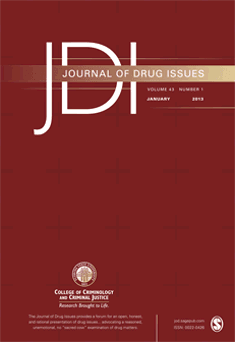
JOURNAL OF DRUG ISSUES
Scope & Guideline
Exploring the Complexities of Drug Discourse
Introduction
Aims and Scopes
- Addiction Treatment and Recovery:
Research on various models of addiction treatment, recovery capital, and the experiences of individuals in recovery, including the efficacy of different therapeutic approaches. - Substance Use Patterns and Behaviors:
Investigation into the patterns of substance use across demographics, including adolescents, marginalized communities, and populations with specific needs such as the homeless or incarcerated. - Impact of Policies and Legal Frameworks:
Analysis of drug policies, including legalization, decriminalization, and harm reduction strategies, and their implications on public health and social justice. - Psychosocial Factors in Substance Use:
Examination of the psychological, social, and cultural factors that influence substance use and addiction, including stigma, mental health, and social networks. - Public Health and Harm Reduction:
Exploration of harm reduction strategies, treatment accessibility, and the public health implications of substance use, focusing on innovative approaches to mitigate harm. - Emerging Drugs and Psychoactive Substances:
Research on new psychoactive substances and trends in drug use, including the motivations behind use and the societal responses to emerging drug challenges.
Trending and Emerging
- Harm Reduction Strategies:
There is an increasing emphasis on harm reduction approaches, including safe consumption spaces and naloxone distribution, highlighting their effectiveness in addressing public health crises related to substance use. - Intersection of Substance Use and Mental Health:
Research exploring the connections between substance use disorders and mental health issues is gaining prominence, reflecting a holistic approach to treatment and recovery. - Impact of COVID-19 on Substance Use:
The pandemic has catalyzed a surge in studies examining its effects on substance use patterns, treatment accessibility, and the mental health of individuals who use drugs. - Community-Based and Social Justice Approaches:
Emerging themes focus on community engagement, advocacy, and social justice in addressing drug issues, particularly in marginalized populations and the criminal justice system. - Technology and Substance Use:
Research is increasingly exploring the role of technology, including social media and online platforms, in shaping drug use behaviors and public perceptions. - Youth and Substance Use Trends:
An uptick in studies focused on adolescent and young adult substance use, including the impact of social norms and peer influences, indicates a growing concern for this vulnerable demographic.
Declining or Waning
- Traditional Views on Drug Criminalization:
There has been a noticeable decline in publications emphasizing punitive approaches to drug use and addiction. As harm reduction and public health frameworks gain traction, discussions around criminalization have become less prevalent. - Stigmatization of Drug Users:
Research focusing solely on the stigmatization of drug users has diminished, as the discourse shifts towards understanding the complexities of addiction and advocating for compassionate treatment approaches. - Single-Substance Focus Studies:
Studies that concentrate on the effects or issues surrounding a single substance (e.g., alcohol or cocaine) are becoming less frequent, with a growing interest in polysubstance use and the interactions between different drugs. - Overly Medicalized Perspectives:
There is a declining emphasis on viewing addiction purely through a medical lens, as more research recognizes the importance of social, cultural, and psychological factors in understanding substance use.
Similar Journals
Journal of Studies on Alcohol and Drugs
Pioneering research for a healthier tomorrow.The Journal of Studies on Alcohol and Drugs is a premier academic journal dedicated to advancing the understanding of alcohol and drug use, its effects, and its societal implications. Published by ALCOHOL RES DOCUMENTATION INC at the Center for Alcohol Studies, Rutgers University, this journal features comprehensive research that spans the disciplines of health, psychiatry, mental health, and toxicology. With its Q1 ranking in Health (Social Science) and Q2 ranking in Psychiatry and Mental Health, the journal plays a vital role in disseminating high-impact research that informs policy, prevention, and treatment strategies in addiction and substance use. The journal contributes significantly to the field, as evidenced by its solid Scopus rankings and engagement with contemporary issues, making it an essential resource for researchers, practitioners, and students. Although it does not offer open access, the journal's commitment to rigorous peer review and scholarship ensures that it remains at the forefront of research on alcohol and drugs through its converged publication timeline from 2007 to 2024.
ADDICTION
Empowering professionals to combat addiction effectively.ADDICTION, published by Wiley, is a highly regarded academic journal that serves the vibrant fields of Medicine and Psychiatry and Mental Health. With an impressive impact factor reflective of its significance—ranking in the top 8% and 7.5% of its categories respectively—this journal is esteemed for its rigorous peer-reviewed research which spans a wide array of topics related to addiction, including pharmacology, prevention, and treatment modalities. Since its inception in 1993, ADDICTION has continually provided a platform for innovative research, shaping the discourse and influencing clinical practices worldwide. This journal, based in the United Kingdom at a prestigious location in Hoboken, NJ, stands as a beacon for researchers, practitioners, and students alike, committed to advancing understanding and strategies to combat addiction-related challenges. Although it is not an Open Access publication, the journal's contribution to the field remains invaluable, ensuring that cutting-edge findings are disseminated widely among professionals dedicated to improving mental health outcomes.
Canadian Journal of Addiction
Empowering minds through addiction scholarship.Canadian Journal of Addiction is a leading platform dedicated to advancing the understanding of addiction and its multifaceted impacts on individuals and society. Published by LIPPINCOTT WILLIAMS & WILKINS, this journal aims to foster rigorous research and discussion in the field of addiction studies, contributing significantly to the intersection of psychiatry and mental health. With its ISSN 2368-4720 and E-ISSN 2368-4739, the journal is indexed in Scopus and has been categorized in the Q3 quartile for 2023, reflecting its emerging influence amongst peers. The Canadian Journal of Addiction facilitates a vital exchange of ideas and findings, crucial for researchers, practitioners, and students alike, addressing pressing issues related to addiction through innovative studies and insightful reviews. Subscribers and readers benefit from the latest findings as they navigate through the dynamic landscape of addiction research, enriching both academic knowledge and practical applications.
AMERICAN JOURNAL ON ADDICTIONS
Connecting Experts to Combat AddictionThe AMERICAN JOURNAL ON ADDICTIONS, published by WILEY, stands as a premier publication within the realms of Clinical Psychology, Medicine, and Psychiatry. With its ISSN 1055-0496 and E-ISSN 1521-0391, the journal has been a critical resource since its inception in 1992, consistently evolving to encompass a wide scope of addiction research and its implications on public health. Renowned for its rigorous peer-reviewed articles, it boasts impressive rankings, including Q1 status in both Clinical Psychology and Medicine (miscellaneous) for 2023, and a respectable Q2 in Psychiatry and Mental Health. As a foundational platform for disseminating cutting-edge research, the journal aims to facilitate the exchange of knowledge among researchers, healthcare professionals, and educators alike. Its significant impact on the academic community is underscored by its Scopus rankings—placing it in the top 26% of Clinical Psychology journals and the top 28% in Medicine (miscellaneous). By fostering an understanding of addiction and its treatments, the AMERICAN JOURNAL ON ADDICTIONS plays an essential role in guiding innovative practices and shaping future policies within the field.

Journal of Social Work Practice in the Addictions
Championing rigorous research in addiction social work.The Journal of Social Work Practice in the Addictions is a pivotal publication in the field of social work, dedicated to addressing the multifaceted challenges of addiction through rigorous research and practice. Published by Routledge Journals, Taylor & Francis Ltd, this journal has been a valuable resource since its inception in 2001 and continues to provide vital insights as it converges towards 2024. With a focus on empirical studies, theoretical advancements, and innovative practice approaches, it serves professionals and researchers alike who are engaged in the health and social sciences. Holding a respectable Q3 quartile ranking in both Health (Social Science) and Rehabilitation and a Q4 ranking in Social Work, it emphasizes the importance of interdisciplinary collaboration in tackling issues of addiction. The journal does not currently offer open access, ensuring exclusive dissemination to its dedicated readership, which includes practitioners, scholars, and students committed to improving outcomes for individuals affected by substance use disorders. As an essential platform within the community, it fosters knowledge exchange and supports evidence-based practice, thereby enhancing the field’s collective understanding of addiction-related challenges.
EXPERIMENTAL AND CLINICAL PSYCHOPHARMACOLOGY
Advancing the Science of PsychopharmacologyEXPERIMENTAL AND CLINICAL PSYCHOPHARMACOLOGY, published by the American Psychological Association, stands as a pivotal resource within the fields of pharmacology and psychiatry. With an ISSN of 1064-1297 and an E-ISSN of 1936-2293, this journal contributes significantly to the understanding of psychopharmacological interventions through its rich array of research articles, reviews, and clinical studies. Classified within the Q2 category in both Pharmacology and Psychiatry and Mental Health, it reflects a solid standing in academic performance, evidenced by its rankings in Scopus, where it places within the top half of its categories. Spanning from 1993 to 2024, it seeks to provide an essential platform for the dissemination of knowledge and advancements that influence clinical practice and therapeutic approaches. Although not an open-access journal, its impact on the development of evidence-based psychopharmacological treatments cannot be overstated, making it a vital resource for researchers, clinically active professionals, and students eager to stay abreast of cutting-edge developments in mental health and pharmacology.
Alkoholizm i Narkomania-Alcoholism and Drug Addiction
Transforming addiction research through open access.Alkoholizm i Narkomania - Alcoholism and Drug Addiction is a prominent peer-reviewed journal published by the Institute of Psychiatry and Neurology, Department of Studies on Alcoholism in Warsaw, Poland. Renowned for its commitment to advancing the fields of addiction research and mental health, this journal disseminates critical findings regarding the prevention, treatment, and societal implications of alcoholism and drug addiction. Since becoming Open Access in 2017, it ensures that researchers, professionals, and students from across the globe have unrestricted access to valuable resources and emerging studies within this vital area of public health. The journal emphasizes innovative methodologies and interdisciplinary approaches, inviting contributions that explore the complex interplay of psychological, social, and biological factors influencing addiction. By fostering a collaborative and inclusive scholarly community, Alkoholizm i Narkomania aims to contribute significantly to the understanding and resolution of addiction-related challenges worldwide.

Journal of Substance Use & Addiction Treatment
Connecting science and practice for impactful change.Journal of Substance Use & Addiction Treatment is a premier scholarly publication dedicated to advancing the understanding and treatment of substance use disorders and addictive behaviors. Published by Elsevier Science Inc, this journal serves as a vital platform for researchers, clinicians, and students in the fields of psychology, psychiatry, public health, and addiction studies. With its commitment to Open Access, the journal facilitates wide dissemination of cutting-edge research, enabling practitioners and policymakers to access critical findings that inform treatment approaches and public health strategies. As an essential resource in addiction treatment and research, the Journal of Substance Use & Addiction Treatment aims to foster interdisciplinary collaboration and innovation, ultimately improving outcomes for individuals affected by addiction.
JOURNAL OF ETHNICITY IN SUBSTANCE ABUSE
Bridging Research and Policy in Ethnic Substance Abuse Dynamics.Welcome to the JOURNAL OF ETHNICITY IN SUBSTANCE ABUSE, an esteemed publication dedicated to advancing our understanding of substance use and its intricate connections with ethnicity and culture. Published by Routledge Journals, Taylor & Francis Ltd, this journal has established itself as a vital resource in the field, holding a significant impact as evidenced by its Q2 ranking in Health (Social Science) and Q3 in Medicine (Miscellaneous) categories as of 2023. Since its inception in 2002, the journal has published cutting-edge research, fostering insightful discussions and providing a platform for scholars, practitioners, and policymakers to explore the multifaceted issues surrounding substance abuse in diverse ethnic communities. Researchers will benefit from the journal's commitment to rigor and relevance, navigating through critical insights that shape public health policies and improve clinical practices. Although it operates under a closed-access model, the journal is accessible to academics and professionals seeking a deeper understanding of ethnicity and substance use dynamics. Join a growing community that values quality research and impactful dialogue within this essential domain.
AMERICAN JOURNAL OF DRUG AND ALCOHOL ABUSE
Exploring Innovative Solutions for Drug and Alcohol ChallengesAmerican Journal of Drug and Alcohol Abuse is a highly regarded publication in the field of substance abuse research, published by Taylor & Francis Inc. With its inception in 1974, this journal has become an essential resource for scholars and practitioners interested in clinical psychology, psychiatry, and the multifaceted issues surrounding drug and alcohol use. It holds a notable Q2 ranking in Clinical Psychology, Medicine (miscellaneous), and Psychiatry and Mental Health, emphasizing its impact and relevance in these domains. The journal's 2023 Scopus rankings further highlight its standing, placing it in the top quartile of publications with established readership and citation metrics. Researchers and students can benefit from its comprehensive articles that delve into the complexities of substance use, treatment methodologies, and the socio-psychological underpinnings of addiction. Whether you seek to access cutting-edge studies or contribute to ongoing discourse in the field, the American Journal of Drug and Alcohol Abuse serves as a vital hub for knowledge dissemination and scholarly engagement.