Journal of Gastrointestinal Cancer
Scope & Guideline
Elevating research standards in gastroenterology and oncology.
Introduction
Aims and Scopes
- Clinical Research and Trials:
The journal emphasizes original clinical research, including randomized controlled trials, cohort studies, and case-control studies that evaluate novel treatments, surgical techniques, and patient outcomes in gastrointestinal cancers. - Molecular and Genetic Studies:
Research focusing on the molecular mechanisms underlying gastrointestinal cancers, including studies on genetic mutations, biomarkers, and their implications for diagnosis, prognosis, and targeted therapies. - Epidemiology and Public Health:
The journal publishes epidemiological studies that explore the incidence, prevalence, risk factors, and survival rates of gastrointestinal cancers, contributing valuable data to public health discussions. - Interdisciplinary Approaches:
Recognizing the complexity of cancer treatment, the journal encourages interdisciplinary studies that integrate surgical, medical, and palliative care perspectives in the management of gastrointestinal cancers. - Innovative Therapies and Technologies:
The journal highlights research on innovative therapeutic approaches, including immunotherapy, targeted therapy, and novel surgical techniques, as well as advancements in diagnostic technologies.
Trending and Emerging
- Immunotherapy and Biomarkers:
A significant increase in research related to immunotherapy, including studies on PD-1/PD-L1 inhibitors and their associated biomarkers, indicates a growing focus on personalized cancer treatments. - Microbiome and Cancer Interactions:
Research examining the role of the gut microbiome in gastrointestinal cancers has gained prominence, suggesting its potential impact on cancer pathogenesis and treatment responses. - Patient-Centered Care and Quality of Life:
There is an emerging emphasis on studies evaluating patient-reported outcomes, quality of life, and the psychosocial aspects of cancer care, reflecting a broader understanding of patient needs. - Integration of Artificial Intelligence in Oncology:
The use of artificial intelligence and machine learning in predicting treatment responses and outcomes is increasingly featured, highlighting the trend towards data-driven approaches in oncology. - Health Disparities and Access to Care:
Research focusing on health disparities related to gastrointestinal cancers, including socioeconomic factors and access to care, is becoming more prevalent, addressing equity in cancer treatment.
Declining or Waning
- Traditional Chemotherapy Studies:
There appears to be a decreasing trend in publications solely focused on traditional chemotherapy regimens, as more research is now directed towards personalized medicine and targeted therapies. - Basic Science and Preclinical Studies:
The journal has seen a reduction in the number of purely basic science studies, particularly those that do not translate into clinical applications, as the emphasis shifts towards clinical relevance. - Single-Institution Studies:
There is a noticeable decline in the number of studies originating from single institutions, with a preference for multicenter studies that provide broader data and enhance generalizability. - Conventional Imaging Techniques:
Research focusing on conventional imaging techniques has waned in favor of studies utilizing advanced imaging modalities like PET/CT and MRI, reflecting a shift towards precision diagnostics. - Epidemiological Studies in Non-Western Populations:
While there is still interest in epidemiological studies, there has been a decline in research specifically targeting non-Western populations, which may limit the global understanding of gastrointestinal cancer trends.
Similar Journals

Current Problems in Cancer: Case Reports
Advancing oncology through shared case insights.Current Problems in Cancer: Case Reports is a prominent scholarly journal published by Elsevier, focusing on critical case reports within the field of oncology. Since its transition to Open Access in 2020, it has enhanced accessibility for researchers and healthcare professionals seeking to share and discuss unique clinical scenarios and insights that advance cancer treatment and patient care. Operating from the United States, this journal aims to address the important and often intricate challenges faced in oncology, facilitating a platform for knowledge exchange and the exploration of new perspectives in cancer management. Despite its current Q4 category ranking in the 2023 oncology category of Scopus with a rank of #359/404, its goal is to enrich the academic discourse by featuring diverse case reports and promoting evidence-based practices. As the journal evolves from 2021 to 2024, it seeks to impact the field by inviting researchers, professionals, and students to contribute their findings, ultimately fostering a collaborative environment for tackling the complexities of cancer.

International Journal of Gastrointestinal Intervention
Pioneering Research for Better Patient OutcomesInternational Journal of Gastrointestinal Intervention is a distinguished open-access journal published by the SOC GASTROINTESTINAL INTERVENTION that has been committed to disseminating critical research since its inception in 2012. Based in the Netherlands, this journal focuses on the dynamic fields of gastroenterology, hepatology, oncology, and radiology, offering a platform for innovative studies and clinical interventions that can significantly impact patient care and medical practice. With its incorporation into Scopus and ranked within the lower quartiles in various categories as of 2023, the journal acknowledges the evolving landscape of medical research and seeks to continually elevate its contributions to knowledge in these specialized areas. By embracing open access since its founding, the journal ensures that cutting-edge research findings are accessible to a global audience, fostering collaboration and knowledge sharing among researchers, professionals, and students. The journal aims to be a premier source of information and a catalyst for advancements in gastrointestinal interventions, making it an essential resource for those dedicated to improving health outcomes in these critical medical fields.

Minerva Gastroenterology
Elevating Clinical Practices with Cutting-Edge InsightsMinerva Gastroenterology, published by EDIZIONI MINERVA MEDICA, is a notable academic journal dedicated to advancing the field of gastroenterology and related disciplines. With an ISSN of 2724-5985 and an E-ISSN of 2724-5365, this journal gathers innovative research from diverse areas including internal medicine, endocrinology, and metabolism. Though characterized by its open-access policies, Minerva Gastroenterology aims to provide a platform for high-quality scholarly articles with an emphasis on critical reviews, clinical studies, and translational research. Since its inception in 2021, the journal has managed to secure a reputation reflected in its Q3 rank across multiple categories in 2023, as well as its standing in Scopus rankings, positioning it in the 45th to 47th percentile among renowned medical journals. Situated in Turin, Italy, it fosters collaboration and knowledge-sharing among researchers and practitioners, making it an essential resource for those seeking to deepen their understanding of gastroenterological conditions and enhance clinical practices.

World Journal of Gastrointestinal Oncology
Unveiling insights that shape the future of gastrointestinal oncology.World Journal of Gastrointestinal Oncology, published by BAISHIDENG PUBLISHING GROUP INC, stands as a pivotal resource in the evolving fields of gastroenterology and oncology, particularly focused on the intricate relationship between gastrointestinal disorders and cancer. Established in 2014, the journal continues to publish influential research, boasting a commendable Q2 ranking in both the gastroenterology and oncology categories for 2023, which underscores its importance in these critical medical domains. With a diverse range of topics and studies, it serves as an essential platform for researchers, healthcare professionals, and students aiming to stay informed about the latest advancements and innovations in gastrointestinal oncology. Though currently not classified as open access, the journal's rigorous peer-review process ensures the dissemination of high-quality research that significantly contributes to clinical practice and patient care. Its positioning in the Scopus rankings also highlights its competitive standing within the scientific community, fostering discussions that are crucial for advancing both fields. Explore the latest insights and findings to enhance your understanding and contribute to the ongoing dialogue in gastrointestinal health and oncology.
Gastrointestinal Tumors
Empowering Research for a Healthier TomorrowGastrointestinal Tumors is a reputable, peer-reviewed journal dedicated to advancing knowledge in the field of gastrointestinal oncology. Published by KARGER, this journal has been a pivotal platform since its transition to Open Access in 2014, ensuring that research findings are accessible to a global audience of researchers, clinicians, and students engaged in this vital area of study. With an emphasis on innovative research, clinical studies, and comprehensive reviews, Gastrointestinal Tumors aims to bridge gaps in knowledge and foster discussions that will inform and enhance clinical practices. The journal's commitment to excellence reflects the rising importance of gastrointestinal health in medical research, making it an essential resource for anyone seeking to stay at the forefront of this rapidly evolving field. Based in Basel, Switzerland, it is positioned within a strong academic community, and continues to influence the landscape of gastrointestinal cancer research.
Canadian Journal of Gastroenterology and Hepatology
Championing Excellence in Gastroenterology and HepatologyCanadian Journal of Gastroenterology and Hepatology, published by HINDAWI LTD, serves as a vital resource in the fields of gastroenterology and hepatology. Since its inception in 1987, this open-access journal has made significant contributions to advancing research and clinical practice through its comprehensive coverage of topics ranging from liver diseases to gastrointestinal disorders. With an impressive Q2 ranking in Gastroenterology and a Q3 ranking in Hepatology as of 2023, the journal has established itself as an influential platform for researchers and healthcare professionals seeking to disseminate and acquire knowledge. The journal is based in Egypt, with its operational headquarters located in London, England. Notably, it holds a respectable standing in Scopus rankings, placed at Rank #64 in Gastroenterology and Rank #34 in Hepatology, reflecting its impact and relevance in the medical community. With a commitment to quality and accessibility, the Canadian Journal of Gastroenterology and Hepatology continues to foster innovation and collaboration among its readers.

Clinical and Experimental Gastroenterology
Advancing gastrointestinal health through innovative research.Clinical and Experimental Gastroenterology is a prestigious Open Access journal published by DOVE MEDICAL PRESS LTD, dedicated to advancing the field of gastroenterology through rigorous research and innovative insights. With its ISSN 1178-7023, the journal has established a significant presence since its inception in 2008 and has been actively contributing to the academic landscape from New Zealand. The journal has attained a commendable Q2 rank in the Gastroenterology category as of 2023, placing it in the upper-tier percentile of similar journals. It currently ranks #57 out of 167 in the Scopus database, highlighting its relevance and impact in the field at the 66th percentile. Encompassing a wide range of topics within gastroenterology, the journal aims to foster discussion and disseminate findings that enhance clinical practices and patient care. Researchers, healthcare professionals, and students alike will find this journal an invaluable resource for cutting-edge research and developments in gastrointestinal health.

BMJ Open Gastroenterology
Advancing Gastroenterology Through Open Access ResearchBMJ Open Gastroenterology is a premier open access journal published by the esteemed BMJ Publishing Group, focusing on the dynamic and evolving field of gastroenterology. Established in 2014, the journal has rapidly ascended in stature, reflected in its impressive 2023 Q1 ranking in gastroenterology and its position within the top 25% of journals in the category according to Scopus. With a mission to disseminate high-quality, peer-reviewed research with global significance, the journal provides a vital platform for researchers, professionals, and students alike to share their findings and advancements in gastrointestinal medicine. Operating from its headquarters in London, England, the journal's open access format ensures wide visibility and accessibility of cutting-edge research, making it an invaluable resource for those dedicated to improving patient care and driving innovation in gastroenterological sciences. By engaging with this journal, contributors and readers can stay at the forefront of critical developments in the field, fostering a collaborative environment for knowledge exchange.
SCANDINAVIAN JOURNAL OF GASTROENTEROLOGY
Illuminating the Complexities of Gastrointestinal DiseasesSCANDINAVIAN JOURNAL OF GASTROENTEROLOGY, published by Taylor & Francis Ltd, is a leading journal in the field of gastroenterology, dedicated to advancing clinical and experimental research related to digestive health. With an ISSN of 0036-5521 and an E-ISSN of 1502-7708, this journal provides a platform for high-quality research that addresses the complexities of gastrointestinal diseases. Since its inception in 1966, the journal has consistently contributed valuable insights and is currently categorized in the Q2 quartile of gastroenterology journals, reflecting its impact and relevance in the field, with a Scopus rank of 87 out of 167 in Medicine - Gastroenterology. Researchers and practitioners are encouraged to explore the journal's archives to enhance their understanding and stay abreast of innovative strategies for managing gastrointestinal disorders. The SCANDINAVIAN JOURNAL OF GASTROENTEROLOGY remains a crucial resource for those committed to improving patient outcomes through rigorous scientific inquiry and the sharing of impactful findings.
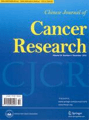
Chinese Journal of Cancer Research
Connecting knowledge to innovation in cancer research.Chinese Journal of Cancer Research, published by Chinese Journal Cancer Research Co, is a pivotal platform for disseminating significant findings in the field of oncology. Since its inception in 1988, the journal has provided a comprehensive forum for cancer research, featuring peer-reviewed articles that cover various aspects of cancer biology, prevention, diagnosis, and treatment. Although the journal's coverage is currently discontinued in Scopus and holds an HIndex that has not been specified, it is ranked in the 65th percentile in Medicine - Oncology and the 48th percentile in Biochemistry, Genetics and Molecular Biology - Cancer Research. This reflects its commitment to maintaining quality and relevance in the rapidly evolving field of cancer research. Researchers, professionals, and students are encouraged to explore its rich archive of studies and breakthroughs to enhance their understanding and further their research. For access, the publication remains instrumental for those invested in advancing the global fight against cancer.