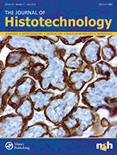
JOURNAL OF HISTOTECHNOLOGY
metrics 2024
Unveiling the intricacies of histotechnology research.
Introduction
JOURNAL OF HISTOTECHNOLOGY, published by Taylor & Francis Ltd, is a leading academic journal dedicated to advancing the field of histotechnology, which plays a crucial role in both clinical and research settings. With an established history since 1977, this journal serves as a critical platform for researchers, professionals, and students engaged in the intricate study of tissue processing, staining techniques, and microscopic analysis. It is currently indexed in reputable databases, reflecting its commitment to scientific rigor, with a notable presence in categories such as Anatomy, Histology, and Medical Laboratory Technology. Despite its open access status being limited, the Journal of Histotechnology maintains a respectable impact factor and ranks within the third quartile for Anatomy and Medical Laboratory Technology, and fourth quartile for Histology in 2023, emphasizing its relevance in the scholarly community. As the field continues to evolve, this journal aims to foster innovation and dissemination of knowledge within histotechnology, making it an essential resource for those looking to further their expertise and contribute to the advancements in this vital area of health sciences.
Metrics 2024
 0.240.601.1026
Metrics History
Rank 2024
Scopus
IF (Web Of Science)
JCI (Web Of Science)
Quartile History
Similar Journals
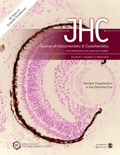
JOURNAL OF HISTOCHEMISTRY & CYTOCHEMISTRY
Shaping the Future of Histochemical MethodologiesWelcome to the JOURNAL OF HISTOCHEMISTRY & CYTOCHEMISTRY, a premier platform for the dissemination of cutting-edge research in the fields of anatomy and histology. Published by SAGE PUBLICATIONS LTD, this esteemed journal has been a cornerstone of academic inquiry since its inception in 1953 and continues to play a vital role in advancing our understanding of cellular structure and function. With an impressive Impact Factor reflected in its rank as Q1 in both Anatomy and Histology categories, the journal ranks #5 out of 48 in Medicine Anatomy and #17 out of 62 in Medicine Histology, making it an essential resource for researchers and professionals alike. The journal provides a rigorous peer-review process and encourages submissions that enhance the scientific community's knowledge. As a vital resource for students, professionals, and researchers focusing on histochemical methodologies, the JOURNAL OF HISTOCHEMISTRY & CYTOCHEMISTRY offers insights into the latest advancements and critical debates within this dynamic discipline.
JOURNAL OF MOLECULAR HISTOLOGY
Innovating research in histology and medicine.The Journal of Molecular Histology, published by Springer, stands at the forefront of multidisciplinary research in cellular and molecular histology, offering vital contributions in the fields of Cell Biology, Histology, and Medicine. With an ISSN of 1567-2379 and an E-ISSN of 1567-2387, this peer-reviewed journal has maintained its commitment to advancing knowledge since its inception in 2004 and continues to thrive into 2024. The journal, located in The Netherlands, boasts a robust impact within its categories, currently holding Q3 rankings in Cell Biology and Q2 rankings in Histology, Medicine, and Physiology, highlighting its relevance to academics and professionals alike. With Scopus rankings that reflect a strong percentile presence across multiple fields, the journal emphasizes open access options to enhance the dissemination of critical research findings. As a valuable resource for researchers, professionals, and students engaged in molecular exploration, the Journal of Molecular Histology fosters innovation and collaboration, making significant impacts on our understanding of tissue structure and function.
HISTOCHEMISTRY AND CELL BIOLOGY
Illuminating the Intricacies of HistochemistryHISTOCHEMISTRY AND CELL BIOLOGY, published by SPRINGER, is a prominent journal dedicated to advancing the fields of histochemistry and cell biology. With an ISSN of 0948-6143 and an E-ISSN of 1432-119X, this journal has carved a significant niche since its inception in 1995, striving for excellence in research dissemination through a rigorous peer-review process. The journal's impact is reflected in its strong performance across various academic categories, achieving a Q1 ranking in Medical Laboratory Technology, Q2 in Histology, and maintaining a credible presence in Cell and Molecular Biology. Nestled in Germany, and with the backing of a reputable publisher, HISTOCHEMISTRY AND CELL BIOLOGY serves as a pivotal platform for researchers, professionals, and students, fostering innovations that push the boundaries of our understanding of cellular processes. While the journal is not open access, it offers subscription-based access options ensuring comprehensive coverage of crucial findings in the rapidly evolving arena of cell biology and histochemistry.
FOLIA HISTOCHEMICA ET CYTOBIOLOGICA
Advancing the Frontiers of Histology and CytobiologyFOLIA HISTOCHEMICA ET CYTOBIOLOGICA, an esteemed journal published by VIA MEDICA, serves as a vital platform for researchers and professionals in the fields of histology, pathology, and cytobiology. With an ISSN of 0239-8508 and E-ISSN of 1897-5631, this Open Access journal has been disseminating significant findings since 1984, offering free access to a broad audience of scientists and academics. Based in Poland, this journal focuses on critical advancements in the study of cellular structures and functions, contributing substantially to the understanding of various diseases and biological processes. The journal currently holds a respectable impact factor, ranking in the Q3 category for Histology and miscellaneous Medicine, and Q2 for Pathology and Forensic Medicine as per the 2023 metrics. With its commitment to quality research and an inclusive publishing approach, FOLIA HISTOCHEMICA ET CYTOBIOLOGICA is poised to continue influencing its fields significantly through 2024 and beyond.

FOLIA MORPHOLOGICA
Advancing the Frontiers of Anatomy and HistologyFOLIA MORPHOLOGICA is a prominent academic journal dedicated to advancing the fields of anatomy and histology. Published by VIA MEDICA since 1952, this journal serves as a critical platform for the dissemination of high-quality research, offering valuable insights into morphological studies. With an impact factor reflective of its dedication to rigorous scientific evaluation, FOLIA MORPHOLOGICA is recognized within the Q3 category in both anatomy and histology as of 2023, indicating its substantial contribution to these vital areas of medical science. Although currently not an open-access journal, it provides essential access options through various academic databases, ensuring that important findings are reachable by researchers, healthcare professionals, and students globally. The journal's scope encompasses a wide range of topics related to morphological sciences, making it a vital resource for those looking to stay at the forefront of anatomical and histological research. FOLIA MORPHOLOGICA remains dedicated to fostering scholarly communication and innovation, continuously aiming to enhance the scientific understanding of the intricate structures that underpin biological functions.
ULTRASTRUCTURAL PATHOLOGY
Bridging Clinical Insights with Experimental DiscoveriesULTRASTRUCTURAL PATHOLOGY is a prestigious academic journal published by Taylor & Francis Inc, focusing on the intricate and detailed aspects of pathology as well as forensic medicine since its inception in 1980. With an ISSN of 0191-3123 and an E-ISSN of 1521-0758, this journal provides a vital platform for researchers and professionals to disseminate innovative findings pertinent to both clinical and experimental pathology. Despite not being an open-access journal, its contributions are critical within its categories, positioned at the Q3 quartile in Pathology and Forensic Medicine and Q4 in Structural Biology as of 2023. The journal's reputation is further underscored by its Scopus rankings, placing it in the 41st percentile for Pathology and 15th percentile for Structural Biology, indicating a competitive standing in these fields. ULTRASTRUCTURAL PATHOLOGY aims to foster rigorous scholarly discourse and advance knowledge through the publication of original research articles, reviews, and case studies, making it an essential resource for academics, practitioners, and students engaged in the evolving domains of pathology and structural biology.
Microscopy
Bridging Disciplines Through Advanced Imaging ResearchMicroscopy, published by Oxford University Press, is a prestigious journal dedicated to advancing the field of microscopy and imaging in biological and applied sciences. With a dynamic coverage dating from 1953 to the present, it offers vital insights into the latest techniques and applications across various disciplines, including Instrumentation, Radiology, Nuclear Medicine and Imaging, and Structural Biology. The journal is recognized for its quality, illustrated by its Q2 and Q3 quartile rankings in relevant categories for 2023. Researchers, professionals, and students will find Microscopy an invaluable resource for keeping abreast of contemporary developments and methodologies in the field. As an open-access journal, it promotes equitable access to cutting-edge research and fosters collaboration among the international scientific community, making it essential reading for anyone involved in microscopy research and its applications. For more information, please visit their site for access options and contributions.
ANATOMIA HISTOLOGIA EMBRYOLOGIA
Advancing the Science of Structure and FunctionANATOMIA HISTOLOGIA EMBRYOLOGIA, published by Wiley, is a well-regarded journal that serves as a vital resource in the field of anatomy and histology, with a particular emphasis on embryological studies. Established in 1972, this journal fosters cutting-edge research and discussions that deepen our understanding of the intricate relationships between structure and function across various species, while also addressing the parallels within veterinary and medical contexts. Though currently not open access, the journal maintains a significant impact within its scope, evidenced by its strong performance in Scopus rankings, particularly in the veterinary sciences, where it stands at rank #81 out of 194. With its dedicated focus on progressive scientific inquiry and publication regularly until 2024, the journal is committed to advancing knowledge and providing a platform for scholars, researchers, and practitioners alike. ANATOMIA HISTOLOGIA EMBRYOLOGIA is pivotal for those aiming to engage with the latest findings and methodologies in the fields of medicine and veterinary science, ensuring it remains an essential addition to any academic library.
JOURNAL OF CLINICAL PATHOLOGY
Bridging Laboratory Discoveries with Patient CareJOURNAL OF CLINICAL PATHOLOGY, published by BMJ PUBLISHING GROUP, stands at the forefront of advancements in the field of clinical pathology, offering a platform for groundbreaking research and insights from 1948 to the present. With an impressive impact factor and categorized as Q1 in both Medicine (miscellaneous) and Pathology and Forensic Medicine for 2023, the journal holds a distinguished position in the academic community, ranking 22nd out of 208 journals in its category on Scopus and representing the 89th percentile. While the journal does not currently offer open access, it remains a vital resource for researchers, healthcare professionals, and students seeking to stay current with innovative methodologies, clinical techniques, and diagnostic advancements. Located in London, United Kingdom, the journal aims to bridge the gap between laboratory findings and clinical practice, emphasizing the importance of evidence-based pathology in improving patient care and treatment outcomes. Engage with the JOURNAL OF CLINICAL PATHOLOGY to enhance your understanding and contribute to the evolving landscape of clinical pathology research.
International Journal of Laboratory Hematology
Connecting research and practice for the future of laboratory hematology.The International Journal of Laboratory Hematology, published by WILEY, serves as a vital resource in the field of hematology, delivering high-quality research findings and innovations within laboratory practices since its inception in 2007. This journal, accessible under Open Access options, showcases cutting-edge studies that span critical aspects of biochemistry and clinical laboratory methodologies. With a notable impact factor reflected in its Q2 and Q3 rankings across various categories—such as Biochemistry (medical) and Hematology—this journal stands out within the Scopus rankings, positioning itself within the 60th and 59th percentiles of its respective fields. Situated in the United Kingdom, the journal's objectives lie in disseminating pivotal research that enhances our understanding of hematological disorders and laboratory techniques, making it an essential tool for researchers, professionals, and students alike who are committed to advancing the science of laboratory hematology and its applications.