
JOURNAL OF THE INDIAN CHEMICAL SOCIETY
Scope & Guideline
Fostering Innovation in Diverse Chemical Disciplines
Introduction
Aims and Scopes
- Green Chemistry and Sustainable Practices:
The journal emphasizes environmentally friendly methods of synthesis and application of chemical compounds, promoting the use of renewable resources and minimizing waste. - Nanotechnology and Materials Science:
Research involving the synthesis, characterization, and application of nanomaterials, particularly in catalysis, drug delivery, and environmental remediation, is a core focus area. - Computational Chemistry and Theoretical Studies:
The journal publishes studies involving computational methods to predict molecular behavior, reactivity, and properties, aiding in the design of new compounds and materials. - Pharmaceutical Chemistry and Drug Development:
Research related to the synthesis and evaluation of pharmaceutical compounds, including studies on drug delivery systems and molecular docking, is prominently featured. - Environmental Chemistry and Waste Management:
The journal covers research on the impact of chemicals on the environment, including studies on wastewater treatment, pollutant removal, and the development of eco-friendly materials. - Catalysis and Reaction Mechanisms:
Studies focusing on catalytic processes, including heterogeneous and homogeneous catalysis, and the mechanisms underlying chemical reactions are central to the journal's scope.
Trending and Emerging
- Sustainable and Green Chemistry:
There is a marked increase in research focusing on sustainable synthesis methods, renewable resources, and environmentally friendly practices, as researchers aim to minimize the ecological footprint of chemical processes. - Nanomaterials and Nanotechnology:
The publication of studies related to nanomaterials, including their synthesis, characterization, and applications in catalysis, drug delivery, and environmental remediation, is rapidly growing. - Computational and Theoretical Chemistry:
Research employing computational methods to model chemical systems, predict reactivity, and design new materials is gaining traction, reflecting the increasing importance of computational tools in chemical research. - Biochemical and Medicinal Chemistry:
The rise in publications related to drug design, development, and the study of biochemical interactions highlights the journal's focus on medicinal chemistry and pharmaceutical applications. - Environmental Remediation and Waste Treatment:
Research addressing the challenges of pollution and waste management, particularly using innovative materials and methods for wastewater treatment and pollutant removal, is on the rise. - Emerging Contaminants and Toxicology:
There is a growing interest in the study of emerging contaminants and their effects on health and the environment, indicating a shift towards addressing contemporary environmental issues.
Declining or Waning
- Traditional Organic Synthesis Methods:
There appears to be a waning interest in conventional synthetic methodologies without green chemistry considerations, as researchers increasingly favor sustainable and eco-friendly approaches. - Basic Inorganic Chemistry:
Publications focusing solely on fundamental aspects of inorganic chemistry, such as coordination chemistry without application to materials or catalysis, have decreased. - Analytical Techniques without Novel Applications:
Research that employs standard analytical methods without innovative applications or integration with newer technologies has seen a decline. - Chemistry Education Research:
Although important, studies solely focused on chemistry education practices and methodologies have become less prevalent, as the journal shifts towards more research-driven, application-oriented studies. - Classical Physical Chemistry:
There has been a noticeable decrease in publications dedicated to traditional physical chemistry topics unless they are linked to applied research, such as materials science or nanotechnology.
Similar Journals
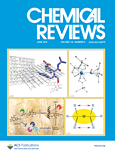
CHEMICAL REVIEWS
Transforming Chemical Research into Knowledge.Chemical Reviews, published by the American Chemical Society, is a leading journal in the field of chemistry, renowned for its comprehensive and authoritative reviews on a wide range of chemical topics. With its ISSN 0009-2665 and E-ISSN 1520-6890, this prestigious journal has maintained a remarkable trajectory since its inception in 1924, continuously contributing to advancements in the chemical sciences. As a Q1 journal in the Chemistry (miscellaneous) category, it stands at the forefront of research, boasting an impressive Scopus rank of #1 out of 408 in the field of General Chemistry, positioning it within the top 1% of the field. Chemical Reviews offers invaluable insights and serves as a critical resource for researchers, professionals, and students alike, facilitating knowledge exchange and fostering innovation in chemistry. While currently not open access, it remains a vital component of the scientific community, gathering an extensive readership base eager for the latest developments, methodologies, and theoretical frameworks in this dynamic discipline.
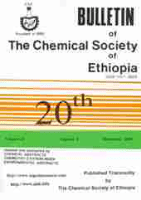
BULLETIN OF THE CHEMICAL SOCIETY OF ETHIOPIA
Elevating Chemical Research to New HeightsBULLETIN OF THE CHEMICAL SOCIETY OF ETHIOPIA (ISSN: 1011-3924; E-ISSN: 1726-801X), published by the Chemical Society of Ethiopia, serves as a pivotal platform for the dissemination of innovative research and developments within the field of chemistry. Since its inception in 1996 and now an open access journal since 2012, it has provided researchers, academics, and students with unrestricted access to critical studies and findings, thus fostering collaboration and the advancement of knowledge in the discipline. The journal's current standing in the Q3 quartile in the 2023 Chemistry category underlines its commitment to maintaining high academic standards, while its Scopus ranking, positioned at #250 out of 408 in general chemistry, showcases its growing influence and contribution to the scientific community. Hailing from Ethiopia and targeted toward a global readership, the journal aims to highlight local and international research, engaging scholars and practitioners alike in discussions that propel the science of chemistry forward.
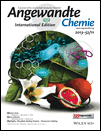
ANGEWANDTE CHEMIE-INTERNATIONAL EDITION
Cutting-edge Insights into Catalysis and ChemistryANGEWANDTE CHEMIE-INTERNATIONAL EDITION, published by WILEY-V C H VERLAG GMBH, stands as a leading journal in the fields of Chemistry and Catalysis, holding a prestigious position with a Q1 ranking in both categories as of 2023. With an ISSN of 1433-7851 and an E-ISSN of 1521-3773, this esteemed publication has been an invaluable resource for the global scientific community since its inception in 1962. The journal's impact is further underscored by its remarkable Scopus rankings, where it occupies the 13th place among 408 journals in General Chemistry and the 4th place among 68 in Chemical Engineering - Catalysis, marking it in the 96th and 94th percentiles, respectively. Although it does not offer Open Access, ANEWANDTE CHEMIE-INTERNATIONAL EDITION remains essential for researchers, professionals, and students seeking to stay abreast of cutting-edge developments and innovations in chemical sciences. Its comprehensive scope and rigorous peer-review process ensure that only the highest quality research finds its way to publication, contributing significantly to the advancement of chemistry worldwide.
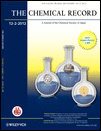
CHEMICAL RECORD
Exploring the Frontiers of Chemical KnowledgeThe Chemical Record is a prestigious peer-reviewed journal published by WILEY-V C H VERLAG GMBH, focusing on innovative research and developments across the diverse and evolving fields of chemistry and biochemistry. With an esteemed 2023 Impact Factor and recognized as a Q1 journal in several categories—including Biochemistry, Chemical Engineering, and Materials Chemistry—The Chemical Record stands as a critical resource for researchers, professionals, and students aiming to disseminate and acquire knowledge in these disciplines. The journal's engaging scope covers contemporary topics and fosters collaboration within the global scientific community, ensuring accessibility to cutting-edge research. By publishing articles that meet the highest standards of scholarship, it has earned a significant place within the academic ecosystem, as reflected in its strong Scopus rankings. Although The Chemical Record operates without open access, it remains deeply committed to advancing the field of chemistry through rigorous and impactful publications that bridge gaps between theory and practice.
RUSSIAN JOURNAL OF GENERAL CHEMISTRY
Fostering Collaboration in the World of ChemistryThe Russian Journal of General Chemistry is a prominent scholarly publication dedicated to advancing the field of general chemistry. Published by MAIK NAUKA/INTERPERIODICA/SPRINGER, this journal contributes significantly to the global chemistry landscape, offering a platform for researchers and professionals to share their latest findings and methodologies. With an ISSN of 1070-3632 and an E-ISSN of 1608-3350, it has established itself as a resource for high-quality research articles since its inception in 1996. Though currently indexed in the Q4 category for chemistry (miscellaneous) and ranking #299 out of 408 in general chemistry according to Scopus, the journal remains an important venue for academic contributions that bridge gaps in traditional chemical disciplines. Desiring to cater to a diverse range of interests within chemistry, the journal actively encourages submissions that reflect significant scientific achievements, innovations, and collaborative studies. Although the journal does not currently offer open access, its role in disseminating crucial chemical research cannot be overstated. Researchers and students alike will find valuable insights and rigorous scientific discourse in its pages.

Journal of the Mexican Chemical Society
Empowering Innovation in Chemistry ResearchWelcome to the Journal of the Mexican Chemical Society, an essential publication for researchers and professionals in the field of chemistry. Published by the reputable SOC QUIMICA MEXICO, this journal has been a vital platform for sharing innovative research and developments in the field since its inception in 2008. With an ISSN of 1870-249X and an E-ISSN of 1665-9686, the journal provides valuable insights and contributes to the global scientific community. As of 2023, it holds a Q3 quartile ranking in miscellaneous chemistry categories and ranks #258 out of 408 in General Chemistry on Scopus, placing it at the 36th percentile among its peers. Although currently not an open access journal, it remains committed to disseminating high-quality research that supports advancements in chemical education, practice, and technology. Researchers, academics, and students are encouraged to engage with this journal to explore groundbreaking studies and enhance their understanding of diverse chemical disciplines.

REVUE ROUMAINE DE CHIMIE
Illuminating the Path of Chemistry Research and DiscoveryREVUE ROUMAINE DE CHIMIE is a distinguished academic journal in the field of chemistry, published by EDITURA ACAD ROMANE in Romania. With an ISSN of 0035-3930, this journal has been a valuable platform for disseminating original research and insights in the diverse realm of chemistry since its inception. The journal currently operates under a competitive tier, categorized in Q4 for miscellaneous chemistry fields, as reflected in its Scopus ranking of #348 out of 408, placing it within the 14th percentile. Aiming to foster scientific discourse and innovation, the REVUE ROUMAINE DE CHIMIE provides a repository of knowledge that is crucial for researchers, professionals, and students eager to advance their understanding and contribute to the global chemistry community. By bridging local and international research initiatives, this journal plays an essential role in enhancing the visibility of Romanian scientific contributions on the world stage.

HELVETICA CHIMICA ACTA
Illuminating Innovations in Chemistry Since 1918HELVETICA CHIMICA ACTA, published by WILEY-V C H VERLAG GMBH, stands as a pivotal journal in the fields of chemistry and chemical research. Established in 1918, this esteemed journal spans a diverse array of topics, including biochemistry, catalysis, drug discovery, inorganic and organic chemistry, as well as physical and theoretical chemistry. With influence reflected in its noteworthy Q2 and Q3 quartile rankings across these categories as of 2023, HELVETICA CHIMICA ACTA continues to capture the interest of the global scientific community. Although not an open-access journal, it remains accessible through various academic institutions, ensuring broad reach and collaboration opportunities. Researchers, professionals, and students alike will find its meticulously peer-reviewed articles critical for advancing knowledge and fostering innovation within the chemical sciences. As the journal converges toward 2024, it remains committed to publishing high-quality, impactful research that supports the evolution of chemistry across its multifaceted disciplines.

Vietnam Journal of Chemistry
Unveiling Cutting-Edge Discoveries in ChemistryVietnam Journal of Chemistry, published by WILEY, is a prominent academic journal that serves as a platform for the dissemination of innovative research in the field of chemistry. With its ISSN 0866-7144 and E-ISSN 2572-8288, this journal has made a significant impact on the global scientific community, evidenced by its 2023 Scopus ranking as #274 in the General Chemistry category and a commendable percentile of 32nd. The journal, categorized in the Q3 quartile for miscellaneous chemistry subjects, aims to foster communication among chemists from Vietnam and around the world, encouraging collaboration and the exchange of cutting-edge knowledge. While it currently does not offer Open Access options, the Vietnam Journal of Chemistry is committed to contributing valuable insights from its coverage years spanning from 2018 to 2024, making it a worthy resource for researchers, professionals, and students dedicated to advancing the field of chemistry. Based in the United Kingdom, it stands as a testament to the vibrant research endeavors emerging from Vietnam and beyond.

JOURNAL OF CHEMICAL RESEARCH
Pioneering Insights in Chemical Research.JOURNAL OF CHEMICAL RESEARCH, published by SAGE PUBLICATIONS LTD, serves as a pivotal platform for scholars and practitioners in the field of Chemistry. With its ISSN 1747-5198 and E-ISSN 2047-6507, this journal has established itself as a reliable source of innovative research since its inception in 2000. The journal's comprehensive scope encompasses various facets of chemical research, providing a broad spectrum of articles that foster scientific advancement and technological innovation. Ranked in the Q3 tier of miscellaneous chemistry journals in 2023, with a Scopus rank of #246 out of 408, it represents a solid outlet for emerging and established researchers alike. Although currently not an open-access journal, its rigorous peer-review process ensures that only high-quality studies are published, catering to the academic and professional community's demand for credible and impactful findings. Positioned in the vibrant research landscape of the United Kingdom, the JOURNAL OF CHEMICAL RESEARCH is dedicated to expanding the frontiers of chemical sciences and is an essential resource for anyone committed to advancing this dynamic field.