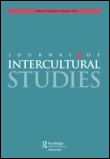
Journal of Intercultural Studies
Scope & Guideline
Connecting Scholars Through Interdisciplinary Insights
Introduction
Aims and Scopes
- Intercultural Dynamics and Migration:
The journal focuses on the experiences and narratives of migrants, examining how culture, identity, and belonging are negotiated in diverse contexts. - Social Justice and Equity:
It emphasizes themes of social justice, equity, and inclusion, particularly in relation to marginalized communities and their struggles against systemic discrimination. - Cultural Representations and Media:
The journal explores the role of media and cultural representations in shaping perceptions of race, ethnicity, and identity, analyzing how these narratives influence public discourse. - Intersectionality and Identity Politics:
It investigates the intersections of race, gender, sexuality, and class in the context of migration and intercultural encounters, promoting a nuanced understanding of identity politics. - Decolonization and Critical Theory:
The journal contributes to discussions on decolonization and critical theories, challenging dominant narratives and advocating for alternative perspectives in cultural studies.
Trending and Emerging
- Impact of COVID-19 on Migration and Racism:
Recent publications increasingly focus on the intersection of the COVID-19 pandemic with issues of migration and racism, exploring how the crisis has exacerbated existing inequalities and shaped new narratives. - Activism and Civic Participation among Migrants:
There is a notable trend towards examining the civic engagement and activism of migrant communities, highlighting their roles in advocating for rights and social justice in host societies. - Intersectional Approaches to Identity:
Emerging research emphasizes intersectionality in understanding identity, recognizing the complexities of how race, gender, and sexuality intersect within migrant experiences. - Digital Spaces and Cultural Encounters:
The journal is increasingly exploring the role of digital media in facilitating intercultural dialogue and the formation of new identities, particularly in the context of remote interactions during the pandemic. - Decolonial Perspectives in Cultural Analysis:
There is a growing focus on decolonial perspectives, with scholars advocating for a rethinking of cultural studies that prioritizes indigenous knowledge systems and critiques colonial legacies.
Declining or Waning
- Traditional Ethnic Studies:
There appears to be a waning interest in traditional ethnic studies that focus solely on historical narratives without addressing contemporary issues of migration and identity. - Classical Theories of Integration:
Classical integration theories are being overshadowed by more contemporary frameworks that prioritize lived experiences and intersectional approaches, reflecting a shift towards more dynamic understandings of belonging. - Homogeneous Cultural Narratives:
The journal has moved away from papers that present homogeneous cultural narratives, indicating a preference for studies that capture the complexities and diversities within cultures. - Static Notions of Identity:
There is a decreasing focus on static notions of identity, as newer research emphasizes fluidity and the evolving nature of cultural identities in response to globalization and migration. - Overemphasis on Quantitative Approaches:
Research employing strictly quantitative methodologies is less prominent, as qualitative and mixed-methods approaches are preferred for their depth and ability to capture lived experiences.
Similar Journals

Storia delle Donne
Unveiling the Untold Stories of Women in HistoryStoria delle Donne is an esteemed open access journal published by FIRENZE UNIV PRESS that has been contributing to the fields of Cultural Studies, Gender Studies, and History since its inception in 2005. Based in Italy, the journal aims to explore the multifaceted roles and representations of women throughout history, providing a crucial platform for research that addresses gender dynamics and cultural contexts. Although its coverage has discontinued in Scopus since 2021, its Category Quartiles indicate a competitive standing within its realms, featuring in Q4 across all relevant categories for 2023. Aimed at researchers, professionals, and students, the journal fosters scholarly dialogue and innovation, encouraging a deeper understanding of women's historical experiences and their implications in contemporary society. With an ISSN of 1826-7513 and an E-ISSN of 1826-7505, Storia delle Donne strives to enhance visibility and accessibility of gender-focused scholarship on a global scale.
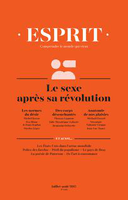
ESPRIT
Cultivating Scholarly Excellence in Diverse FieldsESPRIT is a well-established journal that has been contributing to the fields of Arts and Humanities, Political Science, and Sociology since its inception in 1973. Published in France and bearing the ISSN 0014-0759 and E-ISSN 2111-4579, ESPRIT provides a scholarly platform for research articles that delve into diverse cultural, political, and sociological themes, facilitating critical discourse among academics and practitioners. Although it currently operates under traditional access models, its relevance is underscored by its rankings in Scopus, including a Q4 classification across multiple categories, making it a key resource for those exploring nuanced academic landscapes. With an address located in the heart of Paris, ESPRIT draws from a rich cultural context that enhances its publication scope, poised to inspire and inform a global audience dedicated to the advancement of knowledge in the humanities and social sciences.

Aposta-Revista de Ciencias Sociales
Empowering Knowledge in the Social SciencesAposta-Revista de Ciencias Sociales is a prominent open-access journal dedicated to the diverse field of social sciences, published by APOSTA. Since its inception in 2003, this journal has fostered scholarly dialogue and disseminated significant research findings, contributing to the advancement of knowledge and practice in areas such as sociology, anthropology, and social policy. With its ISSN of 1696-7348, Aposta provides researchers, professionals, and students with unrestricted access to high-quality, peer-reviewed articles, enabling them to engage with vital social issues and advancements. Based in Madrid, Spain, the journal aims to support global academic collaboration and innovation, reinforcing its role as a crucial platform for social science inquiry in an increasingly interconnected world.

Twentieth Century British History
Exploring the complexities of modern Britain.Twentieth Century British History, published by Oxford University Press, stands as a pivotal scholarly journal in the field of historical research, specializing in the rich tapestry of British history during the twentieth century. With an esteemed impact factor and a notable position within the top Q1 quartile of history journals, it ranks impressively in the Scopus database, securing the 234th position out of 1,760 journals in Arts and Humanities, placing it in the 86th percentile. This rigorous academic platform, active since its establishment in 1990, not only contributes to the sophistication of historical discourse but also encourages interdisciplinary dialogue among historians, sociologists, and cultural studies scholars. Though it does not currently offer open access options, the journal provides invaluable insights, critical analyses, and innovative perspectives aimed at enriching the understanding of Britain’s past and its implications for contemporary society. Researchers, professionals, and students alike will find Twentieth Century British History an essential resource for exploring and appreciating the complexities of modern history.
Social Identities
Connecting Disciplines to Understand Identity ComplexitiesSocial Identities is a distinguished academic journal published by Routledge Journals, Taylor & Francis Ltd, dedicated to advancing the understanding of social identities from a multidisciplinary perspective. With an ISSN of 1350-4630 and an E-ISSN of 1363-0296, this journal stands out in the sociology and political science disciplines, as evidenced by its impressive Q2 ranking and a Scopus percentile of 64th. Spanning from 1995 to 2024, it continually fosters scholarly discourse on the complexities of identity formation, representation, and the interplay between various social dynamics. Although the journal currently does not offer Open Access options, it remains a valuable resource for researchers and professionals seeking in-depth analysis and critical insights. Based in the United Kingdom, Social Identities is a vital platform for both emerging scholars and established experts dedicated to exploring the nuances of how identities shape social structures and experiences.
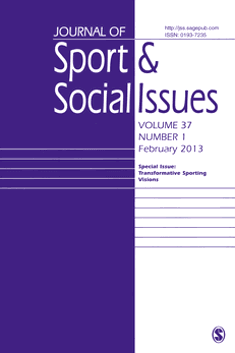
JOURNAL OF SPORT & SOCIAL ISSUES
Illuminating the Impact of Sports on Society and PoliticsWelcome to the JOURNAL OF SPORT & SOCIAL ISSUES, a leading academic publication that serves as an essential platform for scholarly discourse at the intersection of sports, sociology, and political science. Published by SAGE PUBLICATIONS INC, this esteemed journal, with an ISSN of 0193-7235 and E-ISSN of 1552-7638, has been instrumental in promoting groundbreaking research since its inception in 1977. With a prestigious Q1 ranking in both Sociology and Political Science in the latest 2023 category quartiles, the journal ranks at an impressive #173 out of 1466 in the Scopus metrics, placing it in the 88th percentile among its peers. The journal's objectives include exploring the complex societal influences on sports and the role of sports in social change, making it a vital resource for researchers, professionals, and students alike. Although it does not currently offer open access options, the high-impact nature of its contributions ensures that findings reach a broad audience within academia and beyond. Join us in advancing the study and understanding of sport in a sociopolitical context.
Recherches Sociographiques
Innovating Discourse in Sociology and BeyondRecherches Sociographiques, published by the Department of Sociology at Université Laval, stands as a prominent journal in the field of sociology. With its ISSN 0034-1282, it provides a vital platform for the dissemination of innovative research and critical analyses that shape contemporary sociological discourse. Although currently not an open-access journal, it offers insightful contributions that are pivotal for both emerging and established scholars, practitioners, and students. The journal prioritizes high-quality, peer-reviewed articles that advance the understanding of social phenomena, making it an essential resource for anyone engaged in sociological studies. With a commitment to academic excellence, Recherches Sociographiques has established itself as a vital reference point for sociological research in Canada and beyond, fostering intellectual exchange and collaboration among the global academic community.

IDENTITIES-GLOBAL STUDIES IN CULTURE AND POWER
Transforming Perspectives on Identity and InfluenceIDENTITIES: Global Studies in Culture and Power, published by Taylor & Francis Inc, is a distinguished academic journal dedicated to the exploration of cultural identities within a global context. With its ISSN 1070-289X and E-ISSN 1547-3384, this journal has established itself as a key platform for scholars interested in the intersections of culture, power, and identity since its inception in 1994. As a premier Q1 journal in the fields of Anthropology, Arts and Humanities, and Cultural Studies, it ranks highly among its peers, holding notable positions such as #69 in Social Sciences – Cultural Studies and #45 in Social Sciences – Anthropology, reflecting its influence and relevance in contemporary academic discourse. While the journal operates under a subscription model, it remains committed to presenting high-quality, peer-reviewed research that contributes to our understanding of global identities. Its critical analyses and theoretical advancements make it an invaluable resource for researchers, professionals, and students who aim to delve into the complexities of culture and power dynamics in today's world.
SOUNDINGS
Illuminating the Intersection of Arts and SocietySOUNDINGS, published by Penn State University Press, stands as a notable journal within the realms of the arts and humanities, cultural studies, and sociology and political science. With its ISSN 0038-1861 and E-ISSN 2161-6302, this academic periodical has been a platform for critical discourse and innovative research since its inception in the mid-1970s, although it has experienced several convergence periods. Though currently categorized in Q4 within its respective fields, including rankings that reflect its growing influence, SOUNDINGS continues to provide a rigorous space for interdisciplinary dialogue and scholarly reflection. Despite the absence of open access, the journal’s comprehensive articles are vital for researchers, professionals, and students seeking to deepen their understanding of complex cultural and societal dynamics. With its headquarters located at 820 North Univ Drive, U S B 1, Ste C, University Park, PA 16802, SOUNDINGS invites its readership to engage with contemporary issues through a rich lens of academic inquiry.
Question
Advancing the frontiers of communication scholarship.Question is a premier open-access journal published by UNIV NACIONAL PLATA, INST INVESTIGACIONES & COMUNICACION-IICOM, dedicated to advancing scholarship in the field of communication and journalism. Since its inception in 2005, this journal has served as a vital platform for researchers, professionals, and students to disseminate innovative research findings and theoretical discussions that shape contemporary communication practices. Operating out of La Plata, Buenos Aires, Argentina, it engages a global audience by addressing critical topics within communications, including media studies, social communication, and the impact of digital technologies. With its robust commitment to open access, Question ensures that its high-quality content is freely available, fostering a collaborative academic environment and broadening the reach of research in the communications discipline. As a valuable resource, this journal stands at the intersection of academia and practice, inviting contributions that push the boundaries of knowledge in communication.