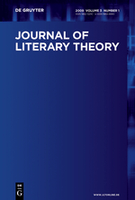
Journal of Literary Theory
metrics 2024
Elevating Scholarly Standards in Literary Studies
Introduction
Journal of Literary Theory, published by Walter de Gruyter GmbH, is a premier academic journal dedicated to advancing the field of literary theory and criticism. With an ISSN of 1862-5290 and E-ISSN 1862-8990, this journal serves as a vital platform for scholars, researchers, and students to explore innovative theoretical frameworks and engage in critical discussions surrounding literature. Aimed at enhancing the theoretical landscape of literary studies, the journal invites contributions that interrogate literary texts through diverse lenses, emphasizing interdisciplinary approaches and contemporary issues. Although not an open-access journal, it boasts a rigorous peer-review process ensuring high scholarly standards. Located in Berlin, Germany, the Journal of Literary Theory is essential for those seeking to contribute to or stay informed about the latest developments in literary studies.
Metrics 2024
 -0.600.40-
Metrics History
Rank 2024
JCI (Web Of Science)
Quartile History
Similar Journals

STRUMENTI CRITICI
Challenging Norms, Shaping Literary FuturesSTRUMENTI CRITICI, an esteemed journal within the realm of literature and literary theory, is published by SOC ED IL MULINO in Italy. With its ISSN 0039-2618, this journal serves as a platform for scholars to disseminate their research findings and engage in critical discussions. Despite being ranked in the Q4 quartile for the category of literature and literary theory, its unique contributions, spanning from 2002 to 2024, resonate strongly within the academic community. With a current Scopus rank of #937 out of 1106, placing it in the 15th percentile, STRUMENTI CRITICI continues to explore innovative perspectives on literary studies and theory, making it an essential resource for researchers, professionals, and students alike. Although not an open-access journal, it maintains a rigorous selection process to ensure the quality and relevance of published works, fostering scholarly dialogue and advancing the field.
ESPRIT CREATEUR
Illuminating Contemporary Literary DiscourseESPRIT CREATEUR is a prestigious journal published by the Johns Hopkins University Press, renowned for its contributions to the fields of Literature and Literary Theory. Since its inception in 2002, the journal has become a vital platform for innovative scholarly discourse, achieving an impressive Q2 classification in the 2023 category rankings and a respectable rank of #546 out of 1106 in the Scopus Arts and Humanities - Literature and Literary Theory sector, situating it within the 50th percentile of the discipline. The journal's blend of critical perspectives offers readers insights into contemporary literary analysis and theory, making it essential for researchers, professionals, and students alike. Though it currently adheres to traditional access models, its commitment to fostering high-quality, peer-reviewed scholarship cements its status as a leading voice in literary studies, enhancing its role in academic research and education.
SPIEGEL DER LETTEREN
Advancing Scholarship in Literature and TheoryWelcome to SPIEGEL DER LETTEREN, a distinguished journal published by PEETERS in Belgium, with an impressive Q1 ranking in Literature and Literary Theory. Since its inception in 1996, this journal has been at the forefront of literary scholarship, engaging researchers, professionals, and students in profound discussions and analysis of literary texts, theories, and cultural contexts. Although it does not currently offer open access, its rigorous editorial standards ensure that each published work contributes significantly to the field, promoting the advancement of knowledge and understanding in literature. With an established reputation, SPIEGEL DER LETTEREN serves as a vital resource for those seeking to explore the nuances of literary studies, supported by a diverse range of articles that reflect both contemporary and historical perspectives.

Estudios de Teoria Literaria-Revista Digital-Artes Letras Humanidades
Unveiling Complex Theoretical FrameworksEstudios de Teoria Literaria-Revista Digital-Artes Letras Humanidades is a prominent scholarly journal published by UNIV NAC MAR PLATA in Argentina, dedicated to advancing the fields of Literary Theory, Communication, and Cultural Studies. Established with an Open Access model since 2012, the journal fosters global dissemination of research without financial barriers, encouraging a broader dialogue among scholars, practitioners, and students alike. Notably, it enjoys a presence in Scopus, with various category quartiles indicating its commitment to quality and relevance, particularly with rankings such as Q3 in Literature and Literary Theory. By providing a platform for innovative scholarship, Estudios de Teoria Literaria aims to explore complex theoretical frameworks and cultural discourses, making significant contributions to ongoing debates in the humanities. The journal is published from its base in Mar del Plata, Buenos Aires, and continues to expand its influence in both regional and international academic communities.

GERMANISCH-ROMANISCHE MONATSSCHRIFT
Unveiling New Dimensions of Language and LiteratureGERMANISCH-ROMANISCHE MONATSSCHRIFT, published by UNIVERSITATSVERLAG C WINTER HEIDELBERG GMBH, is a vital academic journal dedicated to the fields of linguistics, literature, and literary theory. With its ISSN 0016-8904, this journal fosters scholarly discussions and disseminates innovative research that intersects Germanic and Romance languages and literatures. While it does not currently offer Open Access options, its contributions have positioned it within the Q4 quartile in both Linguistics and Language, and Literature and Literary Theory according to the 2023 category rankings. The journal's Scopus ranking reflects its emerging place within the academic community, situated at the 40th percentile for Literature and Literary Theory, and the 20th and 18th percentiles within Language and Linguistics, respectively. Scholars and students are encouraged to engage with this resource as it offers a platform for new perspectives that are pivotal to understanding the complex interrelations of these linguistic traditions, enriching both teaching and research initiatives.
STUDIES IN PHILOLOGY
Cultivating Innovative Perspectives on Textual AnalysisStudies in Philology is a distinguished peer-reviewed journal published by University of North Carolina Press, focusing on the fields of linguistics, literature, and literary theory. Established in 1972, the journal has consistently contributed to the scholarly discourse in its domains, showcasing a rich repository of research that meets the evolving needs of academic inquiry. With an ISSN of 0039-3738 and an E-ISSN of 1543-0383, it provides a platform for innovative studies that enhance understanding and foster critical engagement with texts and language. The journal is currently placed in the Q4 tier within linguistics and language and Q2 in literature and literary theory, reflecting its diverse and significant contributions to the arts and humanities. Although not an open-access journal, it continues to attract submissions from globally recognized scholars, making it a valuable resource for researchers, professionals, and students seeking to deepen their expertise and advance their studies. For more than four decades, Studies in Philology has played an integral role in fostering scholarly communication, and it remains committed to publishing pioneering articles that challenge conventional thinking and broaden the horizons of philological exploration.

Studia Litterarum
Illuminating the Intersections of Literature and CultureStudia Litterarum, published by the esteemed Russian Academy of Sciences at the A.M. Gorky Institute of World Literature, serves as a vital platform for the exploration and analysis of literature and cultural studies. With an ISSN of 2500-4247 and an E-ISSN of 2541-8564, this open access journal has been disseminating valuable research since 2016, reaching a global audience keen on advancing the understanding of literary theory and cultural narratives. Based in Moscow, Russia, the journal has achieved remarkable academic recognition, holding a Q2 classification in Cultural Studies and a prestigious Q1 tier in Literature and Literary Theory, as of 2023. Its Scopus rankings underscore its relevance, with a notable placement in the 51st percentile for literature and literary theory and 27th percentile for cultural studies. Studia Litterarum not only opens doors to scholarly dialogue but also enhances the visibility of contemporary literary scholarship, making it an essential read for researchers, professionals, and students alike seeking to deepen their understanding of the intricate dynamics within literature and cultural studies.

Revista de Letras
Connecting Ideas: Literature, Philosophy, and BeyondRevista de Letras is an esteemed academic journal published by Universidade Estadual Paulista (UNESP), dedicated to the fields of Literature and Literary Theory, as well as Philosophy. With its ISSN 0101-3505 and E-ISSN 1981-7886, the journal serves as a significant platform for the dissemination of scholarly research and critical thought, particularly within the Brazilian context and beyond. Operating from Araraquara, SP, Brazil, the journal spans the period from 2004 to 2023, featuring a diverse array of articles aiming to explore various literary and philosophical discourses. Despite its current Q4 ranking in both the Literature and Literary Theory and Philosophy categories, the journal continues to foster a vibrant academic community, promoting rigorous scholarship and intellectual engagement. Researchers, professionals, and students alike are invited to contribute to and engage with the evolving narratives presented in this publication, aiming to enhance understanding and facilitate discussions within these crucial fields.
ORBIS LITTERARUM
Exploring the Depths of Literary DiscourseORBIS LITTERARUM, published by Wiley, is a prestigious journal in the field of Literature and Literary Theory, aiming to foster in-depth scholarly discussions and critical analyses of literary works and their theoretical underpinnings. With its ISSN 0105-7510 and E-ISSN 1600-0730, the journal presents a rich legacy that spans several decades, having converged its publishing efforts from 1943 to 1950 and from 1954 to the present day, thus ensuring a continuity of discourse in the literary field. Recognized for its high quality, ORBIS LITTERARUM is ranked in the Q2 quartile of literature disciplines as per the 2023 metrics, placing it within the top 26% of its category and earning a favorable position in the Scopus Rankings with a percentile of 74 in the arts and humanities. Researchers, professionals, and students alike are encouraged to contribute to this esteemed journal to engage with contemporary literary debates and to influence future scholarship in literature, enhancing understanding of texts across cultures and epochs.

Law & Literature
Transforming Legal Narratives into Literary Critique.Law & Literature, published by Routledge Journals, Taylor & Francis Ltd, is a pivotal journal at the intersection of legal studies and literary analysis. With an ISSN of 1535-685X and an E-ISSN of 1541-2601, this journal caters to a diverse audience, including researchers, practitioners, and students interested in the complexities of law and its representation in literature. Operating from the United Kingdom, it has made significant contributions to the field since its inception in 1989 and continues to thrive with contributions that explore the dynamic relationship between legal narratives and literary texts. Though classified in the Q4 quartile in Law category and holding a Scopus rank of 564 out of 1025, its unique focus ensures it remains a critical resource for understanding how narrative shapes legal discourse. While not an open access journal, its objective is to facilitate interdisciplinary dialogue by presenting innovative scholarship that probes the legal implications of literary works, thereby enriching both fields. For those invested in the paradigm of law through a literary lens, Law & Literature stands as a vital platform for engaging discussions and influential insights.