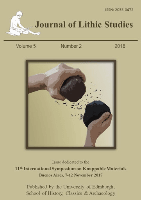
Journal of Lithic Studies
metrics 2024
Pioneering insights into the art of lithic craftsmanship.
Introduction
Journal of Lithic Studies is a premier Open Access journal published by the University of Edinburgh's School of History, Classics & Archaeology, dedicated to advancing the field of lithics and stone tool studies. Since its inception in 2014, this journal has provided a valuable platform for researchers, professionals, and students to disseminate innovative research, explore new methodologies, and engage with the growing body of knowledge in archaeological sciences. The journal encompasses a wide range of topics within lithic studies, including technological analysis, experimental archaeology, and the cultural implications of stone tool production and use. As an open-access publication, the Journal of Lithic Studies ensures that groundbreaking findings are accessible to a global audience, fostering collaboration and scholarly dialogue within the archaeological community. With its commitment to high-quality research and interdisciplinary inquiry, the journal stands as a vital resource for those interested in the past and present significance of lithic technology.
Metrics 2024
 -1.101.10-
Metrics History
Rank 2024
JCI (Web Of Science)
Quartile History
Similar Journals
ACTA ARCHAEOLOGICA
Bridging Cultures Through Archaeological ResearchACTA ARCHAEOLOGICA is a highly regarded, peer-reviewed journal published by BRILL, focusing on the dynamic field of archaeology. With an ISSN of 0065-101X and an E-ISSN of 1600-0390, this journal disseminates innovative research, critical analyses, and comprehensive reviews that contribute to our understanding of human history, cultural heritage, and archaeological methodology. ACTA ARCHAEOLOGICA has excelled in its field, achieving a Q1 ranking in both the Arts and Humanities and Social Sciences categories for 2023, showcasing its impact and relevance in scholarly discourse. Though not currently open access, the journal caters to a diverse audience of researchers, professionals, and students, offering invaluable insights into archaeological studies from a global perspective. As it continues to foster academic dialogue, ACTA ARCHAEOLOGICA remains a cornerstone for those looking to deepen their knowledge and engage with cutting-edge archaeological research.

Journal of Paleolithic Archaeology
Revealing the Wonders of the Paleolithic EraJournal of Paleolithic Archaeology, published by SpringerNature, stands at the forefront of scholarly research in the field of archaeology, focusing specifically on the rich and complex narratives of human prehistory. With an E-ISSN of 2520-8217, this engaging journal serves as a vital resource for researchers, professionals, and students alike, offering open-access articles that disseminate groundbreaking discoveries and theoretical advancements in Paleolithic studies. The journal's objective is to foster a deeper understanding of early human culture, technology, and the environment, ensuring accessibility to vital knowledge that shapes our understanding of human evolution. As the field of archaeology continues to evolve with innovative methodologies and interdisciplinary approaches, the Journal of Paleolithic Archaeology emerges as an essential platform for sharing insights and fostering a vibrant academic community dedicated to unraveling the mysteries of our ancient past.

Annales Instituti Archaeologici
Connecting Scholars, Discovering New Horizons in ArchaeologyAnnales Instituti Archaeologici is a distinguished journal published by INST ARHEOLOGIJU, dedicated to advancing research in the field of archaeology. With an ISSN of 1845-4046 and an E-ISSN of 1848-6363, this journal serves as a vital platform for the dissemination of innovative archaeological studies and findings, reflecting the evolving trends and methodologies in this fascinating discipline. Based in Croatia, the journal captures a global audience, emphasized by its Q3 ranking in both Archaeology categories as per the latest 2023 metrics, indicating a solid presence in the academic landscape. Although it does not currently offer Open Access options, its impactful contributions are recognized through its Scopus ranks, where it stands at #137/413 in Archaeology related to Arts and Humanities and #135/354 in Social Sciences. Researchers, professionals, and students interested in the latest archaeological research and its applications will find Annales Instituti Archaeologici to be an invaluable resource, promoting knowledge and fostering scholarly communication within the archaeological community.

Ethnoarchaeology
Innovating Insights: Discovering Cultural Narratives Through EthnoarchaeologyEthnoarchaeology, published by ROUTLEDGE JOURNALS, TAYLOR & FRANCIS LTD, stands at the forefront of interdisciplinary research within the realms of anthropology and archaeology. With an ISSN of 1944-2904 and an E-ISSN of 1944-2890, this journal has demonstrated an impressive impact, categorized in the Q1 quartile for both anthropology and archaeology as of 2023. Acknowledged for its influence, it ranks 72/413 in Archeology (arts and humanities) with an impressive 82nd percentile, making it a vital resource for researchers and practitioners. Over its converged years from 2014 to 2024, the journal aims to bridge theoretical and practical aspects of ethnoarchaeology, fostering a deeper understanding of cultural practices through archaeological perspectives. Its commitment to advancing knowledge in this unique field is of utmost importance for academics, professionals, and students dedicated to exploring the interplay between contemporary societies and historical archaeological practices.

Anadolu Arastirmalari-Anatolian Research
Innovating Insights into Archaeology and HistoryAnadolu Arastirmalari-Anatolian Research, published by ISTANBUL UNIVERSITY, is a prominent open-access journal dedicated to the exploration of history, archaeology, and related fields. Since its transition to open access in 2017, the journal has become a vital resource for scholars and practitioners, facilitating the dissemination of innovative research findings. With a strong focus on the intricacies of Anatolian history and archaeology, the journal has earned notable recognition, achieving a Q1 ranking in History and Q2 rankings in both Archaeology and Arts and Humanities categories as of 2023. This positions it among the foremost journals in its field, providing an essential platform for interdisciplinary research and discourse. The journal's impact factor is evidenced by its significant citation metrics and rigorous editorial standards, aiming to contribute meaningfully to scholarly dialogue and knowledge production. Researchers, professionals, and students alike will find this journal indispensable for understanding the rich tapestry of Anatolian culture and heritage.
LATIN AMERICAN ANTIQUITY
Advancing Knowledge in Latin American Archaeology and HistoryLATIN AMERICAN ANTIQUITY is a prestigious journal published by Cambridge University Press, focusing on the archaeology and history of Latin America. With an impressive impact factor reflecting its critical role in the academic community, this journal exemplifies excellence in research, landing in Q1 across multiple categories, including Archaeology and History, as per the 2023 category quartiles. The journal's scope covers a broad range of topics related to pre-Columbian cultures, ancient civilizations, and historical developments, making it essential reading for researchers, professionals, and students keen on exploring the rich tapestry of Latin American heritage. Although it is not an open-access publication, LATIN AMERICAN ANTIQUITY remains a vital resource for those dedicated to advancing knowledge in this dynamic field. With its commitment to scholarly rigor and a strong ranking in Scopus, it serves as a cornerstone for academic dialogue and investigation.

SOUTH AFRICAN ARCHAEOLOGICAL BULLETIN
Showcasing Cutting-edge Research in South African Archaeology.Welcome to the SOUTH AFRICAN ARCHAEOLOGICAL BULLETIN, a premier academic journal dedicated to the dynamic field of archaeology in South Africa and beyond. Published by the SOUTH AFRICAN ARCHAEOLOGICAL SOC, this journal boasts an impressive Q1 ranking in both Archaeology (arts and humanities) and Archaeology categories as of 2023, placing it among the top tier of scientific journals in its discipline. With an extensive publication history spanning from 2002 to 2023, it serves as a crucial platform for disseminating pioneering research and scholarly discussions that illuminate the rich tapestry of South African archaeological heritage. Although it does not currently offer open access, the journal’s rigorous peer-review process, combined with its standing in the Scopus rankings—where it ranks 78 out of 413 in the arts and humanities and 75 out of 354 in social sciences—underscores its commitment to academic excellence. Researchers, professionals, and students alike will find this journal an essential resource for exploring innovative methodologies, archaeological discoveries, and theoretical advancements shaping the understanding of human history.

Archeologicke Rozhledy
Connecting disciplines, enriching archaeology.Archeologicke Rozhledy, published by the Academy of Sciences of the Czech Republic, Institute of Archaeology, is a pivotal open-access journal dedicated to advancing the field of archaeology. Since transitioning to open access in 2019, it has made significant strides in disseminating high-quality research, serving as a vital resource for researchers, professionals, and students alike. With an ISSN of 0323-1267, the journal has gained recognition for its contributions in the domains of arts and humanities, particularly archaeology, as evidenced by its 2023 Q2 ranking in both categories. Operating out of the historical city of Prague, the journal encompasses a broad scope of archaeological scholarship, reflecting a commitment to interdisciplinary approaches and fostering dialogue within the global archaeological community. With its notable Scopus rankings—#115/413 in Arts and Humanities and #113/354 in Social Sciences—Archeologicke Rozhledy stands as a crucial outlet for innovative research and scholarly exchange.

ARCHAEOLOGY
Unraveling Mysteries, Enriching KnowledgeARCHAEOLOGY is a distinguished peer-reviewed journal published by the Archaeological Institute of America, focusing on the multifaceted aspects of archaeological research and its relevance to contemporary society. Established in 1966, this journal serves as a critical platform for scholarly discourse in the field, showcasing innovative findings, theoretical advancements, and methodological discussions related to archaeology. While it maintains a Q4 ranking within the disciplines of archaeology and arts and humanities, its contributions remain valuable for those engaging in archaeological studies or seeking to understand historical and cultural narratives. The journal is accessible in print, with an ISSN of 0003-8113 and an E-ISSN of 1943-5746, ensuring that a wide audience can benefit from its insights. Although currently not classified as Open Access, the meticulous peer-review process ensures a high standard of academic rigor, making it an essential source for researchers, professionals, and students alike who are dedicated to exploring the past through archaeological lenses.

Intersecciones en Antropologia
Exploring diverse perspectives in social sciences.Intersecciones en Antropologia, published by the Universidad Nacional del Centro de la Provincia de Buenos Aires (UNICEN), Facultad de Ciencias Sociales, is a premier open-access journal in the field of anthropology, having established its presence since 2010. With an impressive impact factor and currently holding the distinguished Q1 quartile ranking in anthropology for 2023, this journal has quickly become a vital resource for scholars and practitioners alike, offering a platform for innovative research and critical discussion. The journal aims to advance anthropological scholarship by encouraging the dissemination of diverse perspectives and stimulating dialogue across geographical and cultural boundaries. Its open-access model, adopted in 2017, ensures that valuable research findings are accessible to a global audience, fostering collaboration and engagement within the academic community and beyond. Located in the vibrant cultural context of Argentina, Intersecciones en Antropologia serves as a conduit for significant anthropological dialogues, making it an essential read for those dedicated to understanding and contributing to the evolving landscape of social sciences.