
JOURNAL OF MODERN LITERATURE
metrics 2024
Connecting Literature and Culture in the Modern Era
Introduction
JOURNAL OF MODERN LITERATURE, published by Indiana University Press, is a distinguished peer-reviewed journal that delves into critical examinations of modern literary texts and theories. Since its inception, the journal has served as a vital platform for scholars dedicated to the exploration of contemporary literature, making significant contributions to the discourse within the field. With an impressive ranking of Q2 in the Literature and Literary Theory category as of 2023, it positions itself among the top-tier journals in its domain, reflecting its strong impact within academic circles. This journal not only fosters scholarly dialogue but also embraces innovative approaches to literary criticism, ensuring relevance in today’s dynamic cultural landscape. Researchers, professionals, and students will find a rich repository of articles that engage with various modern literary paradigms, enhancing their understanding and appreciation of the intricate relationships between literature and broader socio-cultural contexts. Though it does not operate under an open access model, the journal's extensive reach through its digital ISSN (1529-1464) and print ISSN (0022-281X) allows for valuable insights to be disseminated to the appropriate audiences.
Metrics 2024
 0.140.100.2010
Metrics History
Rank 2024
Scopus
JCI (Web Of Science)
Quartile History
Similar Journals
ARETHUSA
Connecting Scholars Through Rigorous Research and DebateARETHUSA, published by the Johns Hopkins University Press, is a prestigious journal that aims to foster dialogue and scholarship in the fields of Classics, Cultural Studies, and Literature and Literary Theory. Since its inception, it has been recognized for its profound impact on academic research, reflected in its Q2 rankings across multiple categories. With an ISSN of 0004-0975 and an E-ISSN of 1080-6504, ARETHUSA embraces a comprehensive scope that encourages innovative discourse and critical analysis from 1974 through to 2024. Although the journal does not offer open access, its rigorous selection process ensures that only the highest quality research is published, making it a vital resource for scholars, professionals, and students dedicated to advancing knowledge in these interconnected disciplines. The journal's commitment to excellence is further demonstrated by its standing in various Scopus rankings, reinforcing its significance in the scholarly community.

TWENTIETH CENTURY LITERATURE
Fostering Critical Dialogue in Literary StudiesTWENTIETH CENTURY LITERATURE is a renowned journal published by Hofstra University Press, dedicated to the exploration and analysis of literature and literary theory from the twentieth century. With a focus on both established and emerging voices in the field, this journal serves as an essential resource for researchers, professionals, and students who seek to deepen their understanding of significant literary movements and trends. The journal holds an impressive Q2 category ranking in Literature and Literary Theory as of 2023, showcasing its impact and relevance in the academic community. Though not an open access journal, it provides valuable insights and scholarly discussions that contribute to ongoing debates in literature studies. Covering a converged period from 2002 to 2014 and continuing from 2016 to 2024, TWENTIETH CENTURY LITERATURE positions itself as a pivotal platform for thought-provoking literature critique and scholarly inquiry, making it an indispensable addition to any academic library or personal collection.
ORBIS LITTERARUM
Advancing Scholarly Insights in Literary TheoryORBIS LITTERARUM, published by Wiley, is a prestigious journal in the field of Literature and Literary Theory, aiming to foster in-depth scholarly discussions and critical analyses of literary works and their theoretical underpinnings. With its ISSN 0105-7510 and E-ISSN 1600-0730, the journal presents a rich legacy that spans several decades, having converged its publishing efforts from 1943 to 1950 and from 1954 to the present day, thus ensuring a continuity of discourse in the literary field. Recognized for its high quality, ORBIS LITTERARUM is ranked in the Q2 quartile of literature disciplines as per the 2023 metrics, placing it within the top 26% of its category and earning a favorable position in the Scopus Rankings with a percentile of 74 in the arts and humanities. Researchers, professionals, and students alike are encouraged to contribute to this esteemed journal to engage with contemporary literary debates and to influence future scholarship in literature, enhancing understanding of texts across cultures and epochs.
NINETEENTH-CENTURY LITERATURE
Decoding the Complexity of 19th-Century Literary WorksNineteenth-Century Literature, published by University of California Press, stands as a vital resource for scholars and enthusiasts of literature and literary theory. With an ISSN of 0891-9356, this esteemed journal explores the multifaceted dimensions of 19th-century literary works, offering critical analyses and innovative perspectives that advance the discourse in this pivotal era of literature. It holds an impressive ranking of Q3 in the Literature and Literary Theory category, with a Scopus rank of #417 out of 1106, placing it in the 62nd percentile globally. The journal, which has been disseminating knowledge since 1986 and will continue through 2024, is committed to publishing high-quality research that challenges conventional interpretations and engages with contemporary literary debates. Although it currently does not offer open access, its comprehensive scope and rigorous scholarship make it an essential platform for academics aiming to deepen their understanding of 19th-century literature.
RUSSIAN LITERATURE
Exploring the Depths of Russian Literary HeritageRUSSIAN LITERATURE is a premier academic journal published by ELSEVIER, dedicated to advancing the study of Russian literary traditions, critical theory, and cultural contexts. With an ISSN of 0304-3479 and an E-ISSN of 1878-3678, this journal has firmly established itself as a vital resource in the field, achieving a commendable Q1 ranking in Literature and Literary Theory as of 2023. The journal benefits from a strong impact factor and ranks #178 out of 1106 in the Scopus database, placing it in the 83rd percentile of arts and humanities research. RUSSIAN LITERATURE covers an extensive timeline, converging years from 1971 to 1974 and from 1976 to 2023, reflecting its rich academic lineage. Although not an open-access publication, the journal remains influential among scholars, professionals, and students seeking in-depth analyses and critical insights into Russian literature and literary theory. Its commitment to scholarly rigor makes it an essential read for anyone engaging with the complexities of literary studies.

Taller de Letras
Fostering Scholarly Excellence in Literary StudiesTaller de Letras is a renowned academic journal published by the Pontificia Universidad Católica de Chile, specifically from the Faculty of Letters. With an ISSN of 0716-0798, this journal holds a significant position in the field of Literature and Literary Theory, enjoying a commendable Q2 quartile ranking as of 2023. It operates under the auspices of a prestigious institution, promoting high-quality scholarly discourse within its scope, which spans a wide array of literary studies. Although the journal does not offer Open Access, its contributions are pivotal for researchers, professionals, and students seeking to enhance their understanding of contemporary literary trends and theories, establishing a critical dialogue within the literary community. With coverage extending through a converged lifespan from 2011 to 2024, Taller de Letras continues to be a valuable resource for those engaged in the vibrant fields of literature and criticism.

Revue Italienne d'Etudes Francaises
Navigating the Intersection of Language, History, and TheoryRevue Italienne d'Etudes Francaises, published by SEMINARIO FILOLOGIA FRANCESE, is a pivotal open access journal dedicated to the exploration and analysis of French studies within the broader context of history, linguistics, and literary theory. Since its inception in 2011, this journal has fostered scholarly dialogue and critical discourse, offering a platform for researchers, professionals, and students alike to disseminate their work and engage with contemporary issues in these fields. With an ISSN and E-ISSN of 2240-7456, the journal has established itself within the academic community, although it currently ranks in the lower quartiles across various disciplines, as indicated by its Scopus metrics. Nevertheless, the Revue Italienne d'Etudes Francaises remains an essential resource for those seeking to deepen their understanding of Francophone literature, culture, and linguistic dynamics from its base in Rome, Italy, at C/O Fondazione Primoli. As the field of French studies continues to evolve, this journal plays an important role in highlighting the latest research findings and theoretical advancements.
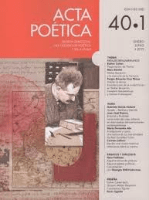
Acta Poetica
Illuminating the Intersection of Literature and SocietyActa Poetica is a distinguished open-access journal dedicated to advancing research and scholarship in the fields of Cultural Studies and Literature and Literary Theory. Published by the Universidad Nacional Autónoma de México through its Instituto de Investigaciones Filológicas, this journal has been a pivotal platform for the dissemination of literary discourse since it embraced open access in 1979. With a notable presence in both the social sciences and humanities, Acta Poetica has earned a ranking of Q3 and Q2 in the 2023 category quartiles, reflecting its commitment to quality scholarship. The journal invites contributions from researchers, professionals, and students alike, fostering a rich dialogue that explores the nuances of literary criticism and cultural phenomena. With its ISSN 0185-3082 and E-ISSN 2448-735X, the journal aims to make valuable research accessible to a global audience, continuing its legacy of enhancing literary scholarship from its base in Mexico City.

Contexto-Revista do Programa de Pos-Graduacao em Letras
Fostering Open Dialogue in Humanities ResearchContexto-Revista do Programa de Pos-Graduacao em Letras is a distinguished open-access journal published by UNIV FEDERAL ESPIRITO SANTO since 2013, effectively contributing to the academic discourse in the field of Language and Literature studies. With its ISSN 2358-9566, this journal offers a platform for researchers, professionals, and students to disseminate and access high-quality scholarly articles that explore various themes in linguistics, literary analysis, and cultural studies. The journal facilitates intellectual exchange within the Brazilian and global academic communities, emphasizing the importance of open access to foster collaboration and innovation in the humanities. By publishing original research, book reviews, and theoretical discussions, Contexto aims to enhance the understanding of language as a vital component in shaping cultural narratives. Its commitment to accessibility ensures that valuable contributions to the field are readily available, serving a diverse audience eager to engage with contemporary issues in letters.

CRITICA LETTERARIA
Connecting Tradition with Contemporary Literary InsightsCRITICA LETTERARIA is an esteemed literary journal published by Paolo Loffredo Iniziative Editoriali SRL that has been contributing to discussions in the field of literature and literary theory since its inception in 2009. With an ISSN of 0390-0142 and an E-ISSN of 2035-2638, this journal is indexed in Scopus, ranking in the category of Arts and Humanities under Literature and Literary Theory. It is classified in the Q4 quartile, indicating its dedication to serving a niche yet vital discourse within the broader literary community. Although currently not open access, the journal offers a platform for scholars, researchers, and students to engage with diverse literary analyses and theoretical advancements. Located in the vibrant city of Naples, Italy, CRITICA LETTERARIA aims to foster academic dialogue and promote innovative approaches in literary studies, making it an important resource for anyone passionate about navigating the complexities of literary narratives and theory.