JOURNAL OF MORPHOLOGY
metrics 2024
Exploring the Intricacies of Life's Forms
Introduction
Established in 1887, the Journal of Morphology is a pioneering publication in the field of morphology, specializing in the anatomical and developmental biology of diverse organisms. Published by Wiley, this journal features high-quality research that spans multiple disciplines, including animal science and zoology, with a current ranking of Q2 in these areas. Although it lacks an open-access option, the journal is committed to advancing knowledge and facilitating scientific communication among professionals in developmental biology, as indicated by its ongoing contributions since its convergence years and up to 2024. With an impact factor that reflects its importance in the scientific community, the Journal of Morphology is a vital resource for researchers, professionals, and students seeking to understand complex morphological processes and their implications in modern science. Its dedication to publishing rigorous, peer-reviewed articles makes it an indispensable asset in the exploration of life's intricacies.
Metrics 2024
 0.521.501.7083
Metrics History
Rank 2024
Scopus
IF (Web Of Science)
JCI (Web Of Science)
Quartile History
Similar Journals

INTERNATIONAL JOURNAL OF MORPHOLOGY
Pioneering Discoveries in Organismal StructureThe INTERNATIONAL JOURNAL OF MORPHOLOGY is a distinguished publication dedicated to the field of anatomy, significantly contributing to the scholarly discourse within this essential area of medical science. Published by the SOC CHILENA ANATOMIA and located in Chile, this journal aims to disseminate groundbreaking research that explores the structural aspects of organisms, from comparative anatomy to developmental processes. With an H-index reflecting its growing impact, the journal has achieved a Q3 ranking in the category of Anatomy according to the 2023 metrics, positioning it among the competitive resources available to the scientific community. Researchers and professionals engaging with this journal can expect to encounter rigorous studies, insightful reviews, and innovative methodologies. Though not strictly open access, the journal remains pivotal for those keen on advancing their understanding of morphological structures and their implications in various fields. With convergence ongoing from 2006 to 2024, the INTERNATIONAL JOURNAL OF MORPHOLOGY is poised to further solidify its role as a vital source of knowledge for anatomy enthusiasts and experts alike.
Imaging Science in Dentistry
Unlocking the potential of radiology in oral care.Imaging Science in Dentistry is a premier open-access journal published by the Korean Academy of Oral & Maxillofacial Radiology, dedicated to the cutting-edge field of dental imaging and radiology. Since its inception in 2011, the journal has played a pivotal role in disseminating crucial research that advances our understanding of imaging techniques in dentistry, imaging-based diagnostics, and treatment planning. With an impressive Q2 ranking in various fields, including Dentistry (Miscellaneous), Radiological and Ultrasound Technology, and Radiology, Nuclear Medicine, and Imaging as of 2023, it is recognized for its contribution to the academic community, attracting a diverse readership that encompasses researchers, clinicians, and students. The journal provides a platform for sharing innovative methodologies, clinical studies, and reviews that shape current practices in dental imaging while promoting open access to enhance knowledge sharing globally. Through its rigorous peer-review process and commitment to high-quality publications, Imaging Science in Dentistry continues to set a standard for excellence in imaging sciences in the dental profession.
FOLIA HISTOCHEMICA ET CYTOBIOLOGICA
Pioneering Research in Histochemistry and PathologyFOLIA HISTOCHEMICA ET CYTOBIOLOGICA, an esteemed journal published by VIA MEDICA, serves as a vital platform for researchers and professionals in the fields of histology, pathology, and cytobiology. With an ISSN of 0239-8508 and E-ISSN of 1897-5631, this Open Access journal has been disseminating significant findings since 1984, offering free access to a broad audience of scientists and academics. Based in Poland, this journal focuses on critical advancements in the study of cellular structures and functions, contributing substantially to the understanding of various diseases and biological processes. The journal currently holds a respectable impact factor, ranking in the Q3 category for Histology and miscellaneous Medicine, and Q2 for Pathology and Forensic Medicine as per the 2023 metrics. With its commitment to quality research and an inclusive publishing approach, FOLIA HISTOCHEMICA ET CYTOBIOLOGICA is poised to continue influencing its fields significantly through 2024 and beyond.
JOURNAL OF ANATOMY
Fostering Innovative Discourse in Anatomical ResearchThe JOURNAL OF ANATOMY, published by Wiley, is a premier international journal dedicated to advancing the field of anatomy and its related disciplines. With the ISSN 0021-8782 and E-ISSN 1469-7580, this esteemed journal has been at the forefront of anatomical research since its inception in 1945. Renowned for its rigorous peer-review process, the journal has earned a prestigious impact factor reflecting its high standard of scholarly work. This includes a 2023 Quartile ranking of Q1 in Anatomy, underscoring its prominence among top-tier publications. The journal’s diverse scope encompasses key fields such as cell biology, developmental biology, and molecular biology, making it an essential resource for researchers and practitioners alike. Publishing cutting-edge research and reviews, the JOURNAL OF ANATOMY aims to foster innovative scientific discourse and exploration within the anatomical sciences, solidifying its role as a vital hub for the global anatomical community.
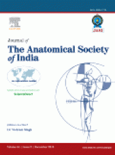
Journal of the Anatomical Society of India
Innovating research, inspiring discoveries.The Journal of the Anatomical Society of India, established in 1960, is a key publication in the field of anatomy and pathology, published by Wolters Kluwer Medknow Publications. With an ISSN of 0003-2778 and an E-ISSN of 2352-3050, this journal serves as a vital platform for disseminating innovative research and advancements in anatomical sciences. Although it currently features a Q4 ranking in both the categories of Anatomy and Pathology and Forensic Medicine as of 2023, the journal aims to elevate scientific discussions and collaborations among researchers, professionals, and students. The impact factor highlights its relevance in the scientific community, although specific metrics are currently unavailable. Located in the dynamic hub of Mumbai, India, the journal encapsulates a commitment to enriching academic discourse while addressing the latest developments and breakthroughs in the field. Researchers looking for a valued resource within anatomy and related disciplines will find this journal an essential read.
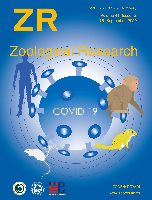
ZOOLOGICAL RESEARCH
Innovating Conservation Practices for a Sustainable FutureZoological Research, published by Science Press, stands as a premier open-access journal in the fields of animal science, zoology, and ecology. Since its inception in 1980, it has fostered an inclusive platform for innovative research and dialogue within the scientific community, enabling researchers from across the globe to share their findings and insights. The journal's significant impact is underscored by its classification in the Q1 quartile across multiple categories, including Animal Science and Zoology, Ecology, and Nature Conservation for 2023, as well as its impressive rankings within Scopus, placing it in the top tier of its respective fields. Situated in Beijing, China, Zoological Research not only contributes to advancing knowledge but also emphasizes the critical importance of conservation practices in today’s rapidly changing ecosystems. With its commitment to open access, researchers, educators, and students alike benefit from immediate, unrestricted access to vital scientific information, making it an essential resource for anyone involved in the biological sciences.
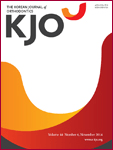
Korean Journal of Orthodontics
Advancing Orthodontics through Innovative ResearchThe Korean Journal of Orthodontics is a leading scholarly publication dedicated to the field of orthodontics, published by the Korean Association of Orthodontists. With an impressive ranking of Q1 in Orthodontics as of 2023, the journal is recognized for its significant contributions to the advancement of orthodontic research and practice. Spanning from 2008 to 2024, it offers a rich repository of peer-reviewed articles that cover a wide range of topics, including innovative treatment techniques, clinical practices, and advancements in orthodontic technology. Although it does not currently offer Open Access, the journal remains highly influential, reflected by its Scopus ranking as 9th out of 39 in the Dentistry Orthodontics category, placing it in the 78th percentile. By fostering the dissemination of high-quality research, the Korean Journal of Orthodontics serves as an essential resource for researchers, practitioners, and students in the orthodontic community and is poised to play a significant role in shaping the future of orthodontic treatment in South Korea and beyond.

ZOOMORPHOLOGY
Unraveling the secrets of evolutionary adaptations.ZOOMORPHOLOGY, published by SPRINGER, stands as a pivotal journal in the fields of Animal Science, Zoology, and Developmental Biology. Since its inception in 1980, this journal has been dedicated to advancing the understanding of animal morphology and the evolutionary adaptations of various species. With an ISSN of 0720-213X and an E-ISSN of 1432-234X, ZOOMORPHOLOGY boasts a Q2 ranking in Animal Science and Zoology and is recognized within the Q4 category in Developmental Biology as of 2023, reflecting its impactful contributions to the scientific community. The journal is indexed in Scopus, where it ranks #224 out of 490 in Animal Science and Zoology, and #66 out of 82 in Developmental Biology, positioning it as a resource of considerable significance for researchers and professionals in these disciplines. Although ZOOMORPHOLOGY currently operates on a traditional access model, it continues to foster scholarly communication and inspire future researchers through rigorous peer-reviewed articles that explore the intricate relationships between form and function in the animal kingdom. With a commitment to excellence and innovation, ZOOMORPHOLOGY remains a vital platform for publishing high-quality research that drives forward our knowledge in morphology and evolutionary biology.
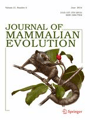
JOURNAL OF MAMMALIAN EVOLUTION
Innovating Understanding in Mammalian Ecology and BehaviorJOURNAL OF MAMMALIAN EVOLUTION, published by SPRINGER, stands at the forefront of the field of mammalian evolutionary research since its inception in 1993. Renowned for its scholarly rigor, this journal covers an extensive range of topics within ecology, evolution, behavior, and systematics, achieving a prestigious Q1 rank in its category, according to the latest metrics. With an ISSN of 1064-7554 and E-ISSN of 1573-7055, it offers critical insights into the diverse adaptations and evolutionary processes of mammals, making it an invaluable resource for researchers, professionals, and students alike. The journal maintains a significant impact factor, reflecting its relevance in shaping current discourse and discoveries within the biological sciences, particularly in mammalogy. Access to its rich repository of articles aids in fostering scientific collaborations and advancing knowledge in the evolutionary sciences, thus solidifying its role as a critical platform for cutting-edge research.
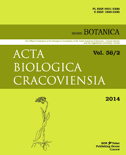
ACTA BIOLOGICA CRACOVIENSIA SERIES BOTANICA
Elevating botanical knowledge for a sustainable future.ACTA BIOLOGICA CRACOVIENSIA SERIES BOTANICA is a distinguished journal published by the Polska Akademia Nauk (Polish Academy of Sciences), with its roots tracing back to 1996. As a pivotal publication in the field of Plant Science, it serves to disseminate high-quality research and findings, contributing to the ongoing development and understanding of biodiversity, plant ecology, and conservation. The journal is indexed under Scopus, ranked #203 out of 516 in its category, placing it in the 60th percentile and firmly within Q3 quartile for Plant Science in 2023. Researchers, professionals, and students will find invaluable content within its pages, enhancing their knowledge and supporting academic exploration. Although it currently does not offer open access options, the journal remains a crucial resource for those engaged in botanical sciences, with a commitment to advancing scholarship in Poland and beyond.