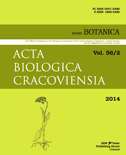
ACTA BIOLOGICA CRACOVIENSIA SERIES BOTANICA
metrics 2024
Advancing plant science through rigorous research.
Introduction
ACTA BIOLOGICA CRACOVIENSIA SERIES BOTANICA is a distinguished journal published by the Polska Akademia Nauk (Polish Academy of Sciences), with its roots tracing back to 1996. As a pivotal publication in the field of Plant Science, it serves to disseminate high-quality research and findings, contributing to the ongoing development and understanding of biodiversity, plant ecology, and conservation. The journal is indexed under Scopus, ranked #203 out of 516 in its category, placing it in the 60th percentile and firmly within Q3 quartile for Plant Science in 2023. Researchers, professionals, and students will find invaluable content within its pages, enhancing their knowledge and supporting academic exploration. Although it currently does not offer open access options, the journal remains a crucial resource for those engaged in botanical sciences, with a commitment to advancing scholarship in Poland and beyond.
Metrics 2024
 0.280.500.9036
Metrics History
Rank 2024
Scopus
IF (Web Of Science)
JCI (Web Of Science)
Quartile History
Similar Journals
BLUMEA
Unveiling the complexities of evolution and behavior.BLUMEA is a distinguished peer-reviewed journal published by RIJKSHERBARIUM in the Netherlands, specializing in Ecology, Evolution, Behavior and Systematics as well as Plant Science. With an ISSN of 0006-5196 and an E-ISSN of 0373-4293, this journal has established itself as a vital resource for academics and practitioners alike since its inception in 1993, with plans to continue through 2024. Currently holding a Q2 quartile ranking in both relevant categories, BLUMEA is positioned as a significant contributor to the advancement of knowledge in its fields, generating innovative research that informs sustainable practices and biodiversity conservation. Although it currently does not offer Open Access options, its insights are critical for those involved in plant sciences and ecological research. Positioned within the Scopus database, the journal ranks at the 41st percentile in Plant Science and the 39th percentile in Ecology, reflecting its substantial impact within the academic community. Researchers, students, and professionals who engage with BLUMEA will find it to be an indispensable source for high-quality research and valuable discussions aimed at shaping the future of ecological studies and botanical science.
PLANT BIOLOGY
Elevating Understanding of Plant SystemsPLANT BIOLOGY is a prestigious academic journal published by Wiley, dedicated to advancing knowledge in the fields of plant science, ecology, and evolutionary biology. With an impressive impact factor and ranking in the Q1 category for Ecology, Evolution, Behavior and Systematics, and Plant Science as of 2023, it stands at the forefront of research dissemination. The journal encompasses a broad scope of plant biology topics, providing a critical platform for researchers to share innovative findings and foster interdisciplinary collaboration. Available in both print (ISSN: 1435-8603) and online formats (E-ISSN: 1438-8677), it ensures accessibility through open access options. As a crucial resource for professionals, researchers, and students alike, PLANT BIOLOGY cultivates a deeper understanding of plant systems and their ecological significance, making it an essential addition to the library of anyone dedicated to the study of biology and the environment.

NEW ZEALAND JOURNAL OF BOTANY
Unraveling Nature's Mysteries, One Study at a TimeThe New Zealand Journal of Botany, published by the esteemed Taylor & Francis Ltd, serves as a pivotal platform for disseminating significant research in the fields of Ecology, Evolution, Behavior and Systematics, as well as Plant Science. With a rich history dating back to 1963 and an impressive convergence extending to 2024, this journal has established itself as an essential resource for researchers and professionals dedicated to understanding the complexities of plant life and ecological systems in New Zealand and beyond. The journal is currently categorized in the Q3 quartile for both relevant disciplines as of 2023, reflecting its balanced influence within the global academic community. Although not an open access journal, it retains a significant impact factor, evidenced by its Scopus rankings, which place it within the top half of its categories. This makes it an invaluable tool for students, researchers, and academics aiming to engage with robust, peer-reviewed scientific findings and contribute to the evolving discourse surrounding botany and ecological research.
BOTANICAL REVIEW
Fostering dialogue on ecology and evolution.BOTANICAL REVIEW is a highly esteemed journal published by SPRINGER, renowned for its commitment to advancing the fields of Ecology, Evolution, Behavior and Systematics and Plant Science. Established in 1935, this journal has become a cornerstone for researchers and professionals, reflecting over eight decades of rigorous scholarship. With an impressive impact factor and ranking within the top quartile for both its fields—Q1 in Ecology, Evolution, Behavior and Systematics and Plant Science—BOTANICAL REVIEW remains a key platform for disseminating critical findings and fostering scientific dialogue. Although it is not an open-access journal, its accessibility through institutional subscriptions enhances its reach among the academic community. The journal not only emphasizes the ecological aspects of plant life but also integrates evolutionary context to inform current practices and theories in botany. With a dedication to exploring the complex interactions within botanical sciences, BOTANICAL REVIEW continues to shape the future of plant research.

PAKISTAN JOURNAL OF BOTANY
Advancing Plant Science Research in South AsiaPakistan Journal of Botany, published by the Pakistan Botanical Society, is a leading platform for the dissemination of high-quality research in the field of plant sciences. Established in 1978 and with its most recent issues available until 2024, this journal has been pivotal in enhancing our understanding of botany, particularly in the South Asian context. With an ISSN of 0556-3321 and E-ISSN of 2070-3368, it serves a global readership, appealing to researchers, practitioners, and students alike. The journal is ranked in Q3 of the Plant Science category for 2023, indicating its scholarly significance, and it holds a position in the 51st percentile of its Scopus ranking. While currently offering limited open access, the journal continues to strive for broader accessibility to foster knowledge dissemination. Research published in the Pakistan Journal of Botany covers diverse topics, including but not limited to plant physiology, ecology, and conservation, making it an invaluable resource for anyone engaged in plant science research.

Annali di Botanica
Exploring the depths of plant sciences with open access.Annali di Botanica is a distinguished journal published by UNIV STUDI ROMA LA SAPIENZA that has become a vital platform for advancing research in the field of plant sciences. With its Open Access policy established since 1995, it ensures that a wide audience including researchers, professionals, and students can access high-quality, peer-reviewed articles that contribute to the global body of botanical knowledge. As of 2023, the journal holds a Q3 rank in the Plant Science category, reflecting its commitment to scholarly excellence and relevance, as evidenced by its position within the 62nd percentile of activities ranked in Scopus. The journal encompasses diverse topics in botany, fostering discussions that encompass morphological, ecological, and genetic aspects of plants, effectively bridging theoretical knowledge and practical applications. Situated in the heart of Rome, Italy, at PIAZZALE ALDO MORO, 5, the journal not only addresses regional botanical issues but aims to serve a global audience, enhancing collaborative efforts and stimulating innovation across the botanical sciences.
Horticulture Environment and Biotechnology
Cultivating Innovations in Horticulture and BiotechnologyHorticulture Environment and Biotechnology is a prestigious journal published by the Korean Society of Horticultural Science, dedicated to advancing knowledge in the fields of horticulture, biotechnology, and plant science. Since its inception in 2011, this journal has played a crucial role in disseminating high-quality research, evidenced by its 2023 category quartile rankings, which position it in Q1 for Horticulture and Q2 for Biotechnology and Plant Science. With impressive Scopus rankings, including Rank #18 out of 115 in Horticulture, the journal continues to demonstrate its significance within the academic community by contributing to innovative practices and findings that impact both environmental sustainability and horticultural advancements. Currently, the journal is accessible to a global audience, facilitating the exchange of ideas and research outcomes with no open-access fees. Horticulture Environment and Biotechnology strives to support researchers, professionals, and students alike by providing a platform for critical discussions on the intersection of horticultural science and biotechnology, thereby fostering the development of sustainable agricultural practices that align with contemporary challenges.
AoB Plants
Leading the way in plant science advancements.AoB Plants is a distinguished open-access journal published by Oxford University Press, dedicated to advancing the field of plant science. Since its inception in 2009, this journal has played a pivotal role in disseminating high-quality research that encompasses a wide range of topics including plant biology, ecology, and biotechnology. With an impressive impact factor and a ranking in the Q1 quartile for Plant Science, AoB Plants is recognized for its innovative contributions and scholarly rigor, ranking #129 out of 516 in the Scopus Agricultural and Biological Sciences category, placing it in the 75th percentile among its peers. By promoting open-access availability of research findings, the journal empowers researchers and practitioners alike, facilitating greater collaboration and knowledge sharing in the global scientific community. Situated in the heart of the United Kingdom, AoB Plants continues its commitment to providing a platform for pioneering research and developments in plant science, thus fostering a deeper understanding of the crucial roles that plants play in our ecosystems and economies.
Alpine Botany
Exploring the Heights of Alpine Flora.Alpine Botany is a premier scholarly journal published by SPRINGER BASEL AG, dedicated to the field of ecological and botanical research with a specific focus on alpine environments. With an ISSN of 1664-2201 and an E-ISSN of 1664-221X, this journal has established itself as a significant platform for disseminating high-quality research findings, with its latest category rankings placing it in the Q1 quartile for both Ecology, Evolution, Behavior and Systematics as well as Plant Science. Originating from Switzerland, Alpine Botany benefits from its geographical context, fostering a rich exchange of ideas and research advancements relevant to high-altitude flora. The journal operates under an Open Access model, promoting widespread accessibility of its content while accommodating an increasing demand for interdisciplinary studies within the ecological and botanical communities. With a commitment to excellence, Alpine Botany continues to serve as an invaluable resource for researchers, professionals, and students who are keen to explore and understand the complexities of alpine ecosystems.

Egyptian Journal of Botany
Cultivating innovation in plant sciences.Egyptian Journal of Botany is a premier publication in the field of botanical sciences, encompassing agricultural research, plant biology, and ecology. Published by the NATL INFORMATION DOCUMENTATION CENT, ACAD SCIENTIFIC RESEARCH & TECHNOLOGY in Egypt, this journal has made significant strides since its establishment, now recognized within several prestigious Scopus quartiles including Q3 in Agronomy and Crop Science, and Q3 in Ecology, reflecting its impact and relevance in the scientific community. With an aim to disseminate high-quality research and foster innovation in plant sciences, the journal provides a platform for researchers, professionals, and students alike to share vital findings and advancements. Although it currently operates under traditional access, the wealth of knowledge it offers is pivotal for those engaged in ecological preservation, crop improvement, and biotechnological applications. With its comprehensive scope and evolving reputation, the Egyptian Journal of Botany is poised to remain an influential player in the botanical sciences from 2019 to 2024 and beyond.