
Journal of the National Cancer Center
Scope & Guideline
Empowering Global Collaboration in Cancer Care.
Introduction
Aims and Scopes
- Epidemiology and Public Health:
The journal regularly publishes studies on cancer incidence, mortality, and survival statistics, particularly in the context of China, aiming to inform public health strategies and cancer control policies. - Precision Medicine and Targeted Therapies:
A significant focus is on precision medicine, including the use of biomarkers and personalized treatment approaches, especially in areas like breast cancer and lung cancer, to improve therapeutic outcomes. - Innovative Treatment Modalities:
The journal covers advancements in treatment technologies such as CAR-T cell therapies, immunotherapy, and precision radiation therapy, highlighting their applications in clinical settings. - Tumor Microenvironment and Mechanisms:
Research on the tumor microenvironment, including studies on tumor heterogeneity and the role of cancer-associated fibroblasts, contributes to understanding cancer biology and potential therapeutic targets. - Methodological Advances in Cancer Research:
The journal emphasizes methodological innovations, including machine learning applications in oncology and the development of patient-derived models for cancer research. - Guidelines and Consensus Statements:
The journal frequently publishes clinical guidelines and expert consensus statements to standardize cancer diagnosis and treatment practices in China.
Trending and Emerging
- Integration of Artificial Intelligence in Oncology:
There is a growing trend towards incorporating artificial intelligence and machine learning in cancer diagnosis, treatment planning, and outcome prediction, showcasing its potential to revolutionize oncology. - Research on Circulating Tumor DNA (ctDNA):
The focus on ctDNA as a biomarker for cancer diagnosis, monitoring, and treatment response is increasing, highlighting its relevance in precision medicine and personalized treatment strategies. - Multidisciplinary Approaches to Cancer Treatment:
The journal is increasingly emphasizing the importance of multidisciplinary care models, combining surgical, medical, and radiation oncology, to enhance patient outcomes. - Investigation of Tumor Microenvironment Dynamics:
Emerging studies are focusing on the complexities of the tumor microenvironment, including its role in tumor progression and response to therapies, which are critical for developing novel treatment strategies. - Global Health Perspectives in Cancer Research:
There is a noticeable trend towards examining cancer from a global health perspective, assessing disparities in cancer care and outcomes, particularly in the context of low- and middle-income countries.
Declining or Waning
- Epidemiological Studies on Traditional Risk Factors:
There has been a noticeable reduction in studies focused solely on traditional cancer risk factors, such as smoking and dietary influences, as researchers shift towards exploring genetic and molecular determinants. - Radiotherapy Alone as a Treatment Modality:
Research specifically on radiotherapy without combination therapies has decreased, likely due to the increasing emphasis on integrating radiotherapy with immunotherapy and targeted treatments. - Basic Science Research in Cancer Biology:
Although foundational research remains important, there is a trend towards applied research with a stronger clinical focus, leading to fewer publications dedicated solely to basic cancer biology. - Generic Cancer Screening Programs:
Publications centered around broad cancer screening initiatives are becoming less frequent, as there is a growing emphasis on personalized screening approaches based on individual risk factors.
Similar Journals
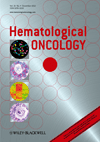
HEMATOLOGICAL ONCOLOGY
Transforming Knowledge into Practice in Hematological OncologyHEMATOLOGICAL ONCOLOGY, published by Wiley, is a premier journal in the fields of cancer research, hematology, and oncology, with a rich history of publication dating back to 1983. With an impact factor indicative of its influential standing—ranking in the second quartile in multiple categories including Cancer Research, Hematology, and Oncology—this journal serves as a vital resource for researchers, clinicians, and students alike. HEMATOLOGICAL ONCOLOGY is based in the United Kingdom and focuses on the advancements and challenges in the understanding and treatment of hematological malignancies. While it does not offer open access options, its rigorous peer-review process ensures that all published articles are of the highest quality, contributing to the ongoing dialogue and research in this critical area of medicine. With its commitment to disseminating impactful research, HEMATOLOGICAL ONCOLOGY remains an essential platform for driving innovation and collaboration within the global scientific community.
GENES CHROMOSOMES & CANCER
Bridging Genetics and Cancer for a Healthier Tomorrow.GENES CHROMOSOMES & CANCER, published by Wiley, is a premier journal in the intertwined fields of cancer research and genetics. With an ISSN of 1045-2257 and an e-ISSN of 1098-2264, this journal has been a significant outlet for innovative research since its inception in 1989, continuing through to 2024. Positioned in the Q2 quartile of both Cancer Research and Genetics categories in 2023, it reflects a strong impact in the scientific community, as evidenced by its Scopus rankings—99th in Genetics and 83rd in Cancer Research. Though it does not provide open access options, GENES CHROMOSOMES & CANCER offers valuable insights that foster collaboration and discovery among researchers, professionals, and students dedicated to understanding the genetic underpinnings of cancer. With its reputable standing, this journal is a vital resource for those aspiring to contribute meaningful advancements in cancer genetics and therapeutic interventions.
CANCER AND METASTASIS REVIEWS
Exploring the Complexities of Cancer ProgressionCancer and Metastasis Reviews, published by Springer, is a leading journal in the field of oncology and cancer research. With an impressive impact factor placing it in the Q1 category for both Cancer Research and Oncology as of 2023, this journal is ranked 29th out of 404 in Medicine, Oncology, and 22nd out of 230 in Biochemistry, Genetics, and Molecular Biology, reflecting its significant influence and prestige in the academic community. Established in 1982, the journal covers a wide spectrum of topics related to the mechanisms of cancer progression and metastasis, making it an essential resource for researchers, healthcare professionals, and students dedicated to understanding and tackling cancer. Although the journal does not provide open access options, the impactful research it publishes contributes to advances in therapeutic strategies and enhances the collective knowledge surrounding cancer pathophysiology. With research converging from 1982 to 2024, Cancer and Metastasis Reviews continues to be a vital platform for disseminating high-quality scientific information in the ever-evolving landscape of cancer research.
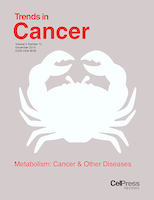
Trends in Cancer
Advancing Cancer Research with Insightful InnovationsTrends in Cancer is a leading journal published by CELL PRESS, dedicated to advancing the field of cancer research and oncology. Since its inception in 2015, the journal has rapidly gained a reputation for excellence, securing both Q1 rankings in Cancer Research and Oncology categories for 2023 and boasting impressive Scopus ranks—#13 out of 404 in Medicine Oncology and #9 out of 230 in Biochemistry, Genetics and Molecular Biology, thus placing it in the top 4% of its field. The journal aims to publish high-quality, innovative research that offers new insights into cancer biology and treatment strategies. With a commitment to scholarly rigor and a broad scope that encompasses molecular mechanisms to therapeutic approaches, Trends in Cancer serves as an essential resource for researchers, professionals, and students eager to stay informed about the latest developments in cancer science. Although it is not an open-access journal, its contributions are pivotal in shaping the future of cancer research.
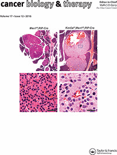
CANCER BIOLOGY & THERAPY
Transforming cancer treatment through cutting-edge research.CANCER BIOLOGY & THERAPY is a premier open-access journal published by Taylor & Francis Inc, dedicated to advancing the field of cancer research and treatment. Since its inception in 2002, the journal has evolved to provide a platform for innovative research and groundbreaking findings, addressing critical aspects of cancer biology, pharmacology, and molecular medicine. With an impressive impact factor and recognition as a Q2 journal in vital categories such as Cancer Research, Oncology, and Pharmacology, it holds significant standing in Scopus rankings, reflecting its influence and commitment to disseminating high-quality research. Offering researchers, professionals, and students a wealth of knowledge, CANCER BIOLOGY & THERAPY stands at the forefront of the fight against cancer, presenting the latest developments and therapeutic strategies vital for improving patient outcomes. Accessible to all since 2022, this journal is a must-read for anyone involved in the multifaceted arena of cancer research and treatment.

Nature Cancer
Transforming Insights into Impactful SolutionsNature Cancer, published by NATURE PORTFOLIO, stands at the forefront of oncological research with a robust impact within the scientific community. As an esteemed journal with impressive rankings—#12 in Medicine (Oncology) and #8 in Biochemistry, Genetics and Molecular Biology (Cancer Research) according to Scopus, placing it within the 97th and 96th percentiles respectively—Nature Cancer boasts a Q1 category status in both Cancer Research and Oncology for 2023. The journal's commitment to advancing cancer research is crucial, promoting high-quality, peer-reviewed studies that address the complexities of cancer biology and treatment. By facilitating open access to impactful findings, Nature Cancer aims to foster collaboration and inspire innovative approaches among researchers, professionals, and students alike, making significant strides in the global fight against cancer. As this pivotal publication continues its converged years from 2020 to 2024, it heralds a future ripe with transformative insights and breakthroughs in the vital field of oncology.
SEMINARS IN RADIATION ONCOLOGY
Exploring the Future of Radiation TherapySEMINARS IN RADIATION ONCOLOGY is a premier journal published by W B SAUNDERS CO-ELSEVIER INC, dedicated to advancing the field of radiation oncology through high-quality research and comprehensive reviews. With an impressive impact factor and a notable HIndex, this journal holds a prominent place within the academic community, particularly illustrated by its Q2 ranking in both Cancer Research and Oncology, and a Q1 ranking in Radiology, Nuclear Medicine, and Imaging as of 2023. Since its inception in 1991, the journal has served as a vital resource for researchers, clinicians, and healthcare professionals, facilitating the exchange of innovative ideas and practices that shape the future of cancer treatment. While the journal is not open access, it offers essential insights into the latest advancements in the field, catering to a diverse audience eager to expand their knowledge and improve patient outcomes in the realm of radiation therapy.
ONCOLOGY RESEARCH
Uncovering New Horizons in Cancer ScienceONCOLOGY RESEARCH, published by TECH SCIENCE PRESS, is a vital academic journal dedicated to the rapidly evolving field of oncology. With its ISSN 0965-0407 and E-ISSN 1555-3906, the journal serves as a key resource for researchers, clinicians, and academicians committed to advancing cancer research and treatment strategies. Operating without an Open Access model, ONCOLOGY RESEARCH provides high-quality, peer-reviewed articles that cover diverse topics within cancer research, medicine, and oncology, with its 2023 Scopus ranking placing it in the Q3 quartile. The journal's commitment to facilitating rigorous scientific discourse is evident in its historical breadth, with a publishing history dating back to 1992. ONCOLOGY RESEARCH is not only significant for the academic community but also plays a critical role in fostering new insights and approaches in the fight against cancer, making it a must-read for those involved in this critical area of study.
Cancer Cell International
Elevating the Standards of Cancer ResearchCancer Cell International, published by BMC, is a transformative open-access journal established in 2001, dedicated to advancing the field of oncology and cancer research. With its ISSN number not specified and an E-ISSN of 1475-2867, the journal proudly operates from the United Kingdom, located at CAMPUS, 4 Crinan St, London N1 9XW, England. Renowned for its rigorous peer-review process, Cancer Cell International has made significant strides, securing a Q2 ranking in Cancer Research and Q1 rankings in both Genetics and Oncology as of 2023. It ranks impressively in Scopus, featuring in the top quintile of Genetics (#37/347) and Oncology (#52/404), indicating its importance within the scientific community. The journal's broad scope caters to a diverse array of topics within cancer biology, making it an invaluable resource for researchers, professionals, and students seeking to stay at the forefront of cancer science. With a commitment to disseminating high-quality research, Cancer Cell International invites scholars to explore innovative findings and contribute to the collective effort of combating cancer.
LANCET ONCOLOGY
Empowering the oncology community with cutting-edge knowledge.The Lancet Oncology is a premier peer-reviewed journal published by Elsevier Science Inc., recognized as a leading authority in the field of oncology. With an ISSN of 1470-2045 and E-ISSN 1474-5488, this esteemed journal boasts an impressive 2023 impact factor placing it in the Q1 category of oncology—reflecting its role as a critical resource for cutting-edge research. The journal publishes high-quality articles covering novel scientific discoveries, clinical advancements, and public health issues related to cancer treatment and prevention. It is ranked #5 out of 404 in the Scopus Medicine _ Oncology category, demonstrating its influence and relevance in the field, with an outstanding rank in the 98th percentile. Operating from its base in the United Kingdom, The Lancet Oncology spans a comprehensive timeframe from 2000 to 2024, making it a vital repository of oncology literature. Although it does not primarily operate on an open-access model, its significant subscription base ensures that a wealth of knowledge is accessible to researchers, professionals, and students alike, fostering a profound understanding and advancement in oncology.