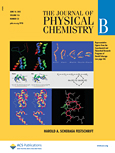
JOURNAL OF PHYSICAL CHEMISTRY B
metrics 2024
Exploring Interdisciplinary Applications of Chemistry
Introduction
Journal of Physical Chemistry B, published by the American Chemical Society, is a leading international platform dedicated to advancing our understanding of physical chemistry and its applications in various interdisciplinary fields. With an impressive 2023 Impact Factor, and categorized in Q1 for Physical and Theoretical Chemistry as well as Surfaces, Coatings and Films, this journal showcases cutting-edge research that contributes significantly to materials science, supporting the innovative development of new materials and technologies. The journal, established in 1997 and converging its years of publication to 2024, maintains rigorous peer-review standards and is accessible to a global audience, enabling the dissemination of pivotal research findings. Moreover, it is renowned for its comprehensive coverage in the realms of materials chemistry and miscellaneous medical applications, making it a vital resource for researchers, professionals, and students alike in their pursuit of excellence in scientific inquiry.
Metrics 2024
 0.762.802.80422
Metrics History
Rank 2024
Scopus
IF (Web Of Science)
JCI (Web Of Science)
Quartile History
Similar Journals
Journal of Computer Chemistry-Japan
Connecting Academia and Industry through Rigorous ResearchJournal of Computer Chemistry-Japan, published by SOC COMPUTER CHEMISTRY, JAPAN, is a dedicated platform for researchers and professionals in the interdisciplinary fields of computational chemistry and chemical informatics. Though the journal does not currently provide open access, it maintains a rigorous selection process for contributions, ensuring the publication of high-quality, peer-reviewed research. With a focus on advancing computational methods and techniques to solve complex chemical problems, the journal aims to bridge the gap between theoretical chemistry and practical applications, making it an invaluable resource for academics and industry professionals alike. As the complexity of chemical systems continues to rise, the relevance of computational approaches in material science, drug discovery, and molecular modeling has never been more critical. Researchers are encouraged to engage with the contents of this journal, which showcases innovative studies, methodologies, and discussions relevant to the evolving landscape of computer-aided chemistry.
ZEITSCHRIFT FUR PHYSIKALISCHE CHEMIE-INTERNATIONAL JOURNAL OF RESEARCH IN PHYSICAL CHEMISTRY & CHEMICAL PHYSICS
Unveiling Complex Chemical PhenomenaZEITSCHRIFT FUR PHYSIKALISCHE CHEMIE-INTERNATIONAL JOURNAL OF RESEARCH IN PHYSICAL CHEMISTRY & CHEMICAL PHYSICS, published by WALTER DE GRUYTER GMBH, is a highly regarded platform for researchers in the field of physical chemistry and chemical physics. With an ISSN of 0942-9352 and an E-ISSN of 2196-7156, this journal serves as a vital resource for the dissemination of original research, critical reviews, and insightful discussions that span theoretical and experimental investigations. Recognized for its quality, it holds a Q2 classification within the 2023 quartiles of Physical and Theoretical Chemistry and ranks 72nd out of 189 in the Scopus database, placing it in the 62nd percentile. The journal’s extensive publication history, originating from 1943, showcases its long-standing commitment to advancing the understanding of complex chemical phenomena. Although it currently does not offer open-access options, it continues to attract contributions from leading experts worldwide, making it essential reading for professionals, researchers, and students dedicated to pushing the frontiers of chemical science. The journal is located in Berlin, Germany, at Genthiner Strasse 13, D-10785 Berlin, Germany.

Journal of Spectroscopy
Exploring the Spectrum of Scientific DiscoveryJournal of Spectroscopy, published by HINDAWI LTD since 2009, is a renowned Open Access journal based in Egypt that serves as a valuable platform for the dissemination of cutting-edge research in the fields of analytical chemistry, atomic and molecular physics, and optics. With the unique ISSN 2314-4920 and E-ISSN 2314-4939, this journal aims to facilitate collaboration and knowledge exchange among researchers, professionals, and students by providing unrestricted access to essential findings and advancements. As of 2023, it holds a Q3 ranking in both Analytical Chemistry and Atomic and Molecular Physics, and a Q4 ranking in Spectroscopy, indicating its growing influence and relevance within the academic community. The journal also maintains a Scopus rank of #126 in Atomic and Molecular Physics and #53 in Spectroscopy, showcasing its commitment to high-quality scholarly content. With a converged timeline from 2013 to 2024, the Journal of Spectroscopy is positioned as a pivotal resource for the latest discoveries and innovative applications in spectroscopy-related studies.
JOURNAL OF MOLECULAR MODELING
Connecting Researchers in the World of Molecular ScienceJOURNAL OF MOLECULAR MODELING, published by Springer, is a pivotal resource for researchers and professionals in the fields of chemistry, computer science, and molecular sciences. The journal's ISSN is 1610-2940, with an E-ISSN of 0948-5023, reflecting its commitment to disseminating cutting-edge research from 1996 to 2024. Although the journal does not operate under an Open Access model, it remains an invaluable platform for the publication of innovative studies related to computational methods, theoretical chemistry, and molecular simulations. With a notable categorization across multiple quartiles—including Q4 in Catalysis and Q3 in Computational Theory and Mathematics—the journal holds a distinct rank in Scopus, highlighting its influence and contribution to the discipline. The importance of this journal lies in its ability to bridge the gap between theoretical understanding and practical applications, making it essential reading for students and scholars seeking to advance their knowledge and research in molecular modeling.
Wiley Interdisciplinary Reviews-Computational Molecular Science
Advancing Molecular Insights through Computational InnovationWiley Interdisciplinary Reviews: Computational Molecular Science is a premier journal published by WILEY, dedicated to the intersection of computational techniques and molecular science. Boasting an impressive impact factor and consistently ranking in the Q1 category across several key disciplines including Biochemistry, Computational Mathematics, Computer Science Applications, Materials Chemistry, and Physical and Theoretical Chemistry, this journal plays a crucial role in disseminating high-quality research that bridges multiple fields. With its focus on providing a platform for interdisciplinary dialogue and innovative computational solutions, it serves as an essential resource for researchers, professionals, and students eager to push the boundaries of molecular science. While the journal does not currently offer open access, it remains a vital conduit for scholarly communication, fostering advancements in understanding molecular interactions through computational methods. The journal is based in the United States, contributing to its global outreach and impact in the scientific community.
JOURNAL OF MOLECULAR LIQUIDS
Advancing Research in Molecular DynamicsJOURNAL OF MOLECULAR LIQUIDS, published by Elsevier, is a premier academic journal focused on the intricate nature of molecular liquids, spanning foundational to applied research. With an ISSN of 0167-7322 and an E-ISSN of 1873-3166, this journal has established its significance in various fields, achieving Q1 rankings across atomic and molecular physics, condensed matter physics, and materials chemistry, among others, as of 2023. The journal’s broad scope, covering studies from theoretical frameworks to experimental applications, serves as a vital platform for disseminating innovative research findings while advancing our understanding of molecular interactions and dynamics. With a strong position in Scopus rankings and high impact factors, it is a trusted resource for researchers, professionals, and students alike, seeking comprehensive insights into molecular liquids. As a journal that thrives on pioneering energy, the JOURNAL OF MOLECULAR LIQUIDS is essential for anyone wishing to remain at the forefront of research in this dynamic field.

Molbank is an open-access journal published by MDPI, dedicated to the fields of Biochemistry, Organic Chemistry, and Physical and Theoretical Chemistry. Established in 2002, this journal has served as a vital platform for the dissemination of research findings, where researchers and professionals share original articles focusing on molecular chemistry, synthesis, and related studies. With a commitment to open access, Molbank enables global access to scientific knowledge, fostering collaboration and innovation among scientists. While currently categorized in the fourth quartile for its field rankings, it provides a unique opportunity for emerging scholars to contribute to and engage with the scientific community. The journal is based in Switzerland, operating from its office at ST ALBAN-ANLAGE 66, CH-4052 BASEL, SWITZERLAND, and continues to attract submissions until 2024. Researchers, students, and professionals looking to expand their knowledge and participate in the dialogue of current molecular chemistry can benefit significantly from engaging with the content published in Molbank.
BIOPHYSICAL CHEMISTRY
Unveiling the complexities of protein folding and beyond.BIOPHYSICAL CHEMISTRY, published by Elsevier, is a prestigious journal with a long-standing tradition since its inception in 1973. This highly respected journal focuses on the intersections of biochemistry, biophysics, and organic chemistry, providing a critical platform for researchers, professionals, and students to disseminate pivotal findings in these dynamic fields. With an impressive impact factor that reflects its robust academic influence and high citation rates, it ranks within the Q2 quartile among its peers in multiple categories, indicating its significance in the scholarly community. The journal, hosted in the Netherlands, encompasses a diverse range of topics, from molecular interactions to protein folding, and serves as an essential resource for those engaged in cutting-edge research. Researchers looking to share their work with a global audience will find BIOPHYSICAL CHEMISTRY an invaluable outlet, fostering the advancement of knowledge in this crucial area of science. For more information, visit the journal's page on the Elsevier platform.
SPECTROCHIMICA ACTA PART A-MOLECULAR AND BIOMOLECULAR SPECTROSCOPY
Illuminating the complexities of molecular interactions.SPECTROCHIMICA ACTA PART A-MOLECULAR AND BIOMOLECULAR SPECTROSCOPY, published by PERGAMON-ELSEVIER SCIENCE LTD, stands as a pivotal resource in the fields of molecular and biomolecular spectroscopy, providing a platform for researchers to disseminate significant findings from both analytical chemistry and molecular physics. With an impactful presence reflected in its Q2 rankings across several categories, including Analytical Chemistry and Spectroscopy, this journal aims to foster advancements in the understanding of molecular interactions through innovative spectroscopic techniques and methodologies. Despite not providing open access, its authoritative articles are crucial for professionals seeking to stay at the forefront of research and development in the discipline. The journal also showcases an impressive pedigree, ranked in the top tiers of Scopus indicators, including high percentiles in both Chemistry and Physics domains. With coverage expanding from 1995 to 2025, SPECTROCHIMICA ACTA PART A remains an essential reading for anyone dedicated to the evolution of spectroscopic science.
Russian Journal of Physical Chemistry A
Elevating the Standards of Chemistry ScholarshipWelcome to the Russian Journal of Physical Chemistry A, a prominent publication in the field of Physical and Theoretical Chemistry, published by MAIK NAUKA/INTERPERIODICA/SPRINGER. This journal, with ISSN 0036-0244 and E-ISSN 1531-863X, has been a vital platform for disseminating significant research findings since its inception in 1996. As a key contributor to academic discourse, it aims to provide high-quality articles that explore fundamental and applied aspects of physical chemistry, thereby enhancing understanding and innovation in the discipline. Although currently categorized as Q4 by Scopus (2023), the journal is positioned to evolve with the scholarly landscape, continually striving to improve its impact and relevance. With no open access options available, subscription to this journal is essential for those keen on enriching their knowledge and staying current with advancements in physical chemistry. Researchers, professionals, and students alike will find invaluable insights and robust discussions that can inspire their work and studies.