JOURNAL OF MOLECULAR MODELING
metrics 2024
Advancing the Frontiers of Molecular Science
Introduction
JOURNAL OF MOLECULAR MODELING, published by Springer, is a pivotal resource for researchers and professionals in the fields of chemistry, computer science, and molecular sciences. The journal's ISSN is 1610-2940, with an E-ISSN of 0948-5023, reflecting its commitment to disseminating cutting-edge research from 1996 to 2024. Although the journal does not operate under an Open Access model, it remains an invaluable platform for the publication of innovative studies related to computational methods, theoretical chemistry, and molecular simulations. With a notable categorization across multiple quartiles—including Q4 in Catalysis and Q3 in Computational Theory and Mathematics—the journal holds a distinct rank in Scopus, highlighting its influence and contribution to the discipline. The importance of this journal lies in its ability to bridge the gap between theoretical understanding and practical applications, making it essential reading for students and scholars seeking to advance their knowledge and research in molecular modeling.
Metrics 2024
 0.332.101.9079
Metrics History
Rank 2024
Scopus
IF (Web Of Science)
JCI (Web Of Science)
Quartile History
Similar Journals

Journal of Physical Chemistry Letters
Unveiling Innovations in Nanoscience and Materials ScienceThe Journal of Physical Chemistry Letters, published by the American Chemical Society, is a premier journal in the fields of Physical and Theoretical Chemistry, Materials Science, and Nanoscience and Nanotechnology. Since its inception in 2010, this journal has established itself as a significant platform for rapid publications of cutting-edge research that bridges various branches of chemistry, providing a critical avenue for advancing knowledge in these dynamic fields. With an impressive impact factor and a consistent ranking in the top quartile (Q1) of its categories, the journal ranks 25th out of 189 in Physical and Theoretical Chemistry and 79th out of 463 in General Materials Science according to Scopus metrics. Although it currently does not operate under an open access model, it remains an essential resource for academics seeking to disseminate their findings to a global audience. Researchers, professionals, and students alike will find invaluable insights and contributions that push the boundaries of scientific inquiry within these disciplines.
JOURNAL OF PHYSICAL CHEMISTRY A
Connecting researchers to the latest in physical chemistry.Journal of Physical Chemistry A, published by the American Chemical Society, serves as a leading platform for disseminating high-quality research in the fields of physical and theoretical chemistry. With an ISSN of 1089-5639 and E-ISSN of 1520-5215, this journal maintains a rigorous standard, demonstrated by its position in the Q2 category for both physical and theoretical chemistry as well as miscellaneous medicine within its 2023 category quartiles. As part of the greater ACS network, it operates with a solid Scopus rank of 76/189, placing it within the 60th percentile, emphasizing its credibility and impact in the chemistry community. The journal's objective is to enhance the understanding of molecular phenomena through innovative experimental and computational approaches, making it essential reading for researchers, professionals, and students seeking to advance their knowledge and contribute to scientific discussion. With additional open access options, the Journal of Physical Chemistry A continues to foster collaboration and the sharing of ideas in the vibrant scientific landscape of the United States and beyond.

ACS Physical Chemistry Au
Catalyzing advancements in physical and theoretical chemistry.ACS Physical Chemistry Au, published by the American Chemical Society, is a pioneering open-access journal that provides a dynamic platform for researchers and professionals in the field of physical chemistry and its interdisciplinary connections. Since its inception in 2021, the journal has made significant strides in disseminating high-quality research, evidenced by its impressive standings in various categories, including Q1 rankings in Chemistry (miscellaneous), Computational Theory and Mathematics, and Physical and Theoretical Chemistry as of 2023. With a commitment to enhancing the visibility and accessibility of scholarly work, ACS Physical Chemistry Au offers a robust Open Access model, ensuring that groundbreaking research is freely available to a global audience. The journal serves as an essential resource for researchers, students, and practitioners seeking to advance knowledge in computational theory, physical chemistry, and their applied sciences. With an ISSN of N/A and an E-ISSN of 2694-2445, the journal is poised to make a lasting impact in the academic community.
NEW JOURNAL OF CHEMISTRY
Fostering Excellence in Chemical ResearchNEW JOURNAL OF CHEMISTRY, published by the prestigious Royal Society of Chemistry, serves as a vital platform for the dissemination of research in the dynamic fields of chemistry, catalysis, and materials science. With an impressive ISSN of 1144-0546, this journal boasts a rich history, having been established in 1996, and is set to continue its impactful publication through 2024. The journal is recognized in several categories, achieving a Q2 ranking in both chemistry and materials chemistry, and a Q3 rank in catalysis, reflecting its significance within these disciplines. Researchers will find it particularly noteworthy that the journal holds an esteemed position in the Scopus rankings, with a 65th percentile standing in general chemistry. Though it currently operates on a subscription model, its commitment to advancing the frontiers of chemistry makes it an essential resource for academics, professionals, and students seeking to keep abreast of the latest advancements and innovative methodologies in their fields.
INTERNATIONAL JOURNAL OF QUANTUM CHEMISTRY
Fostering Breakthroughs in Quantum Chemical ScienceInternational Journal of Quantum Chemistry is a distinguished scholarly publication that has been at the forefront of advancements in the realm of quantum chemistry since its inception in 1967. Published by Wiley in the United States, this journal holds a significant place in the academic community, currently indexed in the Q3 quartile across various categories including Atomic and Molecular Physics, Condensed Matter Physics, and Physical and Theoretical Chemistry. With an ISSN of 0020-7608 and an E-ISSN of 1097-461X, the journal offers a platform for researchers and professionals to disseminate cutting-edge findings in quantum chemical research. While it operates under a traditional subscription model, the journal remains committed to enhancing the visibility of its contributions within the scientific community. With a convergence of research that spans from 1967 to 2024, the International Journal of Quantum Chemistry is pivotal for anyone looking to advance their understanding and application of quantum principles in chemistry, providing valuable insights into the microscopic interactions that govern matter and its properties.
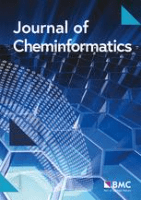
Journal of Cheminformatics
Fostering collaboration in cheminformatics and beyond.Journal of Cheminformatics, published by BMC, is a premier open-access journal that has been a cornerstone of cheminformatics research since its inception in 2009. With an ISSN of 1758-2946, this journal operates from the heart of the United Kingdom, providing a dynamic platform for disseminating high-quality, peer-reviewed articles that explore the integration of computer science with chemistry. The journal proudly stands in the prestigious Q1 category across multiple disciplines, including Computer Graphics, Computer-Aided Design, and Library and Information Sciences, showcasing its exceptional impact in the fields of cheminformatics and computational chemistry. Additionally, it ranks impressively in various Scopus categories, with notable placements such as #7 in Library and Information Sciences and #15 in Physical and Theoretical Chemistry, demonstrating its significance to the academic community. As a leader in open-access publishing, the Journal of Cheminformatics ensures that cutting-edge research and innovations are freely accessible to researchers, professionals, and students alike, fostering collaboration and advancement in this rapidly evolving field.

Computational and Theoretical Chemistry
Advancing the Frontiers of Molecular InsightsComputational and Theoretical Chemistry, published by ELSEVIER, stands at the forefront of interdisciplinary research in the realms of computational chemistry, theoretical physics, and biochemistry. With its ISSN 2210-271X and E-ISSN 1872-7999, the journal has established a significant presence in the academic community since its inception. Covering innovative computational methodologies and theoretical advancements, it addresses critical issues in condensed matter physics and molecular biochemistry, providing a rich resource for scholars and industry professionals alike. The journal enjoys a respectable impact factor and ranks notably in several Scopus categories, making it a vital platform for disseminating high-quality research. It adopts an open-access model, facilitating wider readership and engagement, which is essential for fostering collaborative innovations in the scientific landscape. As it continues to evolve from 2011 to 2024, Computational and Theoretical Chemistry is committed to advancing knowledge and promoting insightful discussions within the scientific community.
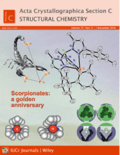
ACTA CRYSTALLOGRAPHICA SECTION C-STRUCTURAL CHEMISTRY
Delivering Rigorous Research in Structural ChemistryACTA CRYSTALLOGRAPHICA SECTION C-STRUCTURAL CHEMISTRY is a respected journal in the fields of condensed matter physics, inorganic chemistry, and materials chemistry, published by the International Union of Crystallography. With an extensive history dating back to its inception in the late 1980s, this journal serves as a significant platform for researchers to disseminate high-quality research on structural chemistry, focusing on the synthesis and characterization of crystalline materials. Despite currently holding a Q4 ranking across multiple academic categories, it remains an essential resource for those engaged in these scientific disciplines, facilitating dialogue and collaboration among experts. The journal's commitment to publishing innovative studies ensures that it continues to contribute to the advancement of knowledge in its field. Although it does not offer Open Access, the journal is dedicated to maintaining rigorous peer-review standards, making it a reliable source for scholars and practitioners alike. Located in the United States, ACTA CRYSTALLOGRAPHICA SECTION C is a pivotal part of the global crystallography community.

Results in Chemistry
Transforming Chemistry Research into Global ImpactResults in Chemistry is a prominent journal published by Elsevier, dedicated to fostering innovation and disseminating cutting-edge research in the field of chemistry. With an ISSN of 2211-7156, this open-access journal has been committed to making scientific knowledge widely available since 2019, aligning with the global trend towards accessibility in research. Based in the Netherlands, it features interdisciplinary studies that span the breadth of general chemistry, contributing significantly to the academic dialogue within the scientific community. Despite currently holding a Q3 ranking in the miscellaneous category of chemistry and occupying the 228th position out of 408 in Scopus rankings, the journal is poised for growth, aiming to enhance its impact and visibility. Researchers, professionals, and students alike will find invaluable resources and insights within its pages, making Results in Chemistry an essential platform for those looking to stay abreast of advancements and trends in chemistry research up to the year 2024.
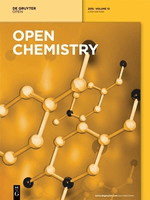
Open Chemistry
Bridging Gaps in Chemical Sciences with Open AccessOpen Chemistry, published by DE GRUYTER POLAND SP Z O O, is a distinguished peer-reviewed journal that has been serving the global chemistry community since its inception. With an ISSN of 2391-5420 and an E-ISSN also of 2391-5420, this open-access journal has been accessible to researchers and practitioners alike since 2015, ensuring a wide dissemination of high-quality research findings. Located in Germany, specifically at BOGUMILA ZUGA 32A STR, 01-811 WARSAW, MAZOVIA, POLAND, Open Chemistry aims to publish innovative research across various chemical disciplines, with special attention to miscellaneous chemistry and materials chemistry. It is currently ranked in the Q3 category for both fields as of 2023, reflecting its solid standing within the academic community, with specific ranks of 187/408 in General Chemistry and 153/317 in Materials Chemistry, corresponding to respective percentiles of 54 and 51. Open Chemistry not only enhances the accessibility of cutting-edge research but also serves as a vital resource for students, professionals, and scholars seeking to advance their knowledge in the rapidly evolving landscape of chemical sciences.