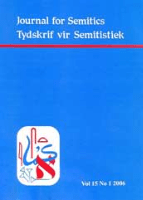
Journal for Semitics
metrics 2024
Unveiling New Perspectives on Semitic Literature and Linguistics
Introduction
Journal for Semitics
Published by UNISA PRESS, the Journal for Semitics is a pivotal platform dedicated to the interdisciplinary study of Semitic languages, literature, and cultures. With its ISSN 1013-8471, this journal provides a comprehensive forum for scholars to disseminate original research, critical reviews, and theoretical discussions that enrich our understanding of Semitic studies in a global context. Although the journal does not currently offer Open Access options, its meticulous peer-review process ensures high-quality scholarship that resonates with academic standards in the field. Flanked by a notable commitment to cultural and linguistic diversity, the Journal for Semitics is essential for researchers, professionals, and students striving to expand their knowledge and engage actively in contemporary Semitic scholarship. Located in Pretoria, South Africa, this journal encapsulates a rich academic tradition while aiming to shape future discourse in Semitic studies.
Metrics 2024
 -0.100.10-
Metrics History
Rank 2024
JCI (Web Of Science)
Quartile History
Similar Journals

Skandinavskaya Filologiya
Connecting Eastern and Western Perspectives in Philology.Skandinavskaya Filologiya is a distinguished academic journal published by St Petersburg University Press that specializes in Scandinavian philology and linguistics. With its ISSN 0202-2397 and E-ISSN 2618-9518, this journal serves as a vital platform for scholarly articles that explore the intricate languages, literature, and cultural nuances of the Scandinavian region. The journal seeks to promote interdisciplinary research and foster collaboration among linguists, literary scholars, and cultural researchers interested in the rich heritage and contemporary developments within Scandinavian studies. Although the journal operates without open access, it is committed to enhancing academic discourse and providing a valuable resource for students, professionals, and researchers. Located in the vibrant city of St Petersburg, Russia, the journal aims to bridge the gap between Eastern and Western scholarship in Scandinavian philology, making it a significant contributor to the field.
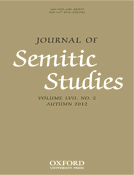
JOURNAL OF SEMITIC STUDIES
Illuminating the Intersection of Language, History, and ReligionJOURNAL OF SEMITIC STUDIES, published by Oxford University Press, is a premier academic journal that has served as a vital platform for interdisciplinary research in the fields of Semitic languages, history, culture, and religion since its inception in 1956. With a distinguished impact factor and a significant presence in various academic quartiles, including Q1 rankings in History and Literature, this journal is essential for scholars and practitioners seeking to advance their understanding of Semitic studies. The journal's scope includes comprehensive research articles, critical essays, and reviews that contribute to ongoing dialogues in Cultural Studies, Linguistics, and Religious Studies, making it indispensable for researchers, educators, and students alike. Although it currently does not offer open access, the high-quality, peer-reviewed content ensures rigorous academic standards while maintaining engagement with current trends and discussions in its respective fields. As a hub for innovative and influential scholarship, the JOURNAL OF SEMITIC STUDIES continues to foster an environment that encourages exploration and discovery within the rich tapestry of Semitic languages and cultures.
Symbolae Osloenses
Exploring the Depths of Ancient WisdomSymbolae Osloenses, published by TAYLOR & FRANCIS LTD, is a distinguished journal in the field of Classics, with a rich history dating back to its inception in 1922. This UK-based journal has continuously contributed to the scholarly discourse surrounding ancient cultures, languages, and literature, making it a crucial resource for researchers, educators, and students alike. Though it operates under a subscription model, its impact on the academic community is underscored by its recent inclusion in the 2023 Scopus rankings, where it holds a respectable position in the 65th percentile among its peers. With decades of published research spanning from 1924 to 2023, Symbolae Osloenses remains committed to fostering robust academic dialogue and advancing knowledge in the Classics, catering to a diverse readership seeking to explore the nuances of classical studies.
SLAVONICA
Decoding the Dynamics of Slavic Languages and CulturesSLAVONICA is a distinguished academic journal dedicated to the exploration and analysis of Slavic studies, incorporating a wide array of cultural, historical, and linguistic perspectives. Published by Routledge Journals, Taylor & Francis Ltd, this journal serves as a critical platform for interdisciplinary scholarship, emphasizing the dynamic nature of Slavic cultures and languages. Though it currently does not offer Open Access, SLAVONICA is an important resource for researchers, professionals, and students seeking to engage with the latest academic discourse in the fields of Cultural Studies, History, Literature, and Linguistics, achieving a recognized place in the Q4 quartile across several categories as of 2023. With coverage spanning from 1994 to 2024, and its commitment to fostering academic inquiry, SLAVONICA plays a vital role in elevating the understanding of Slavic heritage and contemporary issues, making it essential reading for anyone interested in the complexities of this region.

Caplletra
Navigating the Evolving Landscape of LinguisticsCaplletra is a distinguished open-access journal dedicated to the field of linguistics and language studies, published by PUBL ABADIA MONTSERRAT since its inception. Based in Barcelona, Spain, this journal has been a vital resource for researchers, professionals, and students engaged in the intricate explorations of language and its applications since its transition to open access in 2005. Despite its current quartile ranking of Q4 within the Linguistics and Language category as of 2023, Caplletra continues to serve as an inclusive platform, fostering a dialogue that encourages a diverse range of scholarly contributions. Covering an expansive scope in the converged years from 2018 to 2024, it plays a crucial role in disseminating innovative research and insights. With its ISSN 0214-8188 and E-ISSN 2386-7159, Caplletra is committed to making academic work accessible to all, enhancing the landscape of linguistic scholarship and reflecting the evolving nature of language studies.
Estudos de Linguistica Galega
Advancing Understanding of Linguistic DiversityEstudos de Linguistica Galega, an esteemed journal published by the University of Santiago de Compostela, provides a critical platform for scholars engaged in the vibrant field of linguistics, particularly focusing on the Galician language and its surrounding linguistic phenomena. Launched in 2009, this Open Access journal enables unrestricted dissemination of research, facilitating engagement from a global audience. With an impact factor that positions it within the Q4 quartile in Linguistics and Language, it reveals a strong commitment to advancing the discourse in this niche. It ranks #691 out of 1088 in the Arts and Humanities category, underscoring its relevance in the academic landscape. The journal aims to foster collaboration and innovation among researchers and practitioners, making significant contributions to understanding linguistic diversity and its implications in contemporary society. Located in Santiago de Compostela, Spain, the journal encourages submissions that explore theoretical, empirical, and applied linguistic studies, thereby inviting researchers, professionals, and students to contribute to this growing field.

Voprosy Yazykoznaniya
Advancing the Frontiers of Language ResearchVoprosy Yazykoznaniya, published by the esteemed Russian Academy of Sciences and the State Academy of Humanities (GAUGN), stands as a leading journal in the field of linguistics and language studies. With an impressive Q2 rank in Linguistics and Language for 2023 and a strong position within Scopus rankings, this journal fosters scholarly dialogue and pushes the boundaries of linguistic research by providing a platform for innovative studies, reviews, and analyses. Although not open access, its publication ensures high academic standards and visibility within the global academic community. Researchers, professionals, and students alike can benefit from the rich insights and diverse perspectives presented in this journal, serving as a vital resource for anyone interested in the intricacies of language and its role in society. Operating since 2009 and continuing to 2024, Voprosy Yazykoznaniya is an essential reference point for contemporary linguistic scholarship in the Russian Federation and beyond.

Suvremena Lingvistika
Connecting Scholars and Ideas Across Linguistic Landscapes.Suvremena Lingvistika is a distinguished open-access journal published by the Croatian Philological Society, dedicated to advancing research in the field of linguistics and language. Since its establishment, the journal has been pivotal in promoting scholarly dialogue within the linguistics community, especially among researchers and academics in Croatia and beyond. With an ISSN of 0586-0296 and an E-ISSN of 1847-117X, the journal has transitioned to an open-access model since 2007, ensuring that research is freely accessible to all. As of 2023, it holds a respectable Q3 ranking in the Linguistics and Language category, reflecting its potential contribution to the field. The journal's scope encompasses a wide array of linguistic disciplines, encouraging both theoretical and empirical studies. Supportive of new research, Suvremena Lingvistika aims to foster innovative approaches and methodologies in linguistics, making it an essential resource for students, researchers, and professionals eager to explore the complexities of language. With its ongoing publication until 2024, it continues to shape the linguistic landscape, providing valuable insights and fostering collaboration among scholars globally.

Cadernos de Letras da UFF
Unveiling New Perspectives in Literature and LinguisticsCadernos de Letras da UFF is a prominent academic journal published by the Department of History at the Federal University of Fluminense in Brazil. Since its transition to Open Access in 2014, it has fostered a spirit of collaboration and dissemination in the field of Literature and Linguistics, welcoming contributions that explore various aspects of literary studies, historical literature contexts, and linguistic phenomena. With a commitment to quality and academic rigor, the journal serves as a vital resource for scholars, practitioners, and students engaged in the humanities. The journal is dedicated to the advancement of knowledge through innovative research and critical analyses, making it an essential platform for sharing ideas with a global audience. The journal is based in Niterói, RJ, Brazil, and is indexed in various academic databases, enhancing its visibility and impact within the scholarly community.

Jezikoslovlje
Advancing Language Studies for the Modern ScholarJezikoslovlje, published by the Josip Juraj Strossmayer University, Faculty of Philosophy in Croatia, is an essential publication in the field of Linguistics and Language Studies. Launched in 2008 and extending its contributions to the academic community through 2024, this journal addresses a spectrum of linguistic research, facilitating scholarly dialogue around both theoretical and applied aspects of language. With a current Scopus ranking placing it in the 54th percentile in the Arts and Humanities and the 50th percentile in Social Sciences, Jezikoslovlje serves as a vital resource for researchers and students looking to engage with contemporary linguistic issues. Although it operates under a traditional access model, its indexed presence and rigorous peer-review process ensure that published works maintain a high scholarly standard, inviting contributions that advance understanding in this dynamic discipline. The journal's commitment to fostering knowledge in linguistics makes it a significant platform for academics in Croatia and beyond.