
Jezikoslovlje
metrics 2024
Connecting Researchers to Contemporary Linguistic Challenges
Introduction
Jezikoslovlje, published by the Josip Juraj Strossmayer University, Faculty of Philosophy in Croatia, is an essential publication in the field of Linguistics and Language Studies. Launched in 2008 and extending its contributions to the academic community through 2024, this journal addresses a spectrum of linguistic research, facilitating scholarly dialogue around both theoretical and applied aspects of language. With a current Scopus ranking placing it in the 54th percentile in the Arts and Humanities and the 50th percentile in Social Sciences, Jezikoslovlje serves as a vital resource for researchers and students looking to engage with contemporary linguistic issues. Although it operates under a traditional access model, its indexed presence and rigorous peer-review process ensure that published works maintain a high scholarly standard, inviting contributions that advance understanding in this dynamic discipline. The journal's commitment to fostering knowledge in linguistics makes it a significant platform for academics in Croatia and beyond.
Metrics 2024
 0.110.200.208
Metrics History
Rank 2024
Scopus
IF (Web Of Science)
JCI (Web Of Science)
Quartile History
Similar Journals

RLA-Revista de Linguistica Teorica y Aplicada
Bridging the gap between linguistics theory and practical application.RLA-Revista de Linguística Teórica y Aplicada, published by Universidad de Concepción, Facultad de Humanidades y Arte, stands as a vital resource in the field of linguistics, delivering cutting-edge research and scholarly articles that contribute to both theoretical and applied linguistics. With its ISSN 0718-4883, this journal aims to foster robust discussions and innovations in linguistic theory, language acquisition, sociolinguistics, and applied linguistics methodologies. Although the journal currently does not provide open access options, it endeavors to reach a diverse audience, including researchers, professionals, and students, who are keen to explore the rich tapestry of language studies. By offering insights from both local and global perspectives, RLA does not only advance linguistic discourse but also encourages interdisciplinary collaboration, thereby solidifying its role as a pivotal publication in the linguistic academic community.
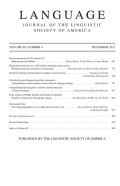
LANGUAGE
Connecting Scholars in the World of LanguageLANGUAGE, published by the Linguistic Society of America, is a premier academic journal dedicated to the rigorous study of linguistic theory and practice. With an ISSN of 0097-8507 and E-ISSN 1535-0665, this esteemed journal has established itself as a leading publication in the field of linguistics since its inception. The journal has consistently maintained a high impact factor, being ranked in the Q1 category in Linguistics and Language for 2023, placing it among the top tier of academic journals. Notably, it also holds impressive Scopus rankings, being positioned at #75 out of 1088 in Arts and Humanities, and #89 out of 1167 in Social Sciences, demonstrating a significant impact and reach in the discipline. While it is not an open-access journal, LANGUAGE provides crucial insights into linguistic research, fostering a vibrant academic community. Spanning years from 1996 to 2024, it continues to be an essential resource for researchers, professionals, and students alike, aiming to advance the understanding of language in its myriad forms and functions.

CogniTextes
Diving Deep into the Cognitive Fabric of Text.CogniTextes (ISSN: 1958-5322) is an esteemed open access journal published by the Association Française de Linguistique Cognitive, dedicated to the exploration of cognitive linguistics and its intersection with textual interpretation. Since its inception in 2007, CogniTextes has been a vital platform for disseminating cutting-edge research that delves into the cognitive processes underlying language use, enhancing our understanding of linguistics in a cognitive context. This journal not only fosters scholarly communication among researchers and professionals but also serves as a valuable resource for students keen on advancing their knowledge in cognitive linguistics. With its headquarters located at the University of Lille 3 in France, CogniTextes encourages contributions from a diverse spectrum of disciplines, thereby enriching the field of linguistics and cognitive studies. The journal's commitment to open access ensures that its findings are readily available to a global audience, thus facilitating knowledge sharing and academic discourse.
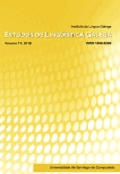
Estudos de Linguistica Galega
Innovating the Discourse in Linguistics and LanguageEstudos de Linguistica Galega, an esteemed journal published by the University of Santiago de Compostela, provides a critical platform for scholars engaged in the vibrant field of linguistics, particularly focusing on the Galician language and its surrounding linguistic phenomena. Launched in 2009, this Open Access journal enables unrestricted dissemination of research, facilitating engagement from a global audience. With an impact factor that positions it within the Q4 quartile in Linguistics and Language, it reveals a strong commitment to advancing the discourse in this niche. It ranks #691 out of 1088 in the Arts and Humanities category, underscoring its relevance in the academic landscape. The journal aims to foster collaboration and innovation among researchers and practitioners, making significant contributions to understanding linguistic diversity and its implications in contemporary society. Located in Santiago de Compostela, Spain, the journal encourages submissions that explore theoretical, empirical, and applied linguistic studies, thereby inviting researchers, professionals, and students to contribute to this growing field.

Lingue e Linguaggio
Navigating the Complexities of Linguistic PhenomenaLingue e Linguaggio, published by SOC ED IL MULINO, is a distinguished academic journal in the field of Linguistics and Language, hailing from Bologna, Italy. With an esteemed Q2 ranking in its category as of 2023, this journal is recognized for its contributions to both the arts and humanities as well as social sciences, achieving notable positions within Scopus rankings. It serves as a vital platform for researchers, practitioners, and students interested in exploring various linguistic phenomena, language dynamics, and theoretical frameworks. Although it operates under a traditional subscription model rather than open access, its comprehensive array of studies and publications provides significant insights and fosters academic discourse. With a publication period extending from 2002 to 2024, Lingue e Linguaggio continues to be a key resource for advancing the understanding of language in contemporary contexts.
JOURNAL OF EAST ASIAN LINGUISTICS
Advancing Knowledge in East Asian LinguisticsJOURNAL OF EAST ASIAN LINGUISTICS, published by SPRINGER, is a premier academic journal that focuses on the rich and diverse linguistic phenomena from East Asia. With an ISSN of 0925-8558 and an E-ISSN of 1572-8560, this journal has steadily contributed to the fields of linguistics and the history and philosophy of science since its inception in 1992. Operating from its base in the Netherlands, the journal is recognized for its impactful research, holding a Q2 category ranking in both the History and Philosophy of Science and Linguistics and Language. It boasts an impressive standing in Scopus rankings, highlighting its relevance and contribution to the academic community with a 66th percentile ranking in Language and Linguistics. The journal is not currently open access, ensuring a rigorous peer-review process that elevates the quality of published articles. By bridging theory and empirical research, the JOURNAL OF EAST ASIAN LINGUISTICS plays a vital role in advancing knowledge in linguistics, making it an essential resource for researchers, professionals, and students interested in East Asian languages and their complexities.

Voprosy Yazykoznaniya
Navigating the Intricacies of Linguistic ScholarshipVoprosy Yazykoznaniya, published by the esteemed Russian Academy of Sciences and the State Academy of Humanities (GAUGN), stands as a leading journal in the field of linguistics and language studies. With an impressive Q2 rank in Linguistics and Language for 2023 and a strong position within Scopus rankings, this journal fosters scholarly dialogue and pushes the boundaries of linguistic research by providing a platform for innovative studies, reviews, and analyses. Although not open access, its publication ensures high academic standards and visibility within the global academic community. Researchers, professionals, and students alike can benefit from the rich insights and diverse perspectives presented in this journal, serving as a vital resource for anyone interested in the intricacies of language and its role in society. Operating since 2009 and continuing to 2024, Voprosy Yazykoznaniya is an essential reference point for contemporary linguistic scholarship in the Russian Federation and beyond.
RUSSIAN LINGUISTICS
Fostering dialogue in the realm of language and culture.RUSSIAN LINGUISTICS is a peer-reviewed academic journal published by Springer, dedicated to advancing the understanding of the Russian language and its interplay with various linguistic frameworks. With a longstanding history that spans from its inception in 1974, the journal encompasses a broad range of topics within the fields of linguistics and language studies, offering valuable insights especially in *Developmental and Educational Psychology* and the intricacies of linguistics at large. Currently ranked in the Q2 quartile for Linguistics and Language, and holding substantial positions within Scopus rankings, RUSSIAN LINGUISTICS serves as an essential resource for researchers, educators, and students alike, fostering dialogue and collaboration within the international linguistic community. The journal notably provides critical access to research findings that enhance the comprehension of Russian linguistics' role in a global context, despite operating under a traditional access model. For those pursuing scholarly excellence, RUSSIAN LINGUISTICS remains a pivotal platform for disseminating innovative research and promoting the study of language.

REVUE DE LINGUISTIQUE ROMANE
Unveiling the Nuances of Romance LanguagesREVUE DE LINGUISTIQUE ROMANE, published by the esteemed SOCIÉTÉ LINGUISTIQUE ROMANE, is a prominent academic journal dedicated to the exploration of Romance linguistics. With its ISSN 0035-1458, the journal plays a significant role in advancing knowledge within the fields of linguistics and the history and philosophy of science. Although it does not currently offer Open Access, it provides critical insights and peer-reviewed research that are indispensable for scholars, educators, and students interested in the nuances of Romance languages. The journal, which has seen converged coverage from 2006 to 2017, and then again from 2019 to 2021, is ranked in the third quartile (Q3) across various categories within Scopus, reflecting its established presence in the academic community. As a vital resource for interdisciplinary studies, REVUE DE LINGUISTIQUE ROMANE is instrumental for those seeking to deepen their understanding of linguistic structures, cultural nuances, and the historical development of Romance languages.
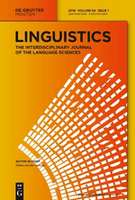
LINGUISTICS
Innovating Linguistic Scholarship Since 1963LINGUISTICS, published by De Gruyter Mouton, stands as a leading journal in the field of linguistics, exemplifying innovation and scholarly rigor. With its roots tracing back to 1963 and a commitment to advancing linguistic research, this journal has consistently achieved Q1 status in both the Linguistics and Language category, marking it among the top-tier journals in the discipline. The journal is indexed with impressive rankings in Scopus, evidenced by its position within the 84th percentile in Language and Linguistics, and 83rd percentile in Social Sciences, demonstrating its significant influence and reach among scholars. Transitioning to Open Access since 2022, LINGUISTICS enhances accessibility and fosters a wider dissemination of knowledge. Published in Germany and backed by a reputable publisher, LINGUISTICS is dedicated to exploring diverse topics in linguistics, making it essential reading for researchers, professionals, and students aiming to stay at the forefront of linguistic scholarship.