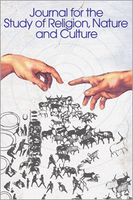
Journal for the Study of Religion Nature and Culture
Scope & Guideline
Fostering Dialogue on the Dynamics of Nature, Culture, and Spirituality
Introduction
Aims and Scopes
- Interdisciplinary Research:
The journal encourages interdisciplinary approaches that combine insights from religious studies, environmental science, cultural anthropology, and social justice to examine the complex interactions between religion and nature. - Engaged Scholarship:
A significant focus of the journal is on engaged scholarship, promoting research that not only analyzes but also advocates for ecological justice and community involvement, particularly in marginalized communities. - Environmental Ethics and Spirituality:
The journal explores various religious perspectives on environmental ethics, spirituality, and the sacredness of nature, highlighting how different traditions contribute to ecological awareness and action. - Cultural Representations of Nature:
It examines how cultural narratives and representations shape human relationships with the natural world, including rituals, myths, and practices that reflect and influence ecological attitudes. - Political Dimensions of Religion and Nature:
The journal addresses the political implications of religious beliefs on environmental policies and movements, particularly how right-wing and nationalist ideologies intersect with environmentalism.
Trending and Emerging
- Right-Wing Environmentalism:
An increasing number of articles are addressing the relationships between right-wing ideologies and environmental movements, particularly how nationalism and religious discourse influence ecological perspectives. - Indigenous Knowledge and Environmental Justice:
There is a growing emphasis on indigenous scholarship and practices, exploring how traditional ecological knowledge contributes to contemporary environmental justice movements. - Community-Engaged Research:
A significant trend towards community-engaged research is evident, with scholars advocating for research methodologies that involve local communities in ecological advocacy and scholarship. - Mother Earth and Ecospirituality:
The concept of 'Mother Earth' as a spiritual and ethical framework is gaining attention, reflecting a resurgence in ecospirituality that emphasizes the sacredness of the earth in various cultural contexts. - Intersections of Religion and Climate Action:
The journal increasingly highlights the role of religious communities in climate action, focusing on advocacy, activism, and the moral imperatives that drive faith-based environmental initiatives.
Declining or Waning
- Traditional Religious Practices:
There has been a noticeable decrease in the exploration of traditional religious practices that engage with nature, suggesting a shift towards contemporary issues and movements rather than historical or indigenous practices. - Secular Environmentalism:
The intersection of secular environmentalism with religious discourse appears to be waning, as the journal increasingly focuses on religious perspectives rather than secular approaches to ecological issues. - Single-Faith Perspectives:
There is a reduction in papers solely focused on a single faith's perspective on nature, indicating a trend towards more comparative and interdisciplinary studies that encompass multiple religions and spiritualities.
Similar Journals

Trumpeter-Journal of Ecosophy
Advancing Ecological Thought for a Sustainable FutureTrumpeter-Journal of Ecosophy, published by Athabasca University Press, is a distinguished journal dedicated to the interdisciplinary study of ecological and philosophical concepts. With its ISSN of 0832-6193, this journal fosters scholarly discourse on issues such as environmental ethics, sustainability, and the interconnections between human societies and the natural world. Although it does not operate under an open-access model, the journal aims to benefit researchers, professionals, and students alike, providing insights and critical perspectives that are vital in a rapidly evolving ecological landscape. Trumpeter embraces a unique role in the field of ecosophy, challenging contributors to explore fresh ideas and innovative solutions to pressing ecological dilemmas, and thus establishing itself as an essential resource for advancing knowledge in this important area of study.
JOURNAL OF CONTEMPORARY HISTORY
Connecting Cultural Studies with Historical ContextJOURNAL OF CONTEMPORARY HISTORY, published by SAGE PUBLICATIONS LTD, is a premier academic journal dedicated to the exploration of modern historical narratives and contemporary societal issues. Established in 1966, this journal has influenced scholarly discourse through a rich repository of research, analyses, and critical reflections, providing invaluable insights into cultural studies, sociology, and political science. With an impressive Q1 ranking in History and a notable Q2 ranking in Cultural Studies for 2023, it stands out in the academic community, ensuring rigorous peer-reviewed content that meets the highest scholarly standards. The journal is accessible through conventional subscriptions, reflecting its long-standing commitment to academic excellence. Based in the United Kingdom, it continues to serve as an indispensable resource for researchers, professionals, and students alike, bridging the gap between historical context and contemporary relevance.

Theology
Unraveling the Complexities of Faith in Modern SocietyTheology is a distinguished academic journal published by SAGE Publications Ltd, focusing on the dynamic intersection of faith, philosophy, and ethical discourse within the field of Religious Studies. Established in 1920, the journal provides a platform for rigorous scholarly dialogue and critical analysis, contributing significantly to contemporary debates and research in theology. With an impressive Scopus rank of 302 out of 644 in the genre of Arts and Humanities, it situates itself within the Q3 quartile in its field for 2023, demonstrating its relevance and scholarly impact. The journal features diverse research articles, reviews, and discussions, aiming to engage both emerging and established voices in theology. While it does not currently offer Open Access options, it remains a vital resource for researchers, professionals, and students seeking in-depth knowledge and insights into religious thought and practice. With a publication history spanning multiple decades and a clear commitment to advancing theological inquiry, Theology is an essential read for anyone vested in the ongoing conversations that shape our understanding of faith in an ever-evolving world.
Environmental Humanities
Transforming Environmental Discourse Through Interdisciplinary InsightEnvironmental Humanities, published by DUKE UNIVERSITY PRESS, is a premier journal that has established itself as a leading platform for interdisciplinary scholarship at the intersection of the environment and the humanities. With its open access framework since 2012, the journal fosters widespread dissemination of critical research that integrates perspectives from Anthropology, Ecology, and the Social Sciences. Currently holding impressive Q1 rankings in both Anthropology and Social Sciences for 2023, along with notable Q2 standings in Environmental Science fields, this journal provides a vital forum for innovative explorations of how human culture shapes and is shaped by environmental challenges. Situated in the United States, the journal encourages authors and thinkers to contribute to ongoing discussions about sustainability, ethics, and the cultural dimensions of environmental issues, making it an essential resource for researchers, professionals, and students alike. With a commitment to high-quality scholarship, Environmental Humanities plays a crucial role in advancing knowledge and understanding in a rapidly evolving field.

LIBERTE
Illuminating the Intersection of Art and ThoughtLIBERTE is a distinguished academic journal that serves as a platform for critical thinking and scholarly discourse across various fields including Literature and Literary Theory, Philosophy, Sociology and Political Science, and Visual Arts and Performing Arts. Established in Canada and published by LIBERTE, this journal aims to foster intellectual exchange and explore the nuances of cultural and social narratives. Although it currently falls in the Q4 quartile across its categories, it is dedicated to advancing the conversation in the arts and humanities, providing a rich resource for researchers, educators, and students alike. With an ISSN of 0024-2020 and an active publication cycle running from 2002 to 2024, LIBERTE welcomes contributions that challenge prevailing ideologies and reflect innovative perspectives. While the journal is not open access, its value in promoting academic inquiry within its communities cannot be overstated.

STUDIES IN ROMANTICISM
Exploring the Depths of Romantic LiteratureSTUDIES IN ROMANTICISM is a prestigious academic journal published by Johns Hopkins University Press, specializing in the field of literature and literary theory. With an ISSN of 0039-3762 and an E-ISSN of 2330-118X, this journal has been a significant contributor to the scholarship on romantic literature since its inception in 1964. It currently holds a strong Q2 ranking in the Literature and Literary Theory category and ranks #351 out of 1106 in Scopus, placing it in the 68th percentile among its peers. Studies in Romanticism focuses on a broad range of topics within the romantic literary tradition, fostering scholarly dialogue and innovative research. Though it does not operate under an open access model, its articles are invaluable for researchers, academics, and students alike, providing critical insights and analyses that deepen the understanding of romantic literature's relevance and impact. With its esteemed history and commitment to excellence in literary scholarship, this journal continues to be a vital resource in the field.
ISLE-Interdisciplinary Studies in Literature and Environment
Unveiling Stories that Shape Our Ecological Understanding.ISLE-Interdisciplinary Studies in Literature and Environment is a renowned journal published by Oxford University Press Inc, focusing on the dynamic intersections between literary studies and environmental discourse. With ISSN 1076-0962 and E-ISSN 1759-1090, it serves as a critical platform for scholars, practitioners, and students interested in exploring how literature shapes and reflects our understanding of the environment. The journal has established its importance in the field, evidenced by its exceptional ranking of Q1 in Literature and Literary Theory, where it occupies the 88th percentile, while also contributing to discussions in Environmental Science, albeit with a less prominent Q4 ranking. Since its inception in 1993, and with coverage continuing through 2024, ISLE invites submissions of innovative research that deepen our collective insights into both literature and ecological concerns. While currently lacking Open Access options, the journal remains a valued resource for those dedicated to enriching the dialogue between the literary arts and environmental studies.
RURAL SOCIOLOGY
Advancing Knowledge in Rural SociologyRural Sociology, an esteemed journal published by Wiley, serves as a pivotal platform for the dissemination of research within the Sociology and Political Science fields, featuring the ISSN 0036-0112 and E-ISSN 1549-0831. With a commendable impact factor and esteemed ranking as Q1 in the 2023 category quartiles for Sociology and Political Science, this journal stands out, placed in the top 85th percentile in its domain according to Scopus metrics. Since its inception in 1978, Rural Sociology has provided scholars and practitioners with critical insights into rural communities, social structures, and the political frameworks that shape them, thus fostering a deeper understanding of these often-overlooked areas. The journal is essential reading for those dedicated to advancing knowledge in rural studies, with a diverse range of articles that inform policy, practice, and academic scholarship. To access the latest research and contribute to ongoing conversations in the field, visit the journal's page on Wiley's platform.
Letras Verdes
Cultivating Knowledge at the Intersection of Nature and NarrativeLetras Verdes, published by the FAC Latinoamericana Ciencias Sociales (FLACSO) in Ecuador, is a distinguished academic journal that focuses on environmental humanities and literature's intersection with ecological issues. With an ISSN of 1390-6631 and an E-ISSN of 1390-6631, this Open Access journal has been disseminating knowledge since 2008, encouraging wide accessibility to research findings. Although currently without an H-Index, Letras Verdes plays a vital role in promoting interdisciplinary dialogue among scholars, professionals, and students interested in sustainability, environmental ethics, and cultural studies. Its commitment to open access not only enhances visibility but also fosters a global exchange of ideas, making it an essential platform for those seeking to explore the complex narratives surrounding environmental challenges.
Feminist Theology
Challenging Narratives, Transforming TheologyFeminist Theology, an esteemed journal published by SAGE Publications Ltd, stands at the forefront of the interplay between gender studies and religious discourse since its inception in 1992. With a commitment to exploring the dimensions of faith through a feminist lens, this journal addresses the critical intersections of gender, religion, and spirituality. Based in the United Kingdom, it boasts an impactful presence, reflected in its Scopus ranks where it holds a respectable position in both Gender Studies and Religious Studies categories. This journal, categorized in the Q3 tier for Gender Studies and Q2 for Religious Studies as of 2023, invites researchers, professionals, and students alike to engage with its rich content that not only challenges traditional narratives but also contributes to contemporary academic discourse. Although not an open-access journal, it ensures that its publications remain accessible for scholarly advancement, fostering a community of inquiry that is essential for the development of feminist theological perspectives.