
Journal of Theoretical and Applied Mechanics
Scope & Guideline
Championing Open Access to Mechanical Insights
Introduction
Aims and Scopes
- Theoretical Mechanics:
Contributions that develop or refine theoretical models in mechanics, including but not limited to dynamics, statics, and continuum mechanics. - Applied Mechanics:
Research focused on practical applications of mechanical principles in engineering, such as structural analysis, fluid dynamics, and materials behavior. - Numerical Methods and Simulations:
Papers that employ computational techniques to solve complex mechanical problems, including finite element analysis, computational fluid dynamics, and optimization. - Material Behavior and Mechanics:
Studies investigating the mechanical properties, failure mechanisms, and performance of various materials under different conditions. - Vibration and Dynamics:
Research centered on the study of vibrations in mechanical systems, including damping, resonance, and dynamic stability. - Biomechanics and Biomechanical Engineering:
Research that applies mechanical principles to biological systems, focusing on the interaction between mechanical forces and biological tissues. - Multi-Scale and Multi-Physics Modeling:
Papers that address the challenges of modeling phenomena across different scales and physical interactions, integrating mechanics with other fields such as thermodynamics and electromagnetism.
Trending and Emerging
- Advanced Computational Techniques:
There is a growing trend towards the use of sophisticated computational methods, including machine learning and artificial intelligence, for solving complex mechanical problems. - Smart Materials and Structures:
Research focusing on smart materials, which can respond to environmental changes or stimuli, has gained traction, reflecting broader trends in materials science. - Sustainability and Green Engineering:
Papers addressing sustainable practices in engineering and mechanics, including energy efficiency and eco-friendly materials, are increasingly being prioritized. - Biomechanics and Health Applications:
The integration of biomechanics into healthcare, such as in prosthetics and rehabilitation engineering, is seeing significant growth, driven by advances in technology and an aging population. - Nonlinear Dynamics and Chaos Theory:
Emerging interest in the complex behaviors of mechanical systems under nonlinear conditions, including bifurcations and chaos, is becoming more prevalent in recent publications. - Data-Driven Approaches in Mechanics:
An increase in research utilizing big data analytics and statistical methods to predict behaviors and optimize mechanical systems is notable, reflecting a broader trend in engineering.
Declining or Waning
- Traditional Structural Analysis:
While structural analysis remains important, there has been a noticeable decrease in papers focusing solely on classical methods without the integration of modern computational techniques. - Static Systems Modeling:
Research on purely static systems is becoming less prominent, with more emphasis shifting towards dynamic and time-dependent analyses. - Basic Fluid Mechanics:
Basic studies in fluid mechanics without significant application or computational advancements are less frequently published, as the field moves towards more complex interactions. - Conventional Material Testing:
Papers solely focused on conventional material testing methods are declining, as more innovative and computational techniques are being favored. - Single-Disciplinary Approaches:
Research that does not integrate interdisciplinary perspectives is becoming less common, as the journal encourages the combination of mechanics with other scientific disciplines.
Similar Journals
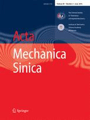
ACTA MECHANICA SINICA
Pioneering Insights in Computational MechanicsACTA MECHANICA SINICA is a prestigious journal published by SPRINGER HEIDELBERG that has been a cornerstone in the field of mechanical engineering and computational mechanics since its inception in 1985. Based in Germany, this leading publication is internationally recognized for its high impact, holding a Q1 ranking in both Computational Mechanics and Mechanical Engineering as of 2023. It is positioned prominently within the academic community, evidenced by its respectable Scopus rankings—#21 in Computational Mechanics and #159 in Mechanical Engineering, both within the 76th percentile. Researchers and professionals alike turn to ACTA MECHANICA SINICA for cutting-edge research, innovative methodologies, and insights that drive advancements in the discipline. Although the journal is not open access, its rigorous peer-review process ensures the publication of high-quality, impactful research that is essential for scholars and practitioners aiming to stay at the forefront of mechanical engineering advancements.

INTERNATIONAL APPLIED MECHANICS
Connecting Scholars to the World of Applied MechanicsINTERNATIONAL APPLIED MECHANICS, published by Springer, is a pivotal journal within the realm of Mechanical Engineering and Mechanics of Materials. With an ISSN of 1063-7095 and an E-ISSN of 1573-8582, this journal serves as a vital resource for researchers and professionals seeking to stay at the forefront of applied mechanics from 1992 to 2024. Although currently categorized in Q4, with a Scopus ranking reflecting its evolving impact (479 out of 672 in Mechanical Engineering and 303 out of 398 in Mechanics of Materials), the journal continually strives to publish innovative research that bridges theoretical concepts and practical applications in mechanics. Notably, it does not offer Open Access, allowing for a focused distribution amongst scholars and institutions. The journal's contributions are essential for advancing knowledge, fostering collaboration, and enhancing education in the diverse fields of engineering mechanics.
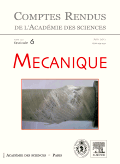
COMPTES RENDUS MECANIQUE
Pioneering Insights in Mechanics: Open Access for AllCOMPTES RENDUS MECANIQUE, an esteemed journal published by the Académie des Sciences, serves as a critical platform for cutting-edge research in the fields of mechanics and materials science. With an ISSN of 1631-0721 and an E-ISSN of 1873-7234, this open-access journal has gained visibility since its transition to open access in 2020, encouraging a broader dissemination of knowledge within the community. As of 2023, it holds a Q3 ranking in both the Materials Science (Miscellaneous) and Mechanics of Materials categories, according to category quartiles. Given its Scopus rankings—299th out of 398 in Mechanics of Materials and 360th out of 463 in General Materials Science—it provides valuable insights and advancements in these disciplines. Located in Paris, France, the journal caters to researchers, professionals, and students alike, showcasing a diverse range of studies and developments that push the boundaries of knowledge in mechanics. Through its accessible format, COMPTES RENDUS MECANIQUE not only highlights significant findings but also promotes collaboration and innovation across the global scientific community.

Journal of the Serbian Society for Computational Mechanics
Fostering Collaboration in Computational ResearchJournal of the Serbian Society for Computational Mechanics, published by the Serbian Society for Computational Mechanics, is a vital platform for advancing research and knowledge in the field of computational mechanics. Established in 2012, this journal serves the academic community by providing a forum for innovative studies, methodologies, and applications within computational mechanics, presenting valuable insights for researchers, professionals, and students alike. With an ISSN of 1820-6530 and a ranking of Q4 in Computational Mechanics, it carries an essential influence in the engineering realm, despite its current rank of 71 out of 89. The journal's commitment to scholarly excellence aims to foster collaboration and encourage interdisciplinary research, making it an important resource for those invested in the evolving landscape of computational methodologies. Although the journal currently does not offer Open Access options, it remains dedicated to disseminating knowledge that will resonate within the local and global scientific community.
International Journal of Mechanics and Materials in Design
Unveiling Insights in Mechanics and Materials for a Sustainable FutureInternational Journal of Mechanics and Materials in Design is a leading publication in the field of mechanical engineering and materials science, published by Springer Heidelberg. With an impressive impact factor, it holds esteemed rankings as Q1 in both Mechanical Engineering and Mechanics of Materials, and Q2 in Materials Science for the year 2023, solidifying its reputation as a significant contributor to the advancement of design methodologies. The journal focuses on the intersection of mechanics and materials, encouraging innovative research that addresses contemporary challenges faced in engineering disciplines. Researchers and professionals alike can benefit from accessing cutting-edge studies contributing to various applications, making it an invaluable resource for staying informed in this dynamic field. While the journal operates under a subscription model, its comprehensive reviews and high-quality original research foster a deeper understanding of material behavior and design principles, thus supporting the academic growth and professional development of its readers.
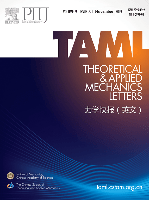
Theoretical and Applied Mechanics Letters
Championing Open Access to Transformative Engineering DiscoveriesTheoretical and Applied Mechanics Letters, published by ELSEVIER, stands as a premier journal in the field of engineering and applied mechanics, recognized for its rigorous peer-reviewed articles that advance theoretical and practical frameworks. With an impressive open access policy established in 2015, the journal enhances global accessibility to cutting-edge research across a range of disciplines including Aerospace, Civil, Mechanical, and Biomedical Engineering, along with Computational Mechanics and Ocean Engineering. The journal boasts an enviable position in the academic landscape, achieving a Q1 rank in several categories as of 2023, while being cited among the top percentiles in Scopus Ranks, specifically ranking #25 in Aerospace Engineering and #15 in Computational Mechanics. The journal aims to foster innovation by providing a platform for scholars and professionals to disseminate their findings, thereby bridging the gap between theoretical research and practical applications. By promoting a diverse range of topics and methodologies, Theoretical and Applied Mechanics Letters not only contributes to the advancement of engineering disciplines but also supports the global academic community in exploring sustainable and impactful engineering solutions.
Theoretical and Applied Mechanics
Advancing Knowledge in Applied Mathematics and Engineering.Theoretical and Applied Mechanics is a premier open-access journal published by the Serbian Society of Mechanics, dedicated to advancing the fields of Applied Mathematics, Computational Mechanics, and Mechanical Engineering. Since its inception, this journal has provided a vital platform for researchers and practitioners to publish high-quality, peer-reviewed articles that contribute to our understanding of theoretical concepts and their practical implications in mechanics. With an ISSN of 1450-5584 and a growing international readership, Theoretical and Applied Mechanics aims to bridge the gap between theory and application, making significant strides in the engineering community. Although the journal is currently ranked in the Q4 category across its scopes, it encourages innovative research that fosters interdisciplinary collaboration. For those interested in exploring cutting-edge developments in the mechanics field, this journal offers an invaluable resource for researchers, professionals, and students alike.

Mechanika
Connecting Global Minds Through Open AccessMechanika is a prominent open-access journal published by Kaunas University of Technology in Lithuania, with an ISSN of 1392-1207 and E-ISSN 2029-6983. Since its transition to open access in 2007, the journal has successfully facilitated the dissemination of vital research findings within the field of condensed matter physics, carving a niche for itself in a competitive academic landscape. Despite currently being categorized in the Q4 quartile for its impact in this area, Mechanika aims to foster advancements by providing a platform for innovative studies, reviews, and applications. As researchers, professionals, and students engage with its content, they will find an array of studies that push the boundaries of understanding in mechanics and related disciplines. Situated in the vibrant academic milieu of Kaunas, Mechanika is committed to quality, accessibility, and fostering scientific dialogue among the global academic community.
MECHANICS RESEARCH COMMUNICATIONS
Connecting Theory and Application in EngineeringMECHANICS RESEARCH COMMUNICATIONS, published by PERGAMON-ELSEVIER SCIENCE LTD, is a prestigious journal in the fields of Civil and Structural Engineering, Condensed Matter Physics, Materials Science, and Mechanical Engineering. With an ISSN of 0093-6413 and E-ISSN of 1873-3972, it has made significant contributions to the understanding and advancement of mechanics and materials since its inception in 1974. The journal is well-regarded in academia, holding a Q2 ranking across multiple categories as of 2023, and ranking in the 65th percentile for Mechanical Engineering. Researchers and professionals benefit from its peer-reviewed content, which includes a wide range of articles from fundamental research to applied technological developments. Although currently not an open access journal, it remains a vital resource for those focused on innovating within the engineering and materials science domains. With its established legacy, MECHANICS RESEARCH COMMUNICATIONS continues to shape the discourse in mechanics and engineering, making it essential reading for students and practitioners alike.
International Journal of Applied Mechanics
Empowering Innovation in Mechanical EngineeringThe International Journal of Applied Mechanics, published by World Scientific Publishing Co Pte Ltd, is a premier platform that serves the fields of materials science, mechanical engineering, and mechanics of materials. Located in Singapore, this journal has established itself as a crucial resource for researchers, professionals, and students, with its convergence of scholarly work from 2009 to 2024. Ranked in the Q2 category across notable disciplines, including Materials Science, Mechanical Engineering, and Mechanics of Materials, it reflects a strong commitment to publishing high-quality research that pushes the boundaries of knowledge in applied mechanics. Despite being a non-open access journal, its successful Scopus rankings, including an impressive rank of #151 in Mechanical Engineering, signify its substantial impact and recognition within the academic community. This journal not only aims to disseminate pioneering research but also to foster collaboration and innovation in the rapidly evolving landscape of applied mechanics.