
Journal of Computational Applied Mechanics
Scope & Guideline
Unlocking Insights in Computational Applied Mechanics
Introduction
Aims and Scopes
- Computational Mechanics:
The journal publishes research on computational methods in mechanics, including finite element analysis, boundary element methods, and mesh-free techniques, aimed at solving real-world engineering problems. - Material Behavior and Analysis:
A significant focus is on the behavior of various materials under different loading conditions, including functionally graded materials, composites, and nanomaterials, exploring their mechanical properties and performance. - Dynamic and Stability Analysis:
Research related to the dynamic response, stability, and vibration analysis of structures and materials is a core area, addressing issues such as buckling, vibration modes, and stability under various conditions. - Thermal and Fluid Dynamics:
The journal covers studies on thermal analysis and fluid dynamics, particularly in relation to nanofluids and heat transfer in complex systems, highlighting the interactions between thermal and mechanical phenomena. - Innovative Technologies and Applications:
Emphasis on the application of novel technologies such as machine learning and advanced simulation techniques in mechanical systems, aiming to improve design and operational efficiency.
Trending and Emerging
- Functionally Graded Materials (FGMs):
There is a rising trend in research on functionally graded materials, particularly their mechanical behavior, stability, and applications in advanced engineering solutions, indicating a growing interest in tailored material properties. - Machine Learning and AI Applications:
The integration of machine learning and artificial intelligence in mechanical systems analysis and design is emerging as a significant theme, highlighting the potential for data-driven approaches to enhance predictive modeling and optimization. - Multiscale and Multiphysics Modeling:
Research focusing on multiscale and multiphysics modeling, which considers interactions between different physical phenomena at various scales, is becoming increasingly prominent, reflecting the complexity of real-world engineering challenges. - Nanotechnology and Nanomaterials:
There is a notable increase in studies related to nanotechnology and the behavior of nanomaterials, particularly in composites and their applications in various engineering fields, showcasing the relevance of nanoscale phenomena in practical applications. - Advanced Computational Techniques:
Emerging computational techniques, such as fractional calculus and hybrid analytical-numerical methods, are gaining attention, indicating a shift towards more sophisticated approaches for solving complex mechanical problems.
Declining or Waning
- Traditional Structural Analysis:
There has been a noticeable decrease in papers focusing exclusively on traditional structural analysis methods without incorporation of advanced computational techniques, suggesting a shift towards more innovative approaches. - Basic Fluid Mechanics:
Papers centered solely on classical fluid mechanics principles are becoming less common, as the journal increasingly favors studies that integrate fluid dynamics with advanced materials or computational methods. - Static Analysis without Dynamic Considerations:
Research that focuses only on static analysis without addressing dynamic effects or stability concerns is declining, reflecting a growing recognition of the importance of dynamic interactions in mechanical systems.
Similar Journals
JOURNAL OF ELASTICITY
Elevating Knowledge in Elasticity Across DisciplinesJOURNAL OF ELASTICITY is a prestigious peer-reviewed journal dedicated to the study and advancement of the field of elasticity and its numerous applications across various disciplines. Published by SPRINGER, and located in the Netherlands, this journal has been a key resource since its inception in 1971, providing critical insights and developments up through 2024. With a commendable impact factor and categorized within the Q2 quartile in areas such as Materials Science, Mechanical Engineering, and Mechanics of Materials, the journal maintains a significant standing in the academic community. Researchers and professionals will find a wealth of knowledge through advanced theoretical and experimental studies published within its pages, contributing to both foundational understanding and practical applications. While currently not an open access publication, the JOURNAL OF ELASTICITY remains an essential platform for innovative research and discussions that shape the future of mechanical sciences.
COMPUTER METHODS IN APPLIED MECHANICS AND ENGINEERING
Unveiling New Dimensions in Engineering through Computation.COMPUTER METHODS IN APPLIED MECHANICS AND ENGINEERING, published by Elsevier Science SA, is a premier journal that has significantly contributed to the fields of computational mechanics, computer science applications, mechanical engineering, and the mechanics of materials since its inception in 1972. With an ISSN of 0045-7825 and an E-ISSN of 1879-2138, this journal is recognized for its rigorous peer-review process and is consistently ranked in the Q1 quartile across multiple categories, including Computational Mechanics and Mechanical Engineering. Its impressive Scopus rankings place it in the top tiers of its field, with a percentile ranking of 98th in Computational Mechanics. Researchers, professionals, and students will find the journal's comprehensive scope and high-quality articles invaluable for advancing their knowledge and practices at the intersection of engineering and computation. Although not an open-access journal, its impactful contributions to both theoretical and applied research make it an essential resource for anyone involved in these dynamic fields.
International Journal of Applied Mechanics
Shaping the Future of Applied Mechanics ScholarshipThe International Journal of Applied Mechanics, published by World Scientific Publishing Co Pte Ltd, is a premier platform that serves the fields of materials science, mechanical engineering, and mechanics of materials. Located in Singapore, this journal has established itself as a crucial resource for researchers, professionals, and students, with its convergence of scholarly work from 2009 to 2024. Ranked in the Q2 category across notable disciplines, including Materials Science, Mechanical Engineering, and Mechanics of Materials, it reflects a strong commitment to publishing high-quality research that pushes the boundaries of knowledge in applied mechanics. Despite being a non-open access journal, its successful Scopus rankings, including an impressive rank of #151 in Mechanical Engineering, signify its substantial impact and recognition within the academic community. This journal not only aims to disseminate pioneering research but also to foster collaboration and innovation in the rapidly evolving landscape of applied mechanics.
EUROPEAN JOURNAL OF MECHANICS A-SOLIDS
Shaping the Future of Mechanical EngineeringThe EUROPEAN JOURNAL OF MECHANICS A-SOLIDS, published by ELSEVIER and based in the Netherlands, stands as a premier outlet for research in the field of solid mechanics. With an impressive track record since its inception, the journal has been indexed in prestigious categories including Materials Science, Mechanical Engineering, and Mathematical Physics, achieving Q1 quartile status across these domains in 2023. This recognition underscores the journal's impact, with Scopus rankings placing it in the top echelon of its respective fields, such as #39 in General Physics and Astronomy and #116 in Mechanical Engineering, demonstrating its significance and wide-reaching influence in the academic community. Scientists, engineers, and researchers are encouraged to submit their cutting-edge findings in areas related to solid mechanics, contributing to the journal's mission of advancing knowledge and innovation in this vital discipline. The journal's comprehensive scope allows for interdisciplinary engagement, making it an essential resource for professionals and students alike seeking to explore the latest developments in mechanics of materials and related areas.
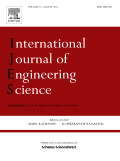
INTERNATIONAL JOURNAL OF ENGINEERING SCIENCE
Shaping the Future of Engineering Through Rigorous ResearchInternational Journal of Engineering Science, published by Pergamon-Elsevier Science Ltd in the United Kingdom, stands as a premier platform for pioneering research in the diverse fields of engineering and materials science. Since its inception in 1963, this journal has consistently demonstrated its commitment to advancing academic discourse, maintaining an impressive trajectory that positions it in the Q1 category across multiple engineering disciplines including Mechanical Engineering and Mechanics of Materials as of 2023. With notable Scopus rankings—placing it in the top 5% percentile for Mechanical Engineering and related fields—this journal attracts high-quality, impactful research designed for both industry practitioners and academic scholars. Although it does not currently offer Open Access options, its readership is enriched by comprehensive peer-reviewed articles, fostering a deeper understanding of complex engineering problems and innovative solutions. The International Journal of Engineering Science continues to be an invaluable resource for researchers, professionals, and students committed to pushing the boundaries of knowledge in engineering and materials science.
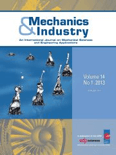
Mechanics & Industry
Exploring the Intersection of Mechanics and IndustryMechanics & Industry, published by EDP SCIENCES S A, is a prominent open access journal dedicated to the fields of Industrial and Manufacturing Engineering, Materials Science, and Mechanical Engineering. Since its establishment in 2004, the journal has served as a crucial platform for disseminating innovative research and developments in mechanics, catering to a diverse audience of researchers, professionals, and students worldwide. With an ISSN of 2257-7777 and an E-ISSN of 2257-7750, the journal is indexed in Scopus and has achieved a respectable Q3 quartile ranking across its categories for 2023. Mechanics & Industry emphasizes the importance of collaborative research and the sharing of knowledge, underpinning advancements in technology and industry practices. The journal's commitment to open access ensures that research findings are available to all, promoting sustainability and innovation within the global engineering community. Located in Les Ulis, France, this journal continues to uphold high standards of scholarly excellence and relevance in an ever-evolving industrial landscape.
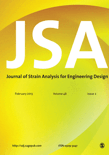
JOURNAL OF STRAIN ANALYSIS FOR ENGINEERING DESIGN
Exploring the Mechanics of Tomorrow’s Engineering Challenges.The Journal of Strain Analysis for Engineering Design, published by SAGE Publications Ltd, is a prestigious academic journal that has been at the forefront of *engineering and applied mathematics* research since its inception in 1965. With a focus on the intricate analysis of strain in engineering design, this journal serves as a vital resource for researchers and professionals seeking to push the boundaries of understanding in mechanics and materials engineering. As of 2023, it enjoys a respectable ranking in its respective fields, including Q2 in *Mechanical Engineering* and *Mechanics of Materials*, and Q3 in *Applied Mathematics* and *Modeling and Simulation*, reflecting its significant contribution to the academic community and relevance in practical applications. Although it is not an open-access journal, its rigorous peer-review process ensures the dissemination of high-quality research. The journal provides a platform for innovative ideas and methodologies, fostering advancements in engineering design and analysis vital for both academia and industry. By bridging theoretical foundations with real-world applications, the Journal of Strain Analysis for Engineering Design remains an essential publication for those dedicated to addressing the complexities of modern engineering challenges.
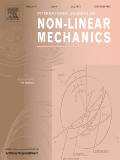
INTERNATIONAL JOURNAL OF NON-LINEAR MECHANICS
Transforming Insights into Engineering InnovationsWelcome to the International Journal of Non-Linear Mechanics, a premier publication dedicated to advancing the understanding of non-linear behavior in mechanical systems. Published by Pergamon-Elsevier Science Ltd, this esteemed journal has been an influential platform since its inception in 1966 and continues its rigorous exploration of specialized topics until 2024. With a strong focus on applied mathematics, mechanical engineering, and mechanics of materials, it holds an impressive Q1 ranking in both mechanical engineering and mechanics of materials, and a Q2 ranking in applied mathematics, underscoring its significance in these fields. Notably, it ranks 81st out of 635 in Applied Mathematics, highlighting its vital contribution to the literature. The journal's commitment to quality research is reflected in its indexing in Scopus and its prominent impact within the academic community. Although not an open access journal, it remains accessible to researchers and professionals seeking cutting-edge innovations and breakthroughs in non-linear mechanics. We invite scholars, practitioners, and students alike to engage with the pivotal research published in this journal as they advance their own works in the dynamic landscape of engineering and applied sciences.
MECCANICA
Driving Progress in Mechanical Engineering and PhysicsMECCANICA, an esteemed journal published by Springer, stands at the forefront of research in the fields of Condensed Matter Physics, Mechanical Engineering, and Mechanics of Materials. Established in 1966 and continuing through 2024, this journal provides a robust platform for the dissemination of innovative research and advancements in these increasingly interconnected domains. With an impressive 2023 ranking placing it in the Q2 category across multiple fields, MECCANICA boasts a Scopus rank of #198 in Mechanical Engineering, #150 in Condensed Matter Physics, and #141 in Mechanics of Materials, highlighting its significance and influence within the scholarly community. The journal aims to foster dialogue among researchers, professionals, and students, facilitating the exchange of cutting-edge ideas and methodologies crucial for overcoming contemporary engineering and physics challenges. Readers can access a wealth of knowledge through its comprehensive articles, and while it does not currently offer open access, the journal remains instrumental in shaping the future of engineering and physical sciences.
International Journal of Mechanics and Materials in Design
Unveiling Insights in Mechanics and Materials for a Sustainable FutureInternational Journal of Mechanics and Materials in Design is a leading publication in the field of mechanical engineering and materials science, published by Springer Heidelberg. With an impressive impact factor, it holds esteemed rankings as Q1 in both Mechanical Engineering and Mechanics of Materials, and Q2 in Materials Science for the year 2023, solidifying its reputation as a significant contributor to the advancement of design methodologies. The journal focuses on the intersection of mechanics and materials, encouraging innovative research that addresses contemporary challenges faced in engineering disciplines. Researchers and professionals alike can benefit from accessing cutting-edge studies contributing to various applications, making it an invaluable resource for staying informed in this dynamic field. While the journal operates under a subscription model, its comprehensive reviews and high-quality original research foster a deeper understanding of material behavior and design principles, thus supporting the academic growth and professional development of its readers.