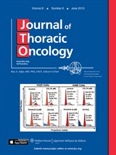
Journal of Thoracic Oncology
Scope & Guideline
Advancing the Frontiers of Thoracic Cancer Research
Introduction
Aims and Scopes
- Lung Cancer Research:
The journal covers a wide spectrum of lung cancer research, including molecular biology, genetics, treatment outcomes, and clinical trials for various lung cancer subtypes. - Mesothelioma Studies:
Research related to malignant pleural mesothelioma, including treatment protocols, clinical trials, and epidemiology, is a significant focus area. - Innovative Therapeutics:
The journal emphasizes studies on novel therapeutic approaches, including targeted therapies, immunotherapies, and combinations thereof, particularly in advanced stages of lung cancer. - Patient Outcomes and Quality of Life:
Research that investigates the impact of treatments on patient outcomes, including survival rates, quality of life, and health-related quality of life assessments. - Diagnostics and Biomarkers:
The journal publishes studies on the development and validation of diagnostic tools and biomarkers that aid in early detection and personalized treatment strategies for lung cancer. - Health Disparities and Epidemiology:
Exploration of health disparities in lung cancer diagnosis and treatment across different demographics and geographic locations. - Radiation Oncology:
Research focusing on the role of radiotherapy in lung cancer treatment, including techniques, dosimetry, and outcomes related to radiation therapy.
Trending and Emerging
- Precision Medicine and Genomic Targeting:
There is an increased focus on precision medicine, with studies exploring the genomic landscape of lung cancer and how specific mutations can guide targeted therapies. - Immunotherapy and Combination Therapies:
Research on immunotherapeutic approaches, particularly combinations of immunotherapy with chemotherapy or targeted therapies, is gaining momentum as a primary treatment strategy. - Real-World Evidence:
There is a growing trend towards publishing real-world evidence studies that assess treatment patterns, outcomes, and patient demographics outside of clinical trial settings. - Artificial Intelligence in Oncology:
The application of artificial intelligence and machine learning for predicting treatment outcomes, analyzing imaging data, and enhancing diagnostic accuracy is emerging as a significant theme. - Health Equity and Disparities:
Research addressing health disparities and the social determinants of health in lung cancer outcomes is increasingly prioritized, reflecting a broader commitment to equitable healthcare. - Patient-Reported Outcomes:
Studies examining patient-reported outcomes, quality of life, and the psychological impacts of lung cancer treatment are becoming more prevalent, emphasizing patient-centered care. - Liquid Biopsy and Minimal Residual Disease Monitoring:
The use of liquid biopsy techniques for early detection, monitoring treatment response, and assessing minimal residual disease is a rapidly emerging area of interest.
Declining or Waning
- Traditional Chemotherapy Studies:
Research focusing solely on traditional chemotherapy regimens has decreased, as there is a growing emphasis on targeted therapies and immunotherapy. - Basic Science without Clinical Correlation:
Studies that delve into basic science without clear clinical applications or implications are becoming less frequent, as the journal prioritizes translational research. - Single-Institution Studies:
There is a noticeable decline in single-institution studies, with more emphasis on multi-center trials and studies that provide broader data sets for analysis. - Non-Small Cell Lung Cancer (NSCLC) Generalities:
General reviews or studies on NSCLC without a specific focus on molecular characteristics, treatment responses, or innovative approaches are less common. - Epidemiological Studies without Intervention:
Epidemiological studies that do not propose specific interventions or actionable insights are waning, as the journal favors studies that lead to clinical advancements.
Similar Journals
BREAST CANCER RESEARCH AND TREATMENT
Fostering Collaboration for Better OutcomesBreast Cancer Research and Treatment, published by Springer, stands as a pivotal journal within the domains of Cancer Research and Oncology, exemplified by its impressive Q2 and Q1 quartile rankings, respectively, in the 2023 category rankings. Since its inception in 1981, this journal has provided a vital platform for disseminating cutting-edge research focused on all aspects of breast cancer, ranging from molecular biology to treatment strategies. With an ISSN of 0167-6806 and E-ISSN of 1573-7217, it captures a broad audience of researchers, clinicians, and students dedicated to improving patient outcomes. The journal emphasizes high-quality, peer-reviewed studies that pave the way for advancements in therapy and direct novel insights into oncological practices. By maintaining a strong ranking in Scopus with percentile placements of 74th in Oncology and 61st in Cancer Research, Brest Cancer Research and Treatment continues to foster innovation and collaboration in the fight against breast cancer.
BREAST
Empowering oncology with innovative insights.BREAST is a leading peer-reviewed journal dedicated to advancing knowledge and practice in the fields of cancer research, oncology, and surgery, published by Churchill Livingstone. With an impressive impact factor and a prestigious Q1 ranking in multiple categories including Cancer Research, Medicine, and Surgery, the journal consistently delivers high-quality content that informs and inspires researchers, clinicians, and educators. Since its transition to Open Access in 2020, BREAST has significantly expanded its reach, providing immediate and unrestricted access to pivotal studies and findings in breast health and disease management. With a history dating back to 1992 and converging to 2024, the journal serves as an essential resource for the latest developments and innovative approaches in the clinical and biomedical aspects of breast care. Scholars and professionals alike can explore a wealth of research aimed at improving patient outcomes and fostering scientific dialogue in this vital area of healthcare.
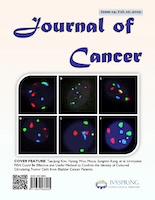
Journal of Cancer
Pioneering discoveries in the realm of oncology.Journal of Cancer is a premier, peer-reviewed academic journal published by IVYSPRING INTERNATIONAL PUBLISHING that focuses on advancing the field of oncology. With an impact factor reflecting its significant contributions, this journal ranks in the 80th percentile of medical journals pertaining to oncology, positioning it at #79 out of 404 in Scopus. Since its inception in 2010, the journal has embraced an Open Access model, ensuring that groundbreaking research reaches a global audience without barriers. Based in Australia, the journal addresses a wide array of topics within cancer research, catering to researchers, healthcare professionals, and students committed to enhancing their understanding of the complexities of cancer. Amidst evolving challenges in oncology, the Journal of Cancer serves as a vital platform for disseminating innovative findings, fostering collaboration, and promoting informed decisions that can lead to improved cancer outcomes worldwide.
International Journal of Clinical Oncology
Advancing the Frontiers of Cancer CareInternational Journal of Clinical Oncology, published by SPRINGER JAPAN KK, is a leading peer-reviewed journal dedicated to advancing research and clinical practices in the fields of oncology, hematology, and surgery. With its impact factor reflecting its significance and reach in the academic community, this journal serves as a solid platform for researchers, professionals, and students to share and disseminate groundbreaking discoveries and methodologies. Notably, it has secured prestigious rankings in the Q1 category in Medicine (miscellaneous) and Surgery, and Q2 in Hematology and Oncology, illustrating its prominent position in the medical literature. The journal's comprehensive scope addresses pivotal clinical issues from 1996 through 2024, further solidifying its relevance in the ever-evolving landscape of cancer research. Despite not offering open access, the depth and quality of research articles ensure that vital information remains accessible to those committed to improving clinical outcomes in oncology. With a focus on innovative treatments and patient care, the International Journal of Clinical Oncology embodies a commitment to fostering excellence in medical research.

ESMO Open is a premier open-access journal published by Elsevier, dedicated to advancing research in the fields of cancer and oncology. Since its inception in 2016, the journal has established itself as a vital resource for researchers, clinicians, and healthcare professionals, providing a platform for disseminating high-quality, peer-reviewed research. With an impressive Q1 ranking in both Cancer Research and Oncology based on the 2023 category quartiles, ESMO Open ranks within the top tier of its field, showcasing its commitment to excellence and innovation. The journal’s inclusion in Scopus rankings further emphasizes its significant impact, with remarkable placements in the 88th and 83rd percentiles for Oncology and Cancer Research, respectively. Operating under an open access model, ESMO Open ensures that cutting-edge findings and insights are readily available to the global academic community, fostering collaboration and knowledge-sharing to further enhance the understanding and treatment of cancer.

BRITISH JOURNAL OF CANCER
Pioneering Insights in Oncology Since 1947.The British Journal of Cancer, published by SpringerNature, stands as a preeminent resource in the fields of Cancer Research and Oncology, with a distinguished history of publication dating back to 1947. With its Q1 rank in both categories for 2023, this journal is among the top-tier publications, offering cutting-edge research and insights into the biology, etiology, and treatment of cancer. The journal’s rigorous peer-review process ensures that readers are presented with high-quality studies that contribute to the advancement of cancer knowledge and clinical practice. Operating from the United Kingdom, it has garnered a notable impact factor and ranks impressively within Scopus, making it an essential publication for researchers, healthcare professionals, and students who are dedicated to understanding cancer's complexities. Access to the journal's articles is available in traditional formats, providing a versatile platform for disseminating pivotal research. As we move towards a future where cancer treatment and prevention remain crucial, the British Journal of Cancer continues to play a vital role in shaping the dialogue and discoveries within the oncology community.
Bladder Cancer
Elevating the standard of care through impactful research.Bladder Cancer, published by IOS PRESS, is a premier open access journal dedicated to advancing the field of oncology and urology, with a specific focus on bladder cancer research and treatment. Established in 2015 and continuing through to 2024, this journal aims to disseminate high-quality, peer-reviewed research that contributes to the understanding, diagnosis, and management of bladder cancer, a critical area of concern in urological oncology. With a robust publication record now encompassing open access since 2023, Bladder Cancer ensures accessibility to vital research for clinicians, researchers, and scholars worldwide. The journal's rankings in Scopus reflect its commitment to excellence, holding a Q3 category in both oncology and urology, with Scopus ranks of #78 in Urology and #285 in Oncology, showcasing its growing influence in the scientific community. By fostering dialogue and innovation, Bladder Cancer serves as an essential resource for those committed to improving patient outcomes in bladder oncology.
Oncology Reviews
Connecting Researchers for Global Cancer SolutionsOncology Reviews, founded in 2007 and published by FRONTIERS MEDIA SA, is a leading open-access journal dedicated to advancing knowledge in the field of oncology and cancer research. With an Impact Factor reflecting its robust engagement in scholarly discourse, this journal maintains a prestigious standing, earning a Q2 ranking in Oncology and a Q3 ranking in Cancer Research as of 2023. Notably, it is indexed in Scopus, where it ranks #118 in Oncology and #98 in Cancer Research, highlighting its global reach and significance. The journal's open-access policy, in effect since 2012, ensures that high-quality research is accessible to all, fostering collaboration and wellness improvements worldwide. This commitment to accessibility and dissemination of pivotal research makes Oncology Reviews an essential resource for researchers, healthcare professionals, and students eager to contribute to and stay abreast of the latest innovations in cancer treatment and research.

World Journal of Oncology
Empowering the global fight against cancer.The World Journal of Oncology, published by ELMER PRESS INC, is a vibrant platform for disseminating groundbreaking research and advancements in the field of oncology. With its ISSN 1920-4531 and E-ISSN 1920-454X, this journal is dedicated to publishing high-quality studies that enhance our understanding of cancer and its treatment. The journal is recognized for its significant contributions, evidenced by its Q2 classification in both Cancer Research and Oncology categories in 2023, and accolades such as a Scopus rank of #126/404 in Medicine _ Oncology. Catering to the needs of researchers, professionals, and students, the World Journal of Oncology offers an essential resource for the latest scientific insights and clinical practices, ensuring the global oncology community remains informed and engaged. The journal operates under a selective publication model, maintaining rigor in peer review while facilitating knowledge sharing across converged years from 2014 to 2016 and 2020 to 2024, further establishing its importance in the ongoing fight against cancer.
Thoracic Cancer
Empowering research for a cancer-free tomorrow.Thoracic Cancer is a distinguished open-access journal published by WILEY, dedicated to advancing the field of thoracic oncology. Since its establishment in 2010, the journal has emerged as a crucial platform for the dissemination of innovative research and clinical studies relating to lung cancer and other thoracic malignancies. With a commendable impact reflected in its 2023 Q2 rankings in the categories of Medicine (Miscellaneous), Oncology, and Pulmonary and Respiratory Medicine, the journal features high-quality articles that are vital for researchers, clinicians, and students aspiring to enhance their understanding of thoracic cancers. Operating out of Australia, Thoracic Cancer has embraced a commitment to open access since 2015, ensuring that vital research is readily available to a global audience. The journal's rigorous peer-review process and emphasis on novel findings make it an indispensable resource for professionals seeking to stay at the forefront of this rapidly evolving field.