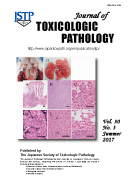
Journal of Toxicologic Pathology
metrics 2024
Fostering Global Collaboration in Toxicologic Research.
Introduction
Journal of Toxicologic Pathology is a pivotal resource in the realm of pathology and toxicology, published by the Japanese Society of Toxicologic Pathology. Since its inception in 1988, this esteemed journal has been committed to advancing scholarly discourse through the dissemination of rigorous research and reviews that address the intricacies of toxicologic pathology. With a current impact factor placing it in the Q3 quartile in both Pathology and Forensic Medicine as well as Toxicology categories, it serves as a crucial platform for academics and practitioners to share insights and findings. Situated in Japan, this journal fosters international collaboration, welcoming contributions that span diverse geographical and scientific contexts. Although not open access, it continues to play a significant role in shaping the future of toxicological research and education, and it remains an invaluable asset for those engaged in the study of disease mechanisms, safety assessments, and the impact of toxic substances on biological systems.
Metrics 2024
 0.310.901.3035
Metrics History
Rank 2024
Scopus
IF (Web Of Science)
JCI (Web Of Science)
Quartile History
Similar Journals

Current Research in Toxicology
Unveiling the Complexities of Toxicological ImpactCurrent Research in Toxicology is a pioneering journal published by ELSEVIER that serves as a vital platform for disseminating cutting-edge research in the field of toxicology, spanning from biological impacts to pharmacological applications. With an ISSN of 2666-027X and an impressive Q2 ranking in key categories such as Applied Microbiology and Biotechnology, Health, Toxicology and Mutagenesis, and Toxicology, this journal underscores its commitment to high-quality research and significant contributions to the scientific community. Based in the Netherlands, Current Research in Toxicology aims to bridge the gap between academia and industry by providing rigorously peer-reviewed articles that cover a wide array of topics including novel methodologies, regulatory challenges, and emerging trends within the domain. The journal is accessible through various platforms, making it essential for researchers, professionals, and students eager to stay updated on the latest findings and advancements in toxicology. With a comprehensive focus on integrating theory with practical application, this journal is poised to influence future studies and policies in health and environmental science.
ARCHIVES OF TOXICOLOGY
Elevating Standards in Toxicological ResearchARCHIVES OF TOXICOLOGY is a prestigious journal published by Springer Heidelberg, dedicated to advancing research in the field of toxicology and related disciplines. With a distinguished history dating back to 1930, this journal has continuously provided vital insights and groundbreaking studies, making it a cornerstone in the areas of health, toxicology, and medicine. Recognized for its high impact, it occupies a top-ranking position in Scopus, with remarkable quartile placements in 2023, categorizing it as Q1 in Health, Toxicology and Mutagenesis, and Q1 in Medicine (Miscellaneous). The journal highlights critical research and innovative methodologies, appealing to a diverse audience of researchers, professionals, and students committed to understanding the complexities of toxic substances and their implications for public health and environmental safety. The journal does not currently offer open access, allowing for a more traditional but rigorous peer-review process that ensures the quality and integrity of every published article. Join the global discourse in toxicological science with ARCHIVES OF TOXICOLOGY, where every contribution furthers the understanding of safety and toxicity in our world.
JOURNAL OF BIOCHEMICAL AND MOLECULAR TOXICOLOGY
Elevating Standards in Toxicological ResearchJournal of Biochemical and Molecular Toxicology, published by Wiley, plays a pivotal role in the advancement of knowledge within the fields of biochemistry, toxicology, and molecular biology. Established in 1998, this esteemed journal has garnered a significant reputation, evidenced by its current placement in the Q2 quartile across several categories, including Biochemistry, Health, Toxicology and Mutagenesis, and Medicine. With an ISSN of 1095-6670 and an E-ISSN of 1099-0461, it serves an international audience, offering critical insights and innovative research that shape our understanding of biochemical interactions and toxicological assessments. While it does not operate on an open-access model, the journal ensures rigorous peer review and high-quality publication standards, making it a valuable resource for researchers, professionals, and students dedicated to the exploration of molecular toxicology. The journal's recognized impact within the scientific community is reflected in its competitive rankings among specialized journals, fostering significant contributions to both academic and applied contexts.

Pathologie
Transforming Investigative Approaches in Forensic SciencePathologie is a distinguished academic journal published by Springer Heidelberg, dedicated to advancing the field of pathology and forensic medicine. With an ISSN of 2731-7188 and an E-ISSN of 2731-7196, this journal serves as a vital platform for researchers, professionals, and students to disseminate innovative findings and insights. Currently ranked in the Q3 category of pathology and forensic medicine according to the 2023 metrics, Pathologie reflects a commitment to quality and relevance in a dynamic research landscape. Despite its relatively recent establishment from 2022, the journal is gaining traction with a Scopus rank of 139 out of 208 in its category, positioning itself as an emerging resource within the academic community. While it operates under a subscription model, the importance of the journal lies in its objective to facilitate the exploration of diverse pathological processes and enhance forensic methodologies, ultimately improving clinical outcomes and investigative practices. As it continues to grow, Pathologie stands poised to impact the pathology domain significantly.
ULTRASTRUCTURAL PATHOLOGY
Innovative Insights into Pathological MechanismsULTRASTRUCTURAL PATHOLOGY is a prestigious academic journal published by Taylor & Francis Inc, focusing on the intricate and detailed aspects of pathology as well as forensic medicine since its inception in 1980. With an ISSN of 0191-3123 and an E-ISSN of 1521-0758, this journal provides a vital platform for researchers and professionals to disseminate innovative findings pertinent to both clinical and experimental pathology. Despite not being an open-access journal, its contributions are critical within its categories, positioned at the Q3 quartile in Pathology and Forensic Medicine and Q4 in Structural Biology as of 2023. The journal's reputation is further underscored by its Scopus rankings, placing it in the 41st percentile for Pathology and 15th percentile for Structural Biology, indicating a competitive standing in these fields. ULTRASTRUCTURAL PATHOLOGY aims to foster rigorous scholarly discourse and advance knowledge through the publication of original research articles, reviews, and case studies, making it an essential resource for academics, practitioners, and students engaged in the evolving domains of pathology and structural biology.

Molecular & Cellular Toxicology
Pioneering research at the crossroads of toxicology and pharmacology.Molecular & Cellular Toxicology, published by the Korean Society Toxicogenomics & Toxicoproteomics (KSTT), is a significant journal in the field of toxicology, providing crucial insights into molecular mechanisms underlying toxic responses. With an ISSN of 1738-642X and E-ISSN 2092-8467, this journal serves as a vital platform for researchers, professionals, and students interested in the latest findings and advancements in toxicology, health, and environmental science. Although it operates under a subscription model, it maintains rigorous peer review standards, contributing to its respectable Q3 classification in Health, Toxicology and Mutagenesis, and its Q2 standing in Pharmacology, Toxicology, and Pharmaceutics. The journal, intersecting with innovative aspects of pharmacology and public health, aims to foster a deeper understanding of toxicological impacts on cellular processes and overall health. Located in Germany and supported by a dedicated editorial board, Molecular & Cellular Toxicology stands out in the academic community, encouraging interdisciplinary discourse and collaboration to address critical toxicological challenges. Engage with us for cutting-edge research that informs and shapes the future of toxicological science.
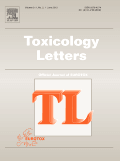
TOXICOLOGY LETTERS
Illuminating the path to safer chemical practices.TOXICOLOGY LETTERS is a prominent journal dedicated to advancing the field of toxicology, providing a platform for high-quality research and reviews that explore the effects of chemical substances on biological systems. Published by Elsevier Ireland Ltd, this peer-reviewed journal has established itself as a vital resource in toxicological research since its inception in 1977, with a convergence of studies extending to 2024. With an impressive Scopus ranking, positioned at #28 out of 133 in the Toxicology category, TOXICOLOGY LETTERS garners a respectable percentile of 79, highlighting its significance in the academic community. Although it is not an open-access journal, its research is accessible through institutional subscriptions, ensuring that critical insights into human health and environmental safety are disseminated effectively. Being categorized in the Q2 quartile in both Medicine (miscellaneous) and Toxicology for 2023 further emphasizes its relevance and impact in these fields. This journal aims to foster collaboration between researchers and professionals, encouraging the exploration of innovative solutions to chemical hazards and the promotion of safer practices in pharmacology and toxicology.

JOURNAL OF APPLIED TOXICOLOGY
Advancing the Science of ToxicologyJOURNAL OF APPLIED TOXICOLOGY, published by Wiley, stands as a leading platform in the field of toxicology, focusing on the rigorous examination of chemical substances and their effects on biological systems. With an impressive Impact Factor, it ranks in the top quartile (Q2) for toxicology journals, reflecting its esteemed position within the scientific community. The journal, identifiable by its ISSN 0260-437X and E-ISSN 1099-1263, has been an invaluable resource since its inception in 1981, and it continues to serve as a conduit for innovative research and practical applications through 2024. Positioned at the forefront of the field, it garners recognition in the Scopus Rankings, where it ranks #31 out of 133 journals in the toxicology category, placing it in the 77th percentile—a testament to its contribution to the advancement of pharmacology and toxicological sciences. While not an open-access journal, it remains accessible to a wide audience of researchers, professionals, and students eager to explore cutting-edge findings in applied toxicology, making it a pivotal resource for enhancing knowledge and fostering collaboration in the field.
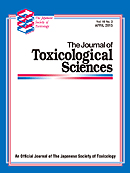
JOURNAL OF TOXICOLOGICAL SCIENCES
Bridging Global Perspectives in ToxicologyThe Journal of Toxicological Sciences, published by the Japanese Society of Toxicological Sciences, is a prominent academic journal dedicated to the comprehensive study of toxicology and its related fields. Since its inception in 1976, the journal has provided a vital platform for researchers and professionals to disseminate innovative findings and insights in toxicology, with a focus on both experimental and clinical studies. Positioned in the Q3 quartile across various relevant categories, including Medicine (miscellaneous) and Toxicology as of 2023, the journal plays an essential role in advancing our understanding of toxic substances and their effects on biological systems. Although currently not open access, the journal maintains high academic standards and is indexed in Scopus, ranking #96 in Toxicology. Offering unique perspectives from Japan, it encourages global collaboration and discourse among toxicologists, making it an invaluable resource for students, researchers, and industry professionals alike.
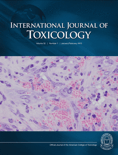
INTERNATIONAL JOURNAL OF TOXICOLOGY
Advancing the Science of Toxicology for a Safer Tomorrow.The International Journal of Toxicology, published by SAGE Publications Inc, serves as a cornerstone of scholarly research in the field of toxicology, with an established history dating back to 1982. This esteemed journal, ISSN 1091-5818 and E-ISSN 1092-874X, functions within the Q3 quartile in Toxicology, ranking 94 out of 133 in the Pharmacology, Toxicology and Pharmaceutics category per Scopus metrics, reflecting its commitment to advancing scientific understanding in this critical area. The journal not only aims to disseminate high-quality research but also encourages open access to vital studies, thus fostering collaboration and innovation among researchers, professionals, and students alike. With a focus on various aspects of toxicology, including but not limited to environmental, clinical, and molecular toxicology, the International Journal of Toxicology is dedicated to bridging gaps in toxicity research and promoting safe practices across numerous disciplines. As it converges towards 2024, the journal continues to play a vital role in shaping the discourse surrounding the implications of exposure to toxic substances in human health and the environment.